General contractors lose thousands in revenue every month because potential customers can’t find them online. Local search is where homeowners and business owners look first when they need construction services, and if you’re not visible, your competitors are getting those calls.
At Ladder 48, we’ve built this general contractor SEO guide to show you exactly how to dominate local search results and attract high-intent customers in your service areas.
Why Local SEO Matters for General Contractors
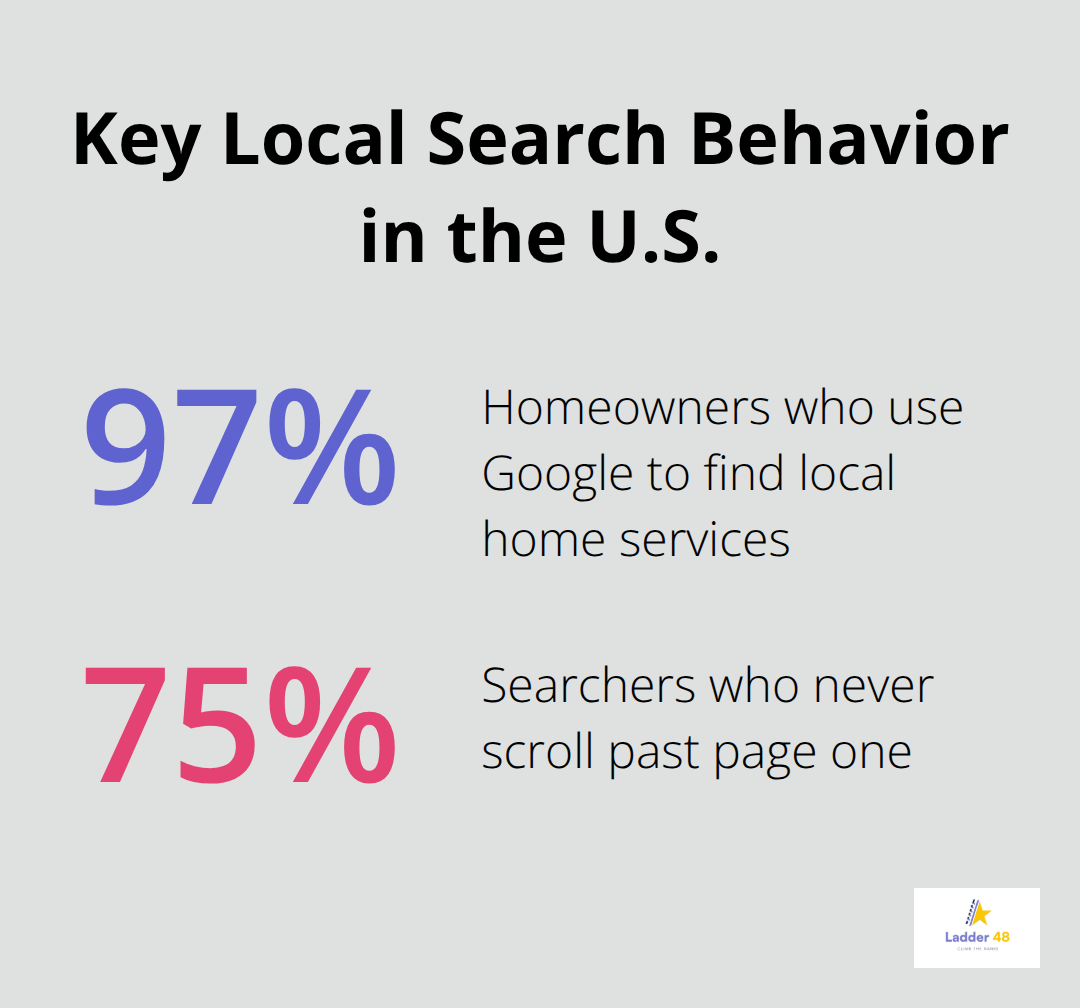
Ninety-seven percent of homeowners use Google to find local home services, and 75% never scroll past page one. If you’re not ranking in those top positions, you’re invisible. Local search isn’t just another marketing channel-it’s where your customers actively look for you right now, wallet ready.
Google processed 5 trillion searches in 2024, and a massive portion of those were local queries from people in your service area. These aren’t vague browsers; they’re homeowners and business owners with immediate construction needs. They’ve already decided they want to hire someone. The only question is whether that someone is you or your competitor down the street.
The Three Factors That Control Local Rankings
Google’s local ranking algorithm focuses on three core factors: Relevance, Distance, and Prominence. Relevance means how well your business matches what someone searches for-if a homeowner searches for bathroom remodeling and you’re a general contractor who specializes in that work, Google needs to understand that connection. Distance is straightforward; Google shows searchers the closest qualified contractors. Prominence is where most contractors fail.
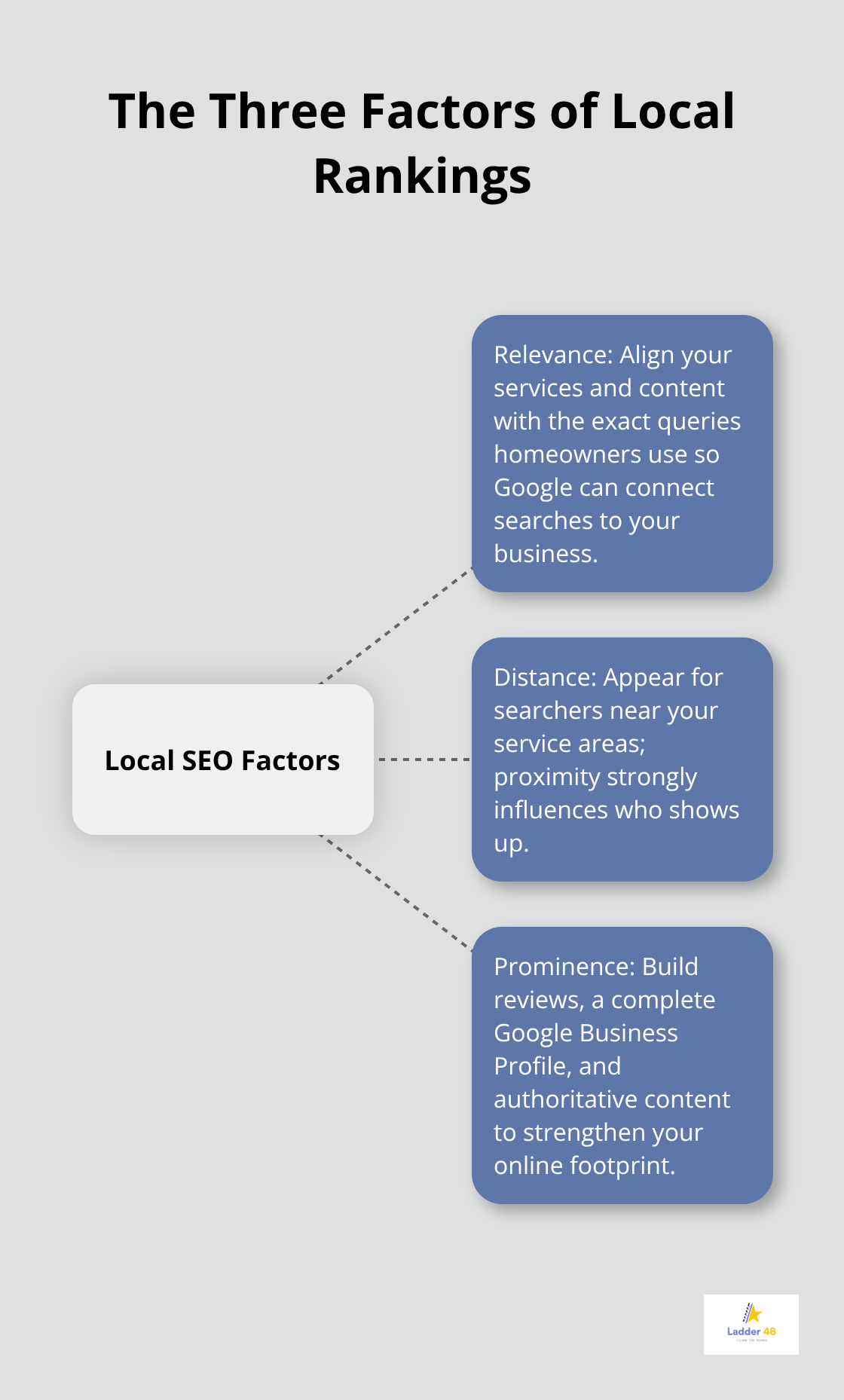
This factor includes your online reviews, your Google Business Profile completeness, your website authority, and your overall digital footprint. Nearly 90% of local consumers use search engines to find home contractor services, making first-page visibility essential. About 70% of contractors now invest in SEO as a core marketing strategy, yet many still treat it as optional. The contractors winning right now aren’t the ones hoping for visibility-they’re the ones systematically building it.
Why Mobile Search Changes Everything
Mobile devices account for roughly 60% of all online searches, and 78% of local searches on mobile devices result in an offline purchase. That means when someone searches for a contractor on their phone while standing in their kitchen, they’re likely to call or book someone that same day. A one-second delay in page load time reduces conversions by about 7%. Your competitor’s website loads in two seconds; yours loads in three. That one-second difference costs you jobs. Mobile optimization isn’t a nice-to-have feature anymore-it’s the foundation of whether you’ll get found and whether you’ll convert that search into a paying customer.
What Comes Next
Your local ranking depends on how well you optimize the three factors Google measures. The next section shows you exactly how to strengthen each one, starting with the most powerful tool at your disposal: your Google Business Profile.
The Three Foundations of Local Contractor Visibility
Claim and Complete Your Google Business Profile
Your Google Business Profile stands as the single most important asset you control for local SEO. Contractors with a complete profile attract location visits 70% more often than those with incomplete listings, yet most profiles sit half-finished with missing photos, outdated hours, or vague descriptions. Claim and verify your listing immediately if you haven’t already. Fill in every field completely: choose General Contractor as your primary category, add your exact service areas by city or region, list your years of experience, and write a description that includes the specific services you offer. Upload high-quality photos of completed projects with before-and-after shots, your team at work, vehicles, and your office or shop. Geo-tag these photos when possible to strengthen local signals.
Keep Your Profile Active and Responsive
Post weekly updates about current projects or promotions using Google Posts (these last about seven days but signal active management to Google). Respond to every review-positive and negative-within 48 hours. A response shows Google and potential customers that you’re engaged and professional. Encourage satisfied clients to mention the specific service and their location in their reviews, since these details boost relevance signals for your local rankings. This active management transforms your profile from a static listing into a dynamic marketing tool that Google rewards with higher visibility.
Maintain Consistent Business Information Across All Directories
Consistent business information across the web matters more than most contractors realize. Businesses with consistent local citations across directories see an average 20% boost in search rankings. Your name, address, and phone number must match exactly on your Google Business Profile, your website, Yelp, Angi, Houzz, Yellow Pages, BBB, Porch, and any local chamber or industry directories where you’re listed. A single typo or abbreviation difference tells Google your listings are unreliable, which hurts your rankings and confuses potential customers. Audit all your listings right now and fix any inconsistencies immediately.
Generate Reviews That Convert Searchers Into Customers
Over 90% of homeowners read reviews before hiring a contractor, and positive reviews correlate with a 31% increase in search visibility. Ask every satisfied customer for a review within a week of project completion while the experience is fresh. Make it easy by sending a direct link to your Google Business Profile. The reviews you collect become social proof that converts the searchers Google sends your way into actual phone calls and contracts. This reputation foundation directly impacts whether potential customers choose you or your competitor.
Build a Contractor Website That Ranks and Converts
Your Google Business Profile attracts searchers to your listing, but your website converts them into customers. A slow, poorly optimized site sends visitors straight to your competitor. Site speed matters brutally: a one-second delay reduces conversions by 7%, which means a three-second load time versus a two-second load time costs you jobs every single month. Mobile optimization is non-negotiable since 60% of all online searches happen on phones. Test your current site speed at Google PageSpeed Insights and compress every image without quality loss, minimize code, and enable HTTPS immediately. If your site takes longer than two seconds to load on mobile, you’re actively losing revenue.
Target Service Area Keywords That Convert
Service area keywords separate contractors who rank from contractors who don’t. Instead of targeting generic terms like “general contractor,” try phrases like “bathroom remodeling contractor in Denver” or “commercial general contractor Chicago.” These long-tail, location-based keywords face less competition and attract homeowners ready to hire. Use Google Keyword Planner or Semrush to find search volume and difficulty scores for your specific service areas, then map the highest-intent keywords to dedicated pages on your website. This approach tells Google exactly what you do and where you do it.
Location Pages Drive Local Relevance
Create a dedicated page for each city or region where you operate. A single generic service page that mentions ten cities ranks worse than ten location-specific pages that each mention one city deeply. Each location page should include the city name in the title tag and H1, describe projects you’ve completed in that specific area, mention local landmarks or neighborhoods your customers recognize, and include testimonials from clients in that city. A contractor serving Seattle and Portland needs separate pages optimized for “Seattle kitchen remodel” and “Portland bathroom renovation,” not one page trying to rank for both. This structure tells Google exactly where you operate and signals genuine local expertise.
Structure Your Website for Authority and Trust
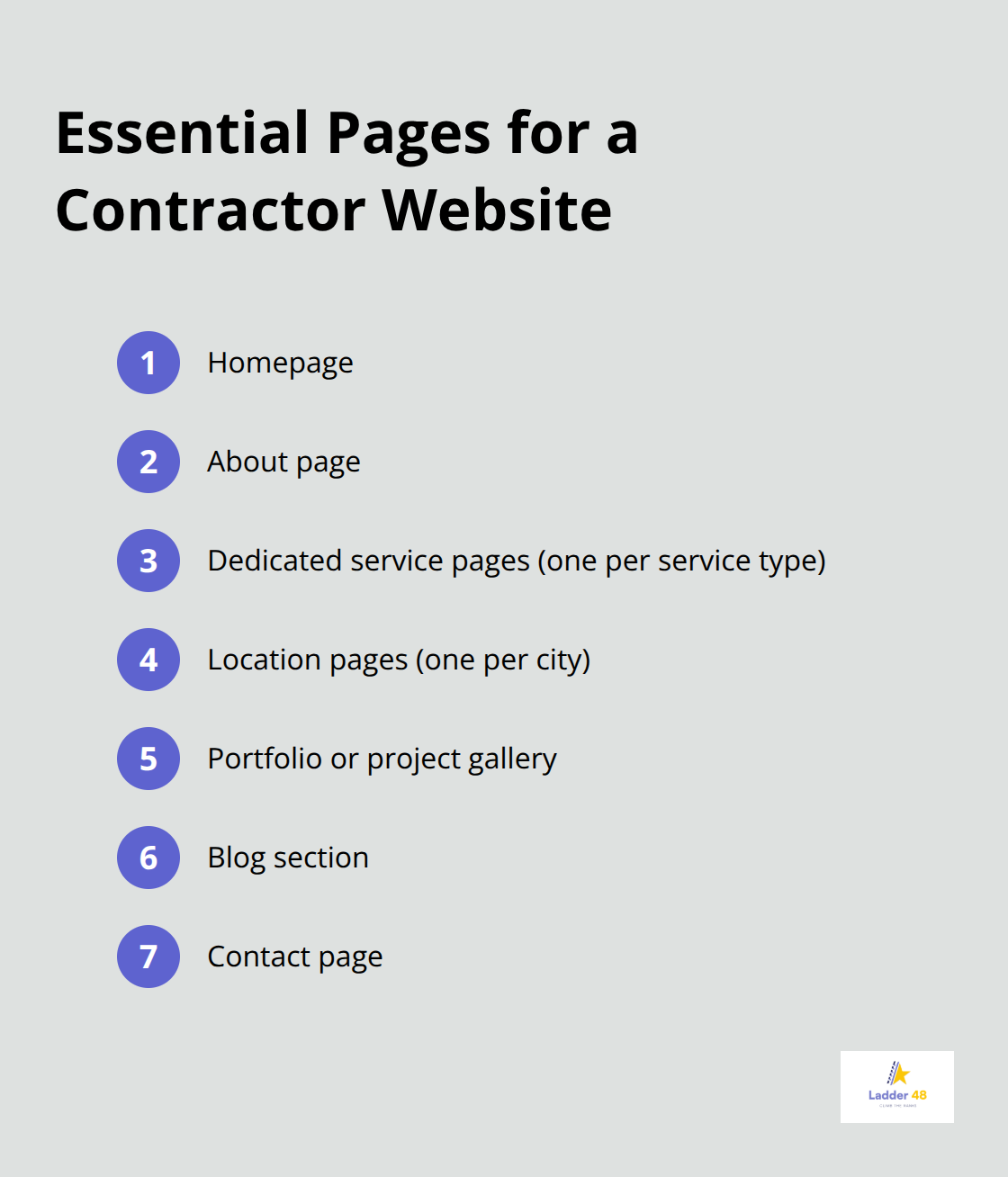
Your website structure should flow logically: homepage, about page, dedicated service pages (one per service type), location pages (one per city), portfolio or project gallery, blog section, and contact page. This hierarchy makes it easy for both Google and potential customers to find what they need. Internally link these location pages to your main service pages to distribute authority throughout your site and improve overall rankings.
Schema markup using LocalBusiness format helps Google understand your business details, service areas, phone number, hours, and reviews. Without schema, Google has to guess what your site is about; with it, you tell Google exactly what you do and where you do it. Implement this markup immediately if your site builder doesn’t already include it automatically.
Final Thoughts
Local SEO isn’t a one-time project you complete and forget-it’s the foundation that separates contractors who attract steady customer inquiries from those who watch competitors capture the work. The strategies in this general contractor SEO guide work because they align with how Google ranks local businesses and how homeowners actually search for contractors. Ninety-seven percent of homeowners start their search on Google, and 75% never look past the first page, which means your ranking position directly determines your revenue.
You now have the roadmap to implement these tactics systematically. Optimize your Google Business Profile completely, maintain consistent business information across every directory, and collect reviews from satisfied customers. Build a fast, mobile-friendly website with location pages for each service area and internal links that distribute authority throughout your site. Target long-tail keywords that match what homeowners actually search for, and implement schema markup so Google understands exactly what you do and where you do it.
The contractors winning right now aren’t waiting for perfect conditions-they’re implementing these strategies and measuring results monthly. If you’re ready to accelerate your local visibility and build a predictable pipeline of customer inquiries, contact Ladder 48 to discuss how we can boost your rankings and attract more customers in your service areas.