Contractors who rank on the first page of Google get more calls, more quotes, and more jobs. Most contractors, though, have no contractor SEO strategy at all-they’re invisible to the customers searching for their services right now.
We at Ladder 48 have helped dozens of contractors dominate their local markets by fixing the three things that matter most: local search visibility, content that converts, and technical foundations that search engines actually reward.
Local SEO Fundamentals for Contractors
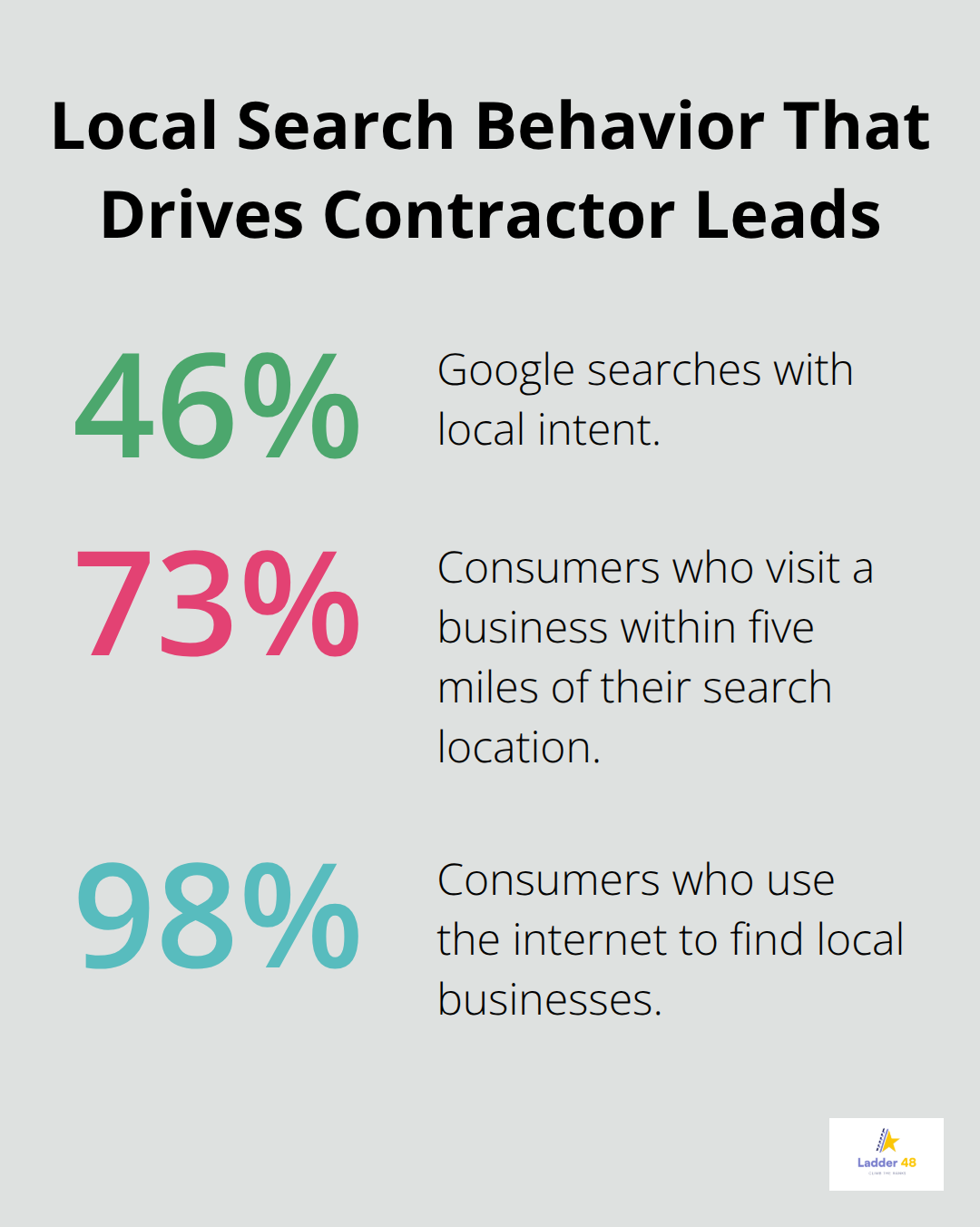
Your Google Business Profile forms the foundation of everything. If you haven’t claimed it yet, you’re losing jobs to competitors who have. According to HubSpot data, 46% of Google searches have local intent, and 73% of consumers visit a business within five miles of their search location. Your profile needs to be complete and accurate.
Claim and Optimize Your Google Business Profile
Start with your business name, address, and phone number-these three pieces must be identical everywhere online. One typo in your address across different directories tanks your rankings. Upload photos of your actual work, your team, and your vehicles. Before-and-after photos work best because they prove you deliver results. Post 2–3 times per week on your profile to signal to Google that your business is active. Most contractors post once a month or never, which is why they get buried in search results.
Build Local Citations Across Directories
Citations across directories like Yelp, Apple Maps, Yellowbook, and industry-specific platforms confirm you’re a real, legitimate business. BrightLocal found that 98% of consumers use the internet to find local businesses. Your Name, Address, and Phone number must be identical across every single directory. One inconsistency confuses Google’s ranking algorithm and costs you positions. Set up your profile on Google My Business first, then systematically add your business to Yelp, Apple Maps, LinkedIn, and your local chamber of commerce. Don’t skip industry-specific directories either-plumbers should be on Angi and Houzz, for example. Fix any existing citations where your information is wrong. This takes time, but it directly impacts how many calls you receive.
Gather and Respond to Customer Reviews
Responding to every review-positive and negative-signals to Google that you engage with customers. Google confirms that responding to reviews improves local SEO. BrightLocal data shows 91% of consumers are more likely to choose a business that responds to all reviews. Don’t hide from negative reviews. Respond professionally, acknowledge the issue, and explain how you fixed it. This shows potential customers you care about quality.
Actively ask satisfied customers to leave reviews after jobs are complete. Make it easy for them-send a direct link to your Google profile. Try for one new review every week or two. Contractors with 20+ recent reviews rank higher than those with five old reviews, even if both have the same star rating.
With your Google Business Profile optimized, citations built, and reviews flowing in, you’ve established local credibility. Now you need content that actually converts those local searches into phone calls and booked jobs.
Content Strategy That Attracts Local Customers
Research Keywords Your Customers Actually Search For
Local keyword research separates contractors who get calls from those who stay invisible. Most contractors guess at keywords instead of researching what their actual customers type into Google. Use Google Ads Keyword Planner to find search volume and competition levels for phrases like “plumber near me,” “emergency furnace repair in [your city],” or “luxury bathroom remodel.” Google Autocomplete reveals what real people search for-start typing a service and Google shows actual searches. These aren’t hypothetical phrases; they’re what your customers actually want.
Target keywords with clear buying intent. Someone searching for “bathroom remodel cost” is researching, but someone searching for “bathroom remodeler near me” is ready to hire. This distinction matters because it determines which pages convert and which ones waste your time.
Build Service Pages That Match Search Intent
Create separate service pages for each major service you offer. A plumber should have distinct pages for water heater repair, drain cleaning, and emergency plumbing, not one generic plumbing page. Each page targets specific keywords and answers the exact question a customer asked.
Include the city name naturally in your page content-not stuffed awkwardly, but woven into headings, descriptions, and body text. A page titled “Bathroom Remodeling in Denver” works better than one titled “Bathroom Remodeling Services” because it matches how people actually search. Write 500–800 words per service page minimum. Thin content ranks nowhere.
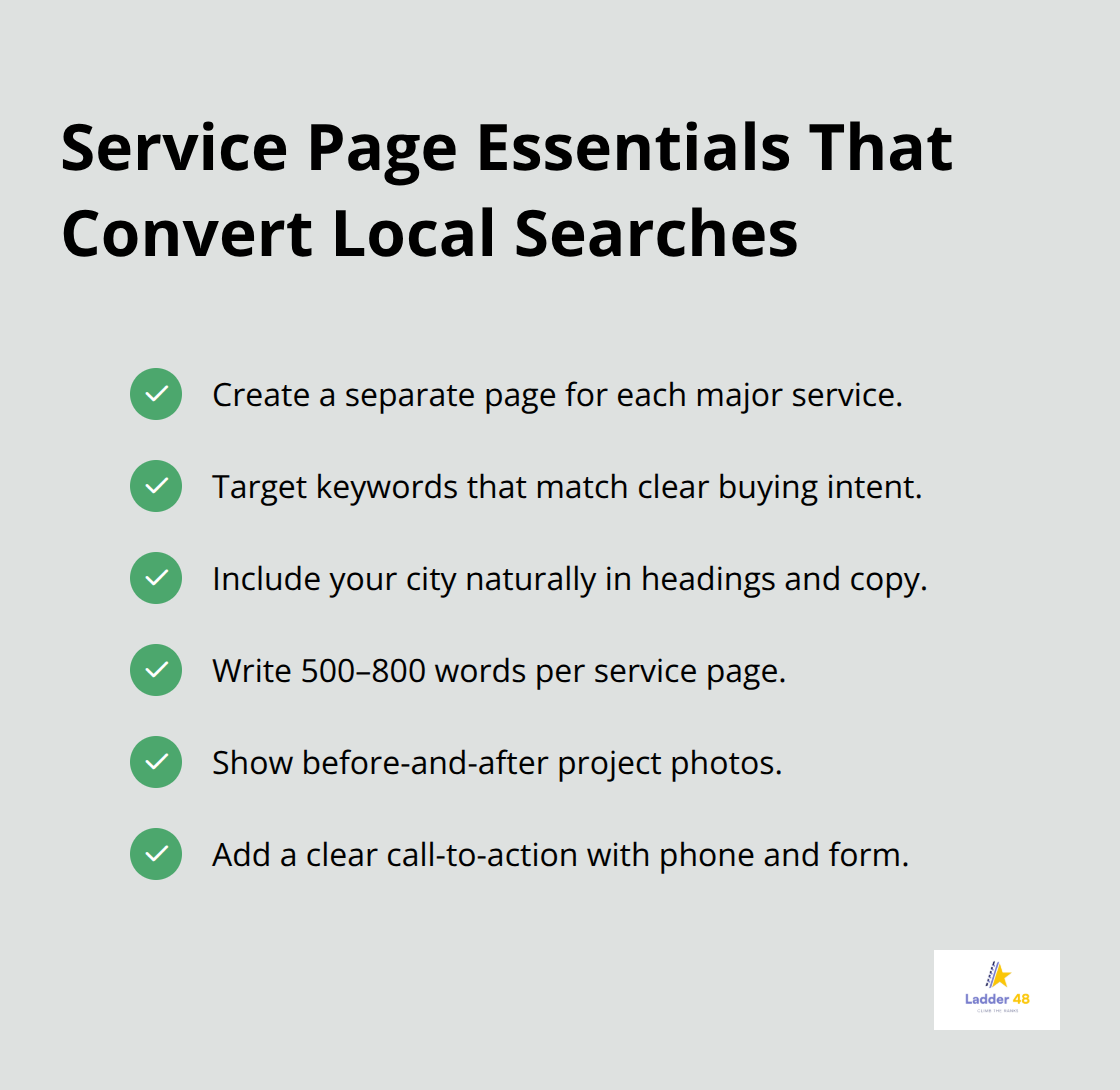
Your page should explain what you do, show before-and-after photos of actual projects, answer common questions customers ask, and include a clear call to action like a phone number or contact form. This combination converts browsers into leads.
Use Schema Markup to Help Google Understand Your Business
Schema markup tells Google exactly what your business does and where you operate. Add LocalBusiness schema to your homepage with your business name, address, phone number, service areas, and hours. Add Service schema to your service pages so Google understands you offer plumbing or electrical work. This structured data helps Google rank you for local searches and display rich snippets in search results.
Most contractors skip schema entirely, which means Google has to guess what they do. Use schema.org as your reference for proper formatting. Proper implementation takes an afternoon but pays dividends in visibility.
Link Your Pages Together to Build Authority
Internal linking between your service pages and blog posts strengthens your entire site’s authority. Link from your main service page to related posts about maintenance tips or seasonal issues. Link from location pages back to service pages. This architecture helps Google understand your site structure and distributes ranking power across pages that matter.
Five trillion Google searches happened in 2024 according to Google itself. A fraction of those are contractors in your area searching for services you provide. Your content strategy determines whether you capture those searches or your competitors do. With your content foundation in place, you need to address the technical elements that search engines actually reward-site speed, mobile responsiveness, and the backlinks that signal authority.
Technical SEO and Link Building for Contractors
Fix Site Speed and Mobile Responsiveness Issues
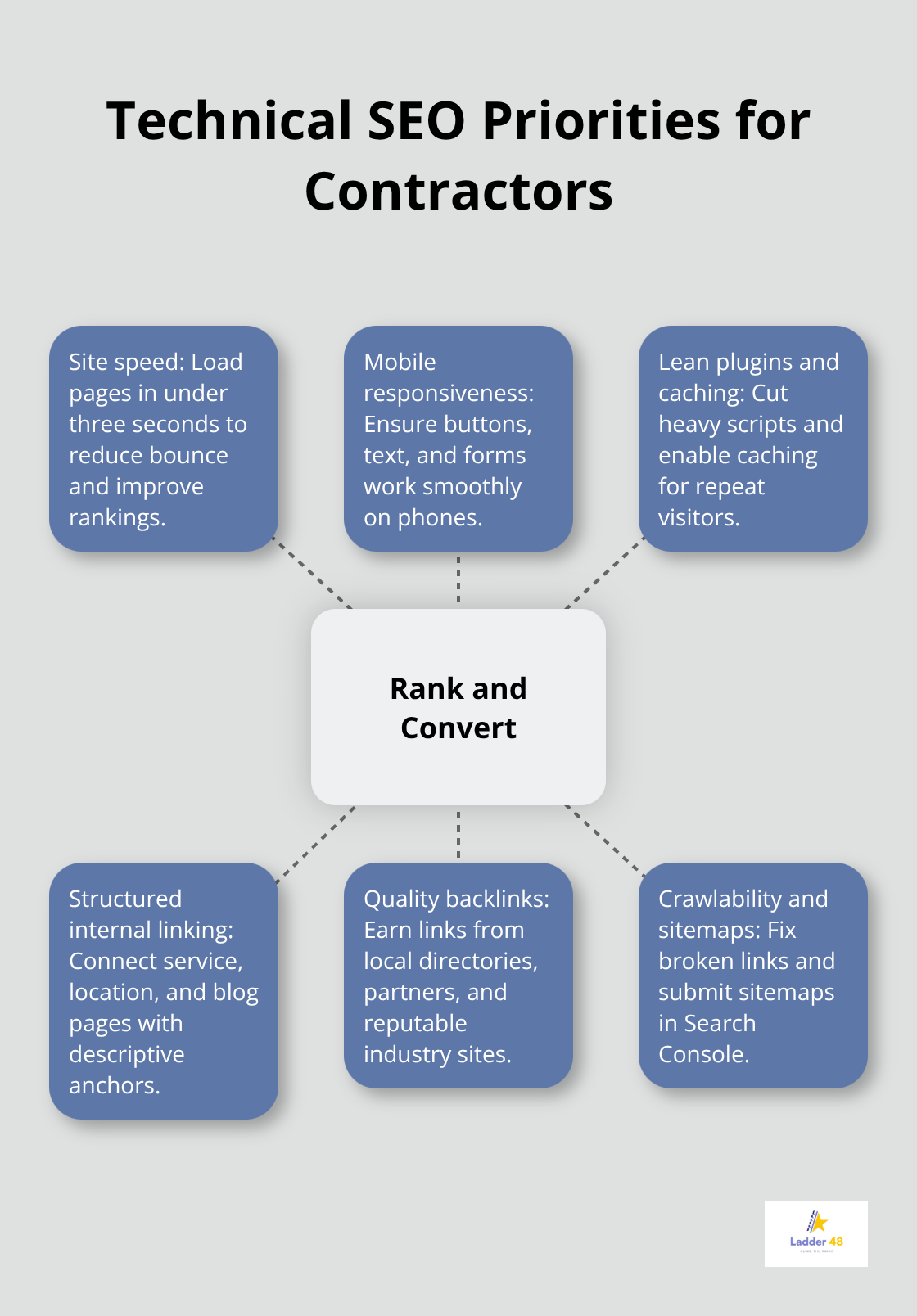
Site speed kills contractor rankings faster than almost anything else. Google’s own research confirms that pages loading in under three seconds achieve significantly higher rankings than slow pages. Test your site speed right now with Google PageSpeed Insights, which gives you specific performance scores for mobile and desktop. Most contractor websites load in six to eight seconds, which is why they get buried.
If your homepage takes longer than three seconds to load, you’re losing jobs to faster competitors. Compress images before uploading them-use tools like TinyPNG or ImageOptim to shrink file sizes without losing quality. Reduce your number of plugins, especially contact form builders and review widgets that load external scripts. Enable browser caching so repeat visitors don’t reload your entire site. These aren’t optional optimizations; they’re mandatory if you want to rank.
Mobile responsiveness matters just as much. Over 60% of Google searches now happen on mobile devices, and Google ranks mobile-friendly sites higher in search results. Open your website on a phone right now and check if buttons are clickable, text is readable without zooming, and forms work smoothly. If your site looks broken on mobile, potential customers bounce immediately and call your competitor instead.
Earn Backlinks from Local Business Directories and Industry Partners
Backlinks from local directories and industry partners signal authority to Google and drive qualified traffic. Start with the directories you should already be on-Google My Business, Yelp, Apple Maps, and your local chamber of commerce all count as valuable backlinks. Industry-specific platforms matter too; plumbers benefit from citations on Angi and Houzz, electricians from HomeAdvisor.
Don’t buy links or use link schemes-Google penalizes this aggressively. Instead, reach out to local organizations, neighborhood associations, and community groups about earning mentions on their websites. If a local newspaper covers one of your projects, that’s a high-authority backlink worth pursuing. Guest posts on industry blogs work too, but only on reputable sites with real traffic.
Optimize Your Site Structure for Better Crawlability
Your internal site structure determines how effectively Google crawls your pages. Create a logical hierarchy where your homepage links to main service pages, and service pages link to location-specific variations and related blog content. Use descriptive anchor text like “emergency plumbing in Denver” instead of generic anchors like “click here.”
Fix broken links immediately-they waste crawl budget and hurt user experience. Submit your sitemap to Google Search Console so Google knows exactly which pages to crawl. A well-structured site with fast loading times and solid backlinks from relevant sources will rank higher than competitors who ignore these technical foundations.
Final Thoughts
Dominating local search rankings requires three elements working together: a complete Google Business Profile with consistent information across directories, content built around what your customers actually search for, and technical foundations that search engines reward. Most contractors skip one or two of these elements and wonder why they’re invisible. The contractors winning jobs execute all three as part of a cohesive contractor SEO strategy.
Your contractor SEO strategy starts today, not next month. Claim your Google Business Profile if you haven’t already, then post 2–3 times per week. Fix your site speed so pages load in under three seconds, create service pages targeting the keywords your customers search for, build citations on Yelp and Apple Maps, respond to every review, and earn backlinks from local directories and community organizations. These aren’t theoretical tactics-they’re what separates contractors getting five calls a week from those getting five calls a month.
The data backs this up: HubSpot research shows 46% of Google searches have local intent, and 73% of consumers visit a business within five miles of their search location. BrightLocal found that 98% of consumers use the internet to find local businesses. Five trillion Google searches happened in 2024, and your market is searching right now. We at Ladder 48 help contractors execute this strategy without guessing-contact us today to discuss how we can help your contracting business climb to the top of local search results.