
Concrete contractors lose thousands in revenue every month because potential customers can’t find them online. At Ladder 48, we’ve seen firsthand how concrete company SEO transforms local visibility and fills job pipelines with qualified leads.
The contractors who dominate their markets aren’t the ones with the fanciest websites-they’re the ones showing up first in local search results. This guide shows you exactly how to get there.
Why Local SEO Matters for Concrete Contractors
Geography Determines Your Market
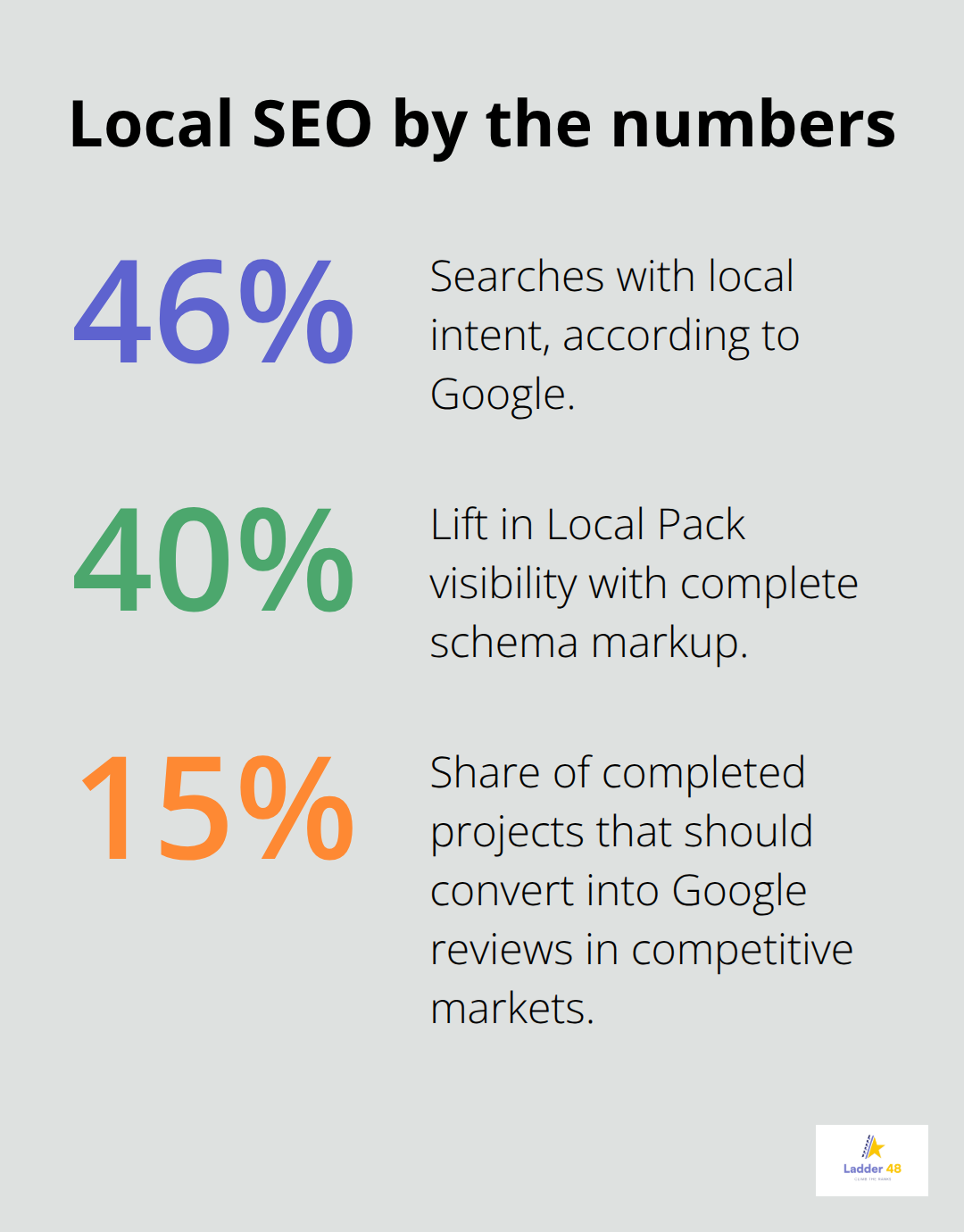
Concrete contractors operate in markets where location is everything. A homeowner in Miami searching for stamped concrete patios will never call a contractor in Phoenix, no matter how skilled they are. According to Google, 46% of all searches have local intent, meaning nearly half of all online searches come from people looking for services in their specific area. For concrete contractors, this percentage climbs even higher. Most customers searching for driveway repair, foundation work, or patio installation add location terms to their searches.
If your company doesn’t appear in those local results, you remain invisible to the exact customers ready to hire you.
Your Competitors Already Control Local Search
The contractors dominating their markets have moved past word-of-mouth referrals. They claim their Google Business Profile, build location pages for every service area they cover, and collect reviews systematically. A contractor with 50+ positive Google reviews and optimized local listings consistently outranks a competitor with a basic website, even if that competitor has been in business longer. The market isn’t just competitive-it’s shifting toward companies that understand how local search works. Contractors who ignore local SEO hand their market share to competitors who don’t. This isn’t a future problem; it’s happening right now in your service area.
Local Search Leads Convert Faster
Not all leads are equal. A lead from a local search differs fundamentally from a random website visitor. Someone searching for concrete contractors near them has already decided they need concrete work. They’re not researching whether concrete is right for them or comparing concrete to alternatives. They want to hire someone, and they’re looking for options in their area right now. These are the leads that convert into booked projects. A homeowner who finds you through a local search is 10 times more likely to call you than someone who stumbles onto your website through a generic search. Local SEO directly fills your pipeline with prospects who are ready to buy.
What Separates Winners from the Rest
The contractors winning in local search share three things in common: they optimize their Google Business Profile completely, they build location-specific pages that target their service areas, and they actively collect reviews from satisfied customers. These tactics work because they align with how Google ranks local businesses and how customers actually search for concrete services. The contractors who implement these strategies first in their markets capture the majority of qualified leads before their competitors even realize what’s happening. The next section shows you exactly how to claim and optimize the single most powerful local SEO asset available to you.
How to Structure Pages That Rank Locally
Build Location-Specific Service Pages
Service pages built without local intent waste traffic. Most concrete contractors create generic pages about stamped concrete or driveway repair that could apply to any contractor anywhere. Google’s algorithm penalizes this approach because it doesn’t match what local searchers actually want. When someone in Miami searches for stamped concrete patios, they want to see projects completed in Miami, pricing relevant to Miami’s market, and testimonials from Miami homeowners.
We at Ladder 48 recommend building dedicated service pages for each concrete service within each geographic area you serve. A contractor operating in three cities needs nine pages minimum: driveway repair in City A, driveway repair in City B, driveway repair in City C, and so on for each major service. Each page should open with a location-specific headline like Stamped Concrete Patios in Miami rather than just Stamped Concrete Patios.
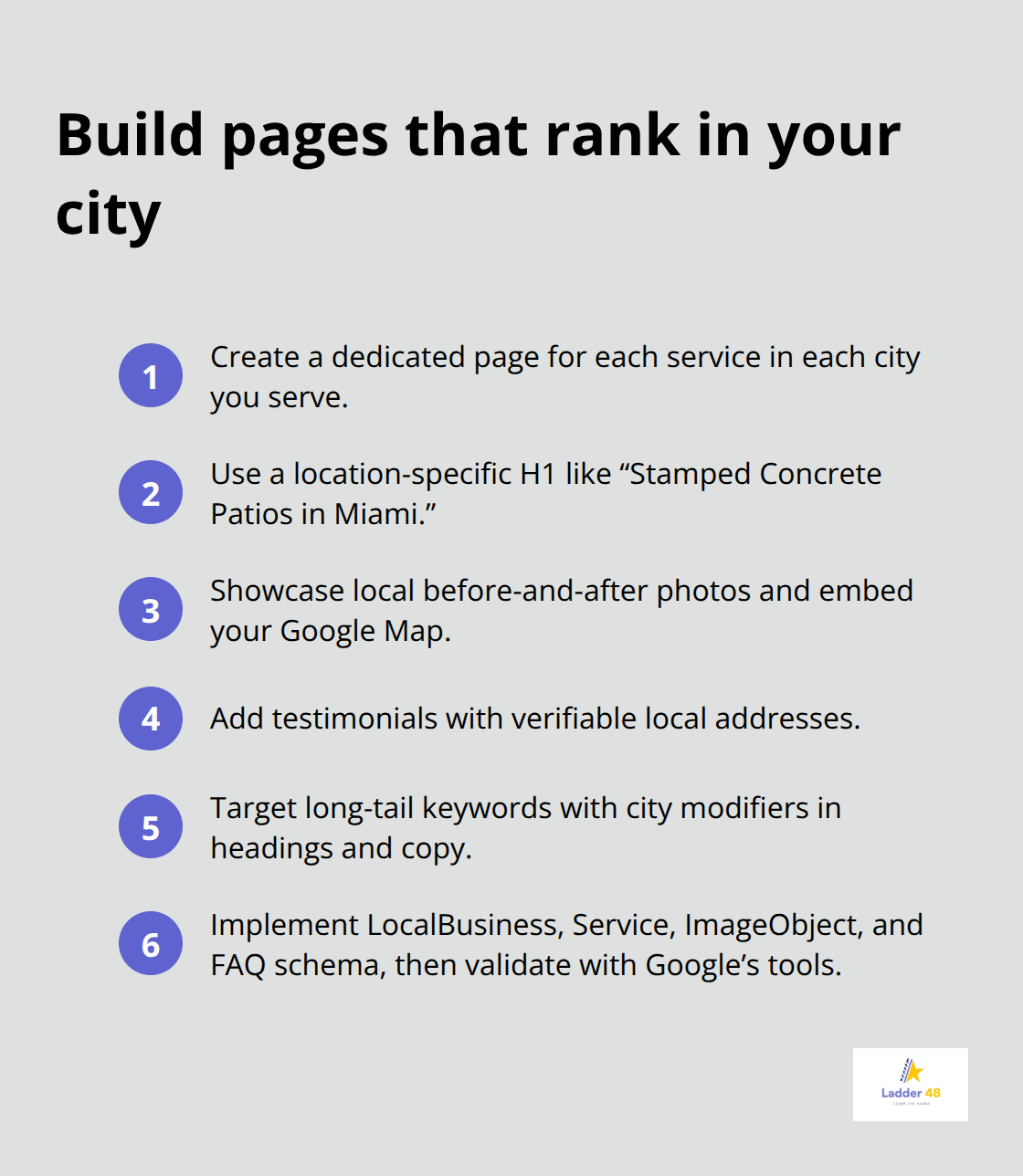
Include before-and-after photos from projects in that specific city, embed your Google Maps location, and feature testimonials from clients with verifiable addresses in that area. Location-specific service pages generate 167% more organic traffic than generic service pages according to industry case studies tracking concrete contractor rankings.
Optimize Page Structure for Local Keywords
The page structure matters equally. Your H2 subheading should answer a specific local question like How Much Does a Stamped Concrete Patio Cost in Miami, not a generic question. Target long-tail keywords with local modifiers throughout the page naturally in your headings, first paragraph, and FAQ section.
A Miami contractor should target queries like concrete patio contractors near me, best stamped concrete in Miami, and driveway repair Miami cost rather than competing nationally for vague terms like concrete patio design. This approach focuses your traffic on prospects who actually live in your service area and can hire you immediately.
Implement Schema Markup for Search Visibility
Structured data transforms how search engines understand your business information. Google relies on schema markup to populate the Local Pack-those three business results that appear above organic listings. Without proper schema implementation, your business information remains invisible to Google’s ranking algorithm.
Install LocalBusiness schema on your homepage and Service schema on each service page. Include your business name, phone number, service area, and business hours in the code itself, not just on the page visible to users. Add ImageObject schema to your before-and-after galleries so Google understands these are project images tied to your services.
Use Google’s Structured Data Markup Helper to implement this correctly without coding knowledge. Concrete contractors using complete schema markup see their Local Pack visibility increase by roughly 40% compared to those without it.
Capture Voice Searches with FAQ Schema
FAQ schema matters significantly. If your Miami driveway repair page answers questions like What causes concrete cracks in Florida humidity or How often should I seal my driveway in Miami, format these as actual FAQ sections with proper schema. These FAQs capture voice searches and featured snippet opportunities that drive additional traffic.
Test your schema implementation with Google’s Rich Results Test to confirm it’s working. Broken or incomplete schema provides zero benefit, so validation is non-negotiable. Once your pages rank locally and capture qualified leads, the next step involves building trust through reviews and citations that reinforce your authority across your entire service area.
Three Tactics That Dominate Local Search
Claim and Optimize Your Google Business Profile
Your Google Business Profile stands as the single most important asset you control in local search. Claim it immediately if you haven’t already, then complete every section without exception. Upload at least 10 high-quality photos that show completed projects, your team at work, and your business location. Add your business hours, service areas, phone number, and website. Most contractors stop here and wonder why they don’t rank. The real work starts after you claim your profile.
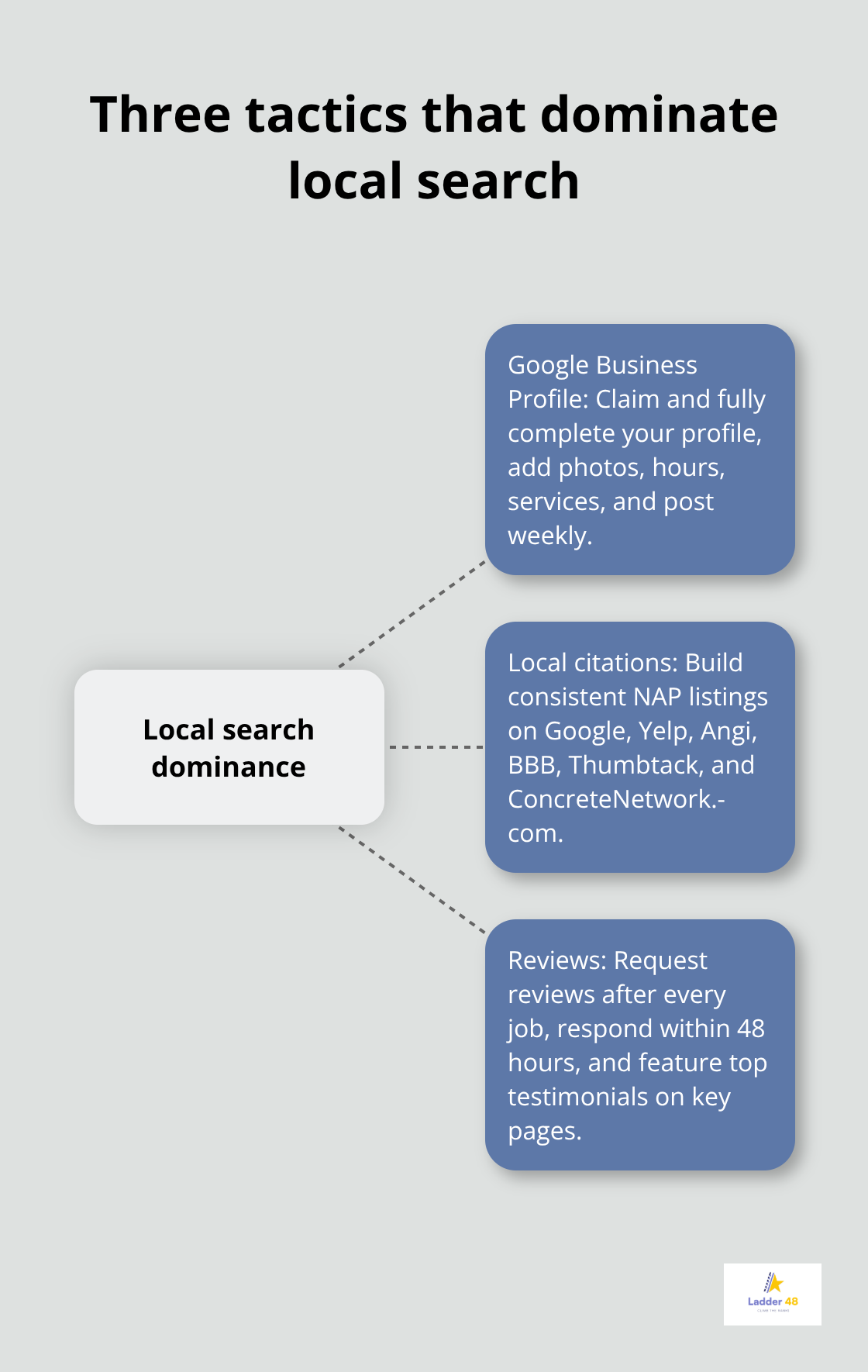
Post on your profile weekly with project updates, seasonal tips, or service announcements. Google’s algorithm treats active profiles differently than abandoned ones. A contractor who posts weekly receives roughly 40% more visibility in local search results than one who posts monthly. Update your profile description with concrete keywords naturally woven in, like stamped concrete patios, driveway repair, and foundation work, but avoid keyword stuffing that makes the text unreadable.
Respond to every review within 48 hours, whether positive or negative. This signals to Google that your business is actively managed and customer-focused. Include your service area boundaries clearly so Google understands exactly where you operate. If you serve Miami, Tampa, and Jacksonville, list all three cities explicitly rather than vague language like Central Florida.
Build Local Citations Across Industry Directories
Local citations transform how Google perceives your authority across your service areas. Citations are mentions of your business name, address, and phone number on other websites, and they matter far more than most contractors realize. Build citations on Google, Yelp, Angi, Better Business Bureau, Thumbtack, and ConcreteNetwork.com. Ensure your name, address, and phone number match exactly across every platform. A single inconsistency damages your local rankings. If your website lists your phone as 555-123-4567 but Yelp shows 555-123-4568, Google treats these as different businesses and splits your ranking authority.
Audit your citations quarterly to catch and fix these errors. This consistency work pays dividends in local search performance. Contractors with accurate citations across multiple directories outrank competitors with incomplete or inconsistent information.
Generate Reviews from Satisfied Customers
Generate reviews systematically after every completed project. Send a follow-up email within 24 hours of job completion with a direct link to your Google review form. Don’t ask for five-star reviews or mention specific ratings. Ask satisfied customers to share their honest experience. Contractors with 50+ Google reviews rank significantly higher than those with fewer than 10. A contractor in a competitive market needs roughly 15% of completed projects to convert into Google reviews to maintain competitive visibility.
Train your team to ask for reviews at peak satisfaction moments, like when the customer first inspects finished work. Make this request part of your standard project closeout process, not an afterthought. Feature your best reviews on your website homepage and service pages next to customer testimonials. This builds trust with new prospects and signals social proof to Google’s algorithm. Respond professionally to negative reviews by acknowledging the issue and offering to make it right offline. This response becomes public and shows potential customers that you stand behind your work.
Final Thoughts
Local SEO isn’t optional for concrete contractors anymore. The contractors dominating their markets right now claimed their Google Business Profile, built location-specific service pages, and systematically collected reviews from satisfied customers. These three tactics work because they align with how Google ranks local businesses and how homeowners actually search for concrete services.
The concrete company SEO strategies in this guide aren’t theoretical-they’re based on what’s working in real markets for contractors who’ve implemented them. A contractor in Miami who builds dedicated pages for stamped concrete patios, driveway repair, and foundation work in their specific city outranks a competitor with generic pages every single time. A contractor who posts weekly on their Google Business Profile and responds to reviews within 48 hours signals to Google that their business stays active and customer-focused.
Every month you delay hands your market share to competitors who don’t wait. If managing local SEO feels overwhelming or you lack the time to execute these tactics properly, partnering with SEO experts who understand the concrete contracting industry accelerates your results significantly.


