Concrete contractors lose leads every day because potential customers can’t find them online. Local search is where most people look when they need concrete work done, and if your site isn’t optimized, your competitors are capturing those jobs.
At Ladder 48, we’ve built this concrete company SEO guide to show you exactly how to rank higher in local search results and attract qualified leads to your business.
Why Local SEO Matters for Concrete Contractors
Local Search Captures Half of All Online Inquiries
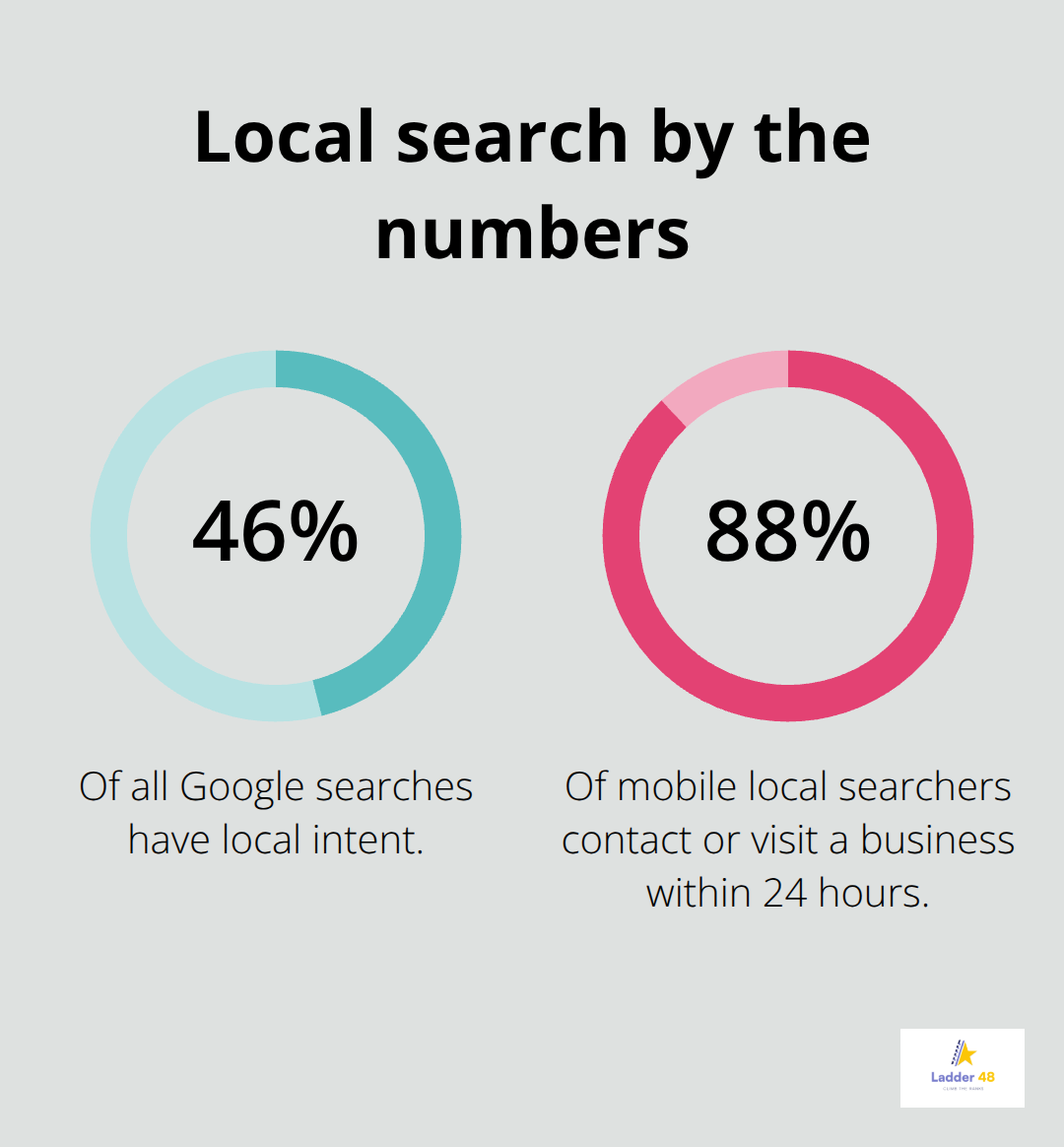
About 46% of all Google searches have local intent, according to Google’s own data. That means nearly half of everyone searching online looks for a service or product near them. For concrete contractors, this statistic translates directly to opportunity.
When homeowners search for driveway repair, stamped concrete, or foundation work, they search locally. If your site doesn’t appear in those local results, you remain invisible to the exact people ready to hire you.
The Google Map Pack Dominates Click-Through Rates
The Google Map Pack-those three business listings at the top of local search results-captures about 3 times more clicks than organic results below it. This isn’t a secondary ranking position. This is where phone calls originate. Without local SEO, your competitors capture the leads that should reach your business instead.
Mobile Users Convert Fast
Mobile search intensifies this urgency. On mobile devices, 88% of local searchers contact or visit a business within 24 hours, according to Google data. People don’t casually browse. They actively search to hire someone today. Your Google Business Profile must be complete, active, and trustworthy because it often represents your first and only impression on potential customers.
Citations and Trust Signals Work Together
A properly optimized Google Business Profile with recent photos, consistent business information, and strong customer reviews signals to Google that you operate as a legitimate, active contractor in your area. Local citations-your business name, address, and phone number listed consistently across directories like Yelp, BBB, HomeAdvisor, and Angi-reinforce that trust signal. Google uses these citations to verify you operate as a real business in a real location. Without them, you ask Google to rank you based on incomplete information.
Authority Signals Beat Generic SEO Tactics
The combination of a strong Google Business Profile, consistent citations, and positive reviews creates a local authority signal that outranks generic, broad-based SEO tactics alone. These three elements work together to tell Google you’re a legitimate, trustworthy contractor worth showing to local searchers. Now that you understand why local SEO matters, the next step involves building the technical foundation that supports these local signals.
Build the Technical Foundation That Local SEO Requires
Mobile Optimization Determines Your Local Visibility
Google’s algorithm rewards fast, mobile-friendly websites with better rankings, and concrete contractors who ignore this reality watch slower competitors capture their leads. We’ve seen countless contractor sites lose Map Pack visibility because their pages take over 3 seconds to load or don’t display properly on phones. Mobile optimization isn’t optional anymore-it’s the baseline expectation. Google prioritizes mobile-first indexing, meaning the search engine crawls and ranks your site based on how it performs on mobile devices first, not desktop. If your site loads slowly on a phone or forces visitors to pinch and zoom to read your content, Google pushes you down in rankings.
Test your site speed using Google PageSpeed Insights and try for a score above 75. Pages loading in under 2 seconds see significantly higher conversion rates than slower pages, and mobile users especially won’t wait around. Compress images aggressively, remove unused code, and leverage browser caching to cut load times. Your Google Business Profile photo gallery matters too-optimize those images for mobile viewing because 88% of local searchers use phones when they contact businesses within 24 hours of searching.
Structured Data Markup Clarifies Your Business Information
Structured data markup tells Google exactly what information appears on your pages, which strengthens your local SEO foundation considerably. Use Local Business Schema from Schema.org to mark up your business name, address, phone number, service areas, and reviews directly in your code. Google’s Structured Data Markup Helper makes this process straightforward even if you’re not technical. When Google understands your data clearly, it displays rich snippets in search results-extra information like your phone number, hours, and rating appear directly in listings, which increases click-through rates.
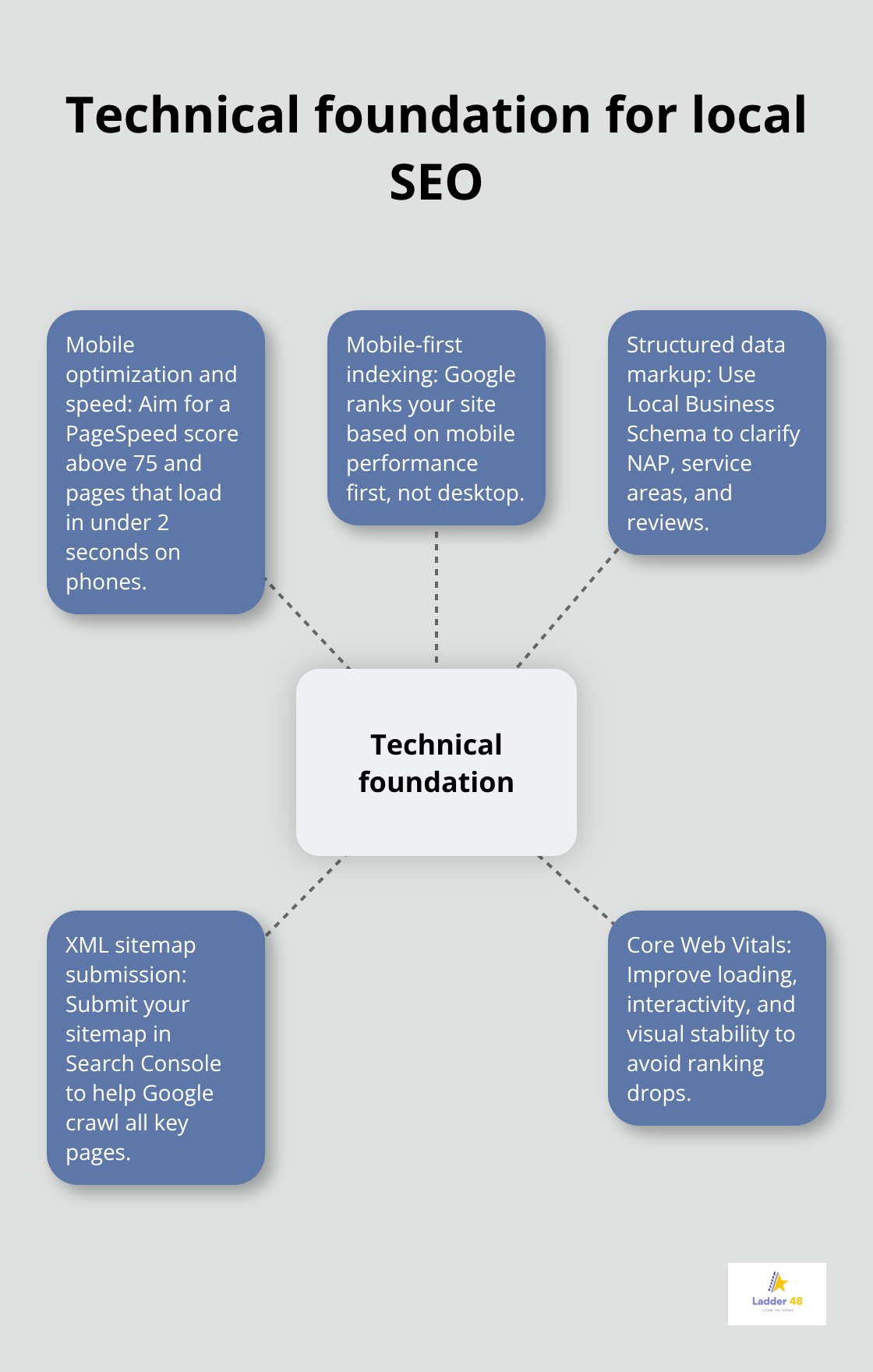
XML sitemaps serve a similar purpose (they give Google a roadmap of every page on your site, including service pages, location pages, and blog posts). Submit your XML sitemap to Google Search Console so Google crawls your site efficiently.
Core Web Vitals Impact Your Competitive Position
Core Web Vitals measure three specific aspects of how visitors experience your site: loading speed, interactivity, and visual stability. Poor Core Web Vitals trigger ranking penalties, particularly for mobile search. Focus on these three metrics to stay competitive in local results where your concrete contractor competitors fight for the same leads you need. These technical elements form the backbone that supports your local SEO strategy, but they only work when paired with the tactical moves that actually generate qualified leads from local searchers.
How to Rank Higher with Citations, Keywords, and Reviews
Citations Establish Credibility Across Directories
Local citations form the fastest path to credibility with Google. Your business name, address, and phone number must appear consistently across Yelp, BBB, HomeAdvisor, Angi, Google My Business, and your local Chamber of Commerce. Inconsistencies between listings confuse Google’s algorithm and damage your rankings. A contractor in Denver with their address listed as 123 Main Street on Yelp but 123 Main St on BBB signals unreliability to search engines. Google penalizes this confusion with lower rankings.
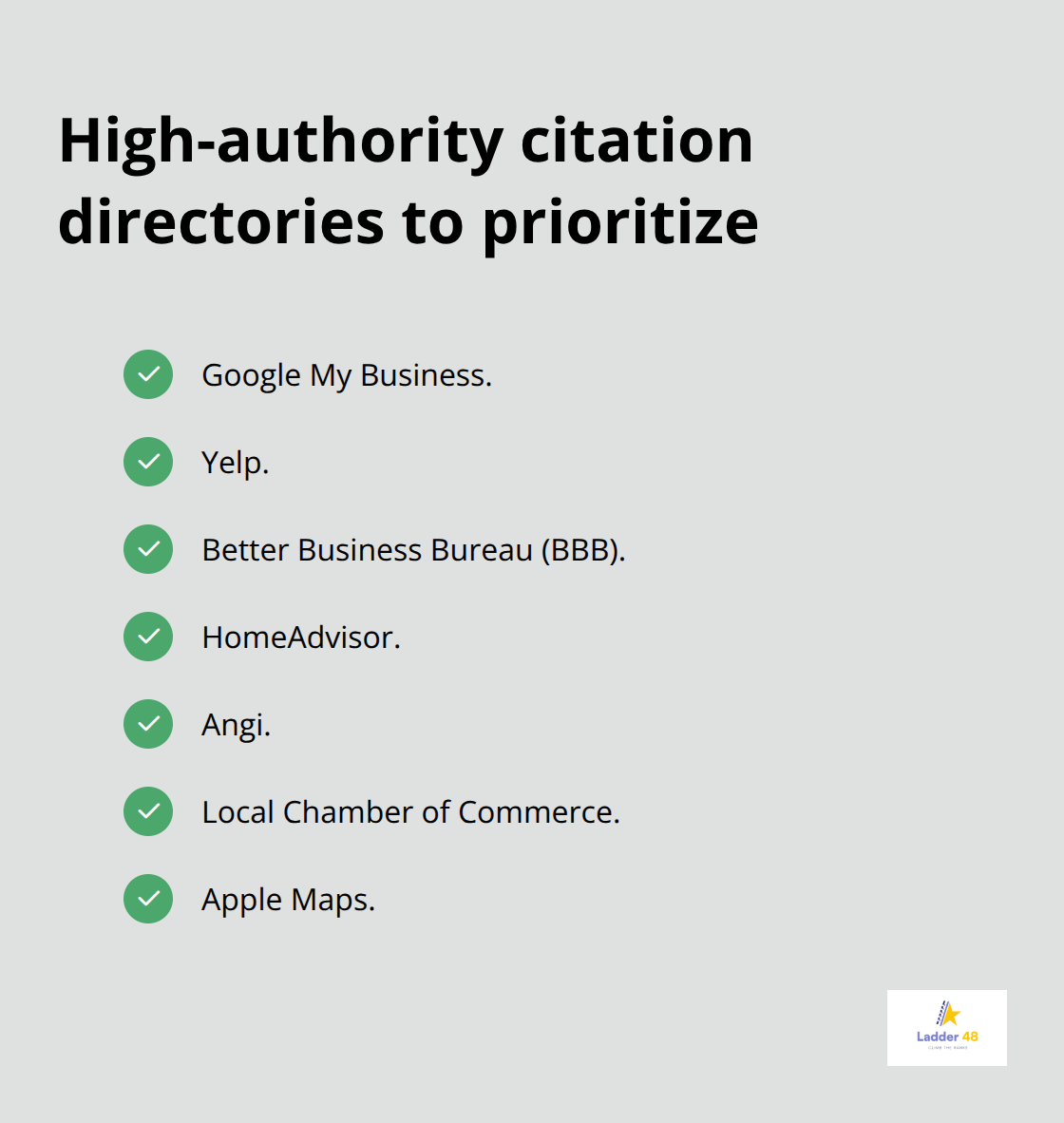
Start by auditing where your business currently appears online. Search your business name plus each directory name to find existing listings, then claim and optimize your Google Business Profile, then verify them. Prioritize the seven most authoritative directories first: Google My Business, Yelp, BBB, HomeAdvisor, Angi, your local Chamber of Commerce, and Apple Maps. Each citation acts as a trust signal that tells Google you operate legitimately in your service area.
A concrete contractor with citations across all seven directories outranks competitors with incomplete information, even if those competitors have stronger backlinks.
Geographic Keywords Drive Qualified Local Traffic
Geographic keywords matter far more than generic ones. Homeowners don’t search for concrete contractors broadly-they search for concrete driveway repair in Denver, stamped concrete near me, or foundation repair in Boulder. Research shows “concrete driveway” attracts about 118,800 yearly searches with very hard ranking difficulty, while “concrete driveway cost” in specific cities drops to 52,800 yearly searches with hard difficulty. This means location-specific cost pages rank faster and attract more qualified leads.
Create dedicated service pages for each major city you serve, not generic pages. A page titled “Concrete Driveway Cost in Denver” ranks better than “Concrete Driveway Cost” everywhere. Include your city name in page headings, the first paragraph, and meta descriptions naturally. Build FAQ sections that answer questions like “How much does a concrete driveway cost in Denver?” or “How long does stamped concrete last?” These long-tail questions show strong search intent and lower competition than broad terms.
Reviews Influence Rankings and Conversions Simultaneously
Customer reviews directly influence Map Pack rankings and conversion rates at the same time. Google’s research confirms reviews rank in the top three factors for local visibility. A contractor with 50+ recent reviews dominates the Map Pack against competitors with ten reviews, regardless of other signals.
Generate reviews systematically after every completed job. Send a text or email with a direct link to your Google review page within 24 hours of project completion (when satisfaction runs highest). Try for 10-15% of customers leaving reviews monthly. Respond to every review within 48 hours, addressing negative feedback professionally and thanking positive reviewers. Each reply should reference specific project details or customer concerns rather than use copy-paste responses. This engagement signals active management and builds trust with potential leads reading your profile.
Final Thoughts
Local SEO success for concrete contractors requires consistent execution across three interconnected areas: technical foundations, citation management, and review generation. You now understand why local search matters, how to build the technical infrastructure that supports rankings, and which tactical moves generate qualified leads from your service area. This concrete company SEO guide provides the roadmap, but implementation determines your actual results.
Start your audit today by checking where your business appears online, verifying your Google Business Profile is complete and active, and measuring your current page speed and mobile performance. Identify which directories list your business with inconsistent information and correct those citations immediately. Pull your recent customer reviews and establish a system to request reviews after every completed job.
Most concrete contractors see meaningful Map Pack movement within 60 to 90 days when they execute these tactics consistently (larger markets may require four to six months). If you lack the time or expertise to implement this strategy yourself, we at Ladder 48 specialize in helping contractors build stronger online presence and achieve sustainable growth through transparent, results-driven SEO.