
Most electricians focus on ranking for service keywords but miss entire categories of content that customers actively search for. These content gaps cost you visibility and potential jobs to competitors who’ve already filled them.
At Ladder 48, we’ve analyzed hundreds of electrical businesses and found that identifying and filling electrician SEO content gaps is one of the fastest ways to capture local search traffic. This guide shows you exactly where those gaps are and how to fill them.
Where Your Competitors Are Winning the Search Results
Search Intent Separates Winners From Struggling Electricians
Search intent separates electricians who capture consistent local leads from those who struggle month after month. When a homeowner types “electrician near me” versus “why does my breaker keep tripping,” they’re not looking for the same content. The first query demands immediate action-a business name, phone number, and service area. The second query requires education. Most electrical contractors build websites around the first intent and ignore the second entirely, leaving competitors to rank for informational queries that build trust and eventually convert into jobs. Electricians who rank for both transactional and educational content capture 3 to 4 times more organic traffic than those focused solely on service pages.
Competitors Capture Searches You Don’t Know Exist
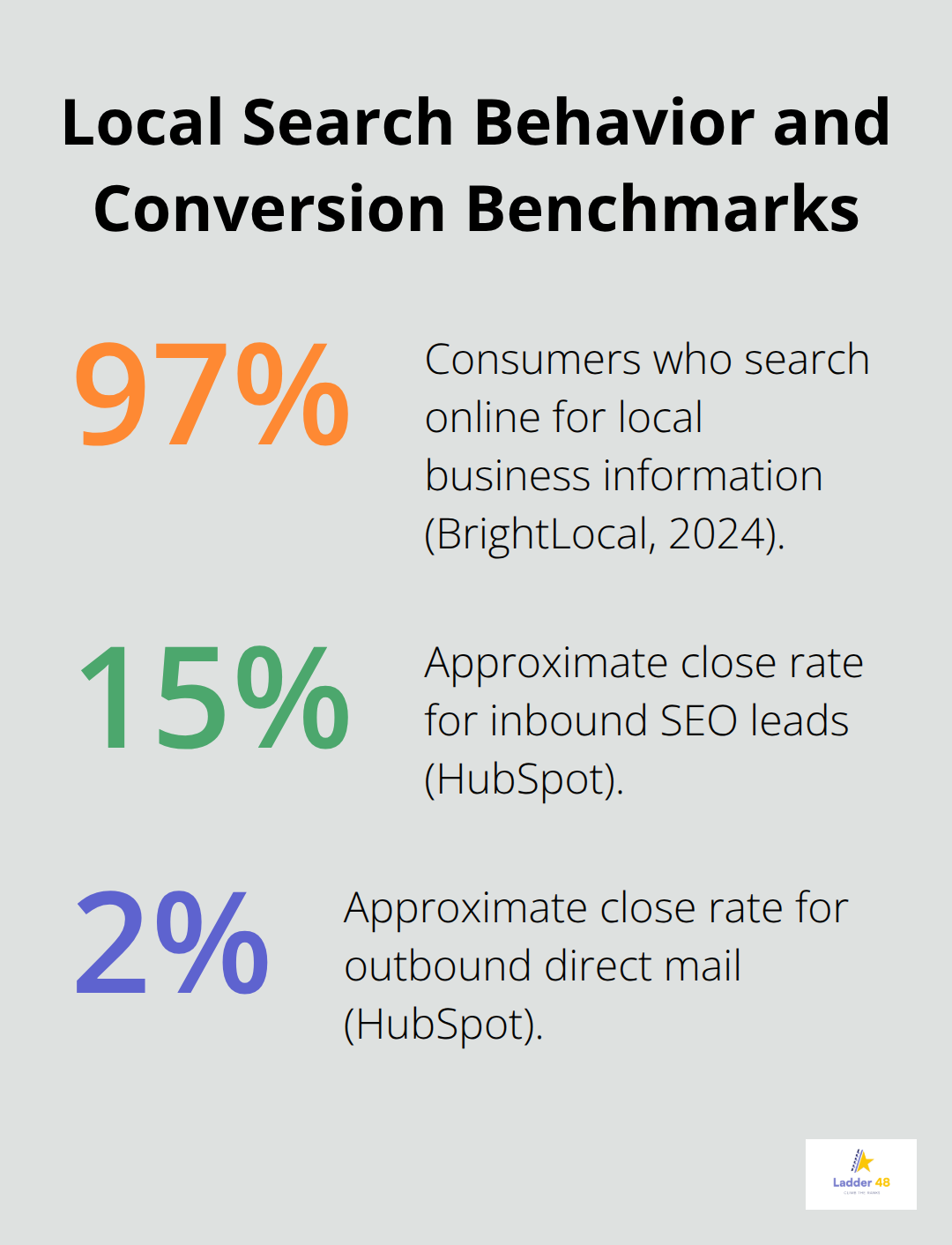
If a competitor ranks for “EV charger installation in Denver” but you don’t, they’re capturing calls you never knew existed. The same applies to seasonal content like “winter electrical safety checklist” or problem-solving pages such as “outlets not working in one room.” These gaps exist because most electricians assume their service pages cover everything. They don’t. According to BrightLocal’s Local Consumer Review Survey 2024, 97% of consumers used the internet to find information about local businesses, yet they’re searching for far more specific topics than your homepage addresses. Your competitors filling these gaps aren’t necessarily spending more on ads-they’re simply publishing content that answers the exact questions your potential customers are typing into Google. When someone searches for “how to tell if my electrical panel needs an upgrade,” they’re ready to learn, and if your site doesn’t answer that question, a competitor’s will.
Real Search Data Reveals Gaps That Guessing Misses
The fastest way to identify content gaps is to compare what you rank for against what customers actually search for in your service areas. Google Search Console shows you the queries people use to find your site and your current ranking position for each one. If you rank in positions 15 to 30 for high-intent keywords like “emergency electrician in [your city],” that’s a ranking opportunity, not a content gap. Content gaps appear when you have zero impressions for searches that happen 50, 100, or 500 times per month in your area. For example, if “electrical panel inspection cost” generates 120 monthly searches in your market but you rank nowhere for it, that’s a gap. Tools like Google Keyword Planner and SEMrush (starting around $129 per month) let you identify these gaps by showing search volume for service-related and informational keywords. The most reliable method combines your Google Search Console data with local keyword research specific to your service areas, filtering for intent that matches your business model. If you only serve residential customers, ranking for “commercial electrical contractor” wastes effort.
High-Intent Keywords Convert Far Better Than General Searches
High-intent keywords-searches like “emergency electrician open now” or “EV charger installation [city]”-convert at rates far higher than general informational searches. These queries indicate someone needs your service today or this week. Inbound SEO leads close at about 14.6% according to HubSpot research, compared to 1.7% for outbound direct mail.
Yet electricians often neglect these high-intent opportunities because they’re harder to rank for and require more targeted content. A competitor who publishes a detailed service page optimizing for “panel upgrade cost [your city]” combined with a Google Business Profile post about current panel upgrade promotions will dominate your local search results. The gap isn’t always missing content-sometimes it’s content that exists but ranks poorly because it lacks local specificity, proper schema markup, or clear conversion elements like a phone number and service area statement.
What Comes Next: Finding Your Specific Opportunities
Identifying gaps is only half the battle. The electricians who win are those who act on what they find, turning those gaps into high-performing pages that capture both traffic and calls. The next section shows you exactly which content topics perform best for electrical contractors and how to structure them for maximum impact.
High-Performing Content Topics for Electricians
Emergency Repair Pages Convert Faster Than Any Other Content Type
Emergency repair pages dominate local search because homeowners searching for them need your service immediately. A homeowner typing “emergency electrician open now” or “water heater breaker tripping” isn’t researching-they’re in crisis mode. These pages generate 3 to 5 times more calls per month than general service pages because the intent is immediate and urgent.
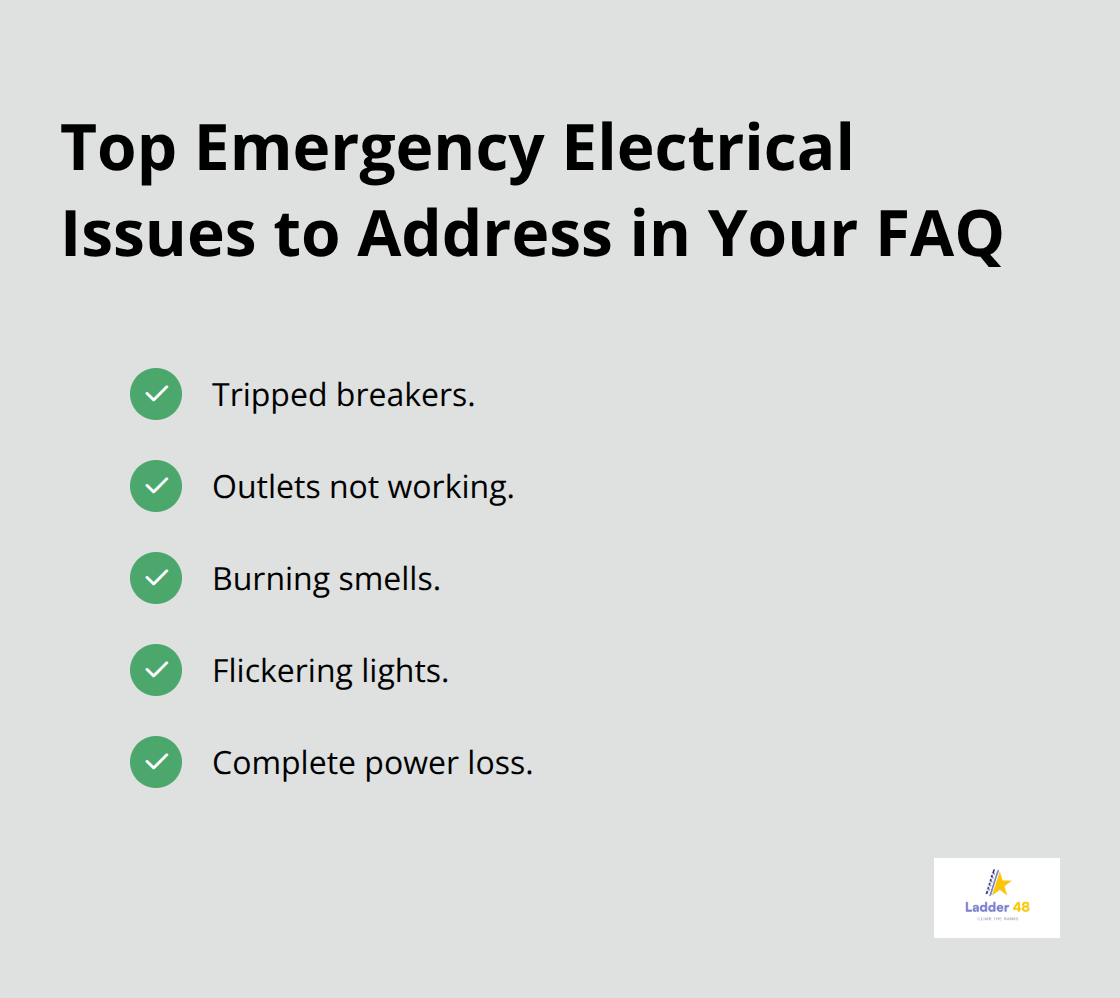
Your emergency page needs a prominent phone number in the header, your availability status (24/7, after-hours rates), response time guarantee, and a clear statement of what qualifies as an emergency. Include an FAQ section answering the top 5 problems that drive emergency calls in your area: tripped breakers, outlets not working, burning smells, flickering lights, and complete power loss. Each answer should run 100 to 150 words, explaining the problem in plain language, why it’s dangerous, and why the homeowner needs a professional now rather than scheduling service next week.
Google’s Local Consumer Review Survey 2024 shows 97% of consumers search for local business information online, and emergency searches convert at significantly higher rates than any other category. Structure this page with LocalBusiness and Service schema markup so Google understands you offer 24/7 emergency service in your area. Include a section with your licensing number, insurance details, and response time guarantees-these trust signals reduce hesitation for someone panicking about electrical problems.
Seasonal and Maintenance Content Captures Predictable Annual Searches
Seasonal and maintenance content captures searches that happen predictably every year but that most electricians ignore entirely. Winter electrical safety, spring outlet inspections, summer air conditioning electrical load checks, and fall heating system inspections all generate consistent search volume in your market.
Create a dedicated seasonal maintenance guide for each quarter, targeting keywords like “winter electrical safety checklist [your city]” or “spring electrical inspection checklist.” These pages rank because they’re specific, timely, and answer questions homeowners ask during those months. Each guide should include 5 to 7 actionable maintenance tips, the cost range for professional inspections in your area, and a clear call-to-action for scheduling a service appointment.
Local Electrical Code Pages Build Authority and Trust
Local electrical code compliance pages separate electricians who build authority from those who remain invisible. Most homeowners don’t understand code requirements for panel upgrades, EV charger installations, or bathroom electrical work.
Publish a page titled something like “Electrical Code Requirements for [Your City]” that explains what code applies locally, why code compliance matters (safety, insurance, resale value), and which upgrades require permits. Include specific examples: bathroom outlets within 6 feet of water sources need GFCI protection, panel upgrades require permits and inspections, and EV chargers need dedicated circuits. This content positions you as the expert and captures searches from homeowners who’ve been told their electrical setup is non-compliant and need guidance. Link this page from your service pages so customers understand why a particular upgrade requires professional installation and proper permitting.
These three content categories-emergency services, seasonal maintenance, and code compliance-form the foundation of a gap-filling strategy that captures both high-intent and educational searches. The next section shows you how to structure and optimize each type of content so it ranks and converts.
How to Build Service Pages That Actually Convert Calls
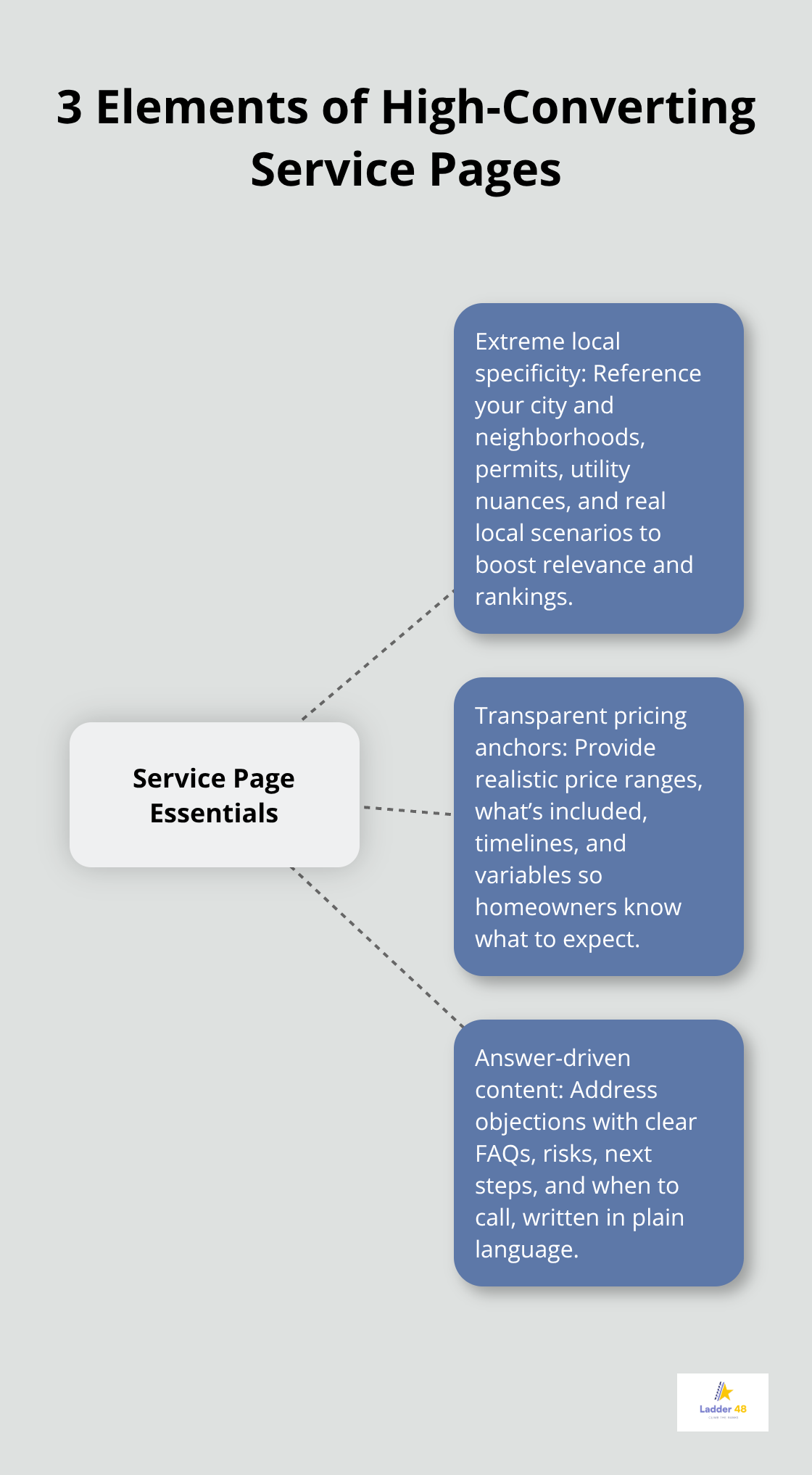
Your service pages determine whether someone calls you or your competitor. Most electricians write generic descriptions that could apply to any contractor in any city, then wonder why they don’t rank or convert. High-converting service pages share three structural elements: extreme local specificity, transparent pricing anchors, and answer-driven content that addresses the exact objections homeowners have before they pick up the phone.
Craft Titles and Descriptions That Drive Clicks
Start with your page title and meta description. Instead of “Service Electrician Near Me,” use something like “Emergency Electrical Repair in Denver” or “Panel Upgrade Cost in Aurora Colorado.” Your H1 should match your primary keyword and include your city name. The meta description should state your service area explicitly, mention a key trust signal like your license number or 24/7 availability, and include a phone number if space allows. Google Search Console data shows that pages with phone numbers in meta descriptions increase click-through rates by 8 to 12 percent because homeowners see you’re reachable before they click.
Open With Facts, Not Marketing Promises
Structure your page with an opening paragraph that answers the question homeowners actually have: What does this service cost, how long does it take, and do I need it? A panel inspection page should open with something like “Panel inspections typically cost between $150 and $300 depending on your panel age and size, take about 45 minutes, and are required if you’re selling your home or upgrading your electrical system.” Skip the marketing fluff. Homeowners searching for this service want facts, not promises.
Include an FAQ section with 6 to 10 questions specific to that service. For a panel upgrade page, answer questions like “How do I know if my panel needs an upgrade?” “What’s the difference between a 100 amp and 200 amp service?” and “Can I upgrade my panel myself?” Each answer should run 150 to 200 words, written in plain language without electrical jargon. Add LocalBusiness and Service schema markup so Google understands your service area, pricing range, and availability. Include your licensing number prominently near your call-to-action. Research from Google shows that homeowners trust contractors who display credentials and licensing information more than those who hide it.
Create Separate Pages for Each Location You Serve
Expand to location-specific pages for each city or neighborhood you serve. If you serve Denver, Boulder, and Aurora, you need three separate panel upgrade pages, not one generic page with three city names stuffed into the content. Each location page should have a unique H1 with the city name, a paragraph explaining what makes electrical work different in that specific city or area, local testimonials from customers in that exact city, and a service area map showing your coverage zone. For example, a Boulder panel upgrade page might mention that Boulder has older homes with 60 amp service that frequently need upgrades for modern electrical demands, while an Aurora page might focus on newer construction with code-compliant service that simply needs capacity expansion for EV chargers or heat pumps.
Include a neighborhood-specific section if you serve a large metro area. This isn’t duplicate content if each page has genuinely different information, testimonials, and location-specific details. Use canonical tags pointing to your main service page to prevent confusion, but Google will index location pages as separate entities because the content and schema differ. Link location pages from your homepage and main service pages so customers in each area find the relevant version.
Test Location Pages Against Generic Versions
Test this approach: compare conversion rates on your generic service page against a location-specific version over 60 days. Most electricians see 2 to 3 times higher conversion rates on location pages because the content speaks directly to their neighborhood and addresses local concerns (this difference compounds when you publish multiple location pages across your service territory).
Final Thoughts
Filling electrician SEO content gaps transforms how homeowners find you online. The electricians dominating local search rank for emergency repairs, seasonal maintenance guides, code compliance information, and location-specific service pages that convert calls at 14.6% rates. Your competitors aren’t outspending you-they’re simply publishing content that answers the exact questions homeowners type into Google, and you can do the same by starting with Google Search Console to spot keywords generating impressions but no clicks.
Start with emergency service pages because they convert fastest, then move to seasonal and code compliance content. Create separate location pages for each city you serve rather than generic versions, and test these pages against your current content over 60 days (most electricians see 2 to 3 times higher conversions on location-specific pages). Audit your competitors’ content using SEMrush to spot topics they rank for that you don’t, then prioritize the gaps that match your service model and local market.
We at Ladder 48 help electricians fill electrician SEO content gaps at scale through technical audits, keyword research, and content strategy tailored to competitive markets. Our approach combines transparent, results-driven SEO with the specific challenges contractors face when competing for local visibility. Contact Ladder 48 to see how we help contractors turn content gaps into booked jobs.


