Concrete finishing contractors lose jobs every day to competitors who rank higher on Google. Most don’t have a concrete finishing SEO plan, which means they’re invisible to homeowners and property managers searching for their services.
At Ladder 48, we’ve helped dozens of concrete contractors dominate local search results and book more jobs. This guide shows you exactly how to optimize your service pages, build local authority, and capture the jobs in your area.
Service Pages That Convert Concrete Jobs
Your service pages are where high-intent customers land after searching for concrete finishing. These aren’t generic pages about what concrete finishing is-they’re conversion machines designed to capture local jobs. Start with keywords that show buying intent. Searches like “polished concrete floors near me” or “concrete sealing in Denver” indicate someone ready to hire, not just research. These high-intent keywords convert at 3 to 5 times the rate of broad terms like “concrete finishing.” Tools like SEMrush and Ahrefs reveal monthly search volume for these terms in your area. If “stamped concrete patios in [your city]” receives 50 searches monthly with low competition, that’s your target.
Build Dedicated Pages for Each Service
Create a dedicated page for each service you offer-polishing, staining, sealing, decorative concrete, and epoxy floors. Each page should focus on one service and include location modifiers that match where you operate. A page titled “Polished Concrete Floors in Denver and Centennial” pulls in both the service intent and local geography.
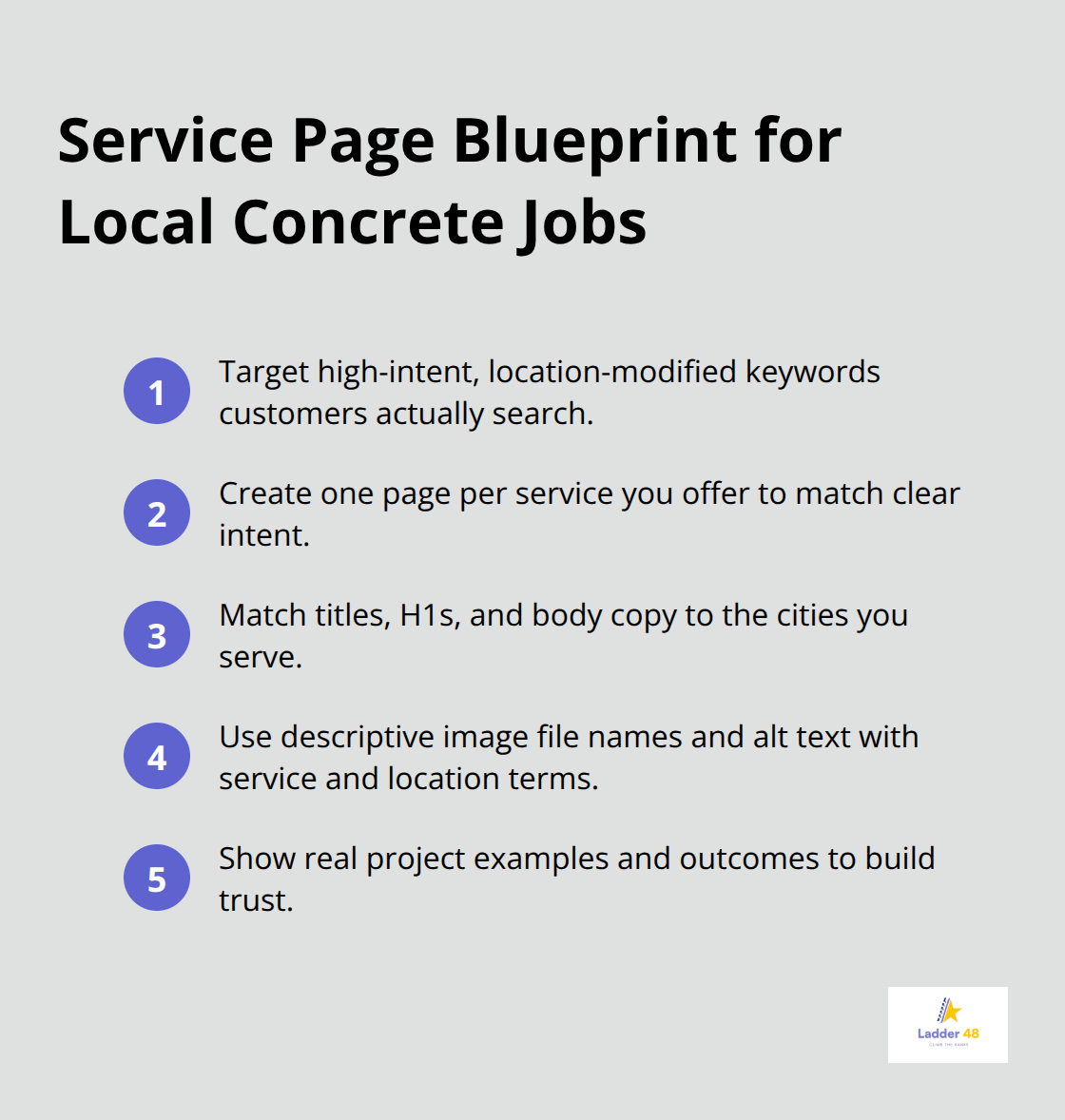
This structure tells Google exactly what you do and where you do it. Without this specificity, your pages compete against every concrete finishing contractor nationwide instead of dominating your local market.
Why Local Modifiers Matter
Concrete contractors who skip local keywords waste traffic. When someone searches “concrete finishing,” Google shows results from across the country. When they search “concrete finishing in [your city],” they’re ready to call someone local. Your service pages must include these geographic modifiers in the title tag, first heading, and throughout the body. Don’t force keywords unnaturally-weave them into descriptions of your work. For example, instead of listing “concrete finishing services,” write “We provide polished concrete, stamped concrete, and epoxy floor finishing for residential and commercial projects across Denver, Centennial, and Aurora.” This approach captures location-based searches while staying readable.
Expand Across Multiple Locations
Include service area pages for neighborhoods within your region if you cover multiple cities. A contractor serving the Denver metro should create separate pages for Aurora, Littleton, and Centennial, each optimized for local intent. Research shows that contractors with location-specific pages rank higher for those areas than those with a single generic service page. Your alt text on project photos should also include location and service type: instead of “concrete-project-1.jpg,” use “polished-concrete-basement-denver.jpg.” These details accumulate across your site and signal to Google that you’re the local authority for your services.
Optimize Images for Search and Conversion
High-quality project photos with optimized alt text and file names strengthen both your SEO and your ability to convert visitors into leads. Each image you upload represents an opportunity to reinforce your local focus and service expertise. The next section covers how to build authority through before-and-after galleries and location pages that work together to establish your concrete finishing business as the go-to choice in your market.
Dominate Local Search Results for Concrete Finishing
Claim and Optimize Your Google Business Profile
Your Google Business Profile stands as the single most powerful asset you own for local concrete finishing jobs. More than 46% of Google searches carry local intent, and concrete finishing searches are predominantly local because customers want someone nearby who can deliver fast. Claiming and fully optimizing your profile takes less than an hour but generates qualified leads for months.
Start by visiting google.com/business and claiming your listing if you haven’t already. Verify ownership through the postcard Google sends to your business address. Once verified, complete every field without shortcuts. Your business name must match exactly what appears on your invoices and website.
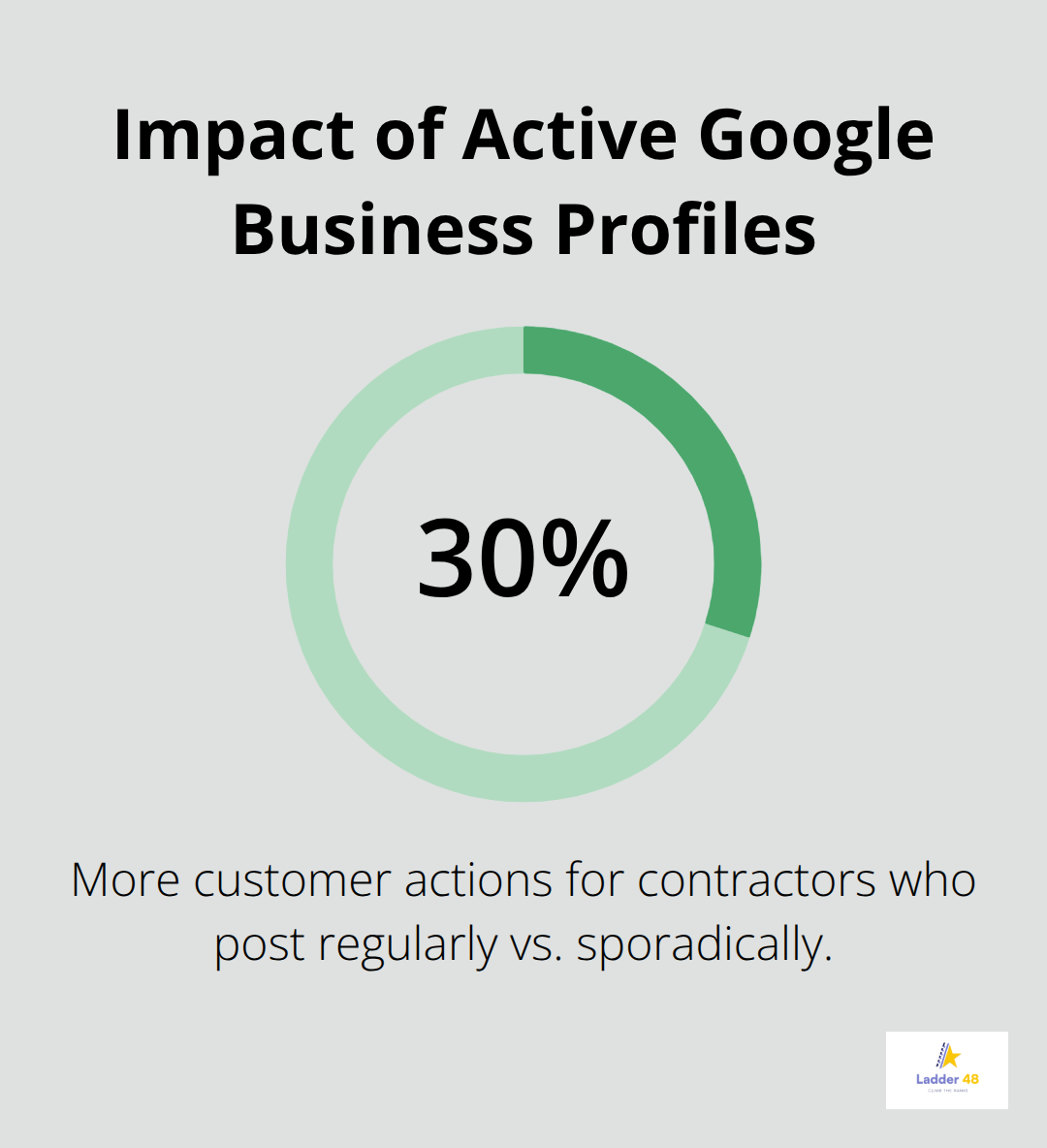
Add your service areas explicitly-don’t rely on a single address to tell Google where you operate. If you serve Denver, Aurora, and Centennial, list all three in the service area section. Upload high-quality photos of your finished projects, your team, and your workspace. Concrete finishing is visual work, so poor photos signal poor craftsmanship. Update your profile weekly with posts about completed projects or seasonal offers. Google rewards active profiles with better visibility in the map pack, which appears above organic search results. Contractors who post regularly see 30% more customer actions like calls and direction requests compared to those who post sporadically.
Build Citations Across Local Directories
Local directories beyond Google matter more than most contractors realize. Houzz, Angi, Yelp, and the Better Business Bureau all influence both rankings and customer trust. Your name, address, and phone number must match exactly across every platform-inconsistencies confuse search engines and hurt rankings.
Audit your current listings immediately by searching your business name plus your city on each platform. Many contractors find outdated addresses, incorrect phone numbers, or misspelled names that contradict their Google Business Profile. Use a listing management tool like Yext or BrightLocal to sync your information across directories automatically. This consistency signals to search engines that you operate a legitimate, established business.
Generate and Respond to Reviews Strategically
Reviews are your competitive advantage. Customers trust reviews more than any marketing message you could write, and Google treats review volume and recency as ranking signals. After completing a concrete finishing project, send customers a direct link to leave a review on your Google Business Profile within 48 hours while satisfaction is highest. This timing matters-reviews posted immediately after project completion carry more weight than those submitted months later.
Respond to every review, positive or negative, within 24 hours. A response shows you care about customer feedback and gives you a chance to address concerns publicly. Concrete finishing contractors with 40 or more reviews on Google rank significantly higher than those with fewer than 10 reviews in the same market. Try for one new review per week, which requires a system.
Train your team to ask for reviews at the moment of handoff, not in an email weeks later. Provide customers with a QR code or short link they can scan immediately to leave feedback. The easier you make the process, the higher your review rate will be. Once you establish this foundation of local authority through your profile, citations, and reviews, you’re ready to build deeper credibility through visual content and location-specific pages that showcase your expertise across multiple service areas.
Build Authority Through Visuals and Local Pages
Optimize Project Photos for Search and Conversions
Before-and-after photos serve as your strongest conversion tool, but only when you structure and optimize them correctly. Most concrete contractors upload random project images without considering how search engines read them or how they influence rankings. Each photo you publish should reinforce both your local focus and service expertise through file names and alt text. Rename files from generic names like concrete-project-1.jpg to descriptive, keyword-rich names such as polished-concrete-basement-denver.jpg or stamped-concrete-patio-aurora.jpg. Alt text should follow the same pattern, describing the project type, finish, and location in plain language. This approach serves dual purposes: search engines use alt text to understand image content and rank your pages higher for location-based searches, while visitors with accessibility needs receive accurate descriptions.
Organize Galleries by Service Type
Organize your galleries by project type rather than chronologically. Separate pages for polished concrete, stamped concrete, epoxy floors, and decorative concrete help visitors find relevant examples faster and reduce friction in the decision process. High-quality project photos increase time on page and reduce bounce rates, both ranking signals Google monitors closely. Include 15 to 25 photos per gallery minimum to demonstrate versatility and volume of completed work. Each project description should mention the specific finish applied, materials used, and the location where the work was completed. This repetition of location keywords across multiple pages and image descriptions accumulates into stronger local SEO signals than a single optimized page could generate.
Create Depth in Location-Specific Pages
Location pages require more depth than simple service pages. Create dedicated pages for each city or neighborhood you serve, but structure them around actual projects completed in those areas, not generic descriptions of your service. A page titled “Polished Concrete Floors in Denver” should include multiple project examples from Denver, customer testimonials from Denver-based clients, and specific details about local preferences or climate considerations that affect concrete durability. This content demonstrates genuine local expertise rather than a template applied to every market.
Build Backlinks from Local Sources
Backlinks from local construction publications, home improvement directories, and neighborhood-focused websites signal authority to Google and drive referral traffic. Identify local builders, architects, and landscapers in your service areas and pitch collaboration opportunities. Many local publications accept expert contributions on topics like concrete maintenance, finish selection, or seasonal care tips. A guest article in a regional home improvement publication that links back to your location page builds credibility and improves rankings simultaneously.
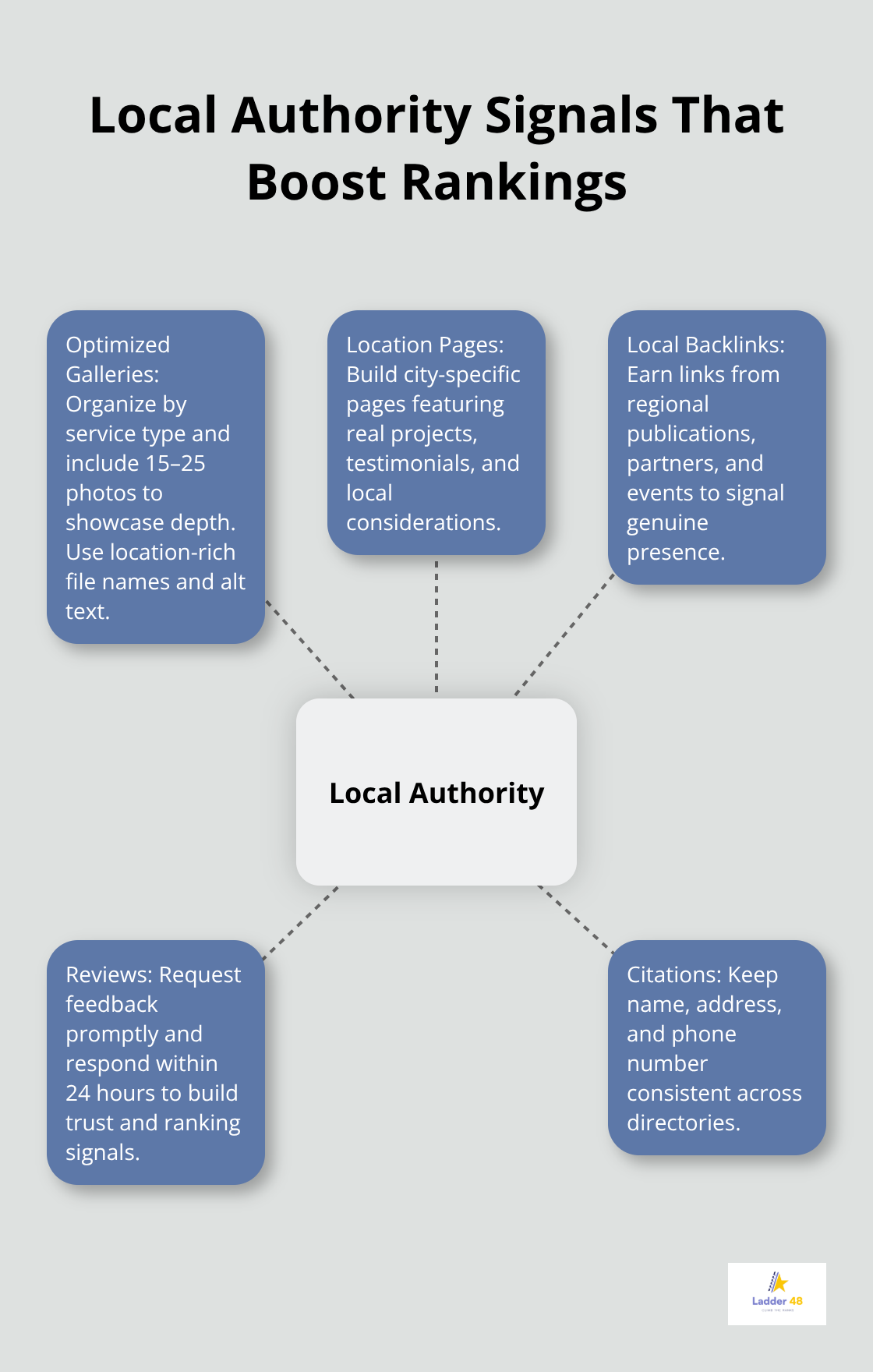
Sponsor local community events or home shows and request a link from the event website. These local connections generate backlinks that carry more weight than links from national sites because they signal genuine community presence.
Focus Resources on High-Performing Markets
Track which location pages drive the most phone calls and form submissions, then invest more content and link-building effort into those areas. Geographic performance varies significantly, and contractors who focus their authority-building efforts on high-performing markets see faster results than those spreading resources equally across all service areas.
Final Thoughts
Concrete finishing contractors who execute a concrete finishing SEO plan dominate their local markets while competitors fade into obscurity. Your Google Business Profile generates qualified leads for months once you claim it, complete every field, and post weekly project updates. Location-specific service pages that target customers ready to hire someone local convert at significantly higher rates than generic pages, so add geographic modifiers to each one and watch your phone ring more often.
Citations across Houzz, Angi, Yelp, and the Better Business Bureau must match your Google Business Profile exactly-inconsistencies hurt rankings and confuse potential customers. A review generation system that requests feedback within 48 hours of project completion produces results that contractors with sporadic review requests never achieve. Contractors with 40 or more reviews rank substantially higher than those with fewer than 10 in the same market, so implement this system immediately.
Before-and-after project galleries organized by service type, with optimized file names and alt text that include location keywords, establish your expertise visually. Create dedicated location pages for your highest-performing service areas, supported by actual project examples and customer testimonials from those locations. We at Ladder 48 help concrete contractors execute this exact strategy through transparent, results-driven SEO-contact us today to strengthen your online presence and attract more qualified leads.