
Concrete finishing contractors lose thousands in revenue every year because potential customers can’t find them online. Local search visibility determines whether homeowners and commercial clients discover your business or your competitors instead.
At Ladder 48, we’ve built this concrete finishing SEO guide to show you exactly how to rank higher in your area and attract qualified leads. The tactics here work because they’re based on how local search actually functions.
Local SEO Fundamentals for Concrete Finishers
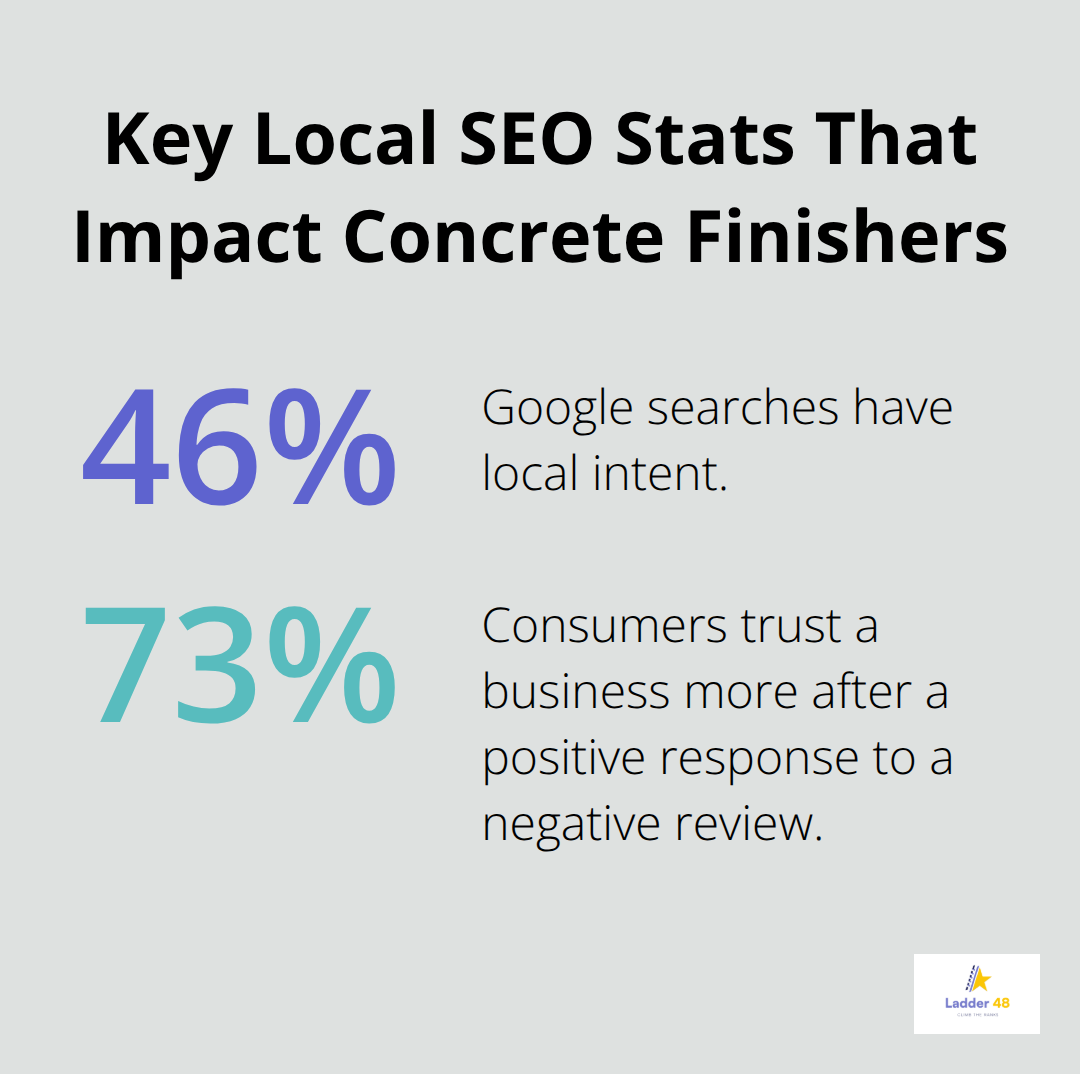
Google processes roughly 8.5 billion searches daily, and about 46% of those searches have local intent. For concrete finishing contractors, this means nearly half of all Google searches include location signals.
Your Google Business Profile is where most of those searches land first. If your profile is incomplete, outdated, or filled with inconsistencies, you lose jobs to competitors who got their basics right.
Claim and optimize your Google Business Profile
Start by claiming your profile if you haven’t already, then fill in every field Google offers. Your business name, address, and phone number must match exactly across your profile and every other listing online. Many contractors skip the categories section or choose generic ones. Don’t. Select Concrete Contractor as your primary category, then add secondary categories like Epoxy Flooring, Polished Concrete, or Floor Coating to signal what you actually do.
Upload high-quality project photos directly to your profile weekly. Google’s algorithms use images to verify authenticity and build trust signals. Post updates at least once a week about current jobs, special offers, or seasonal availability. This keeps your profile active in Google’s ranking system.
Why reviews matter more than you think
Customer reviews drive both rankings and conversions. Contractors with more detailed reviews rank higher in local searches than those with generic five-star ratings. The specificity matters. A review that says someone did excellent work ranks lower than one explaining how the contractor fixed a foundation issue or delivered a stamped patio on deadline.
Start requesting reviews immediately after project completion while the work is fresh in clients’ minds. Make it easy by sending a direct link to your Google profile. Respond to every single review, positive or negative. A response signals to Google that you’re engaged, and it shows potential customers you take feedback seriously. Negative reviews give you a chance to demonstrate your service standards. A thoughtful response to a complaint often converts skeptical readers into customers. Studies show that 73% of consumers trust a business more after reading a positive response to a negative review.
Build local citations across industry directories
Local citations establish credibility and expand your visibility where customers search. HomeAdvisor, Yelp, Angi, Thumbtack, and BBB are non-negotiable. ConcreteNetwork.com specifically targets concrete contractors. Ensure your NAP consistency (name, address, phone) across all platforms. A single mismatched phone number or address confuses search algorithms and tanks your local visibility.
Many contractors spread across multiple locations should create location-specific pages with dedicated phone numbers and addresses, not a single central listing. This signals to Google that you serve specific areas genuinely, not just as a broad claim on your homepage. Consistent citations across these directories tell search engines your business is legitimate and established in your market. Next, you’ll learn which keywords actually drive traffic to concrete finishing contractors and how to target them effectively.
Keywords That Actually Convert for Concrete Finishers
Concrete finishing contractors rank for the wrong keywords constantly. They chase generic terms like “concrete contractor near me” and miss the high-intent searches that fill their pipeline. The data shows “concrete contractor near me” averages 90,500 monthly searches, but that volume hides a critical problem: most of those clicks go nowhere because the search intent is too broad. Homeowners searching that term haven’t decided what they need yet. They might want a driveway, a polished garage floor, or epoxy coating. Your job is targeting the specific searches where intent and your services align.
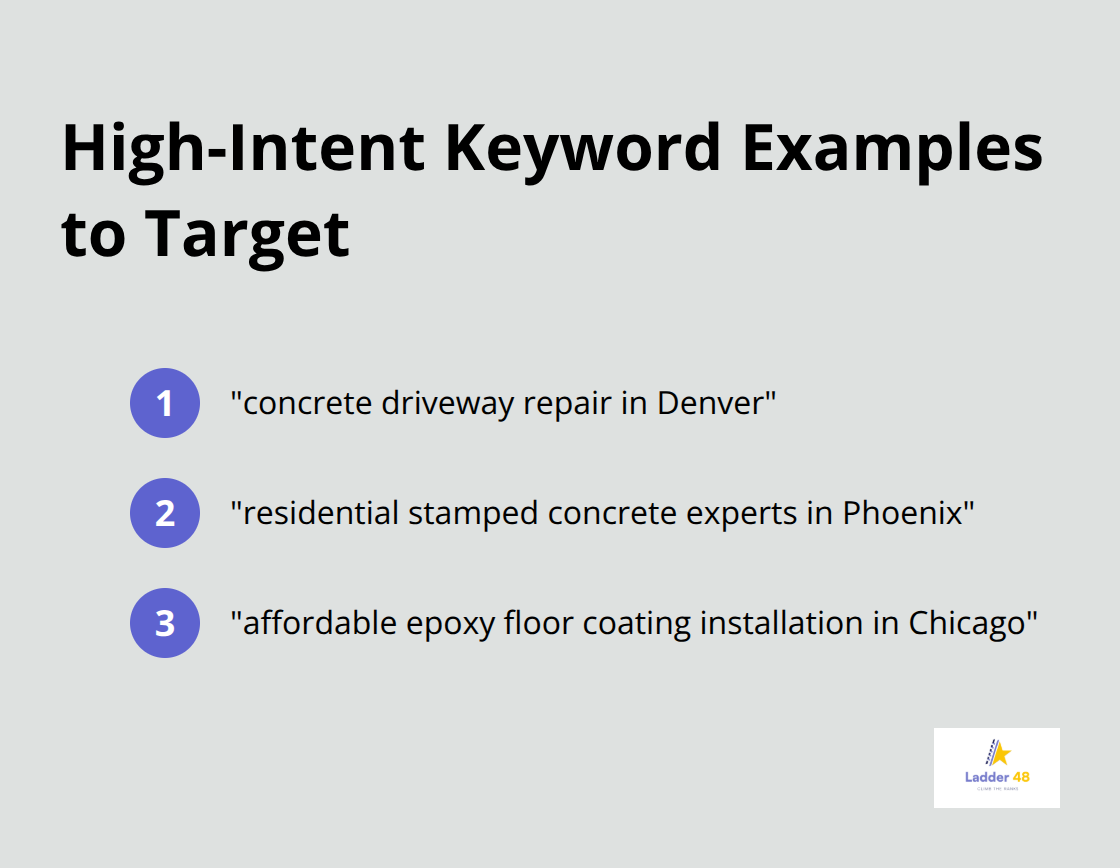
“Stamped concrete patio in Dallas” generates far fewer searches than the generic term, but those searchers know exactly what they want and are ready to hire. Focus on service-specific keywords like “polished concrete installation,” “epoxy garage floor coating,” and “decorative concrete resurfacing.” These terms capture customers at the decision stage, not the research stage. Long-tail keywords account for over 90% of all Google searches, which means most concrete finishing searches are four words or longer. A homeowner searching for “best stamped concrete contractor in Austin Texas” is far more likely to call than someone searching “concrete near me.” The specificity signals intent. Target keywords that combine your service, location, and outcome-examples include “concrete driveway repair in Denver,” “residential stamped concrete experts in Phoenix,” and “affordable epoxy floor coating installation in Chicago.”
These phrases match how actual customers talk when they’re ready to hire.
Match Keywords to Your Service Menu
Your keyword strategy must reflect what you actually offer. If you specialize in polished concrete for commercial spaces, don’t waste ranking effort on residential stamped patio searches. If you focus on decorative finishes, skip foundation repair keywords. Research what searches exist in your service areas using Google Keyword Planner or SEMrush, then filter ruthlessly for relevance.
“Concrete repair near me” generates 40,500 monthly searches according to industry data. “Foundation contractors near me” pulls 6,600 monthly searches. Both are valuable if that’s what you do. The mistake contractors make is creating one generic landing page and sending all traffic there. Instead, build separate pages for each major service. A dedicated page for polished concrete, another for epoxy coating, another for stamped patios. Each page targets different keywords and conversion paths.
Structure Pages Around Specific Services and Locations
A customer landing on your stamped concrete page sees relevant portfolio images, pricing context, and a clear call to action for that specific service. They don’t scroll through unrelated services wondering if you’re the right fit. Structure your location strategy the same way. Create city-specific pages for your primary service areas. “Concrete driveway installation in Dallas” becomes its own page with Dallas-specific imagery, testimonials from Dallas clients, and local authority signals. This approach outranks generic pages because Google rewards specificity and relevance.
The next section covers how to build content that establishes your authority in your market and turns these targeted keywords into actual phone calls and project inquiries. Learn more about SEO basics for local markets to strengthen your foundation.
Build Authority Through Strategic Content and Backlinks
Create Location-Specific Landing Pages That Convert
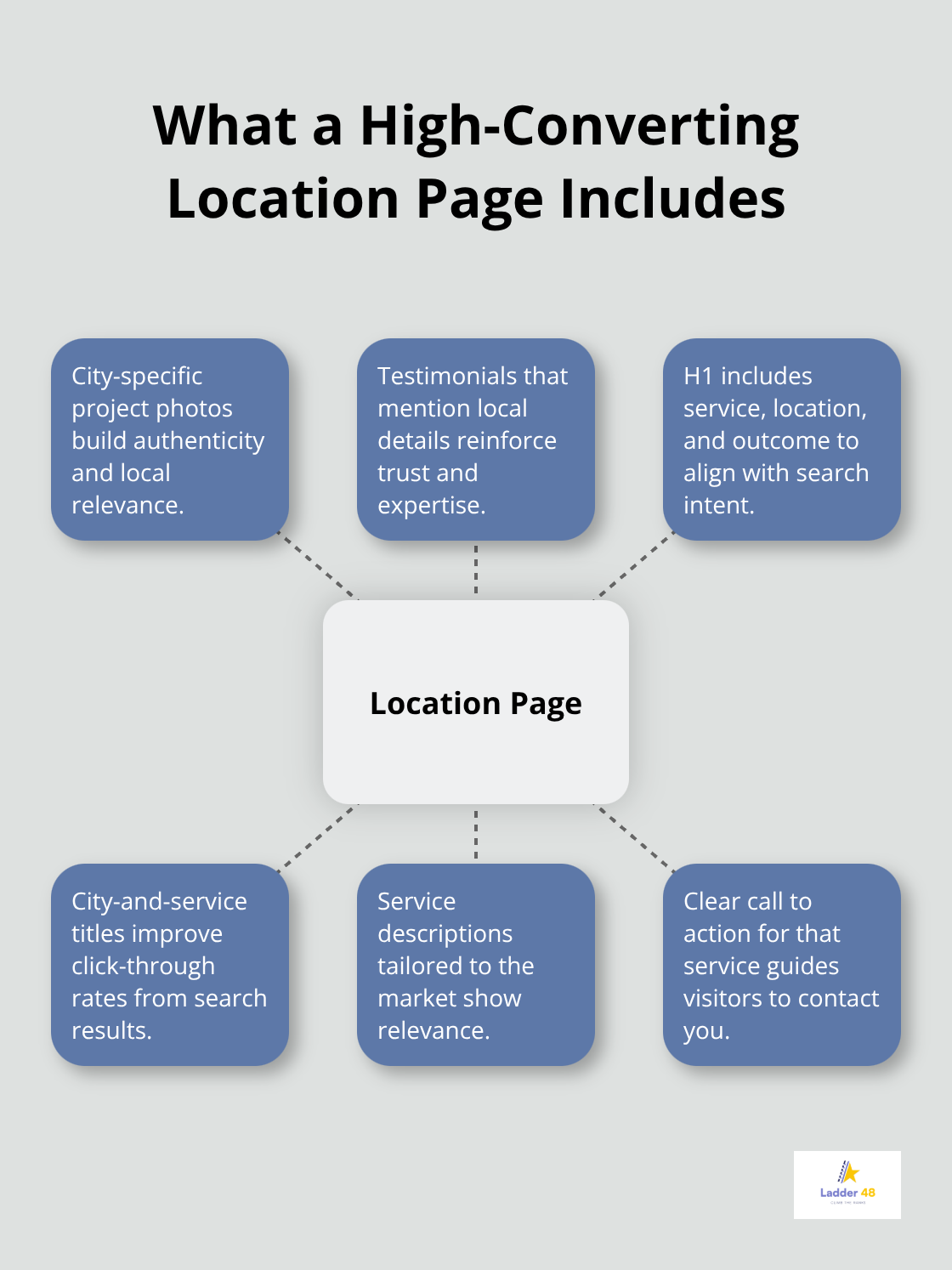
Location-specific landing pages separate contractors who rank from those who don’t. You need a dedicated page for each service area you genuinely serve, not a generic homepage with a dropdown menu. A Dallas stamped concrete page should include Dallas project photos, testimonials from Dallas clients mentioning local details, and service descriptions written for that market. Google’s algorithm rewards this specificity because it signals genuine local expertise rather than a national business pretending to serve everywhere.
Your page for polished concrete in Denver differs structurally from your Austin epoxy flooring page. Each targets different keyword clusters and conversion paths. Include the specific service, location, and outcome in your H1 tag. Use phrases like “Stamped Concrete Patio Installation in Dallas” or “Epoxy Garage Floor Coating in Phoenix.” These titles improve click-through rates from search results because they match exactly what searchers typed.
Load Pages with Real Project Images and Local Testimonials
Load each location page with real project images from that area. Photos of work you completed in Dallas rank better for Dallas searches than generic stock images because Google uses visual signals to verify authenticity and local presence. Include two or three client testimonials that mention specific details about the project, timeline, or problem solved. A generic five-star review adds less value than a testimonial stating something like “Jane Smith trusted us to restore her 20-year-old driveway without disrupting her business operations.”
Showcase Before-and-After Project Galleries
Before-and-after project galleries build trust faster than any written claim. Contractors underestimate how much these images influence decisions. A homeowner scrolling your portfolio sees concrete transformed from cracked and dull to polished and pristine. That visual proof converts better than paragraphs explaining your process.
Organize your portfolio by service type and location so visitors find relevant examples immediately. A customer interested in epoxy coating shouldn’t scroll through stamped patio projects to find one garage floor. Sort your images logically and include the project location and completion date for each. This reinforces your local authority and shows you have recent, active work in the areas you serve.
Earn Backlinks from Industry-Relevant Sources
Backlinks remain one of the strongest ranking signals Google uses, and many contractors ignore them completely. Focus on legitimate, relevant backlinks from HomeAdvisor, Yelp, Angi, BBB, Thumbtack, and ConcreteNetwork.com. These platforms are where homeowners and commercial clients research concrete services. A backlink from ConcreteNetwork carries more weight than a link from an unrelated business directory because it signals industry relevance.
Contact local suppliers, material vendors, and complementary contractors like landscapers or pool builders and ask if they feature partner or vendor pages. A backlink from a local landscape company’s preferred vendors list builds credibility and reaches potential clients already interested in outdoor improvements. Sponsor or participate in local chamber of commerce events and request a listing on their website. These local links tell Google your business operates in and supports your community, which strengthens local rankings.
Final Thoughts
Local SEO for concrete finishing compounds over time when you stay consistent with the fundamentals. Optimize your Google Business Profile completely, build citations across industry directories, gather detailed customer reviews, target service-specific keywords with local intent, create location pages that convert, and earn backlinks from relevant sources. Contractors who implement this concrete finishing SEO guide typically see 50–200% improvements in local keyword rankings within three months.
Start this week by claiming and fully optimizing your Google Business Profile, uploading project photos, posting weekly updates, and requesting reviews from your last five completed jobs. Next, audit your website for location-specific pages and service pages, then build dedicated pages for your primary services and service areas. Fill those pages with real project images, local testimonials, and keyword-optimized content that matches how customers actually search.
SEO requires ongoing attention because rankings shift, competitors optimize, and Google updates its algorithm regularly. Many contractors lack the time or expertise to manage this themselves while running their business, which is why partnering with Ladder 48 makes sense for those ready to climb higher in local search rankings and attract more qualified leads.


