
Concrete companies that ignore SEO lose jobs to competitors who rank higher on Google. A solid concrete company SEO plan isn’t optional anymore-it’s how local clients find you.
We at Ladder 48 built this guide to show you exactly how to dominate local search results. You’ll learn the tactics that actually work for concrete contractors.
How to Get Concrete Contractors Found on Google
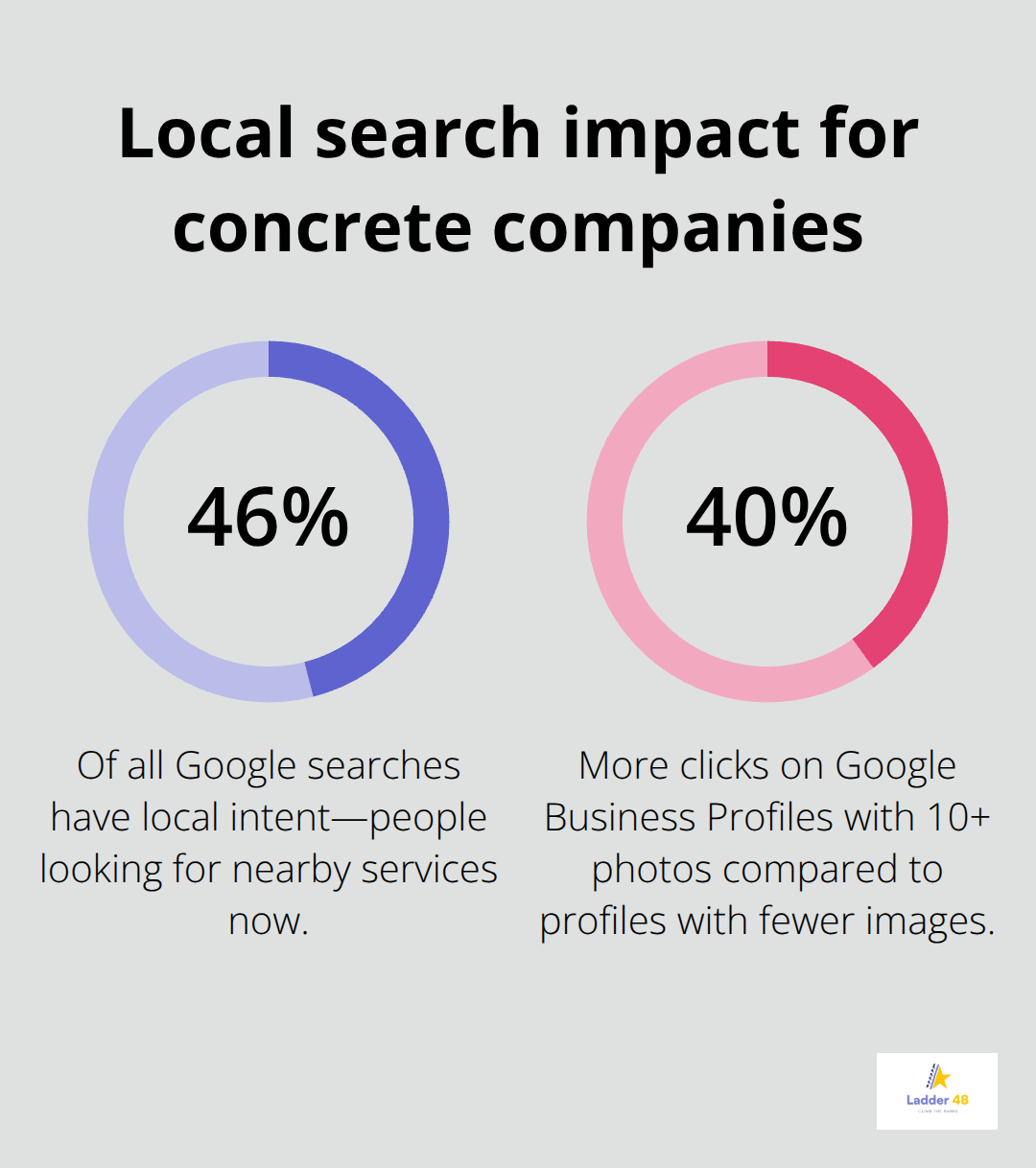
Your Google Business Profile is the single most important tool for attracting concrete jobs in your area. Google processes 8.5 billion searches daily, and 46% of all searches have local intent. That means nearly half of all people searching online look for something near them. If your concrete company doesn’t appear in those local results, potential clients actively searching for your services won’t find you.
Claim and Complete Your Google Business Profile
Start by claiming your Google Business Profile if you haven’t already. This takes 15 minutes and requires your business name, address, phone number, and website. Complete every section available. Upload at least 10 high-quality photos of completed concrete projects directly to your profile. Photos drive clicks and inquiries-profiles with 10+ photos receive 40% more clicks than those with fewer images.
Set your service areas accurately to match where you actually work. Many concrete contractors list service areas too broadly or too narrowly, which confuses Google’s algorithm about your actual operating territory. Post updates weekly to your profile. Concrete companies that post twice weekly see 2.7 times more profile views than those posting once monthly. These updates take two minutes and can highlight current projects, seasonal services, or special offers.
Build Your Local Foundation With Citations
Citations are mentions of your business name, address, and phone number on other websites. Google uses these to verify your business exists and operates where you claim. Start with the high-authority directories that matter most for concrete contractors: Yelp, Angi, HomeAdvisor, the Better Business Bureau, and your local chamber of commerce.
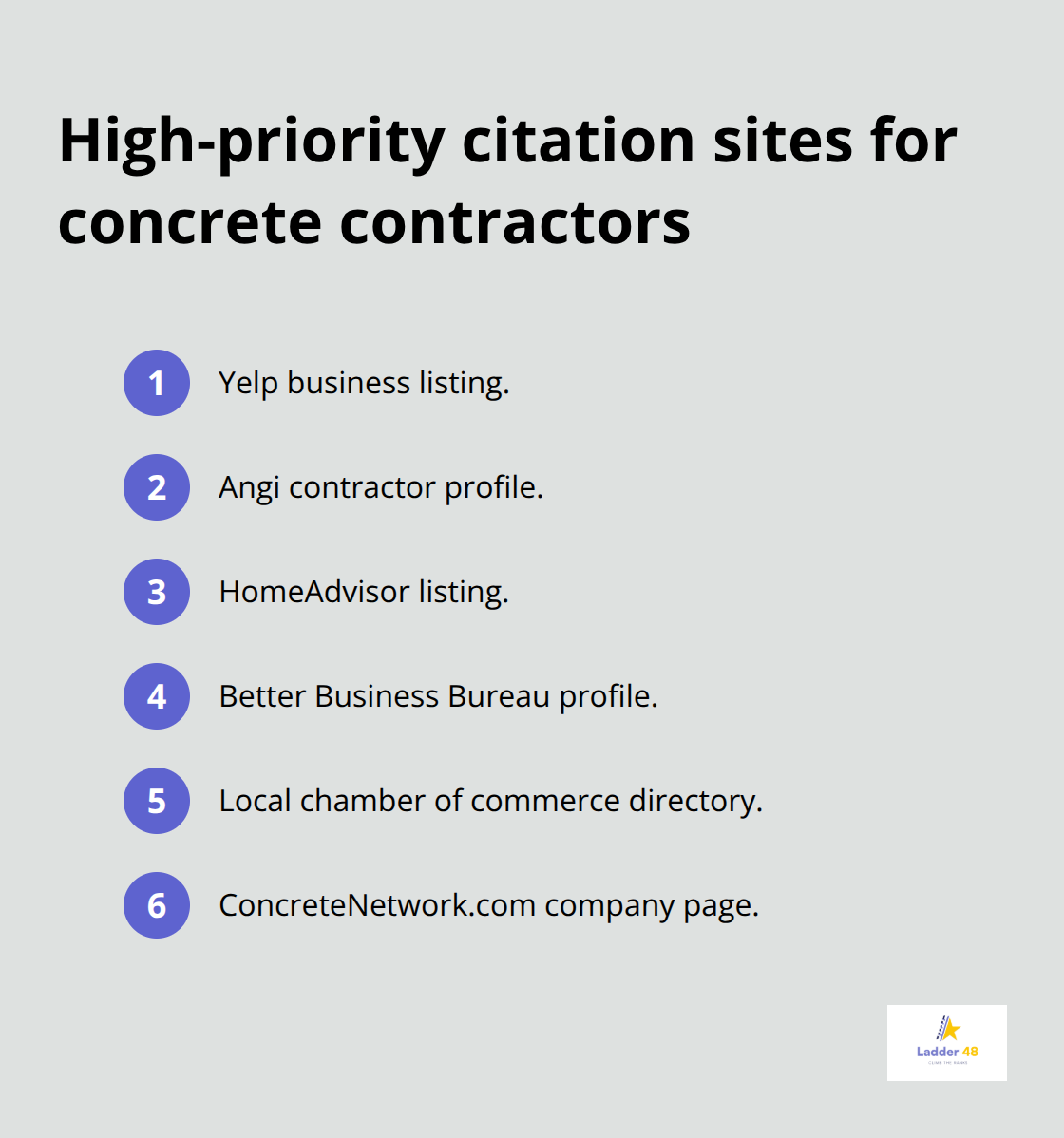
Make sure your name, address, and phone number match exactly across all platforms. Even a small difference like spelling out Street versus St. or including a suite number inconsistently will confuse Google and harm your rankings. Inconsistent citations rank among the top reasons concrete companies fail to rank well locally. After you’ve optimized the major directories, add your business to industry-specific sites like ConcreteNetwork.com and local business networks in your area. This approach builds credibility signals that tell Google your concrete company is legitimate and established in your service area.
Target the Keywords Your Clients Actually Search
Concrete contractors must use location-specific keywords throughout their website. Searches like “concrete contractors near me,” “driveway repair in Denver,” or “stamped concrete patio in Austin” convert at higher rates than general terms. These searches show clear local intent and indicate buyers ready to hire. Local searches convert at significantly higher rates than non-local searches, leading to more calls and on-site visits.
Start with your city name and specific concrete services you offer: foundation repair, mudjacking, polyurethane foam lifting, decorative concrete, or driveway replacement. Place these terms naturally in your service pages, blog posts, and location pages. If you serve multiple cities, create a dedicated page for each location with city-specific content, local landmarks, neighborhoods, and testimonials from clients in that area. A driveway repair page for Denver should mention neighborhoods like Capitol Hill or LoDo, not generic information that applies everywhere. This approach tells Google your site is genuinely relevant to that specific location and positions you to capture the next critical element of your SEO strategy.
On-Page SEO That Converts Concrete Leads
Create Dedicated Pages for Each Concrete Service
Your service pages determine whether concrete contractors win jobs or lose them to competitors. A generic concrete services page that lists everything you do ranks for nothing and converts even fewer prospects into calls. We see this mistake constantly: contractors pack one page with foundation repair, decorative concrete, mudjacking, and driveway work all mixed together. Google can’t determine what that page actually covers, so it ranks poorly for all of those services.
Create separate pages for each major concrete service you offer. A foundation repair page should focus entirely on foundation repair, using that phrase naturally in the headline, the first paragraph, and throughout the content. Include specific details about what foundation repair costs in your area, how long the process takes, and which neighborhoods or building types you typically service. Add before-and-after photos of actual foundation repairs you’ve completed. This approach tells Google exactly what the page covers and gives potential clients the specific information they need to decide if they should call.
Write Title Tags and Meta Descriptions That Drive Clicks
Your title tags and meta descriptions make the first impression in search results and directly impact click-through rates. A title tag like “Concrete Services” should become “Foundation Repair in Denver” or “Driveway Repair Denver Colorado.” The meta description is your sales pitch in 155 characters. Instead of writing “Foundation repair and concrete services for the Denver area,” write “We repair concrete foundations throughout Denver using proven mudjacking and foam lifting techniques. Free estimates.” This tells searchers exactly what you do and includes a reason to click.
Link Your Pages Together for Maximum Authority
Many concrete contractors miss the internal linking opportunity entirely. When you write a blog post about concrete maintenance tips, link to your concrete repair service page. When you create content about seasonal concrete issues, link to your foundation repair page. These internal links pass authority through your site and help Google understand which pages matter most.
A concrete company that serves multiple locations should link from location pages to service pages and vice versa. If you have a Denver page and a driveway repair page, link them together so Google sees the relationship between your location and your service offerings. This structure makes your entire site stronger and helps each page rank higher for its target keywords. The stronger your internal link foundation becomes, the more prepared you are to build external authority through strategic backlinks and content that attracts attention from other websites in your industry.
Build Authority Through Projects and Strategic Links
Transform Projects Into Lead-Generating Case Studies
Case studies convert your concrete work from invisible portfolio pieces into assets that attract calls. A before-and-after photo alone won’t convince prospects to hire you. A detailed case study that explains the problem the client faced, the solution you provided, the timeline, and the results creates trust and demonstrates expertise. Write case studies for your most impressive projects: foundation repairs that saved a historic home, decorative concrete installations in high-end residential areas, or large commercial mudjacking jobs.
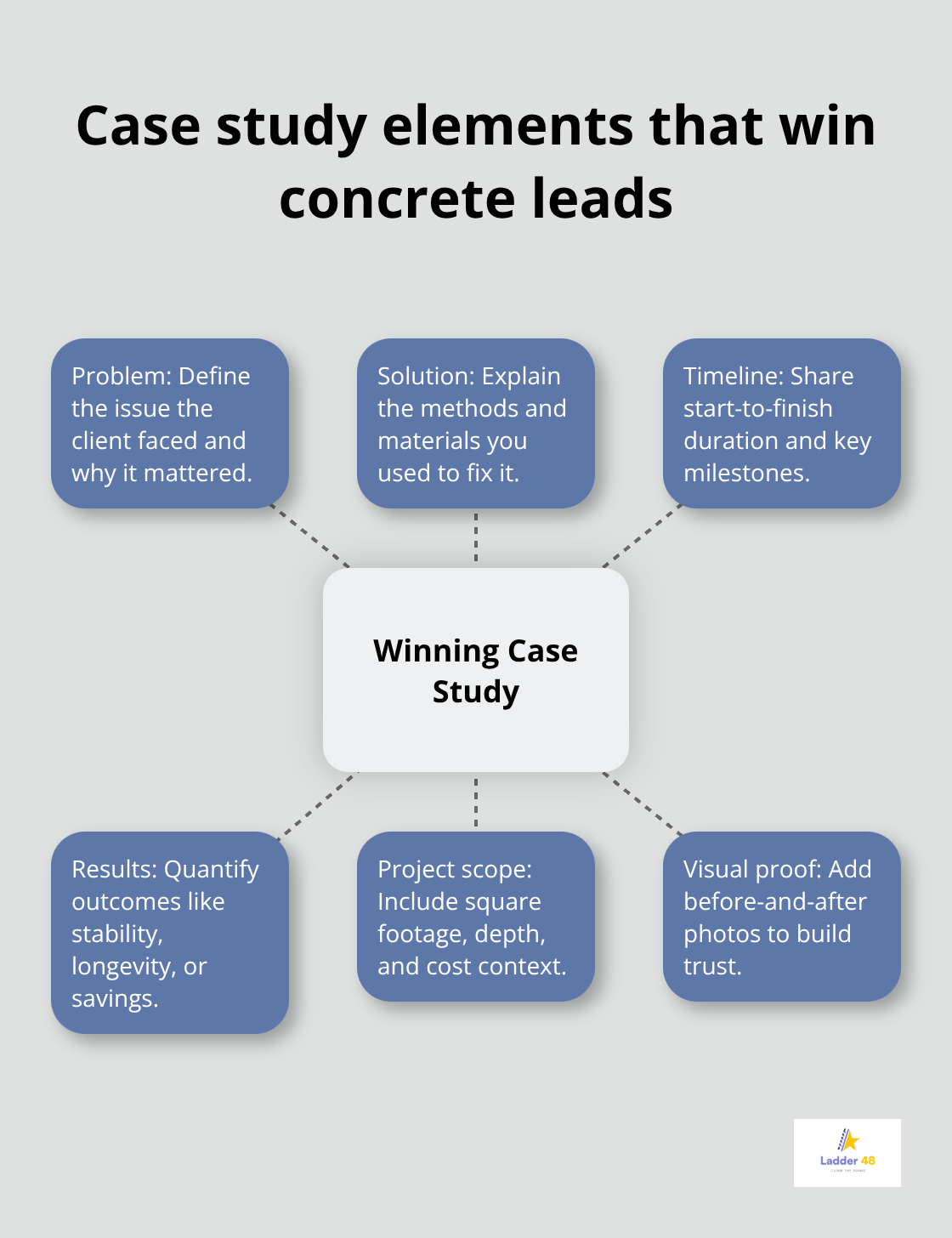
Include specific details like the square footage of concrete repaired, the depth of the foundation issue, or the cost savings compared to replacement. A case study about fixing a 2,000-square-foot stamped concrete patio that had settled 3 inches and cost $8,500 to repair tells prospects exactly what to expect when they hire you. These detailed project stories rank better in search results than generic service pages and convert significantly higher because they show real results.
Earn Backlinks From High-Authority Sources
Backlinks from authoritative sources tell Google your concrete company is trustworthy and established. Local business directories like the Better Business Bureau, chamber of commerce websites, and industry-specific sites like ConcreteNetwork.com provide valuable backlinks when you claim or submit your business. Local sponsorships and subcontractor networks generate credible backlinks that boost local authority.
Focus first on high-authority directories where concrete contractors naturally belong, then expand to local news outlets and industry publications. Many concrete contractors overlook their local newspaper’s business section, which frequently covers construction projects and business milestones. When your company completes a significant project, contact local business reporters. A small mention in your city’s business journal with a link to your website carries far more weight than dozens of low-quality directory listings. With your keywords and pages optimized, you’re ready to build authority signals that push you past your local competitors through strategic off-page tactics.
Create Blog Content That Answers Client Questions
Blog content around questions your concrete clients actually ask drives organic traffic and creates natural linking opportunities. Topics like how much foundation repair costs in your area, what causes concrete settling, or how to maintain stamped concrete attract people mid-way through their buying journey. These blog posts should answer the specific question in the title within the first paragraph, then provide detailed information that positions you as the expert.
Link these blog posts back to your relevant service pages so readers can easily move from educational content to contacting you for a quote. A blog post about concrete driveway maintenance costs should link to your driveway replacement service page and your free estimate offer. This structure keeps visitors on your site longer and signals to Google that your content and services are closely related.
Final Thoughts
Your concrete company SEO plan works only when you execute it consistently across all channels. The tactics outlined here-optimizing your Google Business Profile, building local citations, targeting location-specific keywords, creating dedicated service pages, and earning strategic backlinks-form a complete system that attracts concrete jobs from clients actively searching for your services. CreteJack, a concrete company that started with almost no local visibility, generated 167 qualified leads in six months and captured approximately $80,000 in website-generated revenue by following this structured approach.
SEO builds a reliable digital asset that Google increasingly trusts over time. Concrete contractors who implement this plan see measurable results within six months, with organic traffic growing by 125% and first-page rankings expanding from 13 to 24 keywords in that period. Your competitors are claiming their Google Business Profile today, optimizing their service pages this week, and building citations this month-the question is whether your concrete company will keep pace or fall further behind in search results.
We at Ladder 48 help contractors build and execute SEO strategies that generate qualified leads and grow revenue. If you’re ready to implement your concrete company SEO plan with expert guidance, partner with us to climb to the top of local search results.


