
Concrete contractors face a reality that most other trades don’t: demand swings wildly between seasons. Spring brings a flood of inquiries, while winter can feel like a ghost town.
At Ladder 48, we’ve seen firsthand how concrete SEO seasonal strategies separate contractors who stay booked year-round from those who scramble during off-months. The contractors winning right now aren’t just optimizing for traffic-they’re timing their SEO efforts to match when customers actually search.
When Search Volume Shifts with the Seasons
Spring and summer push concrete search volume to its peak. Google processes roughly 5 trillion searches annually, and a disproportionate share of concrete-related queries happen between March and August. Homeowners plan patios, driveways, and pool decks most aggressively when weather clears and project budgets become available. Winter, by contrast, sees search volume drop sharply-not because people stop needing concrete work, but because fewer homeowners actively plan outdoor projects. This seasonal swing punishes contractors who treat SEO as a set-it-and-forget-it channel. If your site ranks well only during peak months, you lose visibility precisely when you need it most to build pipelines for the busy season. The contractors who win year-round adjust their keyword strategy before demand spikes, not after.
Capitalize on the pre-season search surge
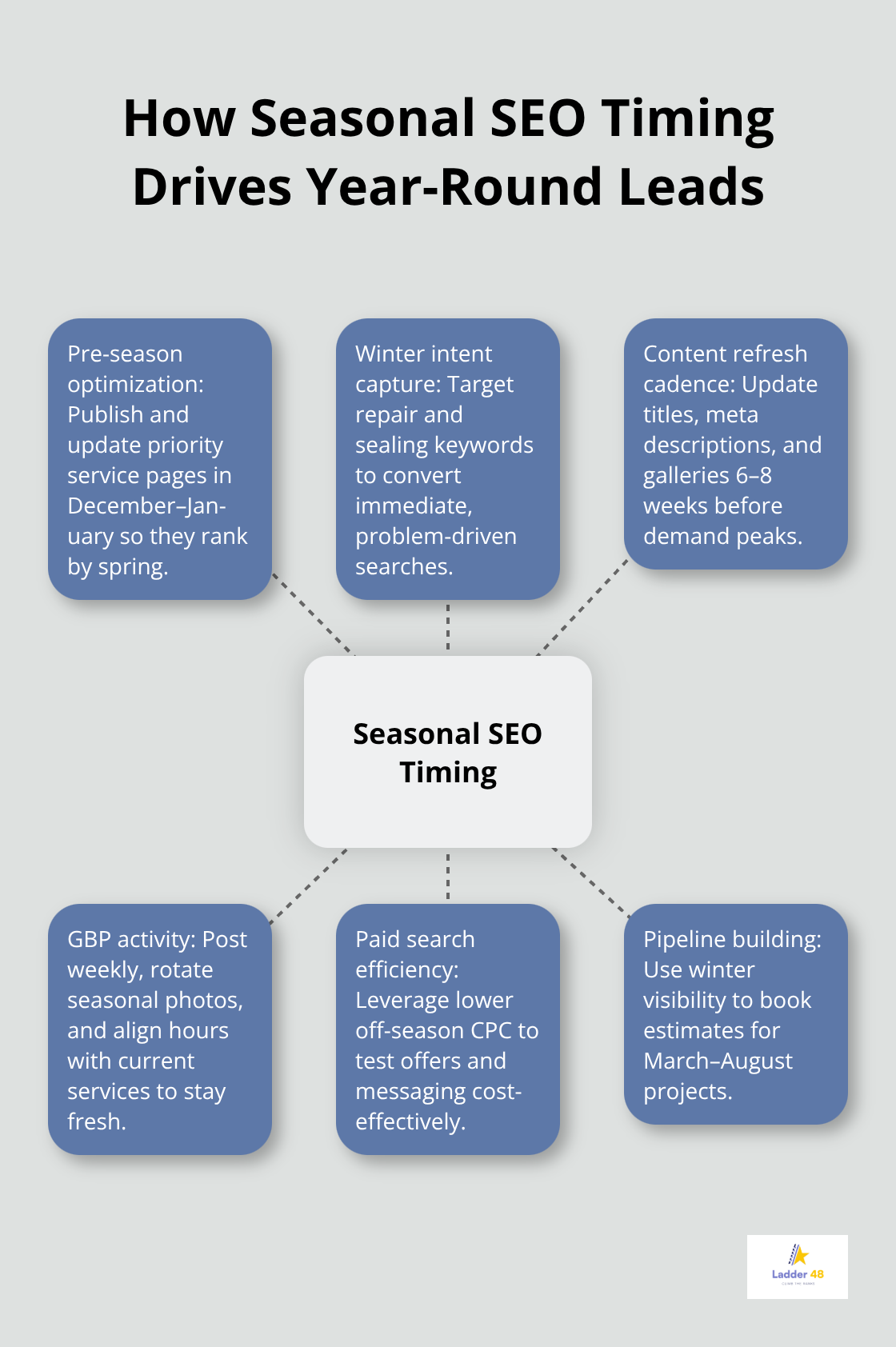
The biggest mistake concrete contractors make is waiting until spring to optimize for spring keywords. Homeowners start searching for concrete services in February and March, well before they’re ready to dig. Target keywords like “concrete driveway contractor” in March, not May. This means your SEO work must happen in December and January-when your schedule is slow and you have time to invest in content and optimization. Winter months offer a tactical advantage: less competition in paid search, lower cost-per-click for seasonal ads, and the chance to rank before your competitors realize spring is coming. Adjust your Google Business Profile weekly posts starting in January with early-bird offers and spring project galleries. Update title tags and meta descriptions on your service pages in February to include seasonal modifiers. If you wait until spring to make these changes, you’re already behind contractors who started planning in November.
Winter keywords require a completely different approach
Winter doesn’t mean zero demand-it means different demand. Homeowners search for concrete sealing, repairs, and maintenance when cold weather hits. They search for winter preparation guides and foundation issues triggered by freeze-thaw cycles. These keywords have lower search volume but higher intent because the person searching has an immediate problem, not a someday project. Try phrases like “concrete crack repair near me” or “how to seal concrete before winter” rather than competing for broad summer keywords. Winter is also when past clients resurface with maintenance questions, making it the perfect time to run email campaigns highlighting seasonal services and upsell opportunities. Many contractors ignore winter SEO entirely, treating the season as dead time. That’s a gift to contractors who understand that winter searches convert differently but convert nonetheless.
Build your SEO calendar six months out
Planning seasonal SEO campaigns requires thinking half a year ahead. Map your peak seasons, then work backward. If summer is your busiest season, December through February is when you optimize and build authority. If fall brings a secondary surge, June and July are your planning months. Create a content calendar that pairs seasonal services with corresponding pages and blog topics. Spring patio installations get dedicated landing pages optimized in January. Summer driveway projects get their optimization push in March. Fall sealing services get their push in July. This rhythm ensures your website is ready before search volume spikes, not scrambling to catch up once it does. Use Google Search Console to monitor which seasonal keywords start to trend, then create content around them before they peak. Most contractors react to seasonal demand; the profitable ones anticipate it.
The next step is translating this seasonal awareness into concrete website changes. Your homepage, service pages, and meta tags all need adjustments that reflect what customers search for in each season-and that work starts with understanding which keywords actually drive qualified leads to your phone.
How to Target Seasonal Keywords That Actually Convert
Seasonal keyword strategy separates contractors making money from SEO and those wasting time on irrelevant traffic. The difference comes down to intent and timing. High-intent keywords like “concrete driveway cost” or “best concrete contractor near me” drive qualified leads year-round, but their search volume and competitiveness shift dramatically by season. Spring and summer keywords like “patio installation” or “pool deck contractor” explode in volume starting in February, while winter keywords like “concrete sealing” or “foundation crack repair” stay steady but quieter. Your job is to identify which keywords your target customers actually search for during each season, then build pages and content around them before search volume peaks.
Google Search Console shows exactly which seasonal keywords drive traffic to your competitors. Use it to find phrases that spike predictably each year, then map them to your service pages. If concrete driveway searches jump 300 percent between January and April in your market, that’s your signal to refresh your driveway page with seasonal language, updated project photos, and early-bird messaging in December. Don’t wait until April when everyone else scrambles to rank.

Winter Keywords Reflect Immediate Problems, Not Future Plans
Winter keywords require a completely different approach because they reflect immediate problems, not future aspirations. Someone searching for “concrete repair near me” in January has water damage or cracks that need fixing now. That’s higher conversion intent than someone casually browsing patio ideas in May. Target these repair and maintenance keywords aggressively during off-season months. Create dedicated landing pages for winter services like sealing, crack repair, and foundation issues. Include the specific problem and solution in your title tag and meta description so Google matches your page to winter searchers immediately. A title tag like “Concrete Crack Repair in Fort Lauderdale: Winter Damage Fix” performs better than generic concrete repair language because it speaks directly to the seasonal pain point and location intent that winter searchers have.
Match Your Content to What Customers Actually Need Each Season
Spring customers searching for patios want inspiration, timeline expectations, and cost ranges. They’re in the planning phase, so your content should show before-and-after galleries, seasonal project guides, and design options. Winter customers searching for sealing or repairs want quick answers about pricing, urgency, and whether they can wait until spring. Your winter content should address freeze-thaw damage, prevention tips, and why acting now prevents expensive repairs later. This difference matters because Google rewards pages that directly answer what searchers are actually looking for. A spring patio page that buries repair information under design inspiration gets clicked but doesn’t convert. A winter repair page that leads with cost, timeline, and urgency converts faster because it matches intent.
Update your meta descriptions to reflect seasonal customer mindset. Spring descriptions should highlight transformation and outdoor living. Winter descriptions should emphasize urgency and prevention. A meta description like “Transform Your Backyard This Spring with Custom Patio Design” works for March. A description like “Prevent Winter Concrete Damage with Professional Sealing Services” works for November. Google shows these descriptions to searchers, and mismatched messaging kills click-through rates. Many contractors use the same meta descriptions year-round, which means they’re wrong half the time.
Refresh Your Homepage and Service Pages Two Months Before Demand Spikes
Seasonal keyword work also means updating your homepage and main service pages with seasonal modifiers starting two months before demand spikes. In January, your driveway page headline should reference spring installation. In July, it should reference fall maintenance. This small change signals to Google that your content stays current and relevant, which improves rankings for seasonal variations of your target keywords. The contractors who adjust their pages before February and August (not during those months) capture the early searchers who plan ahead. These early planners often convert faster because they’ve already decided to move forward-they’re just comparing contractors and pricing. Your seasonal page updates position you to capture that high-intent traffic before competitors realize the season has shifted.
Local SEO Through Seasonal Visibility Management
Your Google Business Profile either works for you year-round or it costs you money every month it sits neglected. Contractors who win consistently treat their GBP like a living document that changes with the seasons, not a static listing they set once and forget. Most concrete contractors make a critical mistake: they optimize their GBP in March when spring hits, then ignore it for nine months. That’s backwards. Your GBP needs seasonal updates starting in January, before search volume spikes.
Update Your GBP Before Demand Peaks
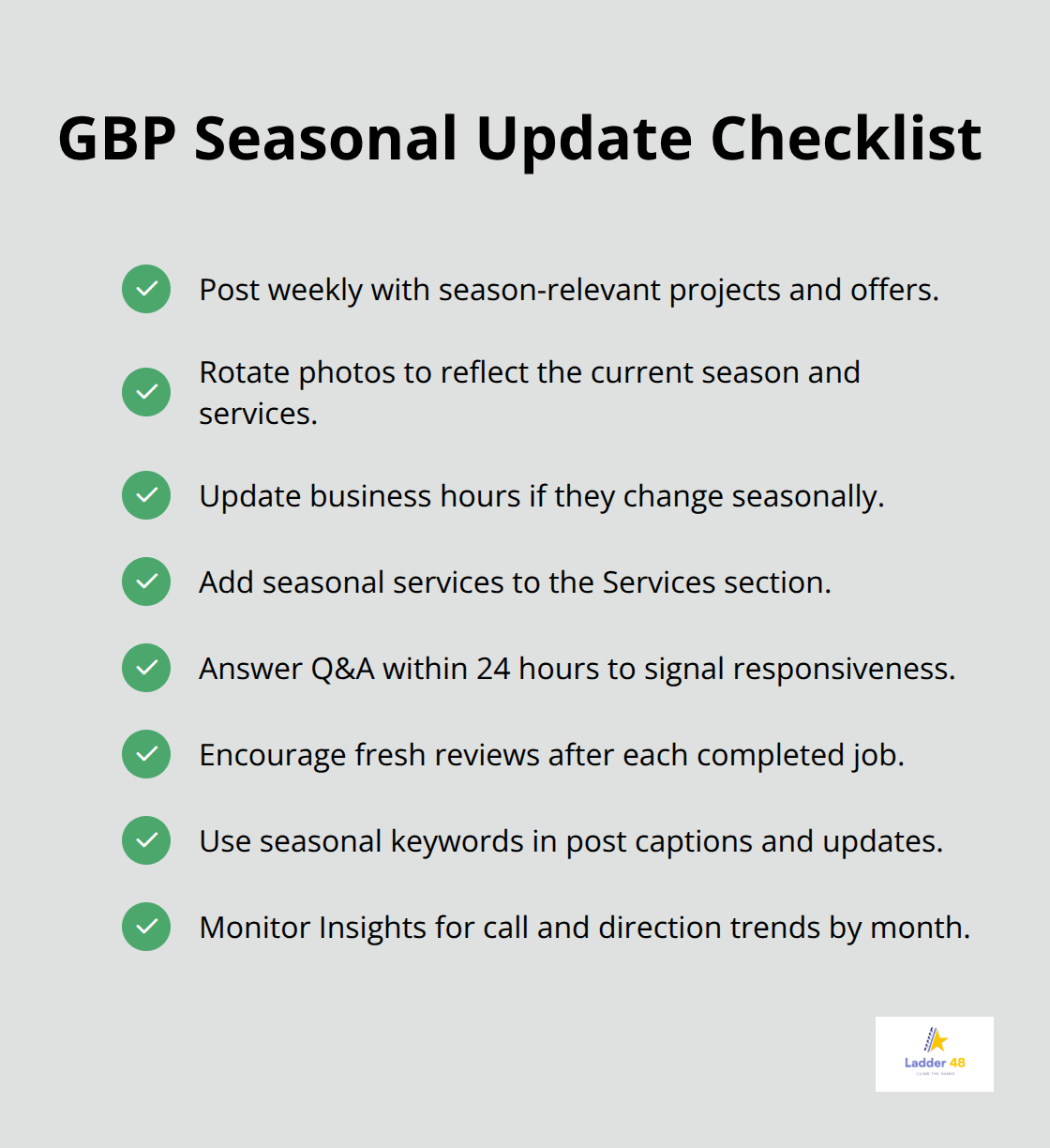
Add weekly posts in December and January that showcase winter projects and early-bird offers. Rotate your service photos seasonally so your profile always displays relevant recent work. If you show summer patio installations in November, you signal to Google that your content is stale. Google’s algorithm favors fresh, relevant business information, so seasonal updates directly improve your Map Pack visibility. Update your business hours if they change seasonally, add seasonal service descriptions to your offerings, and respond to every question in the Q&A section within 24 hours. Contractors who post weekly updates during their slow season see measurable ranking improvements when demand spikes because Google has already learned their profile is active and trustworthy.
Build Backlinks During Off-Season Months
Winter and fall offer a major opportunity that most contractors miss. Sponsor local youth sports teams, participate in chamber of commerce events, and partner with landscapers and pool contractors who will link to your site. These partnerships generate authoritative local backlinks that improve your domain authority for the entire year. A backlink from your local chamber of commerce or a neighborhood association website carries real SEO weight because it signals local relevance to Google. During slow months, reach out to 10 to 15 local businesses and nonprofits about sponsorship or partnership opportunities. Ask for a link on their website in exchange. Winter partnerships take months to materialize, so the timing matters. Contractors who wait until spring to do outreach fall behind those who start in September and October.
Fix Citation Errors Before Spring Arrives
Local citations on construction directories like Yelp, Angi, and Houzz must remain consistent year-round, but off-season months give you time to audit your listings and fix inconsistencies. Inconsistent business name, address, or phone number across directories actively harms your rankings. Use tools like BrightLocal to scan your citations and identify problems. Fixing citation errors during November and December means your profile is clean and authoritative before spring demand arrives, giving you a ranking advantage your competitors won’t have. Many contractors ignore citation audits until they notice ranking drops in spring, but that’s too late. The contractors who maintain clean citations year-round (and especially during slow months) capture more Map Pack visibility when search volume spikes. Learning concrete contractor SEO basics ensures your seasonal strategy aligns with proven local market tactics.
Final Thoughts
Seasonal SEO for concrete contractors isn’t a luxury-it’s the difference between staying booked and scrambling for work. The contractors winning right now understand that demand cycles require strategy cycles. Your website, Google Business Profile, content, and keyword targets all shift with the seasons, which means you plan in December for March, adjust in July for September, and treat off-season months as your competitive advantage. Concrete SEO seasonal success comes from anticipating demand, not reacting to it.
Most contractors treat seasonal SEO as a short-term tactic rather than a system. They chase spring rankings in March, celebrate extra calls in April, then abandon the strategy when summer slows. That approach leaves money on the table every single year. Real seasonal strategy balances immediate wins with long-term authority-you rank for high-intent keywords like “concrete driveway contractor near me” during peak months, but you also build domain authority, earn backlinks, and create content that establishes expertise year-round. Winter sponsorships, off-season content creation, and consistent GBP updates compound over time, and contractors who started planning in November dominate those who wait until spring.
The six-month planning window isn’t arbitrary-it’s the minimum time needed to optimize your website, build authority through citations and backlinks, create seasonal content, and let Google recognize your changes before demand spikes. We at Ladder 48 help contractors build sustainable SEO strategies that work across all seasons, so your concrete business maintains visibility when customers search, not just when you remember to optimize.


