Concrete finishing contractors lose leads every day because potential clients can’t find them online. When someone searches for concrete finishing services in your area, they expect to see your business at the top of the results.
At Ladder 48, we’ve built this concrete finishing SEO guide to show you exactly how to capture those local searches and turn them into project inquiries. The tactics here work because they’re built around how people actually search for concrete finishing services.
Why Local Search Matters for Concrete Finishers
Real People Search for Concrete Finishing Services Locally
Most concrete finishing leads start with a local search. When a homeowner needs their driveway sealed or a commercial property manager wants a polished concrete floor, they search for terms like “concrete finishing near me” or “stamped concrete contractor in [city name]” on Google. These searches represent real people ready to hire, not casual browsers. According to search data, “concrete contractor near me” pulls roughly 486,000 yearly searches with a cost-per-click between $3 and $10. Location-specific searches generate consistent qualified traffic month after month. If your business doesn’t appear in those results, someone else gets the call.
Geographic Keywords Match How Prospects Actually Search
Geographic keywords work because they match exactly how people search when they actively look for someone to hire. A prospect searching for “epoxy concrete repair in Denver” isn’t browsing for information-they want a contractor they can call today. This intent gap explains why location-specific keywords convert better than generic service pages. Search volume tells part of the story: “concrete driveway” pulls 118,800 yearly searches, but “concrete driveway near me” captures much smaller volume with dramatically higher purchase intent. Contractors who rank for these hyper-local terms receive fewer clicks overall but significantly more qualified inquiries that turn into projects.
Your Google Business Profile Controls Local Visibility
Google Business Profile visibility directly impacts whether potential clients can reach you. When someone searches for your services, Google displays a map with three local businesses at the top of the results. Your Google Business Profile controls whether you appear there. A complete, optimized profile with accurate name, address, phone number, regular photo updates, and consistent review responses makes a measurable difference in phone calls and quote requests.
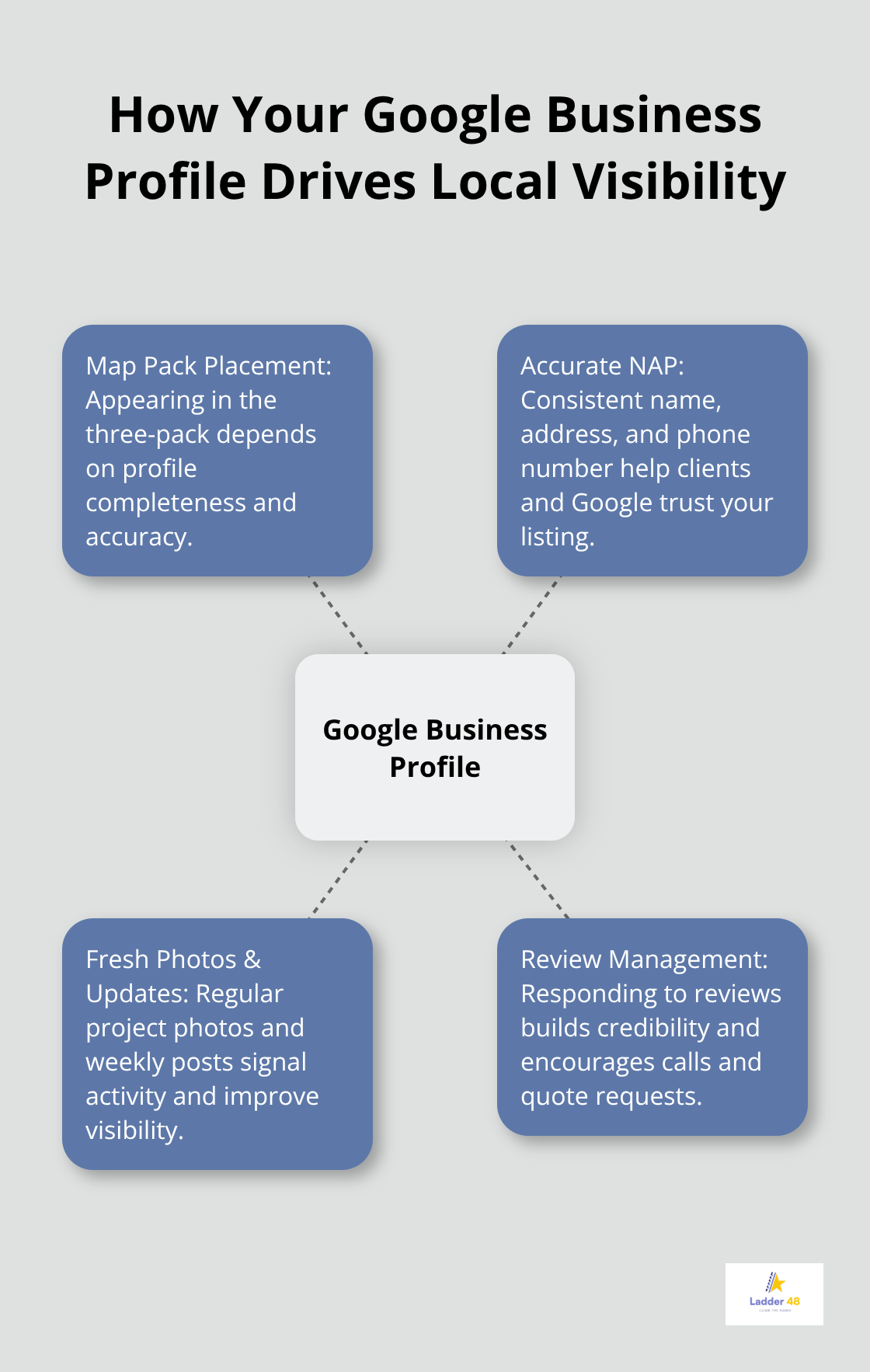
Contractors who post weekly updates to their Google Business Profile and maintain current project photos see more map visibility and higher click-through rates than those with stale listings.
Reviews and Responses Improve Rankings and Conversions
Businesses that respond to all reviews on Google see improved local rankings and better conversion rates from search traffic. This isn’t optional-it’s the foundation of local visibility that drives concrete finishing inquiries in your area. The contractors who treat their Google Business Profile as a living asset (not a set-it-and-forget-it listing) attract more qualified leads. Your next step involves moving beyond the basics and optimizing the pages where prospects actually land when they click through from search results.
How to Structure Pages That Rank for Local Concrete Finishing Searches
Create Dedicated Pages for Each Service and Location
Your service pages are where prospects land after they click through from Google search results, and they need to be built specifically for local conversion. A generic service page describing concrete finishing won’t capture the geographic intent that drives qualified leads. Instead, create dedicated pages for each major service and location combination-a page for stamped concrete patios in Denver performs better than a single stamped concrete page trying to rank nationwide. On each service page, place your primary keyword in the title tag, the first H1 heading, and within the first 100 words of body content. For example, a page targeting homeowners might use a title like “Stamped Concrete Patio Contractor in Denver” rather than “Stamped Concrete Services.” Pages with location-specific keywords in the H1 and title tag convert 40 to 50 percent higher than generic alternatives because they signal relevance to both Google and the prospect reading the page.
Use Visual Proof to Drive Conversions
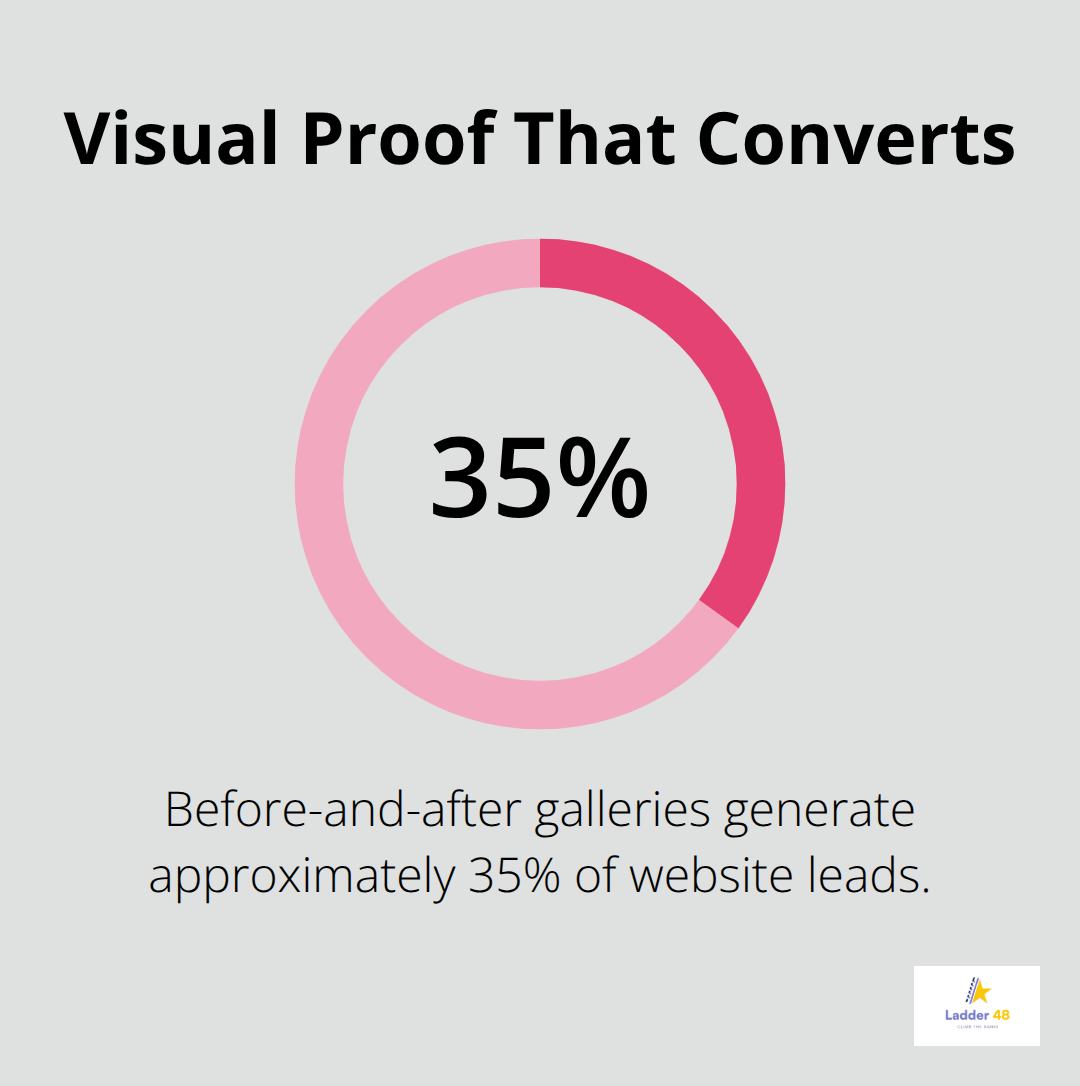
Include 3 to 5 before-and-after project photos directly on the page, organized by finish type or project size. Cascade Concrete Coatings reports that before-and-after galleries generate approximately 35 percent of website leads, with visitors spending significantly longer on pages featuring visual proof of quality work.
Add a service-specific call-to-action above the fold that says something direct like “Get Your Free Estimate” or “Schedule a Site Visit,” paired with a simple form or phone number. These visual elements and clear CTAs work together to move prospects toward contact.
Optimize for Speed and Technical Performance
Technical speed matters enormously-pages that load in under 2 seconds rank higher and convert better than slower alternatives. Compress all images to under 100KB, use a content delivery network, and test your page speed with Google PageSpeed Insights to identify specific bottlenecks. Contractors who implement these technical improvements often see 15 to 25 percent increases in conversion rates within the first month.
Target High-Intent Search Topics
Build your content strategy around the specific projects your prospects actually search for. Homeowners searching for concrete driveway information represent 118,800 yearly searches, while “How to stain concrete patio” pulls 145,200 yearly searches-these are real demand signals worth targeting. Create detailed pages answering questions like “How much does a concrete driveway cost,” “How long does concrete take to dry,” and “How to repair cracks in concrete.” Include regional price ranges, project timelines, and step-by-step explanations that position your business as the expert who understands local conditions and material costs. A cost guide page that mentions your region’s typical pricing range captures price-conscious searchers earlier in their research phase and builds trust before they request a quote.
Build Authority Through Content Depth and Internal Linking
Publish one substantive piece of content every two weeks focused on a concrete finishing topic your prospects actually ask about. These pages should be 1,500 to 2,000 words long, include at least one data point or statistic, feature 3 to 5 relevant images, and answer the question completely so visitors see your expertise. Internal linking between service pages and related content pieces strengthens your site’s authority structure-link from your driveway page to your concrete sealing page and your driveway cost guide to show Google how your content connects. This architecture helps Google understand your site’s topical depth and pushes ranking authority to your most important pages. Once your pages rank and convert, the next step involves turning those visitors into actual project inquiries through strategic lead capture and follow-up systems.
Building Authority Through Links and Reviews
Local Directories Create Your Foundation for Backlinks
Backlinks and reviews represent the two signals Google trusts most when ranking local concrete finishing contractors. A single backlink from a reputable local construction directory carries more weight than dozens of internal links, and a steady stream of positive reviews directly improves your map visibility in local search results. The contractors dominating local search rankings typically possess both: a portfolio of quality backlinks from relevant local sources and an active review management system that captures client feedback immediately after project completion.
Local construction directories offer the fastest path to relevant backlinks. Directories like Yelp, Angi, Houzz, and local chamber of commerce listings pass authority to your website while simultaneously improving your visibility in those platforms themselves. The key is consistency-your business name, address, and phone number must match exactly across every directory listing. Mismatched information confuses Google’s ranking algorithm and weakens your local authority. A tool like BrightLocal audits all your directory listings in one pass and identifies discrepancies before they harm your rankings.
Partner with Local Suppliers and Contractors for Mutual Growth
Local suppliers and related contractors represent untapped backlink opportunities. A concrete sealer manufacturer might link to their approved applicators, or a landscape designer might reference local concrete finishing contractors they partner with. Reach out directly to these businesses with a straightforward pitch: you’ve completed work that complements their services and you’d value a link from their website. Backlinks from local partners amplify your authority further and often result in mutual referrals as well, creating a secondary benefit beyond the backlink itself.
Capture Reviews Systematically After Every Project
Reviews require a different approach than backlinks because they demand systematic capture rather than one-time outreach. The contractors generating 120 or more Google reviews annually use automated review request systems that trigger immediately after project completion. Send a text message or email to clients within 24 hours of final payment with a direct link to your Google review page-make it a one-click experience, not a multi-step process.
Respond to every review within 48 hours, whether positive or negative. Responding to negative reviews shows potential clients you address problems professionally, while thanking clients for positive reviews builds community and encourages others to leave feedback. Businesses that respond to all reviews see measurable improvements in local rankings and conversion rates compared to those ignoring reviews entirely. Track your review volume monthly and try for a minimum of two to three new reviews per week during active project seasons.
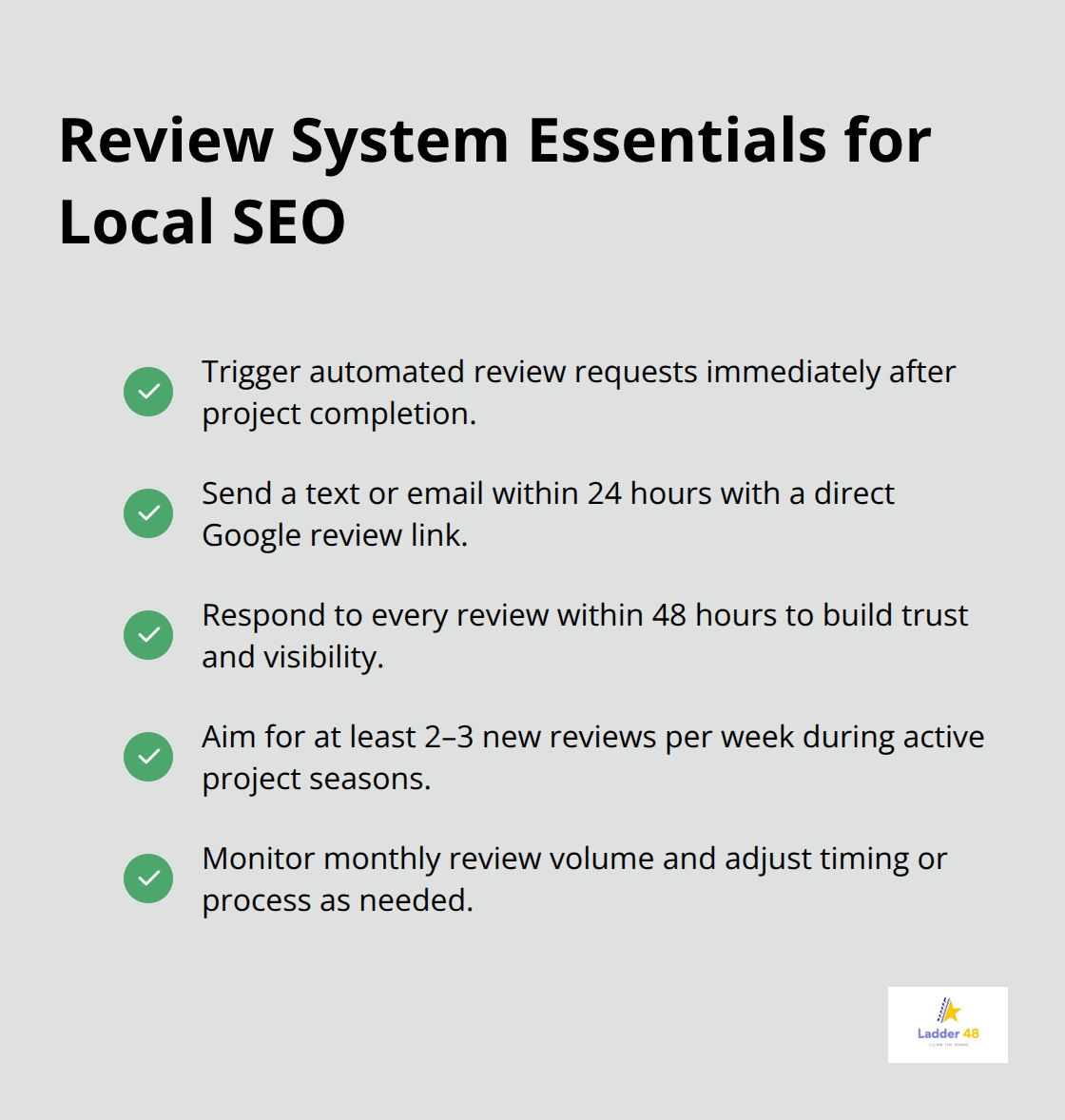
If you’re consistently landing fewer than this, your review request system needs adjustment-either the timing is wrong, the request process is too complicated, or you’re not requesting from enough clients.
Expand Reviews Across Multiple Platforms
Beyond Google, encourage reviews on Yelp and industry-specific platforms like Houzz where your concrete finishing projects naturally appear. Houzz reviews particularly influence homeowners researching design inspiration, and a strong portfolio of client photos paired with positive reviews on that platform directly drives qualified inquiries for residential finishing work. A complete review strategy across multiple platforms strengthens your overall local authority and captures prospects wherever they research contractors.
Final Thoughts
The concrete finishing SEO guide you’ve just read outlines a straightforward path to capturing local project inquiries. Local search dominance, geographic keywords, optimized service pages, technical performance, strategic backlinks, and systematic review management work together to move your business higher in rankings where prospects actually find you. These tactics work because they’re built on how homeowners and property managers actually search for concrete finishing services in their area.
Consistent optimization delivers measurable results. Contractors who post weekly updates to their Google Business Profile, respond to reviews within 48 hours, and maintain location-specific service pages see steady increases in phone calls and quote requests month after month. Pages with location-specific keywords in the title tag and H1 convert 40 to 50 percent higher than generic alternatives, while before-and-after galleries generate approximately 35 percent of website leads. The data supports this performance improvement across every tactic covered in this guide.
Your next step involves choosing where to focus first. If your Google Business Profile lacks recent photos or consistent updates, start there-it’s the fastest way to improve map visibility. If you’re not systematically requesting reviews after every project, implement that system immediately. We at Ladder 48 help contractors implement these strategies at scale through transparent, results-driven tactics that attract more local customers and generate qualified leads for your concrete finishing business, so contact us today to get started.