Roofing contractors lose leads every day because they’re not showing up for the searches that matter. Most roofers chase broad keywords when homeowners are actually searching for specific, local solutions like emergency roof repair or storm damage assessment in their zip code.
At Ladder 48, we’ve helped roofing businesses capture these high-intent local searches by mastering roofing keyword research. This guide shows you exactly how to find the keywords your future customers are typing into Google right now.
What Keywords Homeowners Actually Search For
Local searches dominate roofing demand
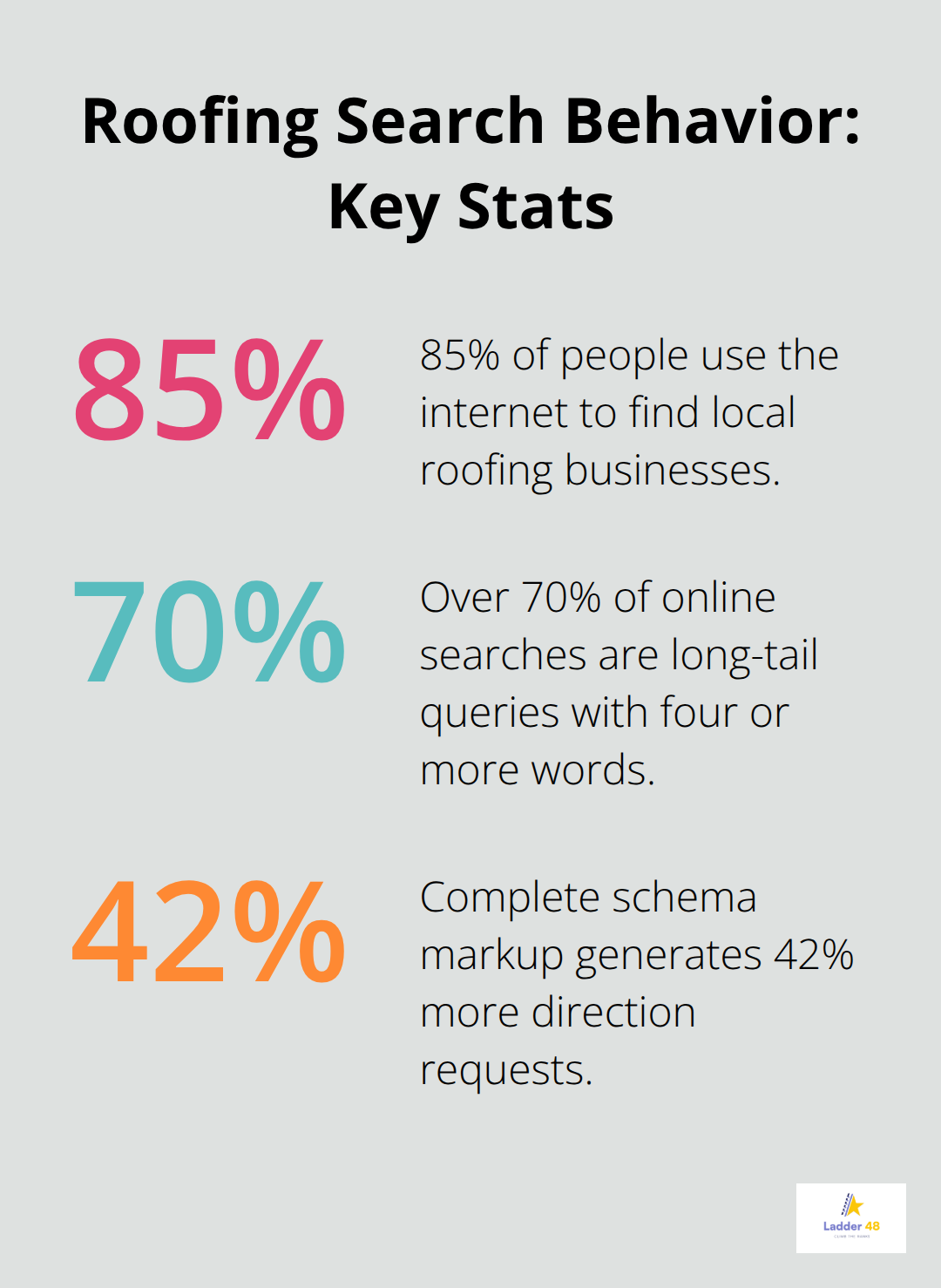
Homeowners searching for roofing services operate with hyper-local intent. According to Google data, 85% of people turn to the internet to find local roofing businesses, and they avoid generic terms like roofing contractor. Instead, they type emergency roof leak repair near me or roof replacement Denver because they want someone who can arrive tomorrow, not next month. This distinction matters enormously. A homeowner with a leaking roof at 2 AM cares about proximity and speed, not your company’s history or credentials. The keywords they search reflect this urgency. Terms like emergency roof repair, storm damage roof repair, and hail damage assessment generate substantially higher conversion rates than broad keywords because the searcher has already moved past research. They’re ready to call. SEMrush data shows significant variation in keyword difficulty by location, meaning roof repair keywords in smaller markets carry far less competition than in major cities. A roofing contractor in Columbus, Ohio faces keyword difficulty of 50 for roofing-related terms, while the same search in Columbus, Georgia shows difficulty of just 12. This means smaller markets can dominate local search with less aggressive SEO effort. Stop chasing national keywords and focus entirely on location-plus-service combinations.
Your website should rank for roof replacement in your city, not roof replacement in America.
Seasonal demand swings change everything
Roofing search volume fluctuates dramatically with weather patterns and seasons. Storm season drives massive spikes in emergency repair searches. Winter months see increased searches for snow removal and ice dam repair. Spring brings roof inspection and maintenance queries. Google Trends consistently shows these patterns, and ignoring them wastes budget and content effort. A roofer invests in storm damage keywords during a calm season and pays high PPC costs for low intent traffic. Instead, plan your keyword strategy around your local climate. If you operate in a region prone to hail storms, build content and PPC campaigns around hail damage terms months before storm season arrives. Track your local weather patterns and adjust your keyword targeting accordingly. Long-tail keywords like emergency roof leak repair in heavy rain or flat roof replacement after wind damage perform better when they align with actual customer problems happening right now in your area. The data shows over 70% of online searches are long-tail queries with four or more words, and these searches indicate higher purchase intent. A homeowner typing roof repair cost estimates near me stands closer to hiring than someone searching what is a roof. Use keyword research to identify which roofing services surge in your specific target areas, then tailor your content and paid campaigns to those terms.
Why location-based keywords outperform everything else
Location-based keywords (roof repair Denver, roofing contractor near me, emergency roofer in [City]) capture homeowners at the exact moment they need help. These terms carry buyer-ready signals because they include action words and proximity indicators. A homeowner searching roof replacement Dallas has already decided they need a new roof and narrowed their search to their city. They’re not comparing roofing materials or reading educational content. They’re calling contractors. Service-based keywords (roof repair, roof replacement, new roof installation) work best when paired with location data. Material-based keywords (asphalt shingle roofing, metal roofing, flat roofing) attract customers with specific preferences, but they convert at lower rates than location-plus-service combinations. Problem-based keywords (roof leak repair, hail damage, wind damage) tap into urgency and immediate need. The most effective strategy combines all three: location, service, and problem. A keyword like emergency roof leak repair in [City] after storm damage hits all three elements and attracts homeowners ready to hire. This is where your keyword research should focus.
Tools that reveal what your competitors miss
Google Search Console shows you which keywords already drive traffic to your site and which ones rank on page two or three. This data reveals quick wins-keywords where you’re close to ranking but need minor content improvements. Analyze your competitor keywords using SEMrush or Ahrefs to see which terms they target and where they rank. Look for gaps where competitors ignore entire service areas or locations. If your main competitor doesn’t target roof repair in a specific neighborhood, that’s your opportunity. Long-tail keywords often carry less competition and higher conversion intent than broad terms. A competitor might dominate roof repair, but you can capture emergency roof leak repair at 2 AM in [neighborhood] with less effort. Use Google’s Keyword Planner to assess search volume and competition for location-based terms in your market. This tool shows you which keywords have real search demand versus which ones sound good but attract no traffic. Track keyword performance monthly or quarterly and adjust your strategy based on what actually converts. The roofing market shifts with seasons, weather events, and local competition, so static keyword lists fail quickly.
Moving from research to implementation
You now understand what homeowners search for and why location-based, problem-specific keywords matter more than broad terms. The next step involves building your website structure and content strategy around these keywords so search engines recognize your authority in your local market.
How to Find Keywords Your Competitors Miss
Search Console reveals your quick wins
Google Search Console shows which keywords already send traffic to your site and which ones sit on page two waiting for a small push. Open your Search Console account, navigate to the Performance report, and filter for queries that generate impressions but few clicks. These keywords represent your fastest path to more traffic-you rank, but your title or meta description fails to stand out. A roofing contractor ranking fifth for emergency roof repair near me receives impressions but loses clicks to higher positions. Fix your meta description to emphasize speed of response or 24/7 availability, and you’ll capture clicks without ranking higher.
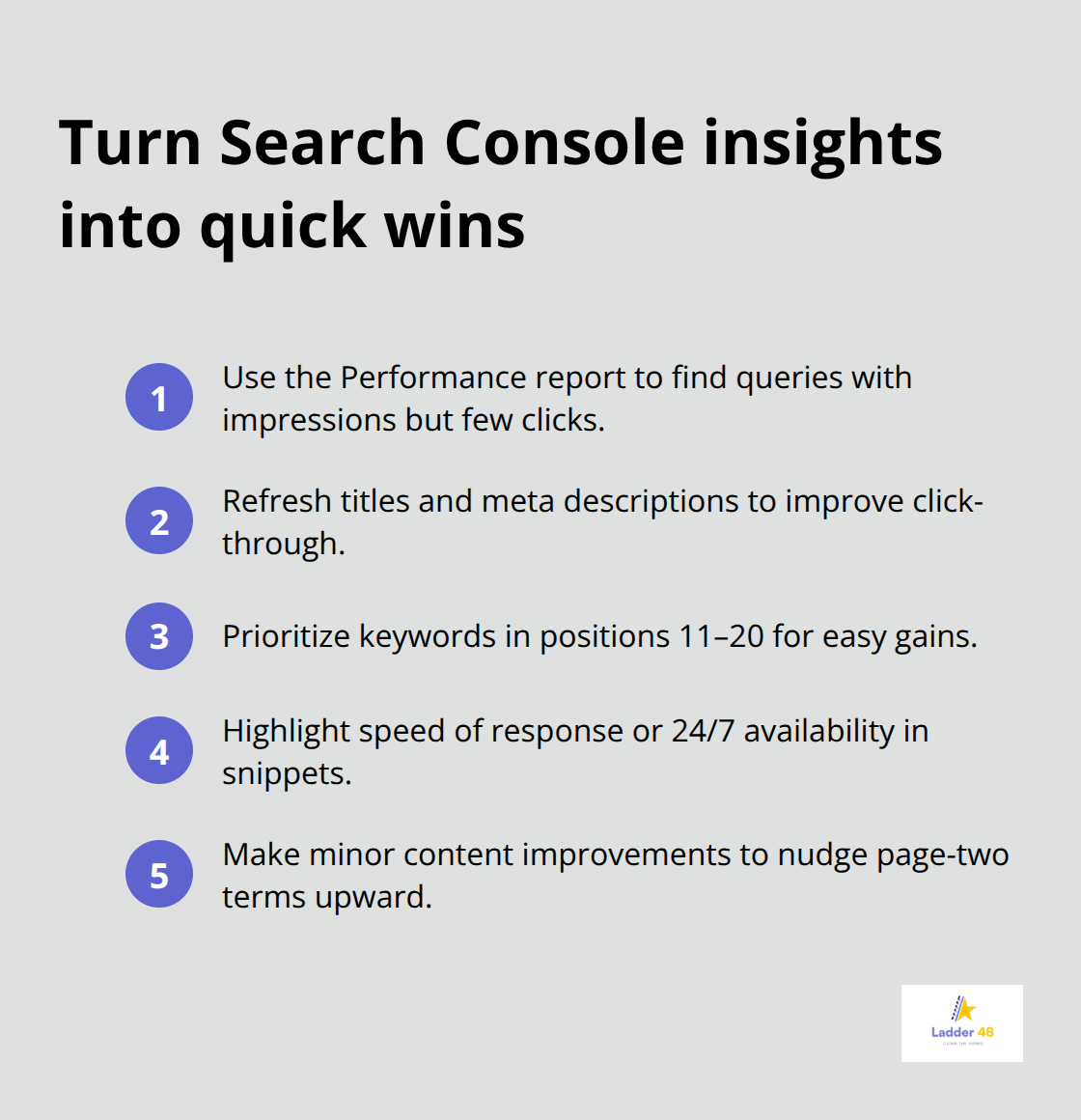
Sort by average position to find keywords between positions 11 and 20, which require minimal effort to push into the top three.
Competitor keyword gaps expose your opportunities
SEMrush and Ahrefs show you exactly which keywords your competitors target and how they rank. Enter your top three competitors into SEMrush’s Keyword Gap tool and you’ll see keywords they rank for that you don’t. This reveals blind spots in your strategy. If a competitor ranks for emergency roof repair in five neighborhoods and you only target two, you’ve identified your next content priority. Look specifically for keywords where the competitor ranks in positions 6-15. These represent opportunities where the market has demand but the competition isn’t dominant. You can outrank them with better content or faster response times in your ads.
Long-tail keywords convert at higher rates
Long-tail keywords like emergency roof leak repair at night during thunderstorm or flat roof replacement after hail damage carry significantly less competition than roof replacement because fewer competitors target them. Google Keyword Planner shows search volume for these phrases, and you’ll notice they have 50-200 monthly searches instead of thousands. But here’s the critical insight: those 50-200 searches convert at rates 3-5 times higher than broad keywords because the searcher has identified their specific problem. Allocate content and PPC budget to long-tail keywords in your local market rather than generic terms.
Conversion tracking separates winners from losers
Track which keywords actually convert to phone calls or form submissions. Most roofing contractors obsess over ranking for competitive terms and ignore the keywords that generate actual revenue. Set up conversion tracking in Google Ads for phone calls and track which keywords lead to bookings. If storm damage roof repair generates 200 clicks but only two jobs, while emergency roof leak repair generates 50 clicks and four jobs, shift your budget to the latter. Review these metrics monthly because seasonal shifts change which keywords perform. A keyword dominating in spring won’t carry the same conversion value in winter.
Your keyword research now reveals what competitors miss and where your real revenue hides. The next step involves structuring your website so search engines recognize your authority in these high-converting keywords across your local market.
Building Your Local Roofing Authority Online
Create dedicated location pages for every service area
Your website structure determines whether search engines recognize you as a local authority or treat you as just another generic contractor. You should create dedicated location pages for every city and neighborhood you serve, not a single service area page that lists ten towns. Each location page targets specific keywords like roof replacement in [City] and includes neighborhood-specific details such as nearby landmarks or community names. Google rewards geographic specificity because it signals to search algorithms that you genuinely serve that area. A roofer serving Denver needs separate pages for roof repair in Capitol Hill, roof replacement in Cherry Creek, and emergency roofing in Highlands, each with unique content addressing neighborhood-specific concerns. You should embed your service area map directly on these pages alongside your phone number and address.
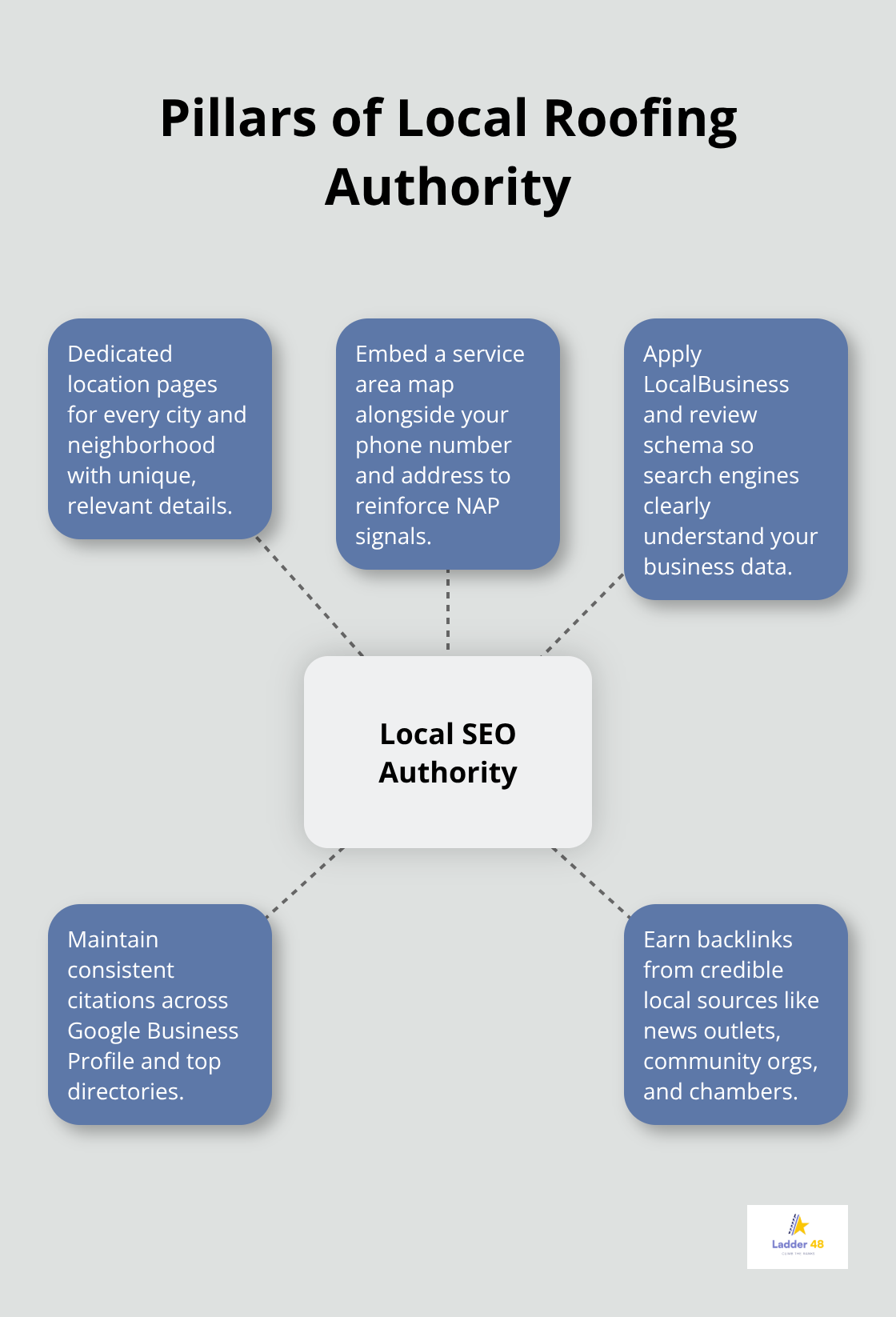
This combination of location-specific keywords, maps, and contact information tells Google exactly where you operate and which searches should trigger your website.
Use schema markup to help search engines understand your business
Schema markup transforms how search engines interpret your business data. You should install LocalBusiness schema on your homepage and every location page so Google understands your business name, address, phone number, service areas, and hours without guessing. This structured data directly impacts your appearance in Google Maps and local search results. According to Google, profiles with complete schema markup generate 42% more direction requests than those without it. You should add AggregateRating schema to showcase customer reviews and ratings directly in search results, which increases click-through rates substantially.
Maintain consistent citations across all directories
Your local citations across directories like Yelp, HomeAdvisor, Angi, and BBB must maintain identical name, address, and phone number formatting. Inconsistencies between your website, Google Business Profile, and directory listings confuse search algorithms and tank your local rankings. You should conduct quarterly audits using tools like SEMrush or Moz to identify citation mismatches and correct them immediately. These audits prevent small errors from undermining your entire local SEO strategy.
Earn backlinks from credible local sources
You should build authority through consistent, high-quality backlinks from local sources. Partner with neighborhood associations, community organizations, and local chambers of commerce to earn links from credible local websites. Guest blogging on reputable local or industry publications generates both backlinks and traffic. You should approach local business directories and ensure your listing includes keyword-rich descriptions mentioning your specific services and locations. A roofer should prioritize backlinks from neighborhood websites, local news outlets, and community blogs over generic directory submissions (these local sources carry far more weight with search engines than national directories).
Final Thoughts
Roofing keyword research separates contractors who dominate local search from those who struggle for visibility. The strategies in this guide work because they align your website directly with what homeowners actually search for when they need roof repairs or replacements. Location-based keywords, problem-specific terms, and seasonal adjustments transform your online presence from invisible to unavoidable in your market.
Audit your Google Search Console to identify keywords where you rank but fail to convert clicks. Build dedicated location pages for every neighborhood you serve, not generic service area pages. Implement LocalBusiness schema markup so search engines understand your business details without guessing, and track which keywords generate actual phone calls and jobs (most roofing contractors waste money on vanity rankings for keywords that never convert).
The roofing market moves fast-storm seasons create keyword spikes, competitors adjust their strategies, and new neighborhoods emerge as growth areas. Your keyword research and website structure must evolve monthly, not annually. Partner with Ladder 48 to build a stronger online presence and capture the high-intent searches in your market.