Google now ranks websites partly on how visitors experience them. For plumbers, this means a slow website or confusing contact form could cost you jobs.
At Ladder 48, we’ve seen plumber SEO user experience directly impact which businesses show up first in local search results. The good news is that improving your site’s usability doesn’t require a complete rebuild.
How Google Ranks Websites Based on User Experience
Google’s algorithm has fundamentally shifted toward measuring how real visitors interact with your website. Since 2021, the search engine has officially weighted Core Web Vitals-Largest Contentful Paint (LCP), Interaction to Next Paint (INP), and Cumulative Layout Shift (CLS)-as ranking factors. For plumbers, this means a website that loads in ten seconds or has janky button interactions will rank lower than a competitor with a snappy site, regardless of content quality. Google PageSpeed Insights scores of 90 or higher are the benchmark; anything below that signals to Google that your site frustrates visitors.
Mobile-First Indexing Changes Everything
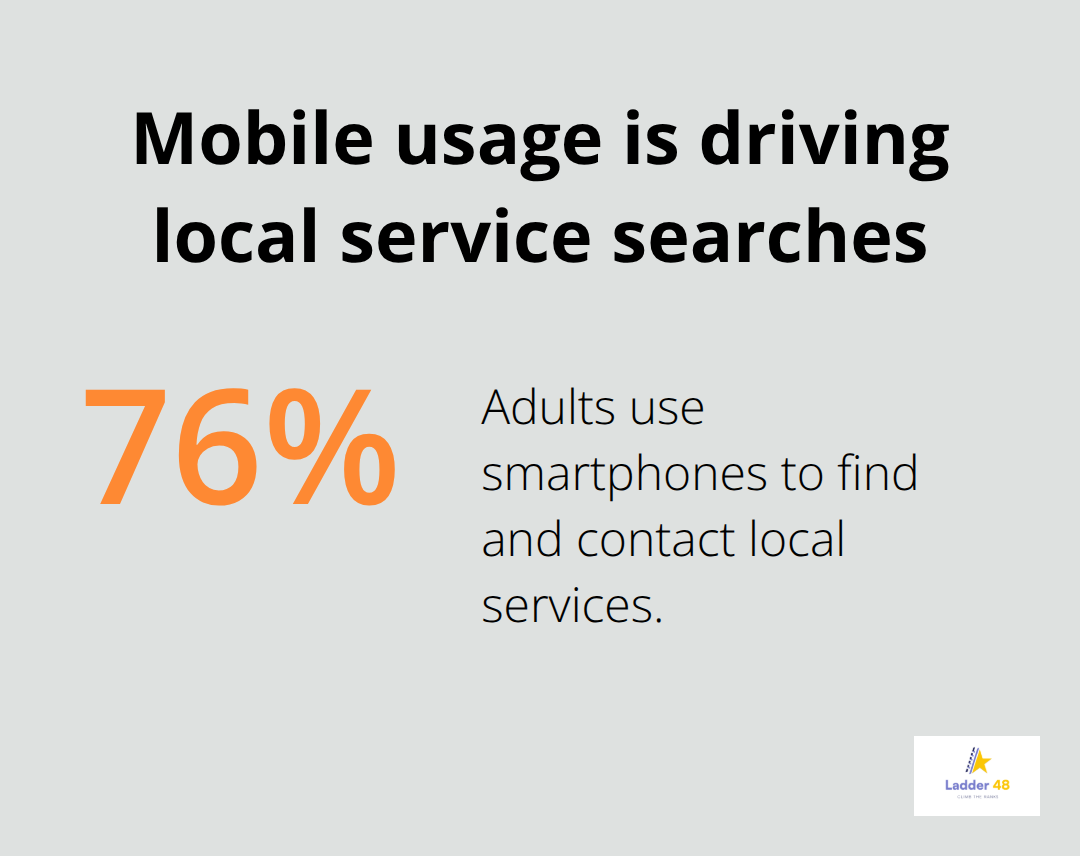
Mobile-first indexing makes page speed even more critical because Google primarily ranks based on the mobile version of your site. Mobile users abandon pages that take longer than two seconds to load, and Google tracks this behavior. Pages with load times above three seconds see bounce rates spike dramatically, which tells Google your content isn’t matching user intent. More than 76% of adults use smartphones to find and contact local services, and for plumbing searches, mobile traffic often exceeds 80% of all visits.
What Mobile Users Actually Need
Google knows that mobile-friendly sites rank higher in local search results. Your contact buttons need to be thumb-sized, your hours and location must be accessible within two taps from the homepage, and your phone number should use tel: links so customers can call directly. Responsive design that automatically adapts to different screen sizes isn’t optional anymore-it’s the foundation of competitive plumber SEO. Poor mobile usability doesn’t just hurt conversions; it actively damages your search rankings because Google tracks engagement metrics like time on page and click patterns as ranking signals.
Image Optimization Cuts Load Times Fast
Oversized images are the biggest culprit slowing plumber websites. A 10MB image file can add seconds to load time; compressing images and converting them to WebP format cuts load times significantly without sacrificing visual quality. Too many plugins also bloat sites-audit your WordPress setup and remove anything you don’t actively use. Cheap hosting that shares resources across hundreds of sites will slow your pages; upgrading to better hosting directly improves speed and reliability.
Navigation Paths That Keep Visitors Engaged
Clear navigation paths matter equally for both users and search rankings. Broken links frustrate visitors and signal to Google that your site isn’t maintained. Use Google Search Console to find and fix 404 errors, and ensure your main navigation never requires more than three clicks to reach key pages like your contact form or service area map. Real-user testing reveals what actually works-ask someone unfamiliar with your site to find your emergency contact information, and if it takes longer than ten seconds, your UX is costing you jobs. These speed and navigation improvements set the stage for the specific UX elements that plumber websites must prioritize.
User Experience Elements That Matter for Plumber Websites
Visitors land on your site for one reason: to solve a problem fast. A plumber’s website must answer three questions instantly-what you do, how much it costs, and how to reach you. If customers can’t find this information within seconds, they’ll call a competitor instead. Google watches this behavior and ranks sites that satisfy visitor intent higher than sites that waste time.
Service Descriptions That Match Local Search Intent
Service descriptions need to be specific to plumbing emergencies your area actually sees. Instead of generic text like “water heater repair,” write what customers search for: “emergency water heater replacement in Denver” or “burst pipe repair available 24/7.” This specificity signals to Google that your content matches real search queries in your market. Customers who find exactly what they’re looking for spend more time on your site, which improves engagement signals that Google tracks.
Transparent Pricing Builds Trust and Engagement
Pricing transparency matters more than you think. Research from the National Association of the Remodeling Industry shows that 68% of homeowners want to see pricing upfront before contacting a contractor. Post your service call rates, diagnostic fees, and common repair price ranges on your site. If you offer financing or guarantees, make those visible too. Hidden pricing or vague estimates signal distrust to both visitors and search engines. Customers who see clear pricing spend more time on your site, which improves the engagement signals that Google uses to rank pages.
Contact Methods That Convert Visitors Into Calls
Your contact form and call button are the most important elements on your entire website. Make your phone number clickable with a tel: link so mobile users tap once and call directly-no typing required. Industry data shows that 40% of mobile visitors abandon contact forms and prefer calling instead. Position your phone number in the header where it’s visible on every page, and add a sticky click-to-call button for mobile that stays on screen as users scroll.
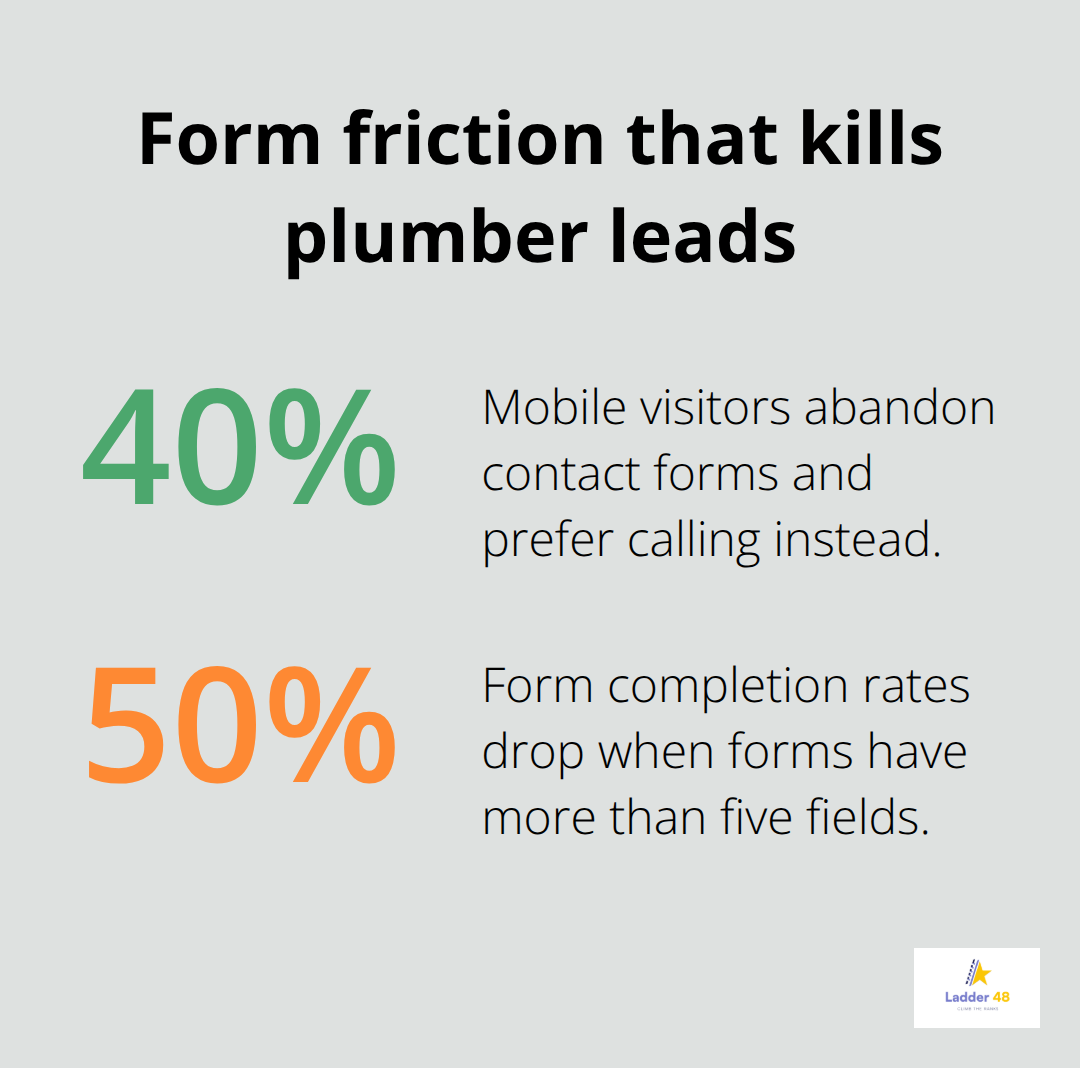
Contact forms should ask for only essential information: name, phone, and a brief description of the problem. Forms with more than five fields see completion rates drop by 50% according to UX research firm Unbounce. For plumbing emergencies, offer an emergency contact option separate from standard inquiry forms. Your form should confirm submission immediately and provide an estimated response time. Google tracks how quickly visitors interact with your site after landing, and fast form submissions signal that your UX matches user intent.
Local Maps and Service Area Clarity
Customers need to know immediately if you service their location. Embed a service area map on your homepage showing the neighborhoods and towns you cover. Vague language like “serving the greater metropolitan area” frustrates visitors. Instead, list specific zip codes or neighborhoods where you operate. Create dedicated landing pages for your top five service areas, each with local keywords, neighborhood-specific testimonials, and a map showing service coverage for that zone.
Include your hours prominently on every page, especially emergency availability. Many plumbing calls happen at night or on weekends, so if you take emergency calls outside standard hours, highlight this on your contact section. Visitors should never need to click more than twice to find your hours, location, and whether you serve their area. Pages with localized content rank higher in map pack results, which drive qualified leads for plumbers and set the foundation for the practical improvements that will accelerate your contractor SEO strategy.
How to Fix Your Plumber Website’s Speed and Navigation Problems
Most plumber websites fail because they ignore the technical foundation that Google measures. Your site’s speed, structure, and credibility signals directly determine whether you rank above competitors. The good news: fixing these problems takes days, not months, and the improvements drive measurable results immediately.
Speed Improvements That Move You Up in Rankings
Test your site speed with Google PageSpeed Insights right now. If your score falls below 90, you’re losing rankings and customers. The biggest speed killer on plumber websites is oversized images. A single 10MB photo adds three to five seconds to load time. Compress every image on your site using a free tool like TinyPNG or Squoosh, then convert them to WebP format, which reduces file size by 25-35% compared to JPEG without visible quality loss.
Use a caching plugin like WP Rocket to enable lazy loading, which delays image loading until users scroll near them. These three steps alone typically improve PageSpeed scores by 20-30 points. Next, audit your WordPress plugins.
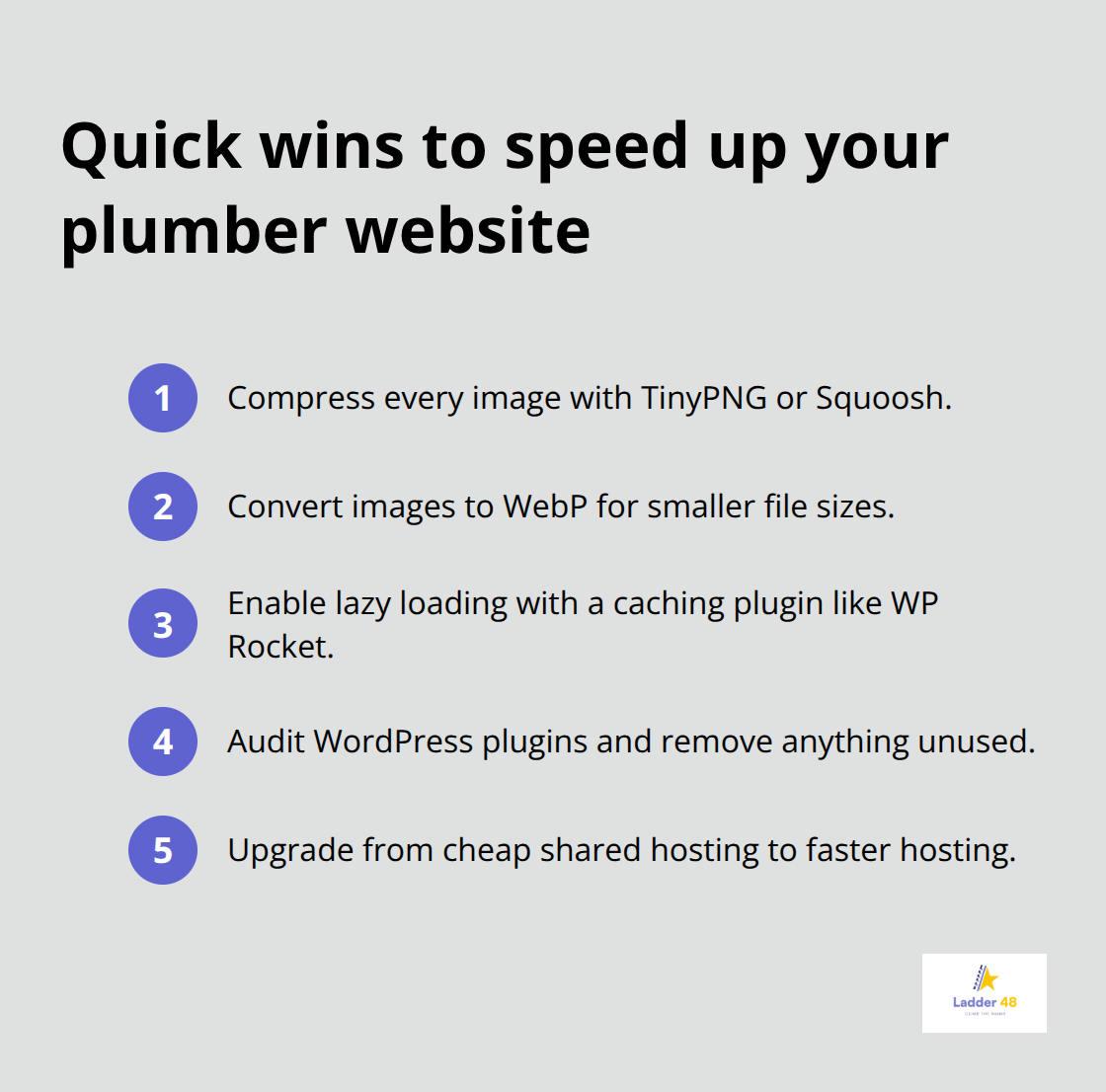
Most plumber sites run 15-25 plugins when they only need 5-7. Deactivate and delete anything you haven’t used in the past month. Each plugin adds code that slows page rendering.
If your hosting costs under $10 per month, upgrade immediately. Cheap shared hosting splits resources across hundreds of sites and creates consistent slowdowns that better hosting eliminates.
Navigation Structure That Guides Visitors to Action
Your navigation structure must guide visitors to conversion points without confusion. Your main menu should have no more than five items: Services, Service Areas, About, Reviews, and Contact. Anything beyond this creates decision paralysis. Clicking Services should reveal subcategories like Emergency Repair, Water Heater Replacement, and Drain Cleaning.
Every page except your homepage should display a visible breadcrumb trail showing the path visitors took to reach it. This helps both users and Google understand your site structure. Test your navigation by asking someone unfamiliar with your business to find your emergency contact number without using the search function. If it takes longer than eight seconds, your structure needs work.
Reviews as Trust Signals That Convert Visitors
Customer reviews function as trust signals that Google and potential customers both value. Websites with five or more reviews on their homepage convert 20-30% better than sites without visible reviews, according to UX research firm BrightLocal. Request reviews from every customer who calls or books a service.
Send a follow-up text 24 hours after the job is complete with a direct link to your Google Business Profile review page. Make this request specific: ask about the technician’s professionalism or how quickly you solved their problem. Specific review requests generate longer, more detailed reviews that potential customers trust more than generic praise.
Display your three highest-rated reviews prominently on your homepage with the customer’s name, date, and the specific service mentioned. Include a link to your full review profile so visitors can read more. Reviews with dates within the past 30 days carry more weight in Google’s algorithm than older reviews. An active review stream signals that your business is current and serving real customers. If you have fewer than ten reviews, prioritize getting five more before investing in other improvements.
Schema Markup for Prominent Search Listings
Schema markup tells Google what your business does and gives you rich results that stand out in search listings. Add LocalBusiness schema to your homepage, PlumbingService schema to your service pages, and FAQPage schema to your FAQ section. Use Google’s Rich Results Test to verify that your schema is correct.
Proper schema markup doesn’t directly improve rankings, but it makes your search listings more visually prominent, which increases click-through rates by 15-25% according to Moz research. A prominent listing that gets clicked more often signals to Google that your result matches user intent better than competitors’ results.
Final Thoughts
User experience directly determines whether your plumbing business ranks in local search results or gets buried below competitors. The improvements we’ve covered-faster load times, mobile optimization, clear contact methods, and visible reviews-aren’t optional extras. Google measures how visitors interact with your site, and sites that frustrate users rank lower, period. Your plumber SEO user experience forms the foundation of your entire ranking strategy.
Start with the fastest wins today. Test your site speed on Google PageSpeed Insights right now. If you score below 90, compress your images and activate caching with WP Rocket to improve your score by 20-30 points within hours. Make your phone number clickable with a tel: link, position it in your header on every page, and add your top three customer reviews with dates and specific service mentions to your homepage.
We at Ladder 48 work with plumbing contractors who want to stop losing jobs to competitors with better websites. Our SEO strategies focus on the technical foundation that Google measures-speed, mobile usability, and trust signals-combined with local optimization that puts you in front of customers searching for your services. Contact Ladder 48 to build a stronger online presence and transform your digital performance into sustainable growth.