
Local search is where homeowners find remodelers. If you’re not showing up in their searches, you’re losing jobs to competitors who are.
We at Ladder 48 know that remodeler local SEO tips work because they’re based on how Google actually ranks local businesses. This guide covers the tactics that move the needle: optimizing your Google Business Profile, building citations, gathering reviews, targeting location-based keywords, and earning local authority signals.
Local Search Visibility: The Three Foundations That Drive Leads
How Google Ranks Local Remodelers
Google’s algorithm ranks local businesses on three signals: proximity, relevance, and prominence. Proximity measures how close you are to the searcher. Relevance measures how well your business matches what they’re looking for. Prominence measures how trusted and authoritative Google thinks you are. You control relevance and prominence directly through your Google Business Profile, citations, and reviews.
Your GBP is the single most important asset for local search visibility. When homeowners search for kitchen remodelers in their city, Google pulls results from your GBP before it even looks at your website. About 70 to 90 percent of local service leads come from Google Maps or location-specific search pages, which means your GBP optimization directly affects your pipeline.
Claim and Complete Your Google Business Profile
Start by claiming your profile if you haven’t already, then complete every single field. Your primary category matters more than most remodelers realize. Instead of selecting General Contractor, choose Kitchen Remodeler or Bathroom Remodeler depending on your highest-margin work. You can add up to 10 categories, so include secondaries like Home Improvement Contractor and Flooring Contractor to capture broader searches.
Write service descriptions that pre-qualify leads by mentioning price ranges and specific deliverables. For example: “Complete kitchen transformation including cabinet installation, countertops, backsplash, and flooring. Starting at $30,000.” This approach filters out budget-conscious homeowners and attracts serious prospects.
Photos and Citations Build Trust Fast
Upload two to three before-and-after photos every week to your GBP. Name your image files with location and service keywords, such as luxury-kitchen-remodel-columbus-oh.jpg. Photos sit above your website in search results and influence clicks before homeowners even visit your site.
Consistency in your business name, address, and phone number across Google, Yelp, Bing Places, Apple Maps, Facebook, Houzz, Angi, HomeAdvisor, Thumbtack, the Better Business Bureau, and local chambers matters enormously. Even minor inconsistencies like “St” versus “Street” can confuse Google’s algorithms and hurt your rankings. Run a gap analysis using BrightLocal or Whitespark’s Citation Finder to identify missing citations and fix inconsistencies before building new ones.
Reviews Convert Leads Into Calls
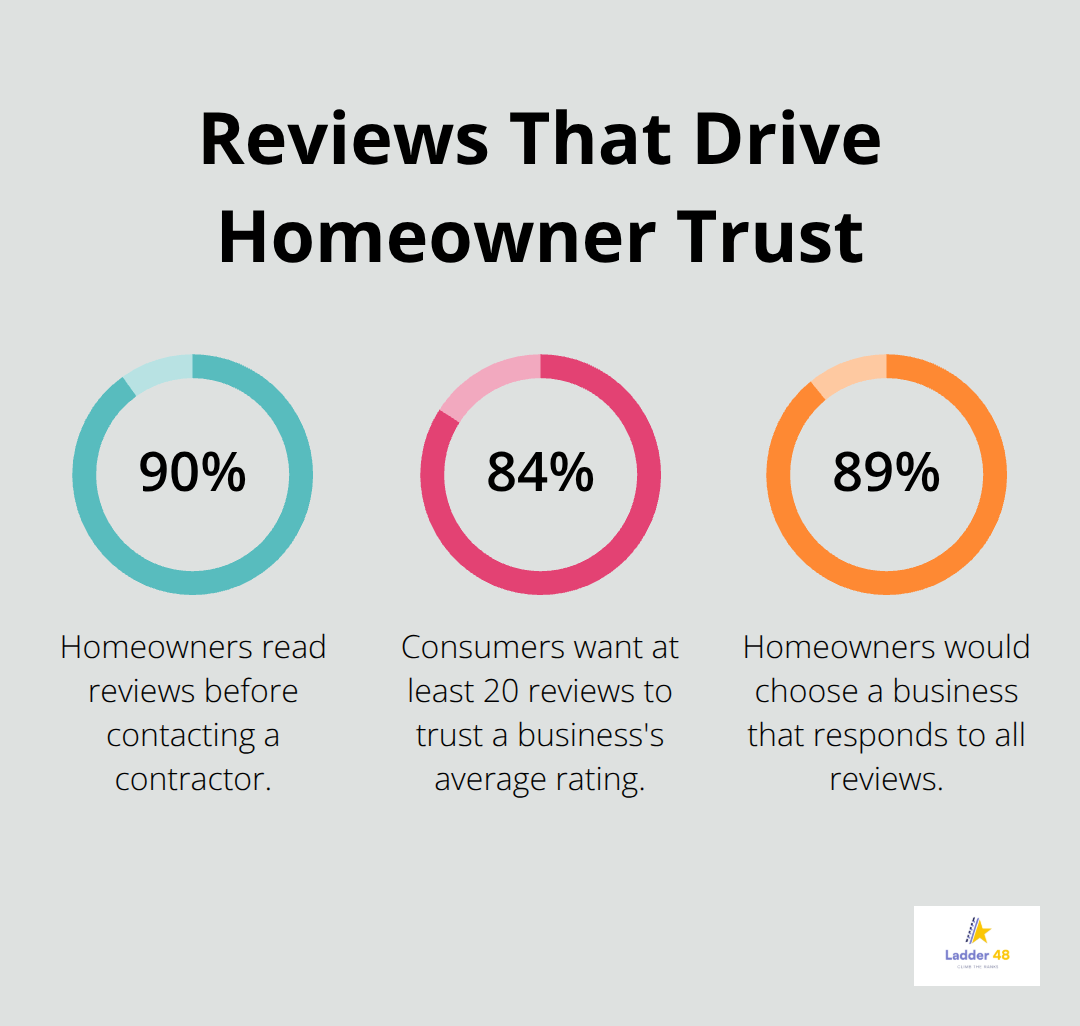
Once your citations are consistent, reviews become your second-biggest ranking and conversion lever. Ninety percent of homeowners read reviews before contacting a contractor, and 84 percent of consumers want at least 20 reviews to trust a business’s average rating. Request reviews at the final walkthrough using a direct Google review link or QR code. Follow up via text or email three to five days later if the homeowner hasn’t left one yet.
Respond to every review, positive or negative, within a week. Eighty-nine percent of homeowners would choose a business that responds to all reviews, and your responses give you a chance to address concerns and highlight your professionalism. Strategic review management transforms your GBP into a lead-generation machine that works around the clock.
Local Keyword Strategy for Home Remodeling Services
Target Location-Based Keywords with Service Types
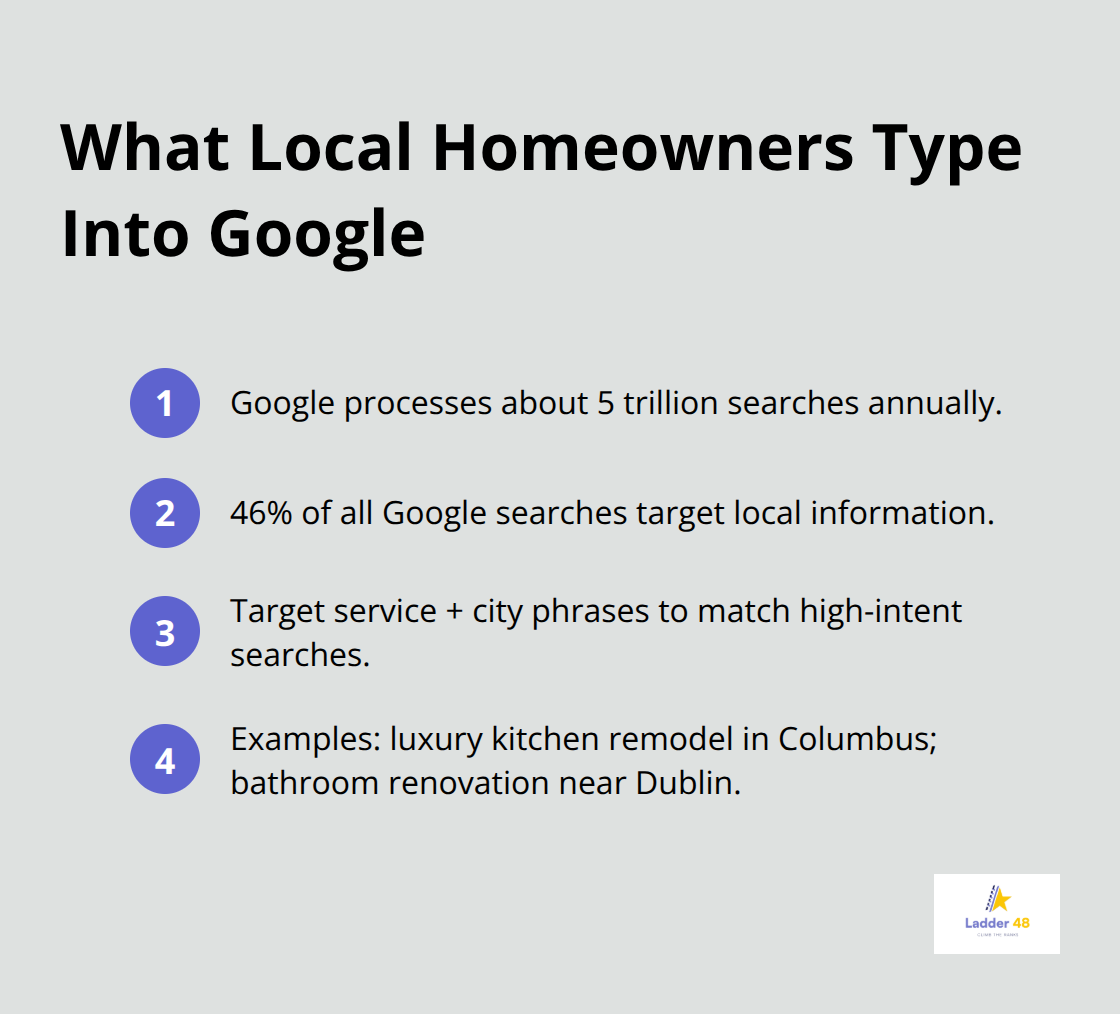
The keywords homeowners type into Google differ drastically from the words you use in your office. Google processes about 5 trillion searches annually, and 46 percent of all Google searches target local information. This means homeowners search for specific service-location combinations right now. Instead of optimizing for broad terms like kitchen remodeling, target phrases that combine your service with the city where you work: luxury kitchen remodel in Columbus, bathroom renovation near Dublin, or tile backsplash installation in Worthington. These location-service combinations are where your phone rings.
Use Google’s autocomplete feature by typing your service into the search bar and noting the suggestions that appear. People Also Ask sections in Google results reveal the exact questions homeowners ask before hiring. For example, if you search kitchen remodeling costs in your city, the People Also Ask box shows questions like How much does a kitchen remodel cost, What is included in a kitchen remodel, and How long does a kitchen remodel take. Answer these questions directly on your website and in your service pages.
Tools like Google Ads Keyword Planner and SEMRush help you separate high-intent keywords people search when they’re ready to hire from informational keywords they search when researching ideas. High-intent keywords deserve prominent placement on your service pages. Informational keywords belong in blog posts that build authority and capture long-tail traffic over time.
Optimize for Voice Search and Mobile Queries
Mobile search demands different treatment than desktop. Eighty-eight percent of people using local search on mobile visit or call within 24 hours, which means mobile searchers convert far more often than desktop researchers. Optimize your Google Business Profile for voice search by using natural, question-based phrases in your service descriptions and FAQs. Voice search users ask questions like How much does it cost to remodel a kitchen or What should I look for in a bathroom remodeler, not keyword phrases.
Create Location Pages for Service Areas
Create detailed location pages for every city and neighborhood you serve instead of using a single generic service page. Each location page should include the city name naturally throughout the headline, body copy, meta title, and URL structure. A page titled Kitchen Remodeling in Columbus performs better than Kitchen Remodeling Services because it signals relevance to both Google and homeowners searching from that specific area.
Include real project details, geotagged before-and-after photos from that neighborhood, and a local phone number or clear call-to-action. Thin placeholder pages that simply swap city names across identical templates rank poorly and waste your time. Google rewards specificity, so invest in authentic location pages that speak directly to the neighborhoods and communities where you build your reputation. These pages form the foundation for the local authority signals that separate market leaders from the rest of the field.
Building Real Authority in Your Local Market
Partner with Local Businesses for Strategic Backlinks
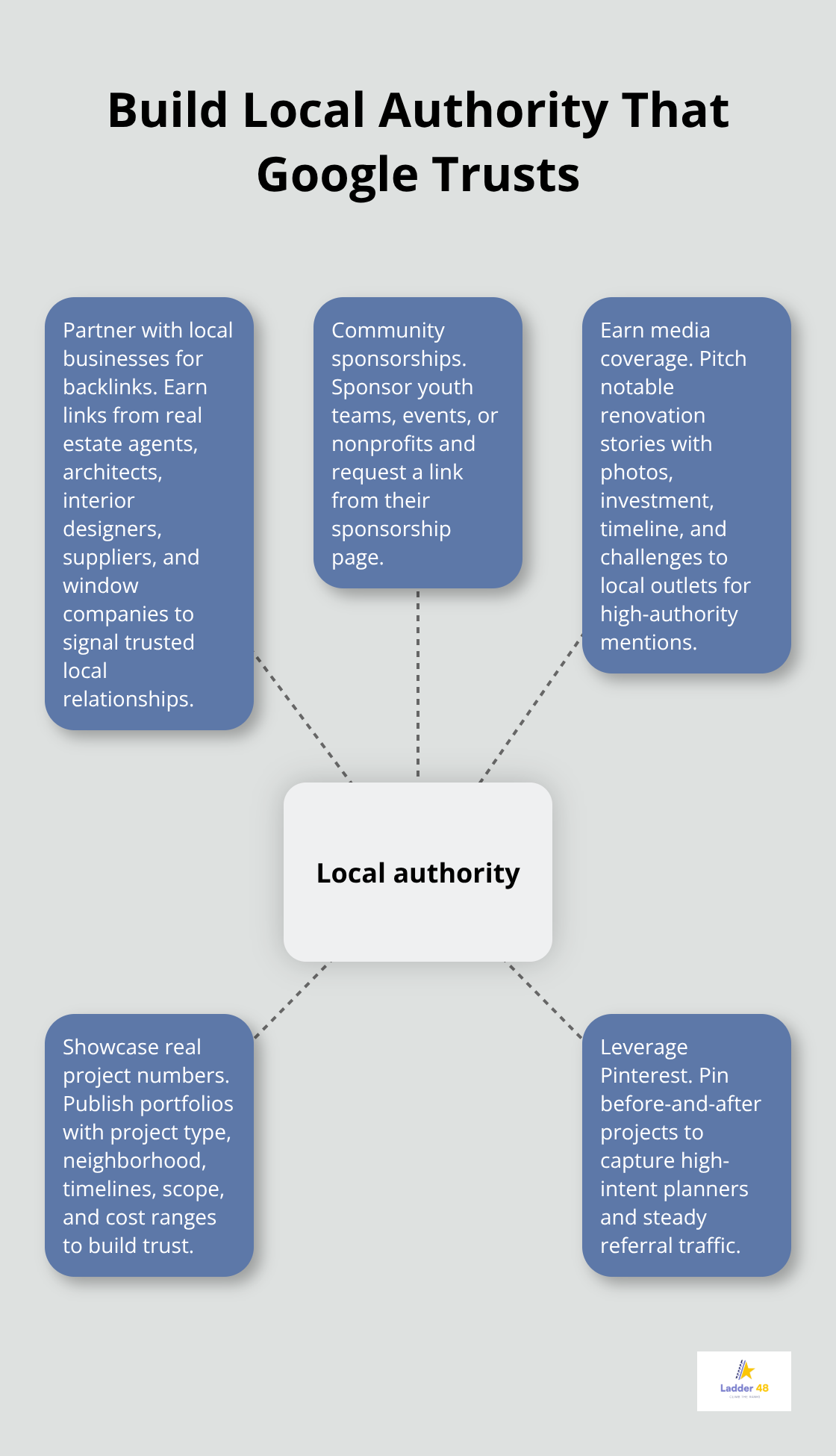
Local authority separates remodelers who dominate their market from those who chase every lead that comes through. Google measures authority through backlinks, media mentions, and the quality of your digital footprint. The strongest backlinks come from local businesses that already trust you: real estate agents, architects, interior designers, flooring suppliers, and window companies. Reach out to three to five businesses in your area that refer clients to remodelers and propose a partnership. Offer to feature their work on your website in exchange for a link back to yours.
A link from a local realtor’s website carries far more weight than a generic directory listing because Google sees it as a vote of confidence from an established local authority.
Sponsorships also generate real backlinks while building genuine community relationships that homeowners notice and respect. Sponsor a local youth sports team, community event, or nonprofit and ask them to link to your website from their sponsorship page. These partnerships work because they connect your business to organizations your target customers already support.
Earn Media Coverage and Expert Positioning
Media coverage accelerates authority faster than almost any other tactic. Local newspapers, home improvement magazines, and neighborhood blogs constantly need expert commentary and project stories. Contact your city’s business journal with a pitch about a notable renovation project you completed, including before-and-after photos and specific details about the transformation. Mention the investment amount, timeline, and unique challenges you solved. Journalists receive dozens of pitches weekly, so yours must tell a story that readers care about, not just promote your business. If a local news outlet features your project or quotes you as an expert, that mention becomes a high-authority backlink and social proof that money cannot buy.
Showcase Projects with Real Numbers and Details
Before-and-after photos deserve their own strategy beyond your Google Business Profile. Create a portfolio page on your website organized by project type, neighborhood, and investment range. Include real project timelines, the scope of work, and the final cost whenever possible. Homeowners search for kitchen remodeling costs in their city and want to see what their budget actually buys. A page showing five completed kitchen projects ranging from $35,000 to $85,000 with photos and descriptions builds trust immediately because it answers the question every homeowner asks first: can I afford this contractor?
Leverage Pinterest for Long-Term Lead Generation
Pin your best before-and-after projects to Pinterest, which drives consistent referral traffic for home remodeling searches. Pinterest users actively plan renovations and save ideas for months before hiring, making it one of the highest-intent social platforms for your business. This channel works because homeowners treat Pinterest as a planning tool rather than a social network, which means they arrive ready to research and compare contractors.
Final Thoughts
Local search dominance for remodelers comes down to execution, not theory. The remodeler local SEO tips covered in this guide work because they align with how Google actually ranks businesses and how homeowners search for contractors. Your Google Business Profile optimization, citation consistency, review strategy, location-based keywords, and local authority signals form a system that compounds over time-each tactic reinforces the others and turns your digital presence into a lead-generation engine that works while you’re on job sites.
Sustained growth requires consistency over months, not weeks. Contractors who dominate their local markets post new photos to their Google Business Profile every week, respond to reviews within days, and continuously add location pages and content that answer homeowner questions. This consistency signals to Google that your business is active and trustworthy, and it keeps your name in front of homeowners across multiple touchpoints before they hire.
Track your Google Business Profile performance through the insights dashboard to see how many people found you through search, called, and visited your website. Monitor your rankings for location-service keywords using Google Search Console to identify which pages drive traffic and which need improvement. Partner with us to develop a tailored SEO strategy that attracts serious homeowners ready to hire, and let’s help you stop chasing every lead and start dominating your local market.


