Most plumbers we work with at Ladder 48 don’t realize how much local search traffic they’re leaving on the table. A strong local SEO strategy can put your business in front of customers actively searching for plumbing services in your area right now.
These plumbers SEO tips focus on what actually moves the needle. You’ll find actionable steps you can implement this week, not theoretical advice that takes months to show results.
The Three Ranking Factors That Control Local Visibility
Google Business Profile: Your Foundation for Local Dominance
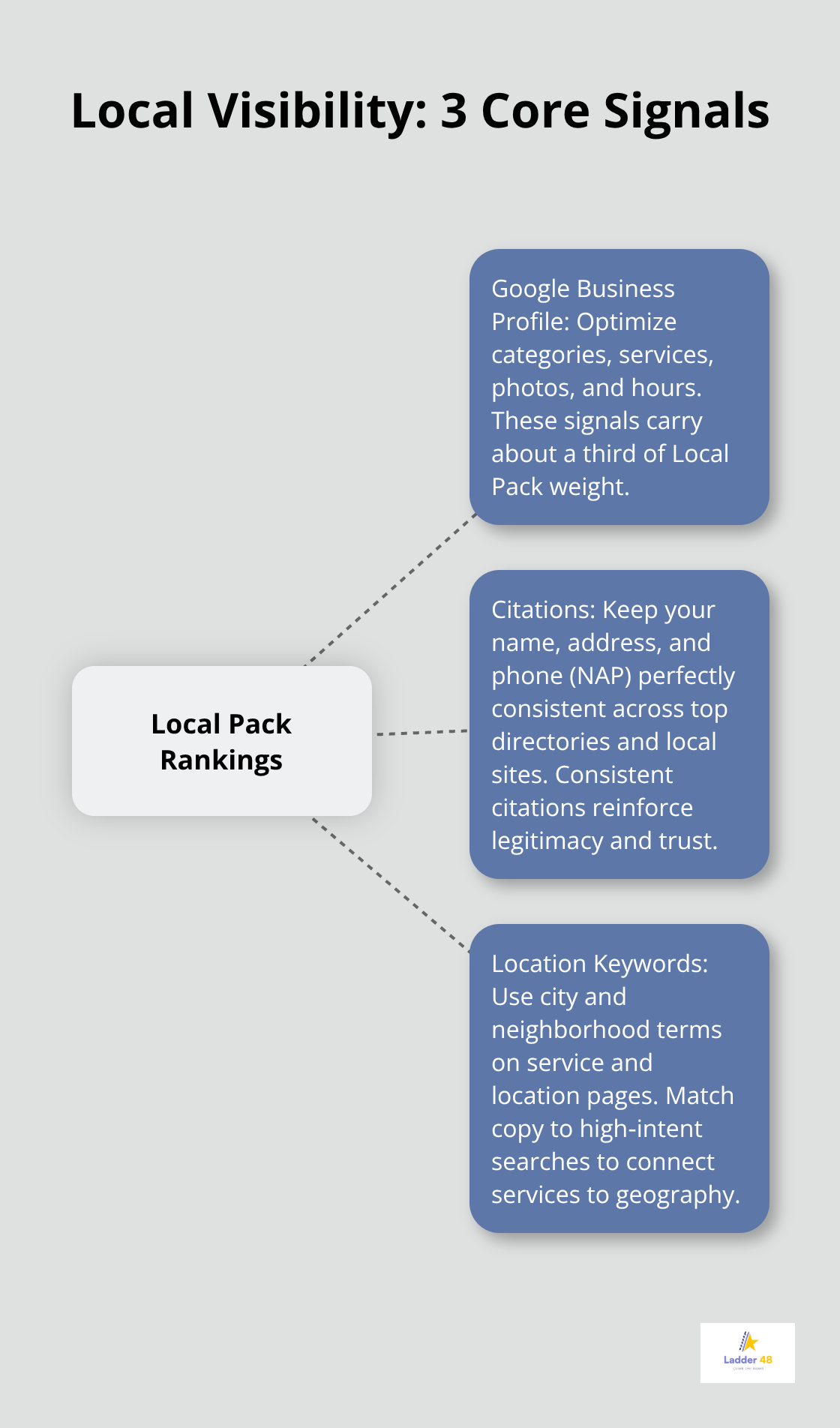
Google Business Profile optimization, citations, and location-based keywords control whether plumbers appear in local search results. According to Whitespark’s Local Search Ranking Factors research, Google Business Profile signals account for roughly 32% of Local Pack ranking factors, making GBP optimization your top priority. The other two signals-citations and on-site location keywords-fill the remaining gaps. All three must work together to drive results.
Your Google Business Profile must list every service area where you actually operate, not a vague radius around your main office. If you cover five cities, create separate service area entries for each one in your GBP settings. This specificity tells Google exactly where your customers are located and prevents your profile from competing against itself across different geographies.
Citations: Build Authority Across the Right Platforms
Claim your business on the major data aggregators first-Google, Bing Places, Apple Maps, Yelp, Facebook, BBB, Angi, Yellow Pages, and Thumbtack. These platforms reach 87% of consumers who read online reviews (according to BrightLocal research) and serve as sources Google uses to verify your business legitimacy. Your name, address, and phone number must remain identical across every single listing. One typo, one abbreviation difference, or one missing zip code weakens your authority signal.
Tools like BrightLocal or Moz Local audit your citations and flag inconsistencies in minutes. After you’ve locked down the major platforms, expand to industry-specific directories like Plumbing Webmasters or regional chamber of commerce listings. One high-quality local citation from your chamber outweighs dozens of generic backlinks.
Location Keywords: Connect Your Website to Local Search Intent
On your website, implement location-based keywords naturally into your service pages and location pages. Instead of writing “We offer drain cleaning services,” write “Emergency drain cleaning in Springfield typically costs between $150 and $400 depending on the blockage severity.” This approach targets the 110,000 monthly searches for Drain Cleaning Near Me while signaling to Google that you serve Springfield specifically.
Mobile search accounts for more than 60% of plumbing searches, so every location page needs a local phone number, a map showing your service area, and fast load times under 2.5 seconds. Customers searching for an emergency plumber at 11 p.m. won’t wait for slow pages. These three elements work together to create the foundation for your next steps.
Quick Wins to Implement This Week
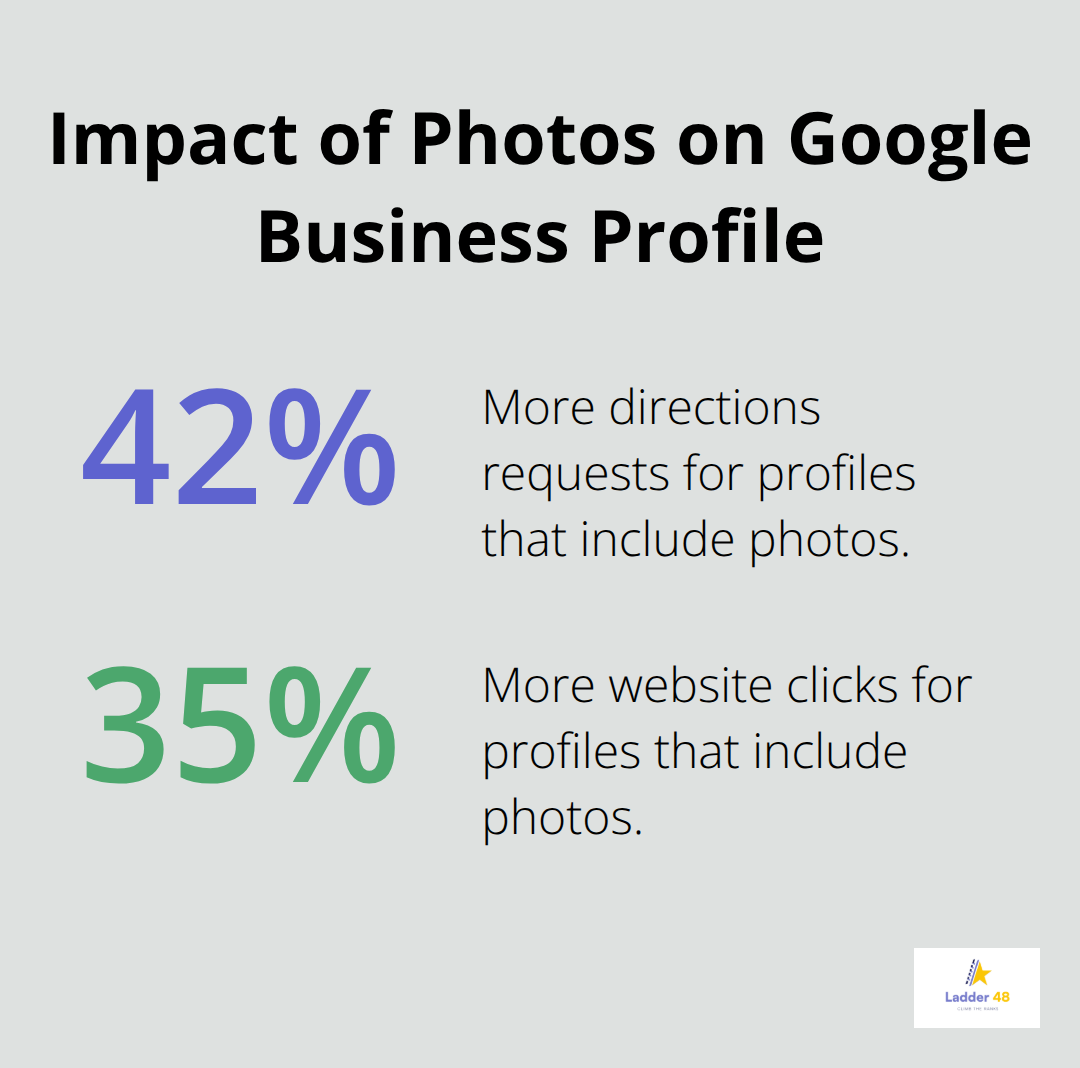
Your Google Business Profile is live right now, but most plumbers leave critical fields empty or outdated. Start with the essentials: verify your primary business category is set to Plumber, not a generic service category. Add every single service you offer with specific descriptions, not vague labels. Instead of writing Drain Cleaning, write Emergency drain cleaning available 24/7 with camera inspection and hydro-jetting equipment. Each service description should answer a customer question or address a specific problem. Upload real job photos weekly directly to your GBP, not stock images. Google Business Profile Insights show that businesses with photos receive 42% more directions requests and 35% more website clicks, according to Google’s own data.
Set your hours to reflect emergency availability if you operate outside standard business hours. Most plumbers don’t list their emergency availability, which means customers searching for a plumber at midnight see competitors instead.
Service Area Pages Stop Self-Sabotage
Create a dedicated service area page for every city or territory where you actually operate and dispatch technicians. If you serve Springfield, Oakville, and Riverside, build three separate pages with local landmarks, neighborhood names, and area-specific phone numbers. Each page should target the high-intent searches you identified earlier: emergency plumber in Springfield, water heater replacement in Oakville, drain cleaning in Riverside. Include specific pricing ranges and response times. Customers want to know if you can arrive in 30 minutes or 4 hours, and they want ballpark costs before calling. The structure matters too: use clean URLs like yoursite.com/springfield/emergency-plumbing-service instead of flat structures that confuse Google about your geographic focus. More than 60% of plumbing searches happen on mobile, so every service area page must load in under 2.5 seconds and have a tap-to-call button above the fold.
Reviews Drive Rankings and Customer Trust
Request reviews within 24 hours of completing a job. Send a text message with a direct link to your Google review page, not a generic request to review you somewhere. According to BrightLocal research, 87% of consumers read online reviews, and 79% trust them as much as personal recommendations. Reviews account for roughly 16% of local pack ranking factors, which means they directly influence whether you appear in the map pack. Respond to every single review, positive or negative, within 48 hours. A response shows Google and customers that you’re engaged. Don’t use scripted replies like Thank you for your business. Instead, address specific details from the review: Thank you for trusting us with your burst pipe repair. We’re glad we prevented water damage to your basement. Try for roughly 10 real reviews per month rather than chasing dozens of low-quality ones. Train your technicians to request reviews during the job, not after they’ve left. The moment someone watches you fix a costly problem is when they’re most likely to follow through and actually post a review.
Mobile Speed and Tap-to-Call Buttons Matter
Your website visitors arrive on mobile devices searching for immediate help. Load times above 2.5 seconds cause customers to bounce to competitors who answer faster. Compress images, enable lazy loading, and use a content delivery network to cut load times in half. Place your phone number and tap-to-call button in the header of every page so customers can reach you with one tap. Test your site on actual mobile devices, not just desktop browsers. A slow page on a 4G connection feels broken to someone with a water leak at 2 a.m. These technical fixes (combined with your GBP optimization and review strategy) position you to capture the emergency plumber searches that convert fastest. The next section covers the technical SEO improvements that support these quick wins and create a sustainable ranking advantage over time.
Mobile Speed and Schema Markup Control Your Technical Foundation
Most plumbers overlook the technical foundation that makes everything else work. You can optimize your Google Business Profile perfectly and collect dozens of reviews, but if your website loads in 5 seconds on mobile, customers bounce to competitors before your service area page even finishes rendering. Google’s Core Web Vitals directly influence local rankings, and plumbing searches skew heavily mobile because customers search at the moment they have a problem. More than 60% of plumbing searches happen on mobile devices. Your largest contentful paint (LCP) must stay under 2.5 seconds, your interaction to next paint (INP) under 100 milliseconds, and your cumulative layout shift (CLS) below 0.1. These aren’t arbitrary numbers-Google uses them to rank pages, and slow sites get buried below faster competitors in local results.
Image Compression and Content Delivery Networks Cut Load Times in Half
Images typically consume 50–80% of page weight, so start there. Use WebP format instead of JPEG or PNG, compress ruthlessly, and implement lazy loading so images only load when users scroll to them. A content delivery network like Cloudflare distributes your content across servers closer to each visitor and cuts load times significantly. Test your actual mobile speed using Google’s PageSpeed Insights tool, not desktop browsers. A page that loads in 2 seconds on desktop often loads in 4–5 seconds on a 4G connection, which is what customers searching for emergency plumbing actually experience.
Schema Markup Tells Google What You Offer and Where You Operate
Implement LocalBusiness schema with your name, address, phone, service areas, and hours of operation. Add Service schema for each major offering like emergency drain cleaning or water heater replacement, including pricing ranges and descriptions. FAQ schema answers common questions directly in search results, which increases click-through rates. This structured data removes ambiguity and helps Google match your services to customer intent faster.
Google Search Console Reveals What Works and What Doesn’t
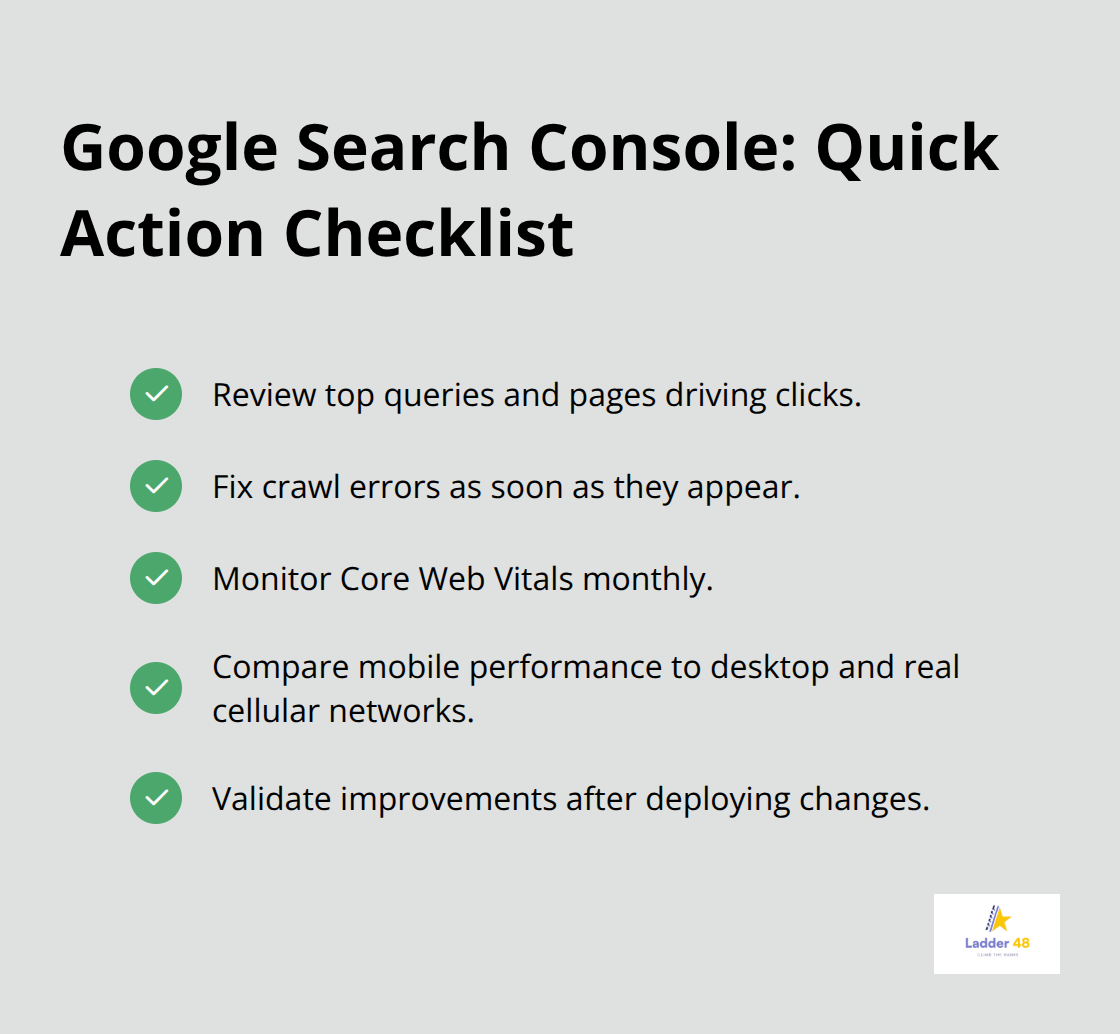
Google Search Console shows you which queries bring traffic and which pages have indexing issues. Fix crawl errors immediately and monitor Core Web Vitals data monthly. The tool reveals whether your mobile pages actually perform as well as you think they do. Most plumbers discover their pages load much slower on actual mobile networks than on their office WiFi.
Technical Performance Outranks Competitors with Identical Reviews
A plumbing website that loads fast, provides clear schema markup, and works flawlessly on mobile outranks slower competitors with identical review counts and citations because technical performance is a direct ranking factor, not a nice-to-have feature. Speed matters more in local search than most plumbers realize.
Final Thoughts
The plumbers SEO tips covered in this guide target what Google actually measures: Google Business Profile signals, citation authority, location relevance, mobile performance, and customer trust through reviews. Start this week by claiming your Google Business Profile completely, uploading real job photos, and setting your emergency hours. Create service area pages for each city you serve with specific pricing and response times, then request reviews from customers within 24 hours of finishing their job.
Long-term growth comes from consistency, not shortcuts. Respond to every review, maintain perfect NAP consistency across all citations, and monitor your mobile page speed monthly using Google Search Console. Build 50 to 100 high-quality citations over the next six months across major platforms and local directories (including chambers of commerce and industry-specific directories in your service areas). Track what actually matters: calls from Google Maps, form submissions, and direction requests.
Most plumbers who implement these strategies see 20 to 50 additional leads per month within three to six months. The investment is time and consistency, not expensive paid advertising. If you want to accelerate your results and avoid common mistakes, Ladder 48 can guide your SEO strategy with transparent, results-driven approaches tailored to your service areas and target customers.