Most plumbers don’t rank on Google because they skip the fundamentals. At Ladder 48, we’ve seen how proper SEO transforms plumbing businesses into the go-to choice in their service areas.
This guide covers the plumber SEO basics that actually move the needle: local optimization, technical fixes, and content that converts local customers into jobs.
Local SEO Fundamentals for Plumbers
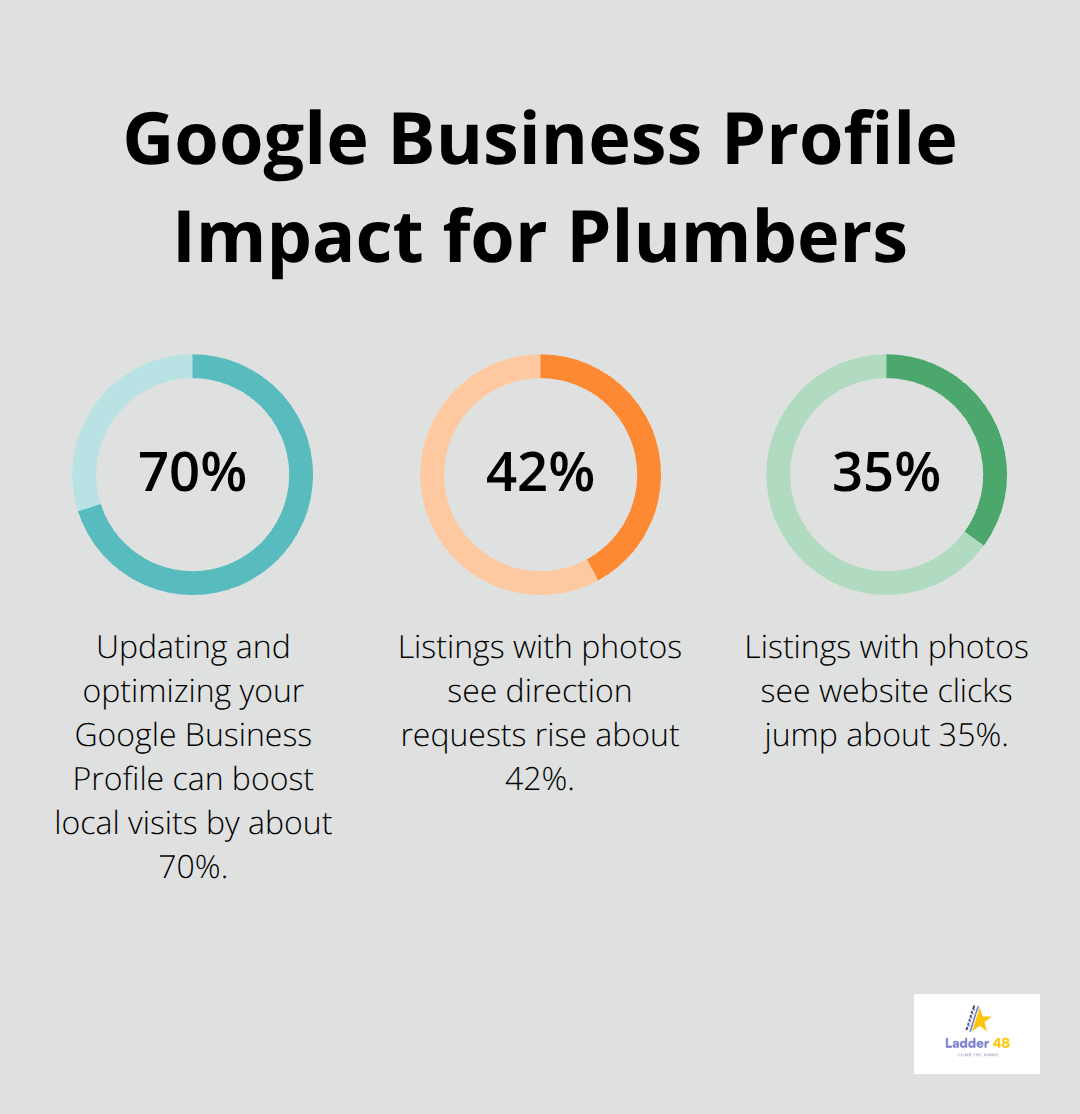
Your Google Business Profile is the single most important asset for local plumbing visibility. When someone searches for a plumber near them, Google displays the Local Pack-three business listings at the top of search results. Updating and optimizing your Google Business Profile can boost local visits by about 70%, according to Google’s own data. Claim your profile if you haven’t already, then fill in every field: business name, address, phone number, service areas, business hours, and a detailed description of what you offer. Add high-quality photos of your work, your team, and your vehicles. Listings with photos drive real engagement-direction requests rise about 42%, website clicks jump about 35%, and having 100 or more high-quality photos makes you 713% more likely to be found by customers. Refresh your profile monthly with new photos, updated hours, and seasonal service announcements to show Google that your business stays active.
Get listed where customers look
Citations-mentions of your business name, address, and phone number on directories like Yelp, Angi, Bing Places, and the Better Business Bureau-tell Google your business is real and legitimate. 80% of buyers lose trust when contact details are incorrect or misleading across the web, so consistency matters enormously. Your name, address format, and phone number must be identical everywhere. Don’t use abbreviations in one place and spelled-out words in another. Don’t list a different phone number on Yelp than on your website. This accuracy directly impacts your rankings and customer confidence. Build citations on high-authority directories first: Yelp, Google Business Profile, Angi, Bing Places, BBB, and your local chamber of commerce. Then expand to industry-specific directories and local business listings. Try for at least 15 to 20 quality citations across trusted platforms.
Reviews are your competitive advantage
Customer reviews influence local rankings and drive trust. 85% of consumers trust online reviews as much as personal recommendations, and active engagement with reviews boosts your visibility in the Local Pack. Start collecting reviews immediately. Ask customers to leave reviews on Google and Yelp-these are the two platforms that matter most for plumbers. Send a follow-up text or email after the job is complete with a direct link to your Google review page to make the process easy. Respond to every review, positive or negative. A response to a negative review shows potential customers you care about fixing problems. Respond to positive reviews with gratitude and mention specific details from the job. Try for at least one new review per week. Plumbing is a service where word-of-mouth matters, and online reviews are the modern version of that word-of-mouth. Businesses with 50 or more reviews rank significantly higher than those with five or fewer, which means your next step involves the technical foundation that supports these local signals.
Technical SEO Essentials Every Plumber Needs
Speed and Mobile Performance Drive Rankings
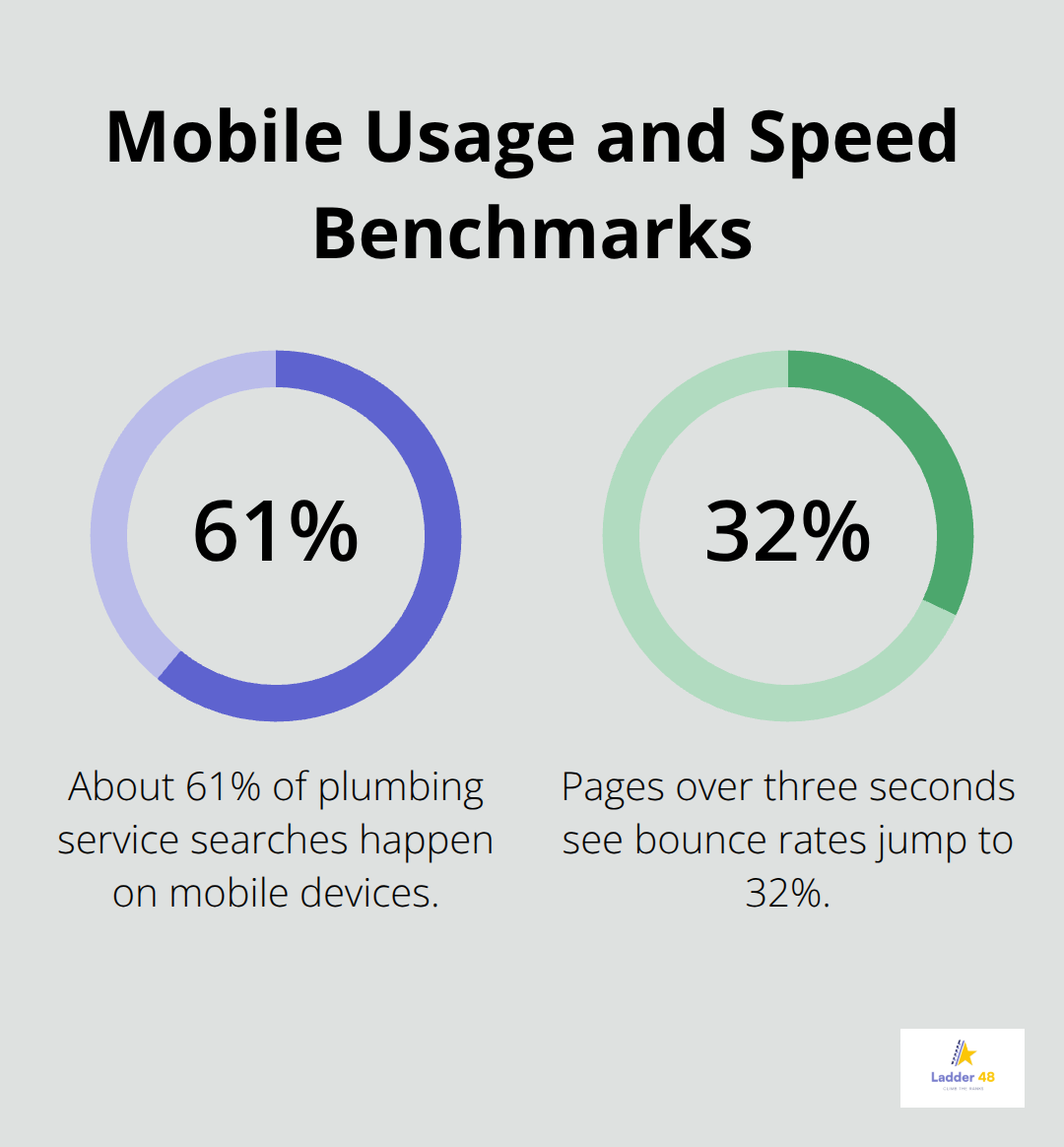
Your Google Business Profile and citations mean nothing if your website doesn’t work properly. About 61% of plumbing service searches happen on mobile devices, and pages that load in under 1.65 seconds rank on the first page of Google. Pages over three seconds see bounce rates jump to 32%, meaning potential customers leave before even seeing your service offerings.
Test your site speed right now with Google PageSpeed Insights or GTmetrix. If your pages load over two seconds, compress your images first, enable browser caching, and consider upgrading your hosting. These three fixes solve most speed problems without requiring a developer. Add responsive design to your website so it adapts seamlessly to phones and tablets. A mobile-first approach isn’t optional anymore-it’s mandatory for ranking in local search results.
Fix Crawl Issues and Submit Your Sitemap
Broken links and missing XML sitemaps confuse Google’s crawlers and prevent your pages from ranking. Audit your website every three to six months using free tools like Screaming Frog or the URL Inspection tool in Google Search Console to find broken links, redirect chains, and pages that won’t index. Fix broken links immediately because they waste your crawl budget and frustrate visitors.
Create an XML sitemap that lists all your important pages and submit it to Google Search Console so Google knows exactly which pages to crawl and rank. This simple step removes guesswork from the indexing process and accelerates how quickly new content appears in search results.
Use Schema Markup to Stand Out in Search Results
Add LocalBusiness and Service schema markup to your website so Google understands you’re a plumbing business operating in specific service areas. Schema markup tells search engines your business name, address, phone number, service areas, and customer ratings without relying on them to guess. Pages with proper schema markup appear with rich snippets in search results, showing your star rating and phone number directly in the listing, which increases click-through rates significantly.
Install an SSL certificate on your website, which means your URL starts with https instead of http. Google gives a modest ranking boost to secure sites, and 80% of users distrust websites without the security indicator. These technical foundations work together to make your website visible, trustworthy, and easy for Google to understand-which sets the stage for content that actually converts local customers into jobs.
Content Strategy That Attracts Local Customers Into Jobs
Create Location-Specific Service Pages That Convert
Most plumbers write content the wrong way. They publish generic how-to guides about fixing leaky faucets or explaining water heater maintenance, then wonder why they don’t rank or attract calls. The issue is that generic content doesn’t match how local customers actually search. A homeowner in Phoenix searching for an emergency plumber at 2 AM doesn’t want a theoretical guide to burst pipes. They want to know if you service their neighborhood, your response time, and your pricing.
Content strategy for plumbers must start with location-specific service pages that answer the questions your actual customers ask in your actual service areas. Create dedicated pages for each major service you offer within each city or neighborhood you serve. Instead of one generic drain cleaning page, build separate pages for drain cleaning in downtown, drain cleaning in the suburbs, and drain cleaning for commercial properties. Each page targets a specific keyword combination that real customers search.
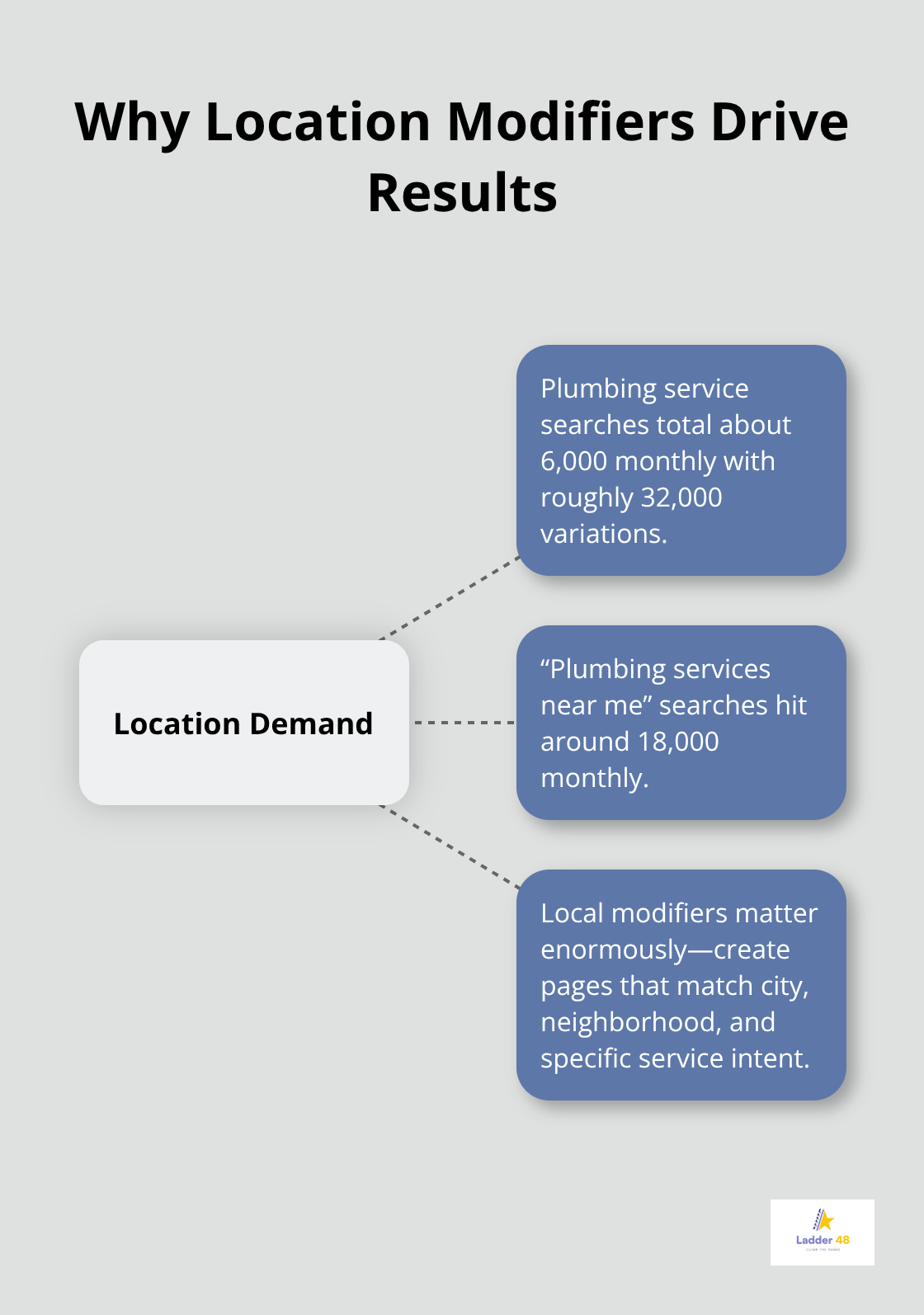
Research what your local competitors rank for by typing your service plus your city into Google and examining the top five results. Notice which pages rank and what keywords appear in their titles and first paragraphs. Target those same keywords on your pages, but make your content more specific and actionable. Include your response time, service area boundaries, emergency availability, and pricing range upfront. Plumbing service searches total about 6,000 monthly with roughly 32,000 variations, while plumbing services near me searches hit around 18,000 monthly. This means local modifiers matter enormously. Every page you create must answer a location-specific problem with a location-specific solution.
Write Blog Posts That Answer Real Customer Questions
Blog content works differently than service pages because blogs establish authority and answer questions that guide customers earlier in their decision-making. Write blog posts about problems your customers actually experience, not theoretical plumbing issues. Check Reddit and local Facebook groups in your service area to see what questions homeowners ask repeatedly. A homeowner might search for how to prevent frozen pipes before winter hits, or what causes low water pressure in older homes, or whether they can use a plumbing snake safely. These topics have genuine search volume and generate qualified traffic because people actively seeking solutions write these searches.
Publish detailed guides that answer the entire question in the first two paragraphs, then expand with practical steps and warnings. Consistent publishing compounds your visibility over time-updating blogs regularly yields up to 434% more indexed pages according to content research. Develop an FAQ section specifically for emergency situations because 64% of local searches occur on mobile devices and customers often search while standing in front of a burst pipe or backed-up toilet.
Optimize FAQ Content for Emergency Situations
FAQ content structured with clear questions and direct answers performs well in search results and on mobile devices. Include questions like what to do immediately when your water heater fails, how to shut off water quickly in an emergency, whether you handle after-hours calls, and what emergency service costs. Schema markup for FAQ content appears as expandable sections in search results, which increases click-through rates significantly. Your FAQ section becomes a second entry point for customers searching emergency plumbing problems in your area, complementing your service pages and building trust by proving you understand urgent situations your customers face.
Final Thoughts
Plumber SEO basics rest on three interconnected priorities: local visibility, technical reliability, and customer-focused content. Your Google Business Profile and citations form the foundation that tells Google you operate as a legitimate local business. Your website speed and schema markup allow Google to crawl, understand, and display your business to customers searching for emergency plumbing help. Your location-specific service pages and FAQ content answer the exact questions your customers ask when they need you most.
Start this month with quick wins that require minimal time but deliver immediate impact. Claim and fully optimize your Google Business Profile with fresh photos and accurate service area information. Audit your website speed with Google PageSpeed Insights and compress your images if pages load over two seconds. Request reviews from your last ten customers with a direct link to your Google review page. These three actions take a few hours but establish the foundation that compounds over months.
Ongoing SEO matters because plumbing markets remain intensely competitive. Your competitors optimize their profiles, publish content, and collect reviews right now. Plumbers who treat SEO as a one-time project fall behind those who treat it as a continuous process. We at Ladder 48 help plumbing businesses build sustainable SEO strategies that generate qualified local leads, and we’d like to show you how to climb to the top of search rankings in your service areas.