Most electricians lose local jobs to competitors with better online visibility. Electrician SEO for local markets isn’t optional anymore-it’s how you get found by customers searching for services in your area.
We at Ladder 48 help electrical businesses rank higher in local search results and attract more qualified leads. This guide covers the exact strategies that work.
Local SEO Fundamentals for Electricians
Optimize Your Google Business Profile
Your Google Business Profile is either your most valuable asset or your biggest missed opportunity. Ninety percent of electrical contractors have poorly optimized profiles, which means they lose calls from customers actively searching for their services right now. A complete profile with correct business name, address, phone number, and services generates up to five times more views than an incomplete one.
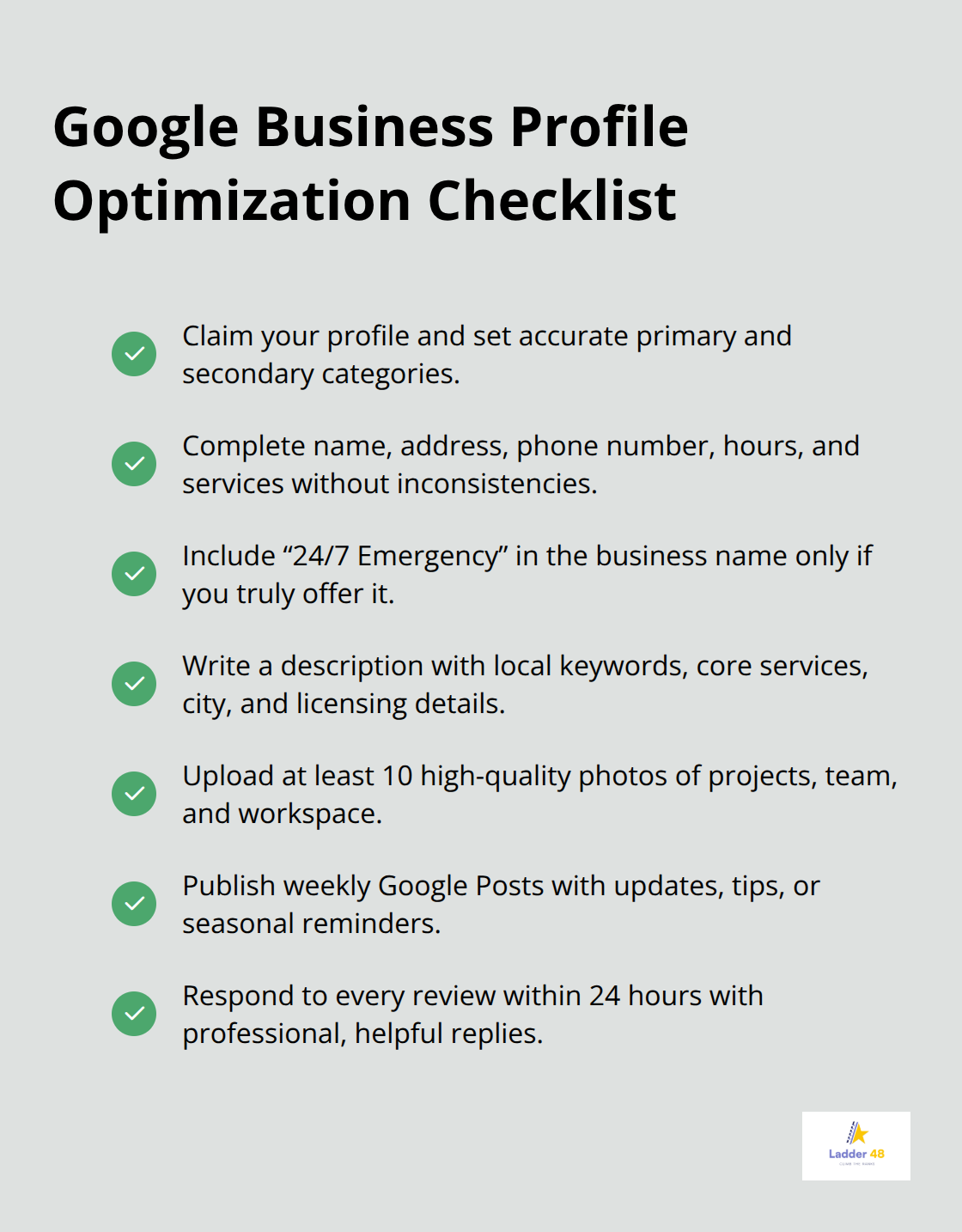
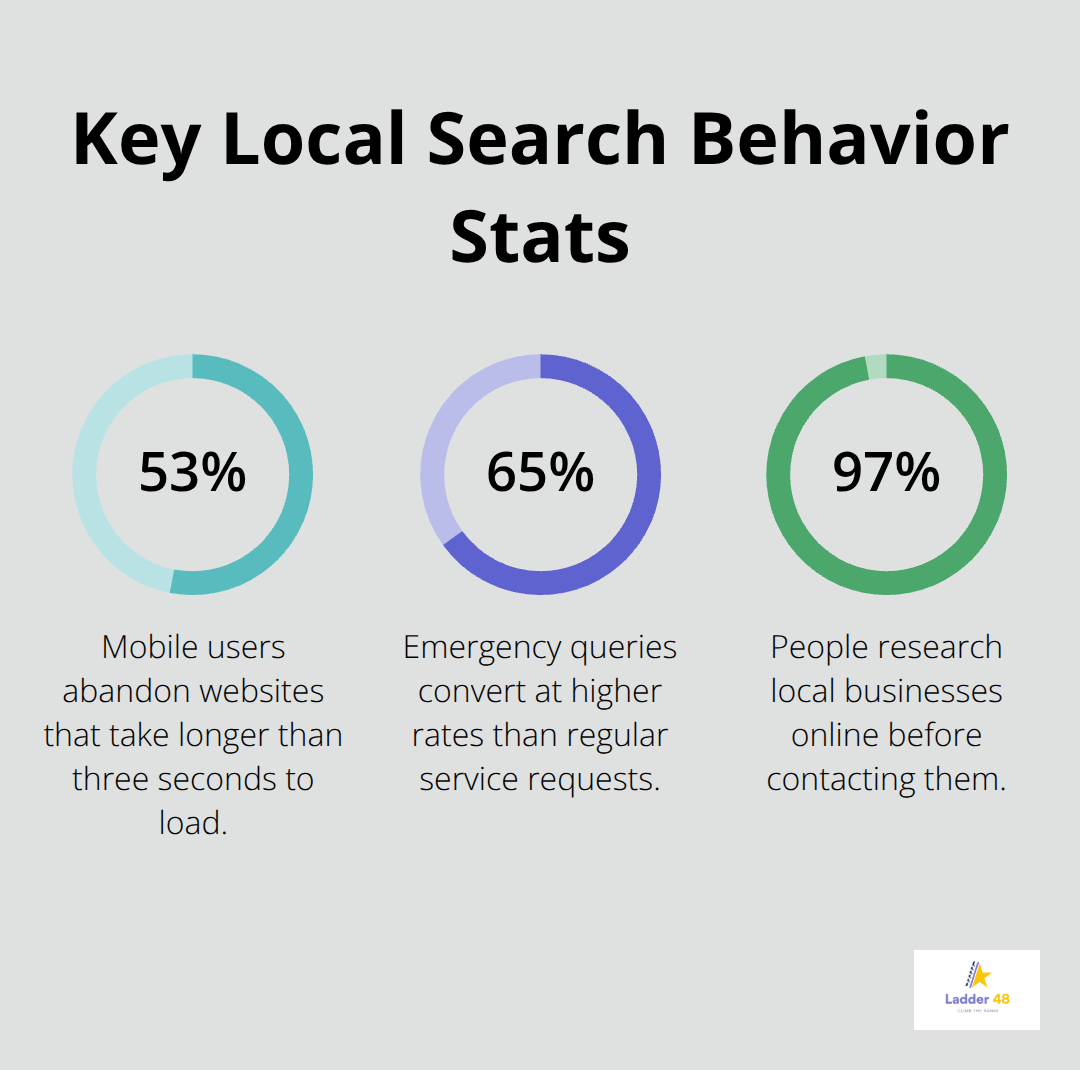
Start by claiming your profile if you haven’t already, then add your primary category as Electrician and secondary categories like Emergency Electrician or Electrical Contractor. Your business description should mention local keywords, main services, your city, licensing credentials, and whether you offer 24/7 emergency service. If you do offer emergency availability, add “24/7 Emergency” to your business name because emergency queries convert at 65% higher rates than regular service requests.
Upload at least 10 high-quality photos showing completed projects, your team, and your workspace; profiles with 10 or more photos see substantially more calls than those with few or none. Post on Google Posts at least weekly with project updates, safety tips, or seasonal maintenance reminders to signal activity to Google. Respond to every review within 24 hours, thank positive reviewers, and address negative feedback with professional problem-solving.
Build a Review Generation System
The most critical action is building a review generation system that automatically prompts customers to leave Google reviews after job completion. Fifty or more reviews correlate with roughly three times more calls than 10 or fewer, and Google’s algorithm uses review quantity, recency, and your response rate as local ranking signals. Make it easy for customers to review by using QR codes and direct text links to your Google review page. High-quality reviews that mention the specific electrical work performed help other customers understand your capabilities and boost your credibility.
Citations and Local Authority
Citations are mentions of your business name, address, and phone number across directories like Yelp, Angi, HomeAdvisor, BBB, and Nextdoor. NAP consistency across these platforms matters enormously because Google looks for the same business name, address, and phone everywhere to protect your rankings. A single inconsistency can confuse Google’s systems and tank your local visibility.
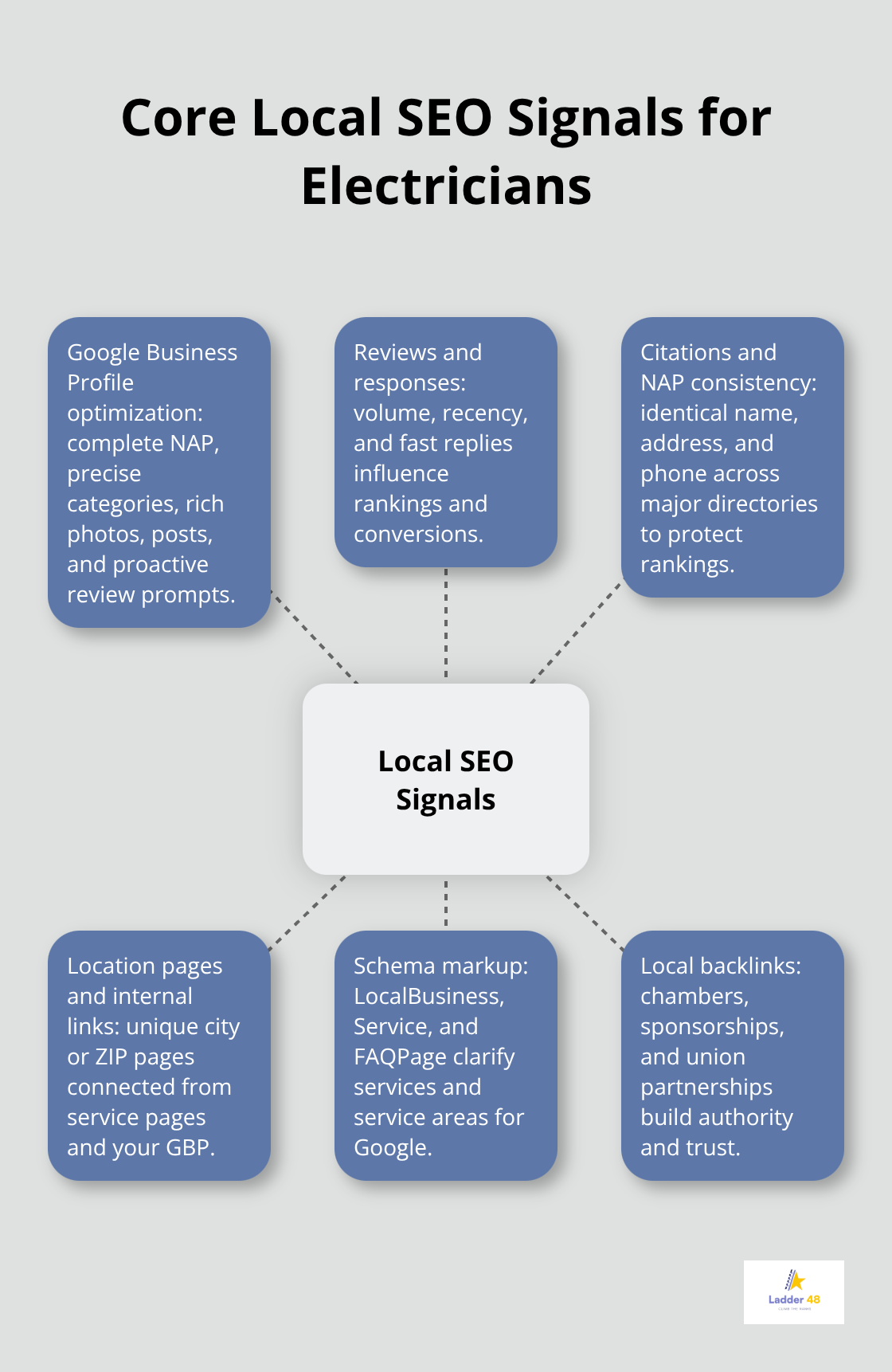
Build citations on high-authority trade directories like Checkatrade and NICEIC because these credentials carry weight for both search algorithms and customer trust. Local backlinks from community sources like your Chamber of Commerce, sponsorships, or union partnerships signal authority to Google.
Target Location-Based Keywords and Create Local Pages
Geo-targeted keywords like “electrical repair in [city],” “best electrician near me,” and “emergency electrician [city name]” capture location-based search intent far better than generic terms like electrician or electrical contractor. Create dedicated location pages for every city, town, and ZIP code within your service area, each with unique, locally relevant content that addresses specific customer pain points in that region. This approach targets the 230,000 monthly US searches for “electrician near me” and the countless hyperlocal variants that customers actually use when searching for immediate help. With your Google Business Profile optimized and local citations in place, you’re ready to implement the technical strategies that help Google understand exactly where you serve and what problems you solve.
How Google Understands Your Service Area and Builds Trust
Schema Markup Tells Google What You Do and Where
Schema markup tells Google exactly what electrical services you offer and where you offer them, eliminating ambiguity from your website code. Without schema, Google has to guess whether your page covers panel upgrades in Denver or emergency repairs in Austin. LocalBusiness schema should include your business name, address, phone number, service areas, and hours. Service schema specifies individual offerings like rewiring, EV charger installation, or PAT testing, which helps Google match your services to customer searches. When you add FAQPage schema to your electrical troubleshooting content, Google can pull answers directly into AI-driven search results, putting your expertise in front of searchers before they even click your site. Start with schema on your homepage, Google Business Profile, and every service page. Tools like Google’s Structured Data Testing Tool verify your markup is correct before deployment.
Create Location Pages That Answer Local Questions
Location-specific landing pages rank higher than generic pages because they answer the exact question customers ask: can you serve my area? You should create one dedicated page for each city or ZIP code you service, with unique content that addresses local electrical codes, neighborhood-specific wiring challenges, and regional climate factors that affect electrical systems. A page titled Electrical Panel Upgrade in Denver should mention Denver building codes, local inspector requirements, and neighborhood-specific considerations rather than repeating national information. Include local customer testimonials on each page; research from Spiegel Research Center shows reviews boost conversions by up to 270 percent. A clean, professional website builds trust and keeps potential customers engaged, which improves SEO rankings.
Link Your Location Pages Strategically
Link these location pages internally from your service pages and Google Business Profile to signal to Google that you genuinely serve those areas. Internal linking structure matters because it shows search engines which pages are most important and how your content relates. Most electricians make the mistake of creating thin location pages with minimal unique content; Google’s algorithm recognizes this and ranks them poorly. Your location pages should be 800 to 1,500 words each, with actual local insights and customer feedback that proves you understand that specific market. Once you’ve built this foundation of schema markup and location-specific content, you’re ready to tackle the technical and content strategies that accelerate your rankings even further.
Technical SEO and Content Strategy for Electrical Services
Site Speed Determines Whether Customers Stay or Leave
Site speed determines whether potential customers stay on your website or bounce to a competitor. Google reports that 53 percent of mobile users abandon sites that take longer than three seconds to load, and electricians lose leads every single day because their websites are slow. If your homepage takes five seconds to load, you’ve already lost half your mobile traffic before they see your services or phone number.
Test your actual load time using Google PageSpeed Insights, which gives you specific recommendations tailored to your site. Compress images aggressively because photos of completed electrical work build trust, but oversized images kill performance. Remove unnecessary plugins and bloated code; many electrician websites run 15 or more unused plugins that slow everything down.
Mobile responsiveness matters because 97 percent of people research local businesses online before contacting them, and most of that research happens on smartphones. Your website must load fast, look clean, and display your phone number prominently on every mobile screen. Core Web Vitals measure loading speed, interactivity, and visual stability; improving these metrics directly correlates with higher Google rankings and more phone calls.
Content That Answers Real Electrical Questions
Create content around the electrical problems customers actually search for, not generic industry information. High-volume keywords like “electrician near me” and “emergency electrician” reveal what customers need right now, but long-tail searches like “how much does it cost to rewire a house” or “why does my circuit breaker keep tripping” show customers in research mode who are ready to hire.
Write 800 to 1,500 word articles that directly answer these questions with specific information relevant to your service areas. Include cost estimates, timelines, and explanations of why the problem occurs because customers want to understand what they’re paying for before calling. Understanding what your customers are searching for is the foundation of effective content strategy, so use FAQPage schema on these articles so Google can pull your answers into AI search results, putting your expertise in front of searchers who haven’t clicked your site yet.
Structure your content with clear headings, short paragraphs, and bulleted explanations because both humans and AI search algorithms prefer scannable, well-organized information. This content strategy attracts customers at every stage of the buying journey and establishes you as the local electrical authority in your market.
Website Architecture That Supports Local Search
Your website structure should mirror how customers search for electrical services. Create a clear hierarchy with Home pointing to Services, then Services pointing to specific offerings like Panel Upgrade, EV Charger Installation, or Emergency Repair, and each service page linking to location pages for cities you serve. This structure helps Google understand your topical authority and makes it easy for customers to find exactly what they need.
Use simple, readable URLs like yoursite.com/services/panel-upgrade-denver instead of cluttered strings that confuse both search engines and users. Internal linking between related pages signals to Google which content is most important and how your expertise connects across different services and locations. Most electricians create location pages but fail to link them strategically, so Google never realizes they actually serve those areas.
Link your Denver location page from your Panel Upgrade service page, your Emergency Electrician page, and your Google Business Profile to make the connection unmistakable. A well-structured website combined with fast load times and high-quality content creates the technical foundation that allows your local SEO efforts to actually work.
Final Thoughts
Local SEO for electricians compounds over time because each optimization reinforces the others. Your Google Business Profile, location pages, schema markup, and review system work together to create a competitive advantage that competitors struggle to match. Start with your Google Business Profile-claim it, complete every field, upload photos, and build a review system that runs automatically after each job. This single step generates more calls within 30 to 60 days than most electricians expect.
Next, audit your website and fix your three slowest pages because site speed directly impacts both rankings and customer experience. Build your location pages systematically by starting with your top five service areas and expanding from there. Each page should answer real questions customers ask about electrical work in that specific location, not generic national information.
Electrician SEO for local markets requires technical knowledge, ongoing optimization, and data-driven decisions that most electricians lack the time to implement while running their business. We at Ladder 48 specialize in building the exact systems described in this guide-from Google Business Profile optimization to location page creation and performance tracking. Contact Ladder 48 to transform your local search visibility into qualified leads that convert into paying customers.