
Most plumbers lose potential customers because they’re invisible in local search results. At Ladder 48, we’ve seen firsthand how proper local SEO transforms plumbing businesses-more calls, higher visibility, better revenue.
This guide covers the plumber local SEO tips that actually work: claiming your Google Business Profile, building citations, optimizing for local keywords, and managing reviews. You’ll find actionable strategies you can implement immediately.
Local Search Fundamentals for Plumbers
Claim and Optimize Your Google Business Profile
Your Google Business Profile is the foundation of local search visibility. A complete GBP profile generates seven times more clicks than an incomplete one, according to Google Business Profile guidelines. This means claiming your profile and filling every field isn’t optional-it’s the difference between appearing in the local pack and staying invisible.
Start by claiming your profile if you haven’t already. Add your exact name, address, and phone number to every field. Write a description that speaks to your customers without stuffing keywords. Include your service areas, emergency hours, and link directly to your website.
Upload 20 to 30 high-quality photos of completed jobs, your team, and your van. These photos signal legitimacy and boost engagement rates significantly. Post weekly updates about seasonal offers, emergency availability, or maintenance tips. Answer the Q&A section proactively by seeding 10 to 15 common questions customers ask, then respond within 24 hours to new questions.
Monitor GBP Insights religiously. Track which searches bring people to your profile, how many call clicks you receive, and which keywords perform best. This data tells you exactly where your customers search and what they want.
Build Citations Across Major Directories
NAP consistency is non-negotiable. Your name, address, and phone number must match perfectly across Google, Yelp, Angi, BBB, and other major directories. Inconsistent information confuses search algorithms and costs you rankings.
Use BrightLocal or Whitespark to audit your current citations and identify duplicates or errors. Fixing these issues takes time but pays dividends. Once your NAP is locked in, add photos, service lists, and links to your location-specific service pages on every directory profile. This signals relevance to search engines and increases click-throughs from directory users who actively search for plumbers. Update these profiles annually and after any business changes.
Implement Schema Markup for Search Engines
LocalBusiness schema markup tells search engines exactly what you do and where you operate. Implement LocalBusiness, Service, and FAQPage schemas using JSON-LD format. Test your markup with Google’s Rich Results Test to verify it works correctly.
This structured data helps you appear in rich snippets and improves your chances of ranking in AI-powered search results. Schema markup is technical but essential-it’s the language search engines use to understand your business. Once you establish this foundation, your local search strategy is ready for the on-page and technical SEO strategies that drive qualified traffic to your service pages.
On-Page and Technical SEO for Local Plumbing
Target Local Keywords That Drive Calls
Your website’s on-page optimization directly impacts whether plumbers searching for your services find you or your competitors. Start with keyword research using Google Keyword Planner or SEMrush to identify what your customers actually search for. Focus on local intent terms like emergency plumber in your city, drain cleaning near me, or water heater repair in specific neighborhoods. High-volume keywords matter: emergency plumber receives 165,000 monthly searches, water heater replacement pulls 201,000, and drain cleaning generates 135,000 searches according to industry keyword data. Build your content strategy around these terms, then map them to dedicated service pages and location pages. Each page should target one primary keyword plus your city modifier, such as drain cleaning in Atlanta or emergency plumber in Marietta. Write natural, helpful content around these keywords without forcing them unnaturally into every sentence.
Optimize for Mobile and Speed
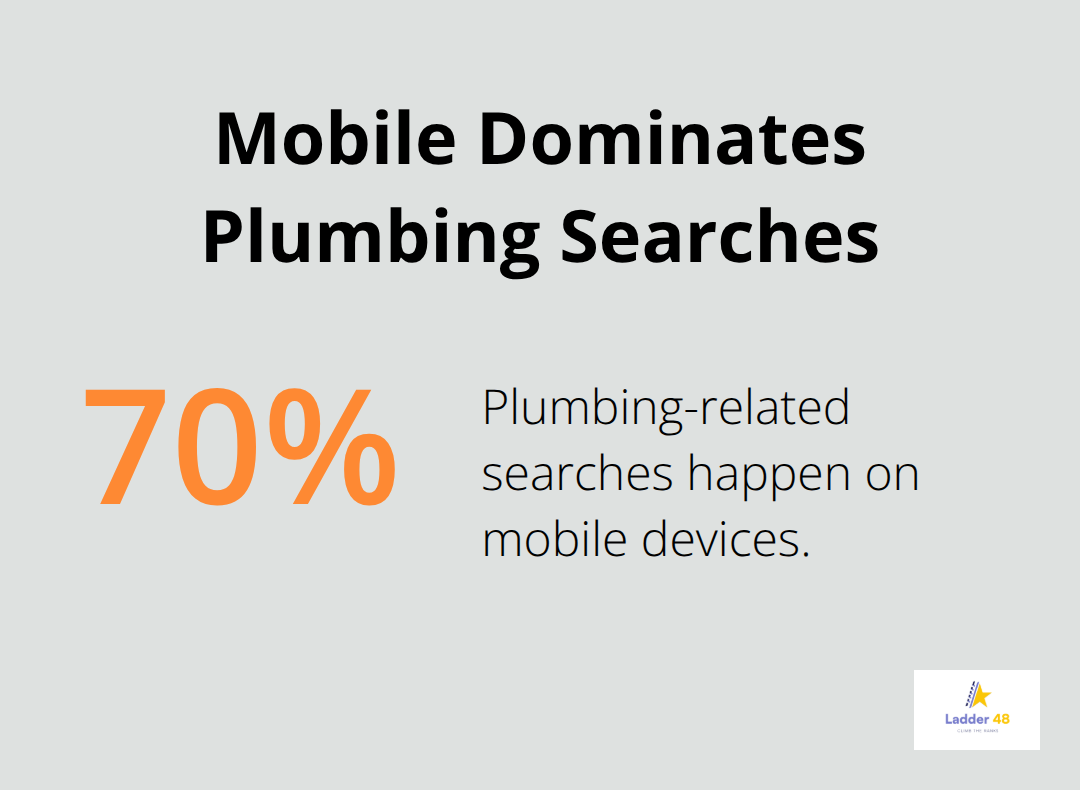
Mobile responsiveness is non-negotiable because 70 percent of plumbing searches happen on mobile devices. Your site must load in under three seconds on mobile connections, or customers bounce to competitors before your page even appears.
Test your mobile speed using Google PageSpeed Insights and prioritize Core Web Vitals: largest contentful paint, first input delay, and cumulative layout shift. Slow sites don’t rank well in local search, period. Implement HTTPS, clean URL structures, and XML sitemaps submitted to Google Search Console. These technical foundations matter less than they used to, but skipping them still hurts your rankings.
Create Unique Location-Specific Pages
Location-specific landing pages separate plumbers who dominate their markets from those who struggle for visibility. Create individual pages for each service area you cover, each containing 500 to 800 words of genuinely unique content. Mention local landmarks, neighborhood names, area-specific plumbing problems (like hard water issues or aging pipe systems common to older neighborhoods), and customer testimonials from that specific area. Avoid copying the same content across pages with just city names swapped in different places. Search engines detect this duplicate content and penalize you. Optimize your title tag with the service plus location, craft a meta description with a clear call to action, and use a single H1 with your primary keyword naturally placed. Embed a Google Map on each location page to reinforce geographic relevance.
Build Internal Links and Schema Markup
Link internally between your service pages and location pages to create topical clusters that signal expertise to search engines. For example, link from your drain cleaning service page to all your location pages offering that service in different areas. This internal linking structure helps both users and search engines understand your service offerings and geographic footprint. Deploy schema markup for LocalBusiness and Service on every location page to enable rich snippets in search results. These technical signals increasingly influence rankings as search engines prepare for AI-powered results that pull from structured data. With your on-page and technical foundation solid, you’re ready to build authority through local link building and review management-the strategies that convert visibility into actual phone calls and booked jobs.
Local Link Building and Review Management
Earn Backlinks from Local Sources
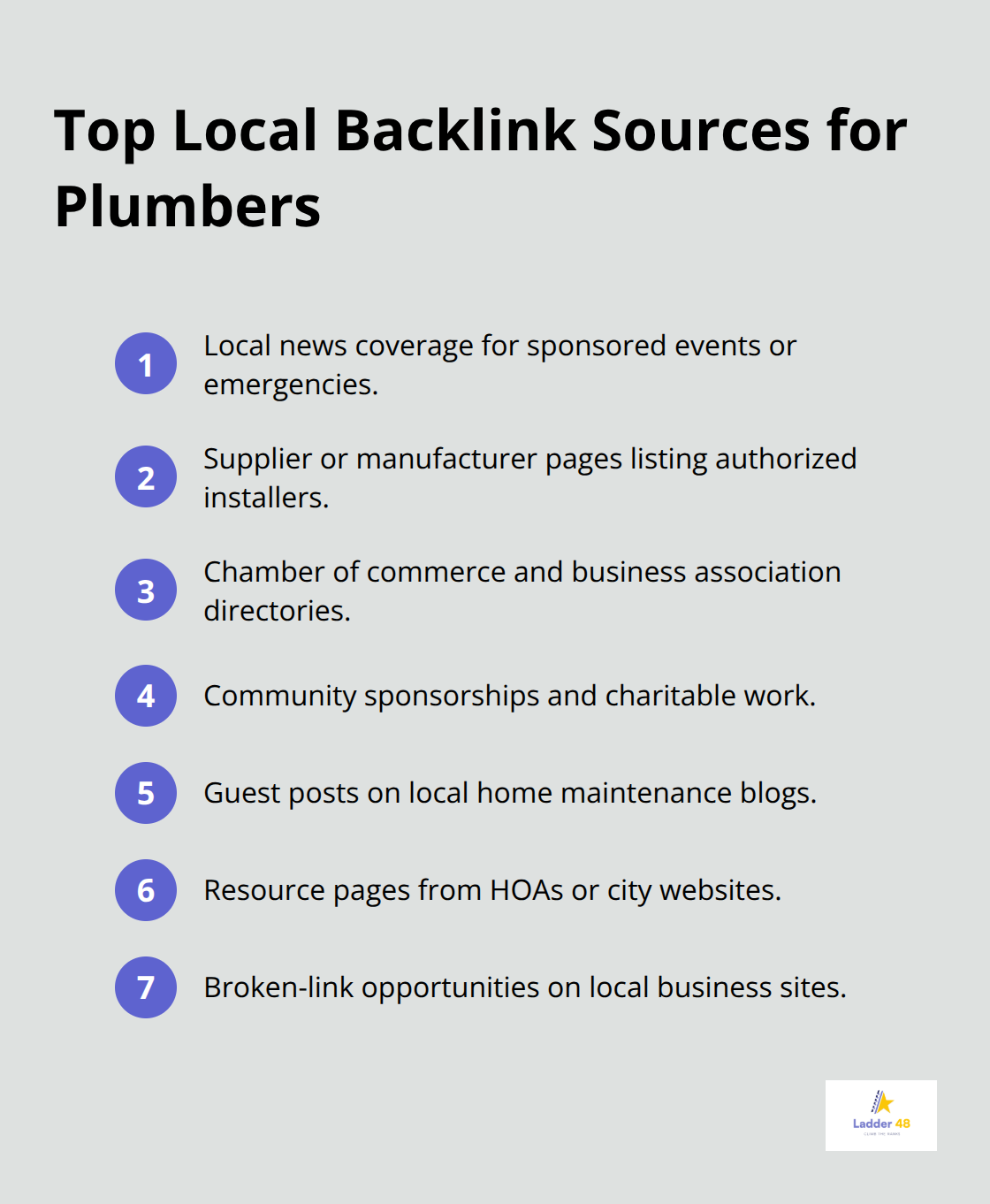
Backlinks from local sources signal to search engines that your plumbing business operates within your community and serves customers there. A link from your local chamber of commerce, a neighborhood news outlet, or a supplier directory carries far more weight than a random backlink from an unrelated website. Focus on earning links from seven specific sources: local news coverage when you sponsor community events or handle emergency situations, supplier and manufacturer pages where you’re listed as an authorized installer, chamber of commerce and business association directories, community sponsorships and charitable work, guest posts on local blogs covering home maintenance topics, resource pages from homeowner associations or city websites, and broken-link opportunities on local business sites.
Start with your existing relationships. Reach out to suppliers you work with regularly and ask if they list authorized service providers on their websites. Contact your local chamber and join if you haven’t already; membership often includes a business listing that counts as a citation and backlink. These links take time to build, but they’re far more effective than pursuing random backlinks from SEO link farms.
Collect Reviews That Convert Searches Into Calls
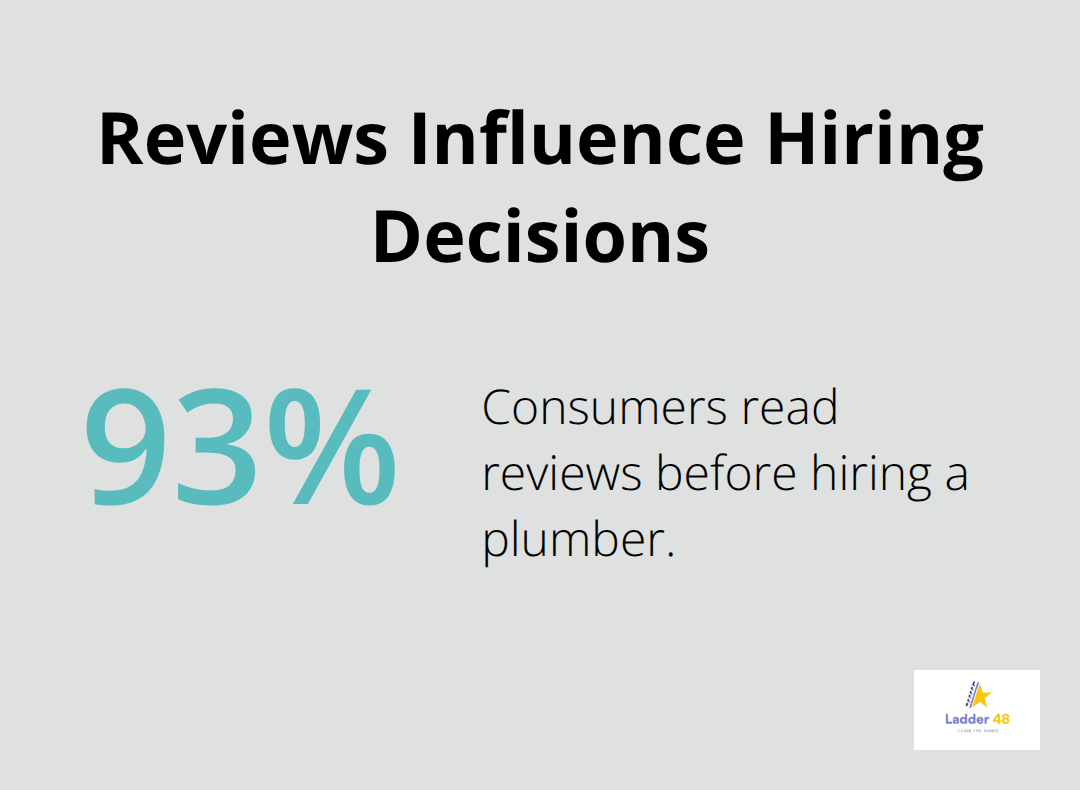
Customer reviews function as both social proof and ranking signals that search engines increasingly weight heavily. A 2025 Yext study shows active review engagement boosts Local Pack visibility, and 93 percent of consumers read reviews before deciding to hire a plumber according to BrightLocal’s Local Consumer Review Survey. Try for 20 or more Google reviews per location to gain visibility advantages; competitive markets require 8 to 12 new reviews monthly to stay ahead.
Set up automated review requests within 24 hours of job completion using tools like Housecall Pro, Jobber, ServiceTitan, Podium, or BirdEye. These platforms send compliant requests that don’t violate Google’s policies. Train your technicians to ask for reviews in person after successful jobs; this personal touch increases completion rates significantly compared to email-only requests.
Respond to Every Review and Build Trust
Respond to every single review within 24 hours, whether positive or negative. Thank customers by name and reference the specific service they received; this response shows future customers that you actually engage with feedback. For negative reviews, acknowledge the problem calmly, apologize, and request to take the conversation offline. Never respond defensively in public.
After resolving the issue, ask the customer to update their review. Feature your top reviews prominently on your homepage and create a dedicated reviews page with an embedded Google reviews widget that includes review schema markup. This approach increases click-through rates from search results and signals active reputation management to search algorithms.
Final Thoughts
Local SEO success for plumbers doesn’t happen by accident. The strategies in this guide work because they address what search engines reward and what customers actually search for. Claiming your Google Business Profile, building consistent citations, optimizing for local keywords, earning backlinks from your community, and actively managing reviews create a system that generates qualified calls month after month.
Start with your GBP profile-a complete profile generates seven times more clicks than an incomplete one, so filling every field and uploading photos should be your first action. Then lock in NAP consistency across Google, Yelp, Angi, and BBB using tools like BrightLocal to audit and fix errors. These two steps alone separate plumbers who appear in local search from those who remain invisible. Next, build location-specific pages targeting keywords your customers actually search: emergency plumber receives 165,000 monthly searches, water heater replacement pulls 201,000, and drain cleaning generates 135,000 searches.
Review velocity matters more than you think. Try for 20 or more Google reviews per location and respond to every single review within 24 hours. A 2025 Yext study confirms that active review engagement boosts Local Pack visibility, and 93 percent of consumers read reviews before hiring a plumber. These plumber local SEO tips work best when implemented as a complete system rather than isolated tactics, and the foundation, on-page optimization, and authority-building strategies reinforce each other and compound over time. If managing local SEO feels overwhelming, we at Ladder 48 specialize in helping contractors dominate their local markets through transparent, results-driven SEO strategies.


