
Most roofing contractors lose potential customers because they’re not showing up in local search results. At Ladder 48, we’ve seen firsthand how the right roofing SEO tips can transform a contractor’s visibility in their service area.
This guide covers the exact strategies that work: local keyword targeting, on-page optimization, and citation building. Implement these tactics and you’ll start capturing the homeowners actively searching for roof repair and installation services in your area.
Which Keywords Do Roofing Customers Actually Search For?
Most roofing contractors target generic keywords like roof repair or roof replacement and wonder why they’re not getting calls. The problem is simple: homeowners search for specific, location-based queries that include their city, neighborhood, or phrases like near me. According to research from Roofing Webmasters, long-tail and hidden search terms drive over 50% of organic traffic, yet many contractors ignore them entirely. This means you’re leaving half your potential customers to competitors who understand local search intent.
The Keywords That Convert
Homeowners type specific phrases into Google when they need roofing work now: emergency roof repair in Springfield, metal roof installation near me, or leak detection services in zip code 45701. These queries show immediate intent to hire, not someday interest. Start by listing every city and neighborhood you service, then pair each location with the specific roofing work you offer-shingle repair, flat roof restoration, storm damage assessment.
Google Search Console reveals the exact queries driving traffic to your site. If you’re not using it, you’re missing critical data about what your market searches for. The tool shows which keywords bring visitors to your pages and which ones fail to convert, allowing you to refine your strategy based on real behavior rather than assumptions.
Geographic Modifiers Win Over Broad Keywords
Broad keywords like roof repair rank for millions of searches but attract nationwide competition and visitors outside your service area. Geographic modifiers-your city name, neighborhood, or ZIP code-filter for local intent and reduce competition dramatically. A contractor in Columbus, Ohio should target emergency roof repair in Columbus, roof damage inspection near me, and residential roofing services in Delaware County, not just roof repair.
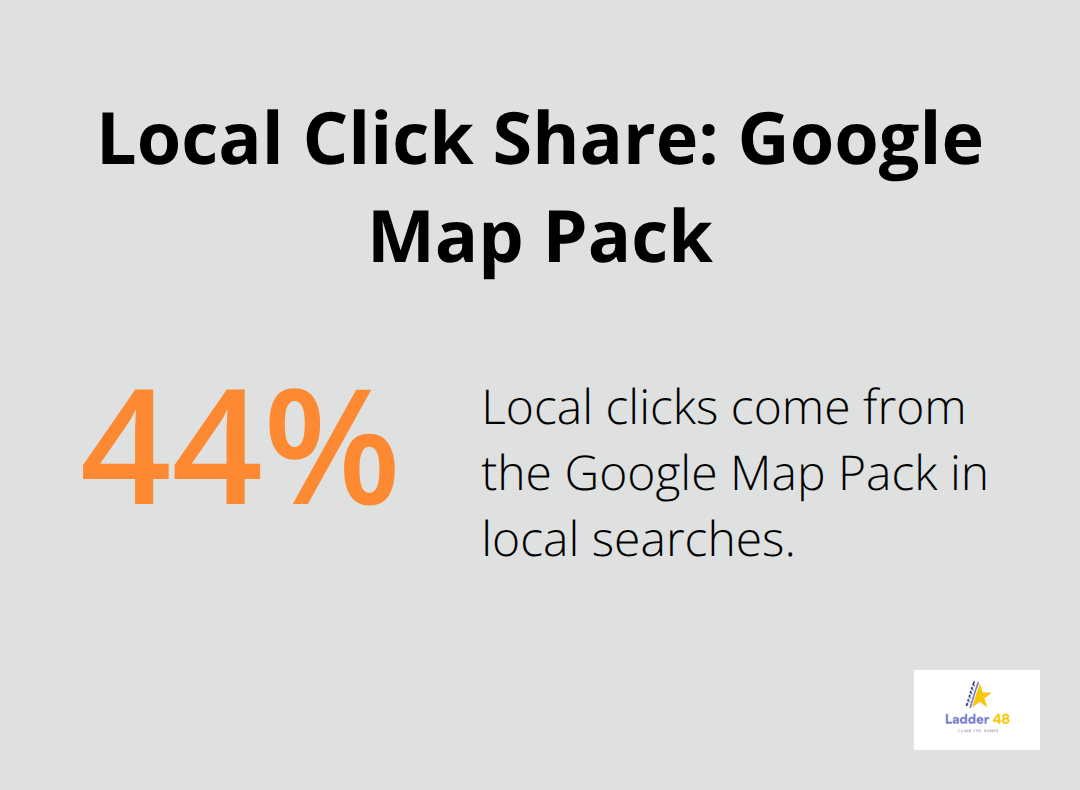
Google’s algorithm weighs location signals heavily in local search results, so including city and neighborhood names in your keyword strategy directly improves your chances of appearing in the map pack, which accounts for roughly 44% of all local clicks according to Google data. One optimized location page can drive more qualified calls than ten pages targeting generic keywords.
Build Pages That Match Local Intent
Create separate service pages for each roofing type you offer, then add pages targeting specific locations within your service area. A page titled Asphalt Shingle Roof Replacement in Worthington will rank faster and attract higher-intent homeowners than a generic page about asphalt shingles. This location-specific approach signals to Google that you serve that exact area with that exact service, making your site more relevant to local searchers.
The next step involves optimizing the actual content on these pages-your title tags, meta descriptions, and headers all need to reflect the local keywords you’ve identified.
On-Page SEO Optimization for Roofing Websites
Your website’s pages either work for you or against you in local search. Most roofing contractors build generic pages that describe what they do, then wonder why they rank poorly against competitors. The difference between a page that ranks and one that doesn’t comes down to specificity: your titles, headers, and content must match the exact queries homeowners type into Google. According to Google data, the map pack accounts for roughly 44% of all local clicks, and appearing there depends entirely on how well your pages signal relevance to both search engines and users.
Create Service Pages for One Roofing Type Per Page
A page about asphalt shingle repair should not also cover metal roofing, flat roof restoration, or gutter installation. Google rewards depth and specificity, so a detailed 1,500-word page about asphalt shingle repair with actual project photos, cost information, timeline expectations, and common problems will outrank a thin page that mentions five services in passing. Each service page needs a clear job to perform in your local search strategy.
Include real before-and-after photos from jobs you’ve completed. Homeowners trust visual proof more than written claims alone. Explain your process step-by-step, address common questions, and provide cost ranges based on typical projects in your area. This approach transforms a generic service page into a resource that answers the questions homeowners actually ask.
Build Location Pages for Every Service Area
Create separate pages for each city or neighborhood you serve. A page titled Roof Replacement in Columbus should not also cover Roof Repair in Worthington. Each location deserves its own page with local references, neighborhood-specific testimonials, and details that prove you work in that exact area. Include actual street names, local landmarks, and specific damage patterns you see in that region.
This approach requires you to create dozens of pages, but that’s exactly what Google expects from contractors serious about local dominance. A homeowner in Bexley searching for roof repair will see your Bexley-specific page and recognize that you understand their neighborhood. That relevance signal matters far more than a generic page covering ten cities at once.
Optimize Title Tags and Meta Descriptions with Local Keywords
Your title tags and meta descriptions must include both the service and location without keyword stuffing. A title like Asphalt Shingle Roof Repair in Columbus, Ohio works. Asphalt Shingle Roof Repair, Replacement, Installation in Columbus, Worthington, Bexley, and Dublin does not. Google’s algorithm filters for natural language, and overstuffed titles signal desperation, not authority.
Your meta description should answer the question a homeowner asks: what you do, where you do it, and why they should call you instead of a competitor. Include a phone number or call-to-action in your meta description if space allows. When homeowners land on your page, they should immediately see that you serve their location and understand your exact service within three seconds.
Structure Headers to Guide Both Users and Search Engines
Your H1 header should match your title tag closely, and H2 headers should break down the service into specific subtopics like Cost, Timeline, Common Problems, or Why Our Process Works. This structure helps Google understand your page content while making it easy for visitors to find answers quickly. Headers act as signposts that tell both search engines and homeowners what your page covers.
Use natural language in your headers instead of keyword-stuffed phrases. A header like “How Much Does Asphalt Shingle Repair Cost in Columbus?” performs better than “Asphalt Shingle Repair Cost Columbus Ohio Pricing.” The first reads naturally and answers a real question; the second feels forced and artificial.
With your on-page foundation solid, the next step involves building trust signals through citations and your Google Business Profile-the tools that tell Google you’re a legitimate, active roofing contractor in your service area.
How to Build Trust Signals That Google Actually Rewards
Your Google Business Profile and citation consistency form the foundation of local search authority. Google rewards contractors who maintain accurate, consistent business information across the web because consistency signals legitimacy. According to Google, a complete Google Business Profile yields about 7x more clicks than an incomplete one, and profiles that are complete are 2.7x more likely to be seen as reputable. This isn’t theoretical-homeowners trust what Google displays, and Google trusts what it finds across multiple authoritative sources. If your business name, address, and phone number differ across directories, Google questions your legitimacy and ranks you lower. If your profile remains incomplete, homeowners see uncertainty and call a competitor instead.
Claim and Optimize Your Google Business Profile
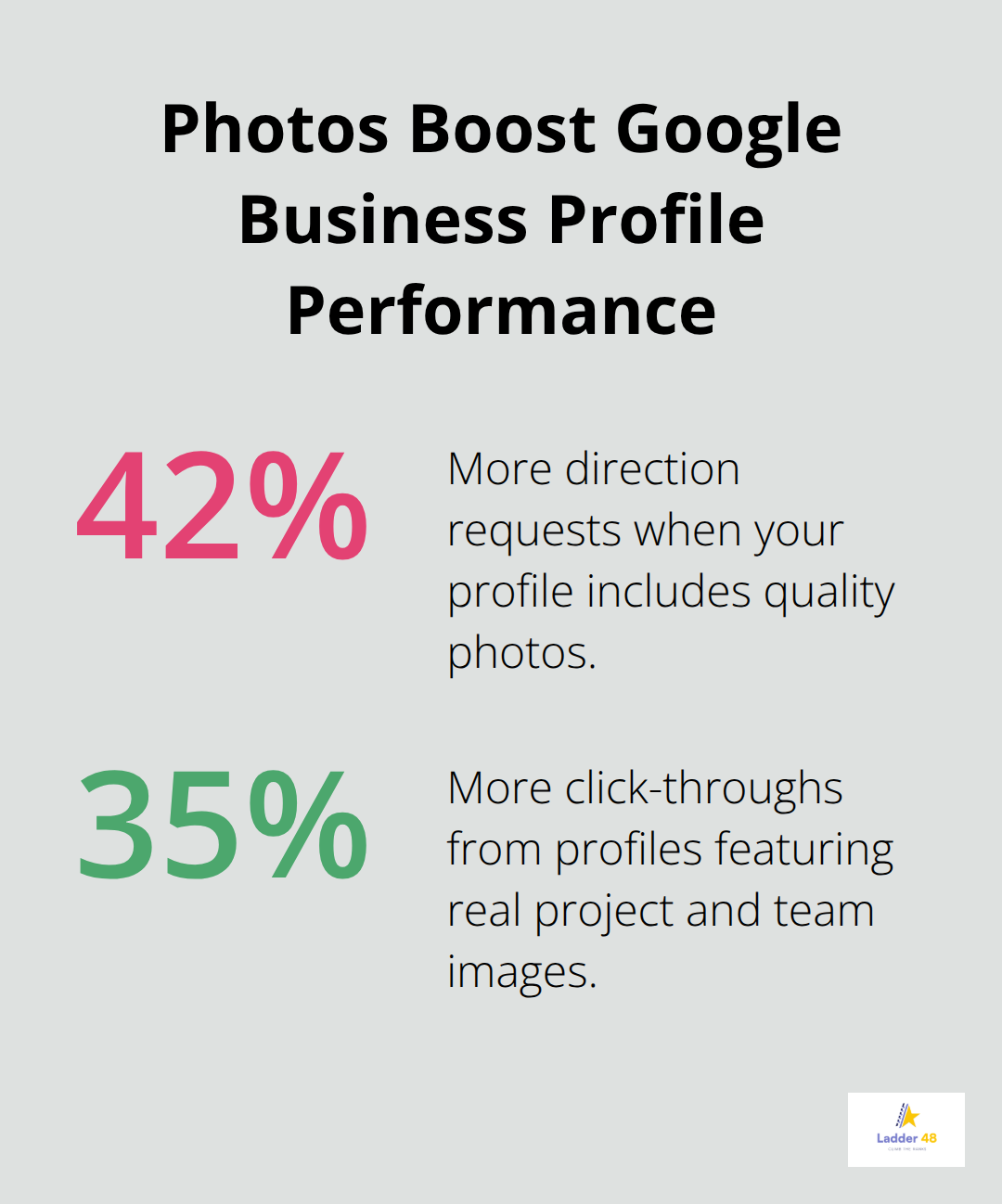
Start by auditing your Google Business Profile immediately if you haven’t already. Set your primary category to Roofing Contractor, and write your business description to include the specific services you offer paired with your service area. Try something like: Asphalt shingle repair, metal roof installation, and emergency leak detection for homes across Columbus and surrounding neighborhoods. Upload high-quality photos of actual jobsites, completed projects, your team, and branded trucks-profiles with photos see 42% more direction requests and 35% more click-throughs according to Google. These images prove you operate in the real world and build trust with homeowners before they call.
Maintain Consistent NAP Across All Directories
Audit every directory where your business appears: Google Business Profile, Yelp, Facebook, HomeAdvisor, Angi, BBB, Houzz, and your local Chamber of Commerce. Your name, address, and phone number must match exactly across all of them. A single inconsistency-like listing your address as Main Street on one site and Main St. on another-weakens your local authority. Update these listings quarterly and watch for duplicate profiles that competitors or outdated services may have created. Consistent information across directories tells Google that you operate a legitimate, stable business.
Request and Respond to Reviews Strategically
Focus relentlessly on reviews because about 99% of people read online reviews before hiring a local service, and Google’s algorithm weights review recency, volume, and quality heavily in rankings. Request reviews after every completed job through email or text, and respond to every single review within 24 to 48 hours, whether positive or negative.
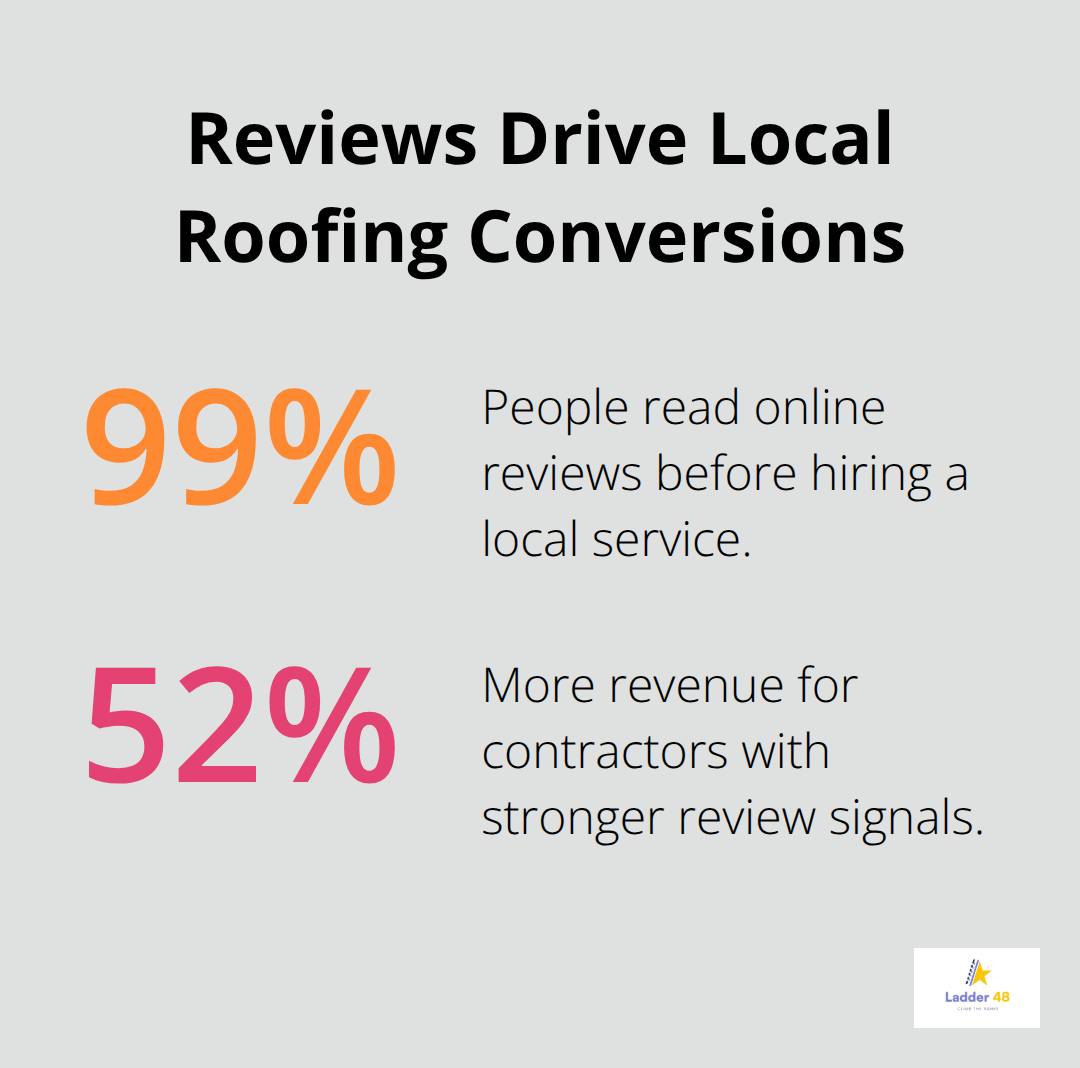
When homeowners mention specific services and locations in reviews-like metal roof installation in Worthington-that keyword-rich feedback strengthens your local relevance signals far more than generic five-star ratings. Reviews and trust signals earned about 52% more revenue than peers with fewer reviews according to Hibu case data.
Track Review Velocity to Identify Patterns
Track your review velocity in a spreadsheet or CRM so you can see trends and identify which jobs or neighborhoods produce the most reviews. This data reveals which service areas and work types homeowners value most, allowing you to refine both your marketing and your actual service focus. Monitoring review patterns helps you understand which customer segments respond most readily to review requests and which geographic areas generate the strongest word-of-mouth momentum.
Final Thoughts
Roofing SEO tips work because they align your website with how homeowners actually search for roofing services. Local keyword targeting, on-page optimization, and citation building form interconnected signals that tell Google you operate as a legitimate, active contractor in your service area. When you implement all three together, your visibility compounds over time and homeowners find you instead of your competitors.
The numbers validate this approach. A complete Google Business Profile generates 7x more clicks than an incomplete one, profiles with photos receive 42% more direction requests, and reviews drive 52% more revenue compared to contractors with fewer reviews. These improvements represent the difference between a thriving roofing business and one that struggles to fill the schedule. Homeowners searching for roof repair in your city represent immediate, qualified demand-they need work done now, not someday.
Start with your Google Business Profile today by claiming it, verifying it, and uploading quality photos of your work. Then audit your citations across Yelp, Facebook, HomeAdvisor, and Angi to confirm your name, address, and phone number match exactly. Finally, create location-specific pages for your service areas paired with service pages for each roofing type you offer, and contact Ladder 48 to build a stronger online presence that converts homeowners into contracts.


