
Roofers SEO optimization isn’t optional anymore-it’s how customers find you when they need emergency repairs or a full roof replacement. Most roofing companies lose leads to competitors simply because they’re not visible in local search results.
We at Ladder 48 built this guide to show you exactly how to rank higher, attract qualified leads, and turn search traffic into booked jobs. The strategies here work because they’re based on what actually moves the needle for roofing businesses.
How to Dominate Local Search Results for Roofing
Your Google Business Profile Controls Local Visibility
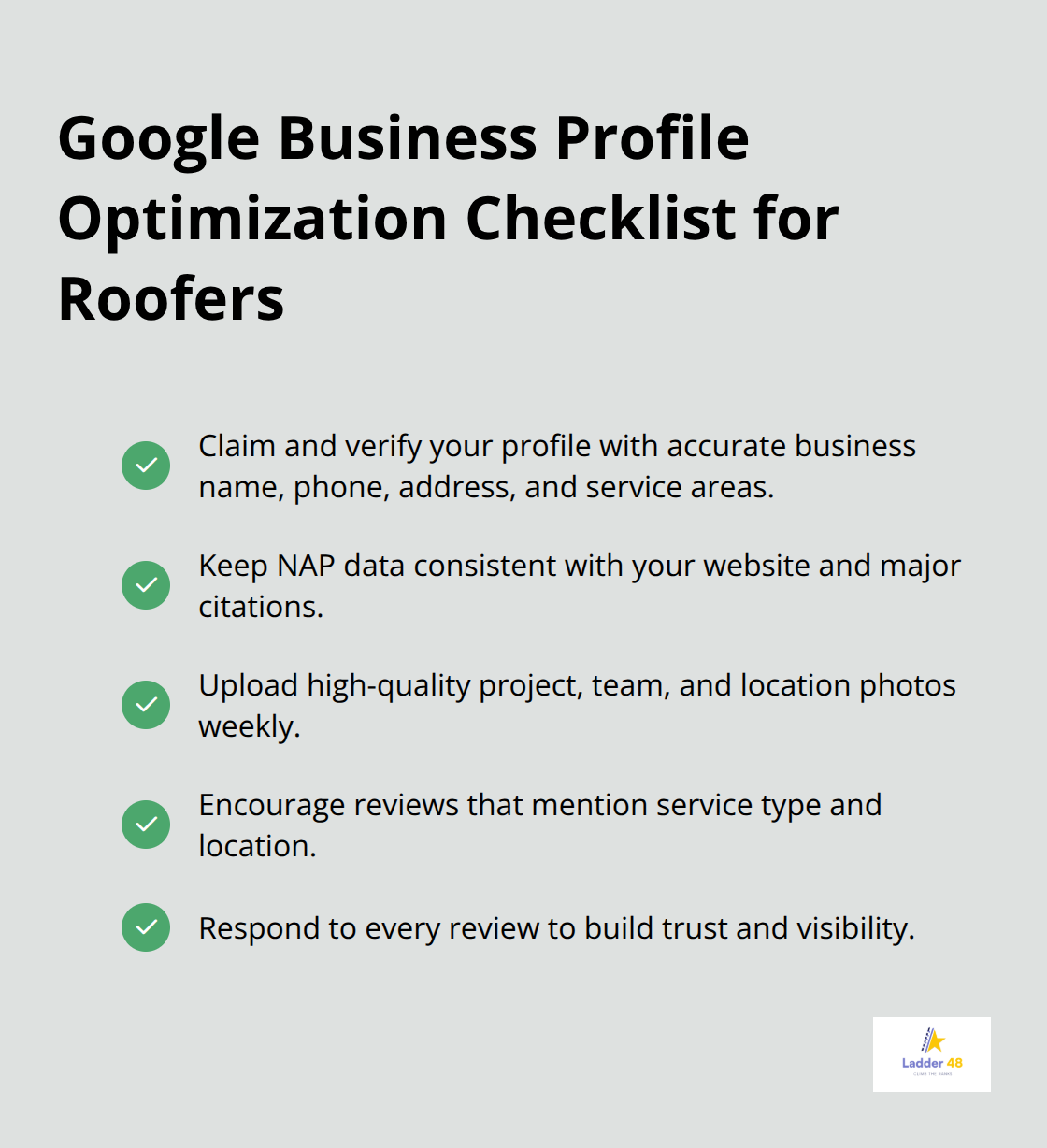
Your Google Business Profile either works for you or against you-there’s no middle ground. Most roofers neglect this single most important asset, which means they stay invisible when homeowners search for emergency roof repair or replacement services in their area. Google Business Profile optimization directly controls whether you appear in the local pack, on Google Maps, and in AI Overviews. Claim your profile if you haven’t already, then verify every piece of information is accurate: your business name, phone number, address, and service areas must match exactly what appears on your website and everywhere else online. Add high-quality photos of completed projects, your team, and your location at least weekly. Google prioritizes fresh visual content, and homeowners convert faster when they see real work you’ve completed. Encourage customers to leave reviews that specifically mention the service type and location, since review language and velocity influence both AI visibility and local rankings. A Google Business Profile with 50 or more reviews consistently outranks thinner profiles in local searches, so this isn’t optional.
Citations Act as Trust Signals Across the Web
Local directories and industry listings act as trust signals that tell Google your business is legitimate and serves specific areas. Citations-mentions of your business name, address, and phone number across platforms like Angie’s List, HomeAdvisor, Yelp, and local chamber of commerce websites-matter more than most roofers realize. Inconsistent information across these platforms actually hurts your rankings, so audit your current citations first and fix any discrepancies. Prioritize high-authority directories in the home services space since they carry more weight than generic business listings. Don’t spread yourself too thin by claiming profiles everywhere; focus on the directories where homeowners actually search for roofers. Your website should reinforce this data consistency by clearly stating your exact service areas and the cities you serve, which helps both Google and customers understand your scope.
Location-Based Keywords Separate Winners from Losers
Location-based keywords are where roofing SEO separates winners from losers. Homeowners don’t search for roofers nationwide; they search for roofers in their specific city or neighborhood. Create dedicated service pages for each location you serve, not just a generic service menu on your homepage. A page optimized for roof repair in Charlotte will outrank a generic roof repair page when someone searches in that city. Include the city name naturally in your page title, heading, and first paragraph. Long-tail keywords like “how much does a roof replacement cost in Denver” perform better than generic terms because they capture intent and location simultaneously. Google Search Console and tools like SEMrush show exactly which location-based terms drive traffic and which ones still need content. If you serve multiple cities, location-specific pages become non-negotiable for competing effectively in local search results.
On-Page SEO Transforms Keywords Into Rankings
Your website content must match the keywords your customers actually search for. High-intent keywords like “emergency roof repair” and “roof replacement cost” signal that homeowners are ready to hire, not just browsing. Create individual service pages for each roofing service you offer-residential replacement, storm damage repair, inspections, gutter installation-rather than lumping everything into one generic page. Each service page should answer what the service is, who it’s for, how fast you can deliver it, and where you offer it. Implement structured data markup (Schema.org) for local business information so search engines understand your services and location without guessing. This markup helps you appear in AI Overviews and featured snippets, which drive qualified traffic directly to your site. The combination of location-specific content, high-intent keywords, and proper markup creates a foundation that search engines reward with higher rankings.
Keywords That Separate High-Intent Leads From Tire Kickers
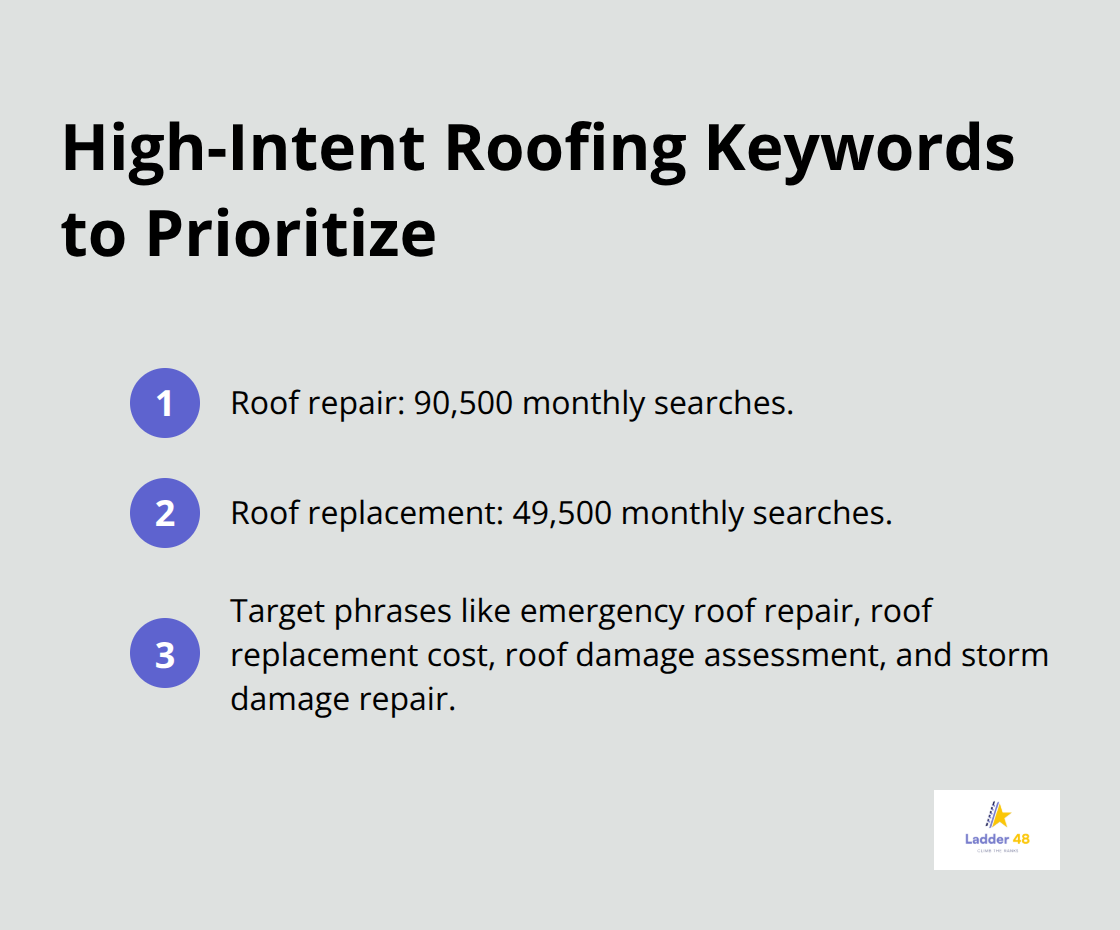
Roof repair commands 90,500 monthly searches, and roof replacement pulls another 49,500, but most roofers waste time chasing generic terms instead of the high-intent keywords that actually convert. Emergency roof repair, roof replacement cost, roof damage assessment, and storm damage repair are the phrases homeowners type when they’re ready to call someone today, not next month. These keywords signal urgency and buying intent, which means the traffic you capture from them converts at dramatically higher rates than informational searches about roofing materials or maintenance tips. Target these exact phrases in your service pages, title tags, and meta descriptions because Google rewards relevance.
If someone searches for emergency roof tarping near me, they need help now, and your page should load fast, display a phone number above the fold, and answer their question within the first sentence.
Match Service Pages to Exact Customer Problems
One generic roofing services page will never outrank a competitor who creates dedicated pages for residential replacement, storm damage repair, inspections, emergency tarping, and gutter installation. Each service page should target a specific keyword and answer the exact question a homeowner asks when they search. A page optimized for roof replacement in your city should state how long the project takes, what the process involves, what materials you use, and whether you handle insurance claims. Include structured data markup (Schema.org LocalBusiness and Service schemas) on every service page so Google understands what you offer and where, which directly improves your chances of appearing in AI Overviews and Google’s local pack. Homeowners want to know cost, timeline, and whether you’re licensed and insured before they call, so answer those questions prominently instead of forcing them to dig through your site.
Identify Keywords Your Competitors Miss
SEMrash and Ahrefs both let you filter keywords by search intent, so you can identify which terms your competitors rank for and which ones they’ve missed entirely. Focus your initial SEO efforts on high-intent keywords first because they deliver faster results and higher conversion rates than trying to rank for every possible roofing term. Track which service pages drive the most leads and phone calls using Google Analytics 4, then double down on those high-performers with additional content and local optimization. Your website should function as a conversion machine for each service, not a brochure that looks nice.
Schema Markup Tells Search Engines Your Service Territory
Schema markup isn’t optional if you want to compete in 2026. Google, Yahoo, and Microsoft all support structured data, and AI tools like ChatGPT and Perplexity use schema to understand what services you offer and where you offer them. Implement LocalBusiness schema with your NAP, service areas, phone number, and reviews, then add individual Service schemas for each roofing offering. Include your service radius or specific cities served because this data helps Google match your business to location-based searches and prevents your profile from appearing for searches outside your territory. FAQ schema on pages that answer common questions (like how much a roof replacement costs or what to do after storm damage) helps you land in featured snippets and AI Overviews. Organizations that implement proper schema markup see measurable improvements in click-through rates from search results because rich snippets stand out visually. Most roofers skip this step entirely, which means you gain an immediate competitive advantage by getting it right.
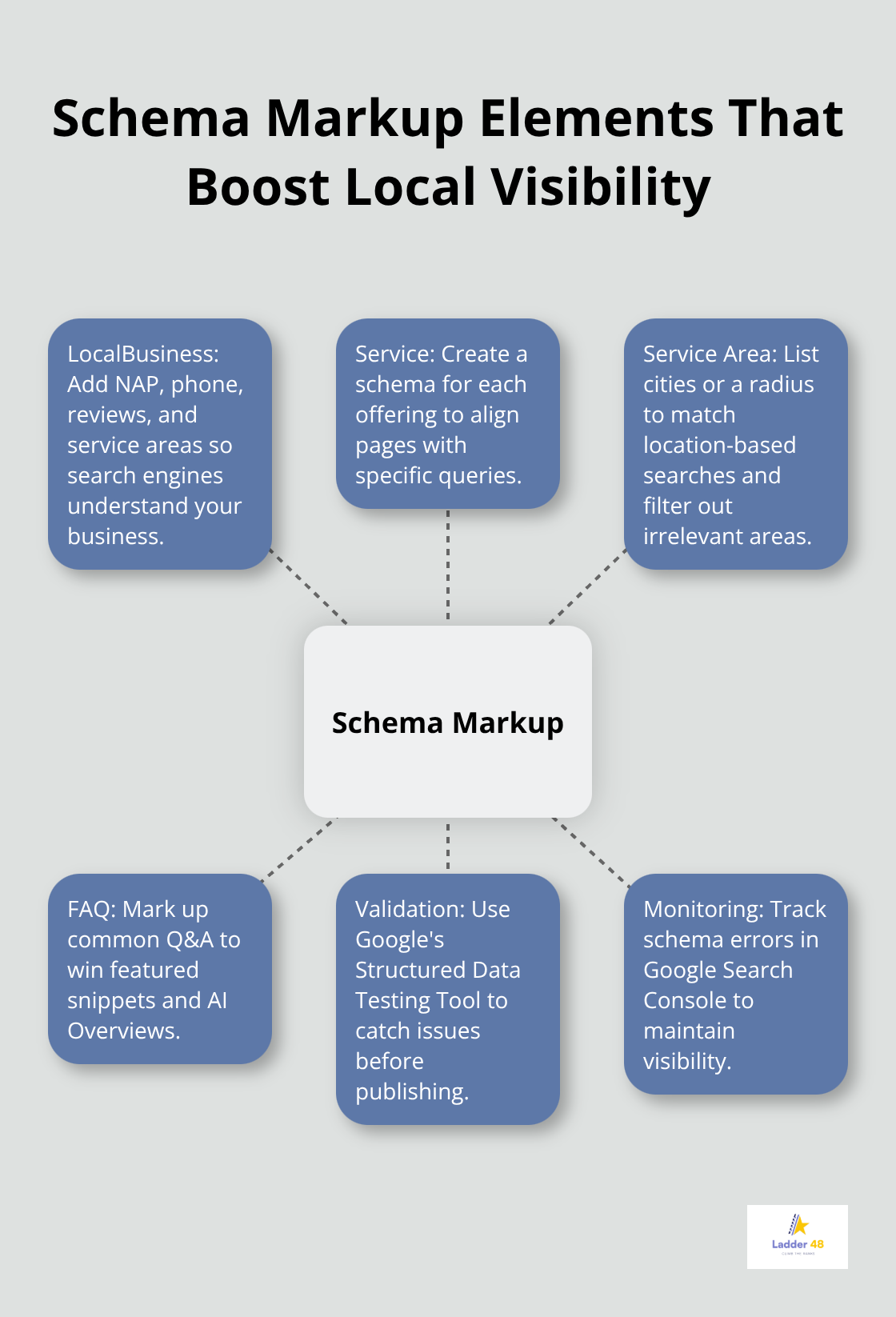
Use Google’s Structured Data Testing Tool to validate your markup before publishing, then monitor Google Search Console to catch any schema errors that might hurt your visibility.
The keywords you target and the pages you build around them determine whether homeowners find you or your competitors when they search for emergency repairs or replacements.
Reviews and Backlinks Build Search Authority
Google Reviews Signal Legitimacy to Search Engines
Reviews and backlinks are the two signals Google watches most closely when deciding which roofing company dominates local search results. A Google Business Profile with 50 or more reviews consistently outranks thinner profiles, and that gap only widens as your competitors accumulate more feedback. The language within those reviews matters just as much as the volume-homeowners who mention specific services like emergency roof repair, storm damage assessment, or roof replacement in their reviews send stronger ranking signals than generic five-star ratings with no detail.
Actively solicit reviews after every completed job by texting or emailing customers a direct link to your Google Business Profile. Respond to every review within 24 hours regardless of whether it’s positive or negative. Negative reviews actually improve your credibility because they show Google the feedback is authentic, not artificially inflated. Encourage customers to mention their location, the service type, how fast you responded, and whether you helped with their insurance claim because these specifics influence both AI visibility and local rankings far more than vague praise.
Feature Reviews Prominently Across Your Digital Presence
Don’t just collect reviews and ignore them-feature the best ones prominently on your service pages and in your Google Business Profile highlights because homeowners read them before calling. Reviews that include specific details about response time, workmanship quality, and insurance handling convert prospects at higher rates than generic testimonials. The velocity of reviews matters too; Google favors businesses that collect consistent feedback over time rather than sudden spikes followed by silence.
Quality Backlinks Establish Authority in Local Search
Backlinks from local businesses, news outlets, and industry publications tell Google your roofing company is an authority worth ranking higher. Quality beats quantity decisively, so a single backlink from your local chamber of commerce or a regional home improvement publication outweighs dozens of links from irrelevant directories. Network with nearby businesses like contractors, property management companies, and real estate agents who might reference your services on their websites, then reciprocate by linking to them from your resources page.
Create Content That Journalists Want to Cover
Create content that local news outlets actually want to cover-storm damage guides published within hours of severe weather, seasonal roof maintenance checklists, or data about common roofing failures in your region all attract journalist attention. After storms hit your service area, contact local news reporters directly with specific storm damage statistics and offer your expertise for their coverage because media mentions generate both backlinks and brand awareness simultaneously (and they establish you as a local authority that homeowners trust).
Build Authority Through Industry Publications
Trade publications and roofing industry blogs link to content that educates their readers, so publish detailed guides about roof inspection checklists, insurance claim navigation, or material comparisons that solve real problems for homeowners. Monitor which pages on your website attract the most backlinks using tools like Ahrefs or SEMrush, then double down on those topics with additional content because you’ve already proven demand exists. The pages that earn backlinks naturally are the ones that provide genuine value-focus your effort there rather than chasing links from low-authority sources.
Final Thoughts
Roofers SEO optimization connects your business directly to homeowners actively searching for the exact services you offer. When someone types emergency roof repair or roof replacement cost into Google, they’re ready to hire-not browsing for information. Your job is to appear in front of them before your competitors do, and the strategies in this guide (optimizing your Google Business Profile, building citations, targeting high-intent keywords, creating dedicated service pages, implementing schema markup, and earning reviews and backlinks) all work together to make that happen.
Results compound over time. Your first month of SEO effort might feel slow, but within three or four months, you’ll notice consistent phone calls from qualified leads in your service areas. Within six months, the gap between your visibility and competitors who ignore SEO widens dramatically. Most roofers expect instant results and quit too early, which is exactly why the ones who stay consistent dominate their local markets.
Start with local fundamentals before expanding your strategy nationally. Your roofing business survives on local customers, not nationwide visibility. Partner with Ladder 48 to implement a results-driven SEO strategy tailored to your roofing business and stop losing leads to better-optimized competitors.


