
Contractors who publish the right content rank higher in local search and attract more qualified leads. The problem is knowing which content ideas for contractors actually move the needle.
We at Ladder 48 have seen firsthand how strategic content transforms local visibility and client inquiries. This guide walks you through the exact topics, formats, and distribution tactics that work.
What Content Topics Actually Convert Local Customers
Service pages remain the workhorses of contractor websites, yet most miss the mark entirely. A service page that converts doesn’t just list what you do-it addresses the exact questions your local customers ask before hiring. According to data on construction search behavior, homeowners search for specific problems they need solved: water damage repair, foundation issues, kitchen remodeling timelines, roof replacement costs. Your service pages must target these precise pain points with concrete details. Include material options with price ranges, typical project timelines measured in weeks or months, permit requirements specific to your area, and honest answers about common mistakes homeowners make. Pages that include before-and-after photos alongside detailed explanations of the process perform significantly better in local search rankings than generic descriptions.
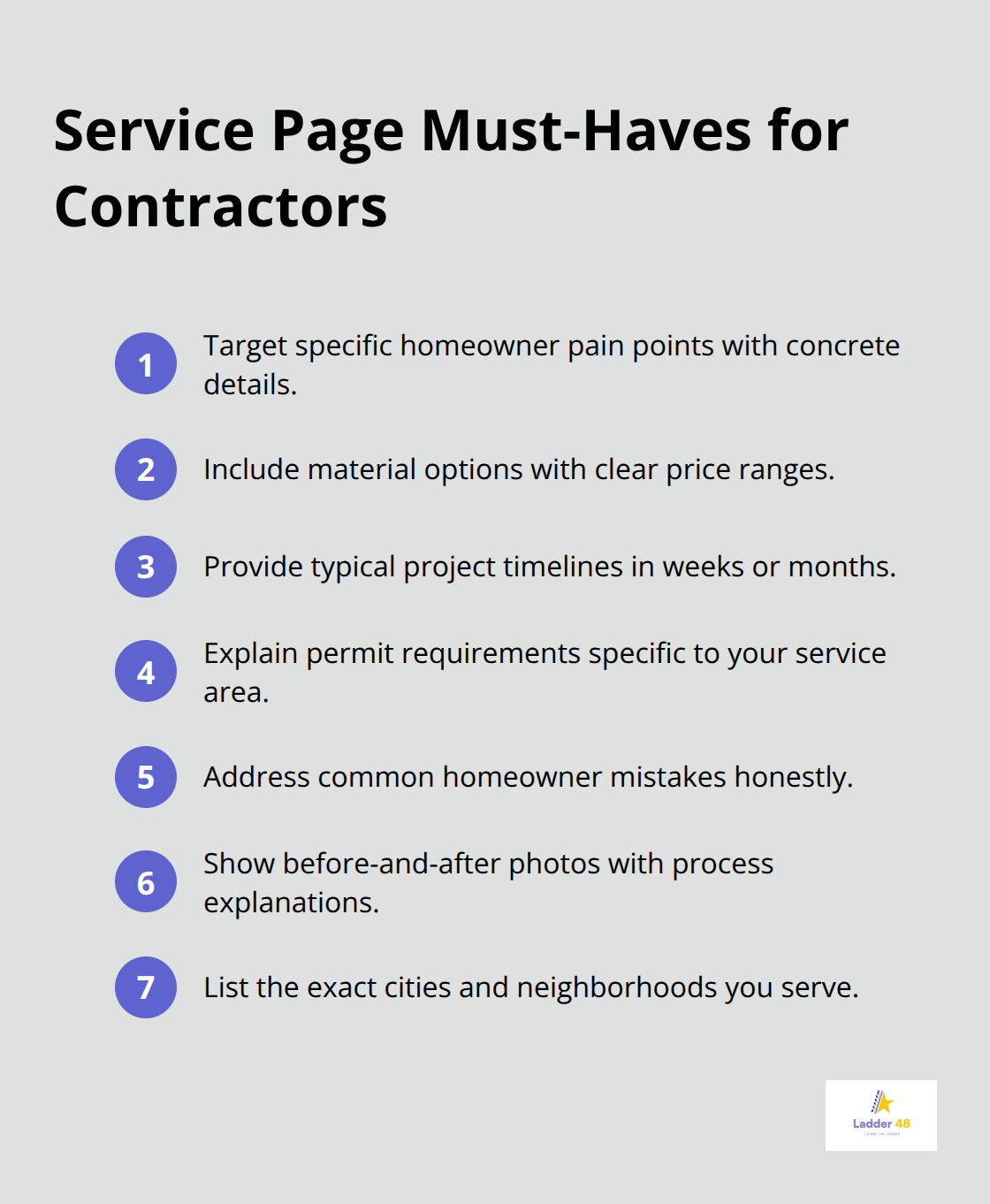
Add a clear service area section naming the cities and neighborhoods you serve-this directly impacts whether Google shows your page to nearby searchers.
Project Showcases That Build Proof
Before-and-after content performs exceptionally well because it removes doubt. Homeowners weighing hiring decisions want proof you deliver results, not promises about quality. Structure your project showcases around specific project types: kitchen remodels under $50,000, bathroom renovations completed in under four weeks, roof replacements on homes built before 1980. Include measurable outcomes whenever possible-square footage added, energy efficiency improvements, structural issues resolved. Video walkthroughs of completed projects outrank static photos; platforms like YouTube reward longer watch times, and homeowners spend more time on video content than photos when evaluating contractors. Your project descriptions should explain the challenges you faced and how you solved them, which demonstrates expertise far better than generic praise. This approach also generates the backlinks and social shares that boost rankings, as these projects become shareable proof of your capabilities.
Community Trust Without Generic Content
Community-focused content fails when it stays vague. Avoid broad topics like seasonal home maintenance tips that apply everywhere. Instead, publish content specific to your area: how local climate impacts roof lifespan in your region, which neighborhoods have specific foundation issues due to soil conditions, how recent zoning changes affect home additions in your service areas. Local government websites, building department data, and historical weather records provide factual material most contractors ignore. Partner with local architects, designers, or real estate agents to create co-branded guides addressing their clients’ needs-this builds authority and generates backlinks from established local websites. Respond visibly to Google reviews and questions on your Google Business Profile; this public engagement signals trustworthiness to both customers and search algorithms far more effectively than anonymous testimonials.
Moving From Topics to Formats
The topics you choose matter, but how you present them determines whether audiences actually engage. Your next step involves selecting the right content formats that match what your local customers prefer to consume.
Formats That Rank and Keep Audiences Watching
Video Content Dominates Contractor Marketing
Video content dominates contractor marketing because homeowners trust what they see over what they read. YouTube ranks as the second-largest search engine according to Google, and construction-related videos consistently rank in local search results when properly optimized. Project walkthroughs showing the actual work process outperform polished marketing videos significantly. A 5-10 minute video of a kitchen renovation from demolition to final reveal attracts far more viewer engagement than a 30-second highlight reel because audiences spend substantially more time on longer content. Include your service area keywords in the video title and description-for example, “Complete Kitchen Remodel in Denver: Granite Counters and Custom Cabinetry” ranks better than generic titles. Transcribe each video and add it to your website as a blog post; this dual approach captures both video searchers and text-based searchers while improving your overall SEO authority.
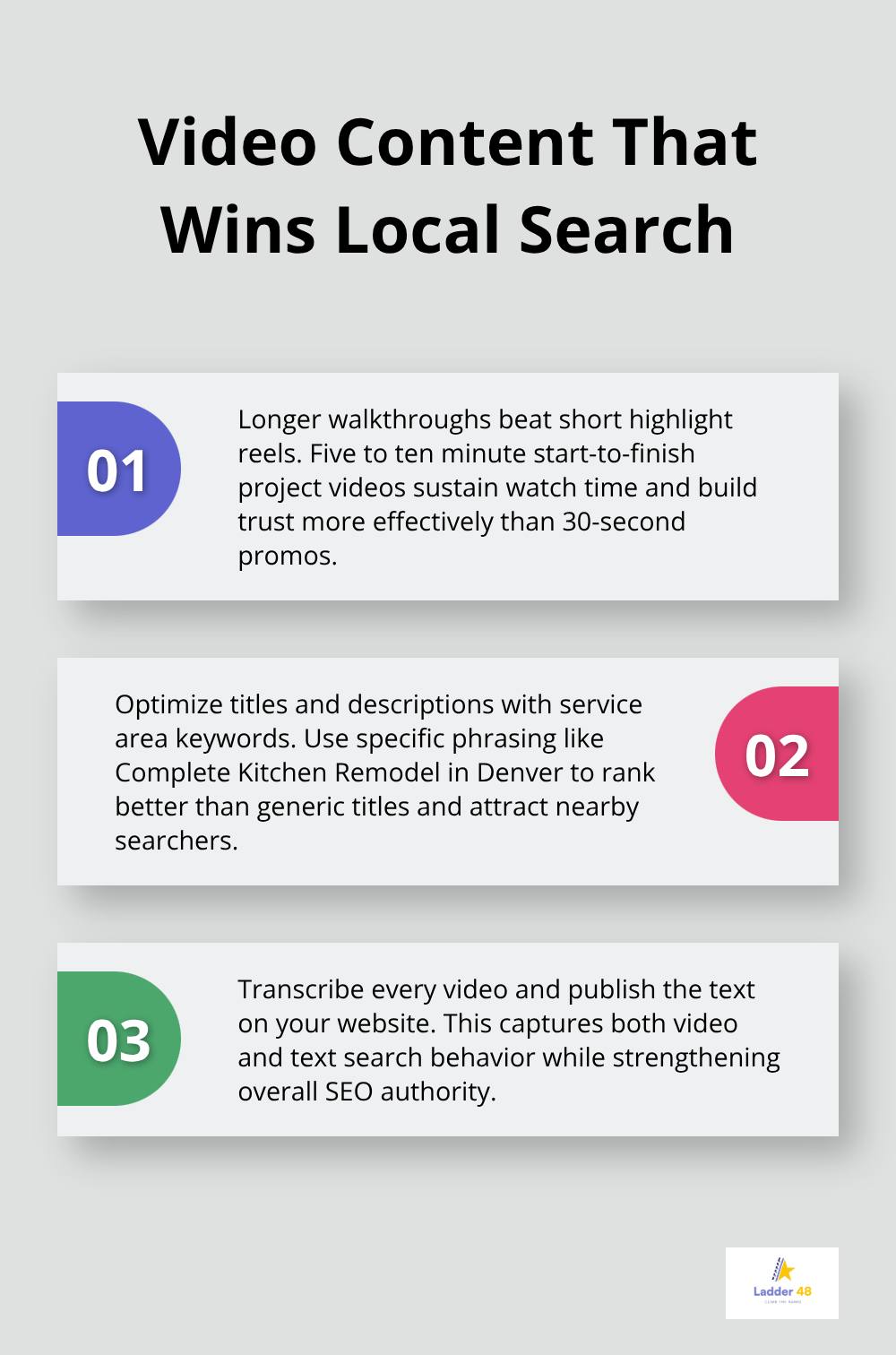
Many contractors skip transcription because it feels tedious, but the ranking benefit justifies the effort. Post the same video across YouTube, your Google Business Profile, Instagram, and Facebook to maximize visibility without creating redundant content.
How-To Guides Solve Real Customer Problems
How-to guides and step-by-step tutorials work when they solve actual problems your customers face before, during, or after hiring you. A guide titled “What to Expect During a Foundation Inspection: A Homeowner’s Walkthrough” addresses the anxiety homeowners feel before meeting with you, positioning you as an educator rather than a salesperson. Include specific timelines, costs, and decision points throughout your guides rather than vague generalities. Maintain consistency in posting at least 3-4 times a week to keep your audience engaged and your business top-of-mind. This approach transforms your content into a resource that builds confidence in potential clients before they ever contact you.
Testimonials and Case Studies That Convert
Customer testimonials fail when they sound scripted or anonymous; instead, collect video testimonials from actual clients naming specific challenges they faced and measurable results you delivered. A 2-3 minute video of a homeowner discussing how you fixed their water damage problem and prevented future issues converts far better than written reviews because viewers hear genuine emotion and see the person behind the recommendation. Request these testimonials immediately after project completion when satisfaction is highest, and offer a small incentive like a $50 Amazon gift card to encourage participation. Case studies should follow a problem-solution-result structure with concrete numbers: the original issue, your approach, the timeline, the cost, and the outcome measured in dollars saved, square footage added, or structural problems resolved. These formats transform abstract claims into tangible proof that resonates with homeowners evaluating their options.
The formats you select determine whether your audience actually engages with your message and takes action. Your next step involves deciding how to distribute this content across the platforms where your local customers spend their time.
Distributing Your Content Across Platforms
Optimize Your Google Business Profile First
Your Google Business Profile functions as a second website that many homeowners never leave, making it the highest-priority distribution channel for contractor content. Google displays your profile to local searchers before they click through to your main website, which means optimizing it directly impacts whether potential clients contact you. Add your best project photos and videos directly to your profile rather than linking to external pages; homeowners spend more time engaging with content they can view without leaving Google.
Post updates at least twice weekly using the Google Posts feature, which appears prominently above your service descriptions. Each post should include a clear call-to-action like “Book now” or “View project,” paired with location-specific keywords such as “kitchen remodeling in Denver” or “roof repair in Austin.” Video content posted to your profile generates substantially more engagement than static images, so prioritize uploading your project walkthroughs directly to Google rather than assuming YouTube alone will drive traffic.
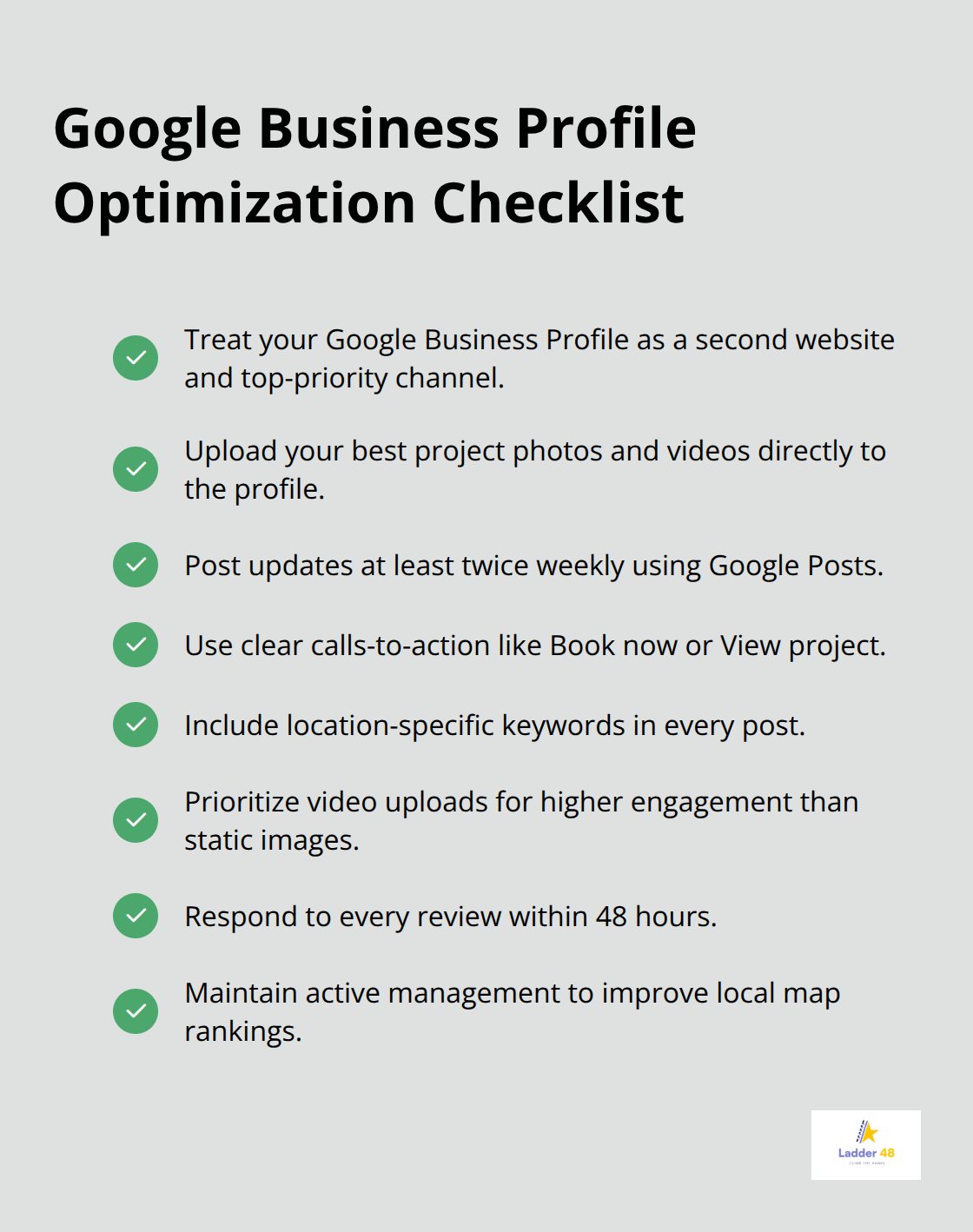
Respond to every review within 48 hours, whether positive or negative, because Google’s algorithm rewards active profile management with higher local search visibility. Many contractors skip Google Posts entirely, viewing them as optional, but they directly influence whether Google ranks your profile above competitors in local map results.
Tailor Content for Each Social Platform
Repurposing content across social platforms multiplies your reach without creating redundant work, though most contractors waste this opportunity by posting identical content everywhere. Instagram and TikTok demand vertical video formatted for mobile, so edit your landscape project walkthroughs into 9:16 vertical clips with captions burned directly into the video since many viewers mute sound initially.
Facebook audiences respond better to longer-form written descriptions paired with before-and-after carousel posts, while LinkedIn suits partnership announcements and industry insights targeting other professionals who might refer work to you. Post on each platform 3-4 times weekly with content tailored to how each audience consumes information rather than blast-posting the same message everywhere.
Build Backlinks Through Strategic Outreach
Building backlinks requires treating your content as a resource worth sharing, not just promotional material about your business. Reach out to local real estate agents, architects, and interior designers offering to create co-branded guides they can share with their clients; this generates backlinks from established local websites while positioning you as an authority. Internal links connect your pages and guide users through your site, helping distribute page authority and keep users engaged longer.
Contribute guest posts to local business publications and neighborhood blogs, mentioning your service areas naturally within the content. This approach builds credibility while earning links from high-authority sources. Track which content generates the most backlinks and social shares, then focus your efforts on that format rather than assuming all content performs equally.
Final Thoughts
The content ideas for contractors outlined in this guide directly shape whether your business appears at the top of local search results or gets buried beneath competitors. Publishing service pages that answer specific customer questions, showcasing real project results, and building community trust through local expertise generates the visibility and credibility that converts searchers into clients. Consistency matters far more than volume-posting two high-quality project walkthroughs and one detailed how-to guide weekly outperforms publishing ten generic blog posts monthly.
Google’s algorithm rewards websites that publish regularly with fresh, relevant content, and your local customers remember contractors who stay visible and engaged. Track which content formats generate the most engagement and backlinks, then focus your effort on what works rather than spreading resources across every possible format. The real challenge isn’t knowing what to publish; it’s executing a sustainable content strategy while managing your actual contracting business.
We at Ladder 48 help contractors solve this exact problem by handling strategic planning, content creation, and SEO optimization so you can focus on delivering exceptional work. Partner with us to build a content strategy that climbs your business to the top of local search rankings and generates qualified leads consistently.


