
Google’s ranking system is shifting fast, and contractors who ignore these changes will lose visibility in 2027. At Ladder 48, we’ve analyzed what’s coming and built this guide to help you stay ahead.
Local contractor SEO in 2027 demands action now-not after your competitors move first. We’ll walk you through the algorithm updates, tactical changes, and technical priorities that matter most.
What Google Really Cares About Now
Site Speed Determines Your Visibility
Google’s 2027 algorithm prioritizes three things contractors ignore at their peril: site performance, demonstrable expertise, and human-authored content. Core Web Vitals have moved beyond nice-to-have territory. Sites that load in under 2.5 seconds now rank higher than those taking 4+ seconds, and Google measures this across real user data, not lab tests. For contractors, this means your homepage, service pages, and location pages must load fast on mobile-where most local searches happen.
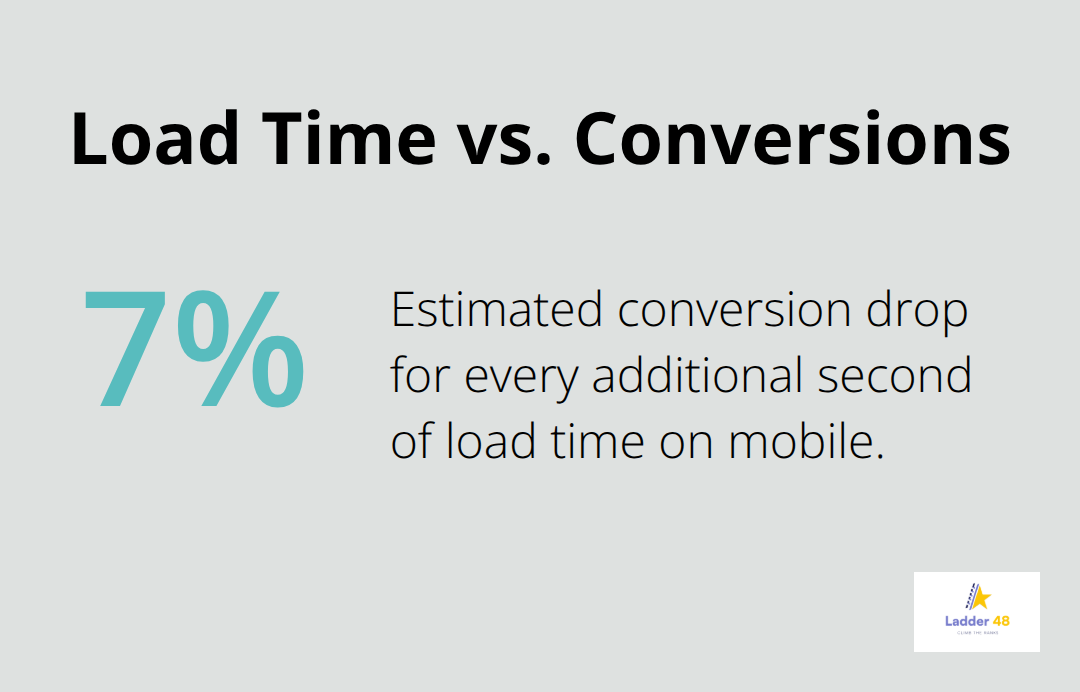
If your site takes 5 seconds to load on a phone, you lose visibility to competitors who invested in speed. Test your actual performance using PageSpeed Insights and prioritize fixes that improve Largest Contentful Paint and Cumulative Layout Shift. Slow sites don’t just rank poorly; they convert poorly. Studies show that every additional second of load time drops conversions by roughly 7%.
E-E-A-T Signals Now Drive Local Rankings
E-E-A-T signals now dominate local rankings, especially for contractors handling safety-critical work. Google wants to see Experience (you’ve actually done the work), Expertise (you know your trade), Authoritativeness (other trusted sources mention you), and Trustworthiness (your credentials and reviews back you up). This isn’t about adding flowery bios.
Instead, show real proof: publish case studies with before-and-after photos of actual projects, display your licenses and insurance prominently, link to industry certifications, and encourage satisfied clients to leave reviews mentioning specific results. Google’s systems now correlate mentions of your business on trusted local sites, industry directories, and news outlets with ranking strength. One mention in a local news story about a major project you completed carries more weight than 50 generic directory listings.
Human-Written Content Beats AI Every Time
AI-generated content penalties are real and getting stricter. Google can detect AI writing patterns, and sites stuffed with ChatGPT-generated pages will lose rankings. Write your service descriptions, project case studies, and FAQs yourself or hire a contractor in your field to write them. Authentic, human-written content that reflects actual experience outperforms polished but generic AI alternatives every time.
Your competitive edge isn’t a perfectly written paragraph-it’s your real story and real results. These three shifts reshape how contractors win visibility in 2027, and the next section shows you exactly which local SEO tactics to implement first.
How to Dominate Your Local Market With Google Business Profile and Citations
Your Google Business Profile Is Your Most Valuable Asset
Your Google Business Profile stands as the single most important asset you own online. It appears in maps, local search results, and AI-powered overviews, making it the first impression potential clients see. Most contractors treat it like a forgotten form filed once and never touched again-a critical mistake. Fill every field completely: service descriptions, hours, photos of actual completed projects, service areas with specific neighborhoods listed, and a direct phone number for calls. Google now surfaces GBP data more often than external websites in AI results, according to analysis by Lily Ray, which means accuracy here directly impacts visibility.
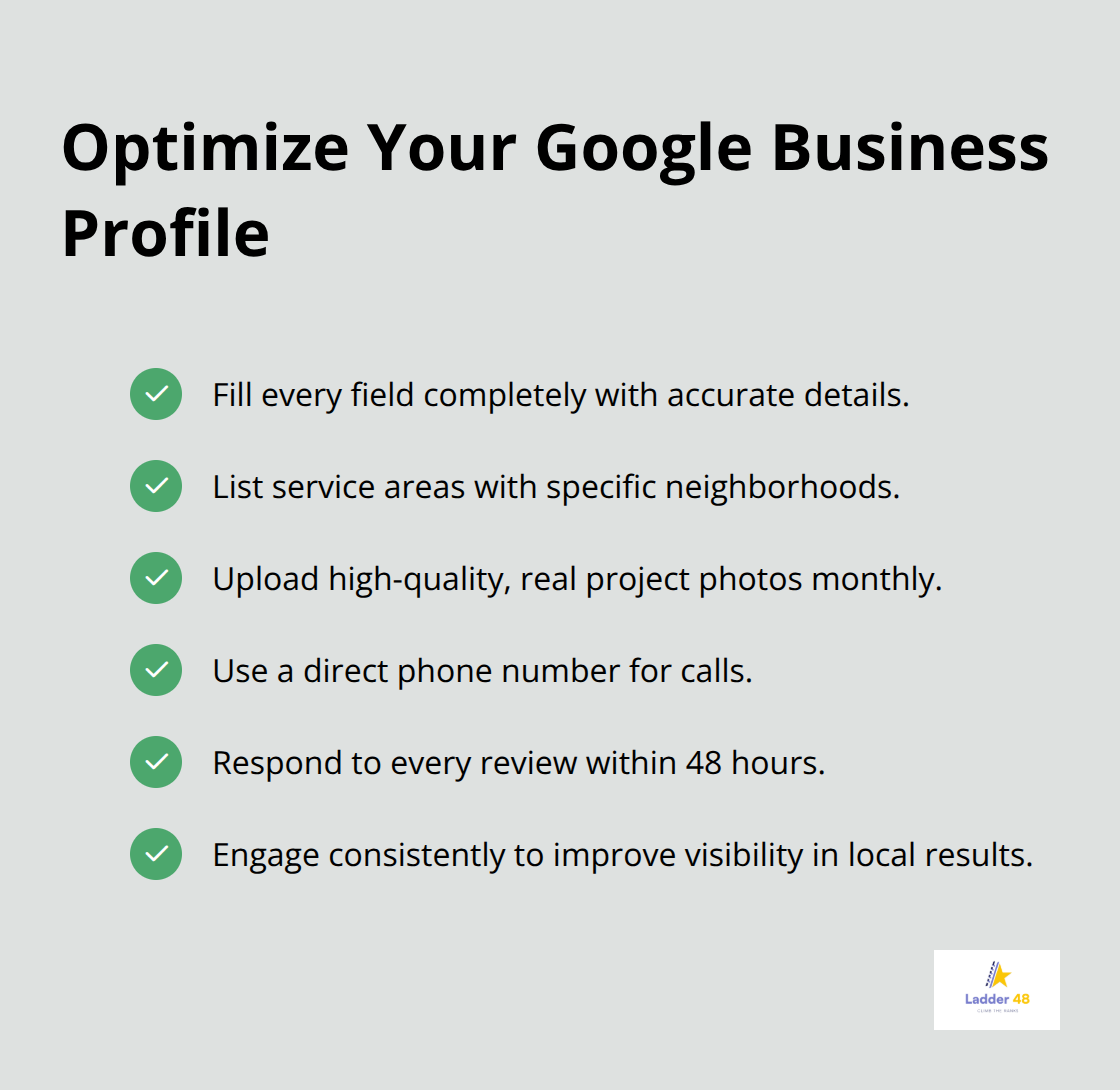
Upload high-quality photos monthly, not once. Fresh imagery signals active business to Google’s ranking system. Respond to every review within 48 hours, whether positive or negative. Google tracks response rates, and contractors who engage consistently rank higher than those who ignore feedback.
Citations Build Your Local Authority Foundation
Your citations form the foundation of local authority. You need consistent Name, Address, and Phone number across Google My Business, Yelp, Apple Maps, your industry directories, and local data aggregators. One wrong phone number on a single platform creates conflicting signals that confuse Google’s systems and tanks your rankings. Audit your current presence using a tool that checks major directories simultaneously, then fix discrepancies immediately.
Prioritize high-authority sources first: Yelp, Angi, The Spruce, and your state contractor licensing board. Local citations on official platforms carry more weight than generic directories. This distinction matters because Google weights authority differently across platforms.
Reviews Drive Rankings and Conversions
Generate reviews consistently and ask satisfied clients to mention specific results in their feedback. Google’s systems now correlate review content with ranking strength, so a review mentioning how you saved a client money on energy costs matters more than a generic five-star rating. Try for one new review per week, not one per month. Contractors generating 40 to 50 reviews annually outrank those averaging 10 to 15.
Make it frictionless: send review request links via text within 24 hours of project completion, when satisfaction is highest. Response rates to text requests exceed email by roughly 300 percent. Respond publicly to negative reviews with specific solutions, not defensive excuses. Google’s algorithm now measures how you handle criticism, and professional, solution-focused responses boost trust signals more than silence ever will.
What Comes Next in Your SEO Foundation
With your Google Business Profile optimized and citations locked in, you’ve established the local visibility foundation that AI systems and Google’s algorithm now depend on. The next step moves beyond these foundational elements into the technical infrastructure that supports everything you’ve just built-because even the most polished GBP and citation profile won’t deliver results if your website itself can’t perform.
Your Website Architecture Determines Local Ranking Strength
Your website’s technical foundation either accelerates or sabotages every local SEO effort you’ve made so far. Most contractor websites fail at the architectural level long before content or citations matter. Google’s 2027 algorithm prioritizes three technical elements that directly impact local visibility: how fast your site loads on mobile devices, whether search engines understand what services you offer, and whether your site structure clearly communicates your service areas.
Mobile Speed Isn’t Optional Anymore
Mobile load time now functions as a ranking factor that separates contractors who win local searches from those who disappear. Google measures real user experience data from actual visitors, not synthetic lab tests. Sites loading under 2.5 seconds on mobile devices rank significantly higher than those taking 4 or more seconds. For local contractor searches, this difference translates directly into visibility loss.
Test your current mobile speed using Google’s PageSpeed Insights and focus on three specific metrics: Largest Contentful Paint, Cumulative Layout Shift, and First Input Delay. Largest Contentful Paint measures when your main content loads, and contractors should target under 2.5 seconds. Cumulative Layout Shift tracks visual instability as elements load, and anything above 0.1 is a ranking penalty. First Input Delay measures responsiveness, and exceeding 100 milliseconds costs you rankings.
Most contractor sites fail because they load high-resolution images without compression, embed videos without lazy loading, or use unoptimized third-party scripts. Compress all images to under 100 kilobytes without sacrificing quality using tools like ImageOptim or TinyPNG. Remove unnecessary plugins and scripts that fire on every page load. If you use a page builder, switch to a lightweight alternative or hire a developer to clean up your code. The investment pays back immediately through improved rankings and conversion rates.
Schema Markup Makes Your Services Searchable
Search engines need structured data to understand what services you offer, where you offer them, and how clients should contact you. Schema markup tells Google’s crawlers exactly what information appears on your pages. Without proper schema, Google must guess whether your roofing service page targets residential or commercial work, whether you serve one city or fifty, or whether your phone number is current.
Implement LocalBusiness schema on your homepage with your company name, address, phone number, and service areas. Add Service schema to every service page, specifying exactly what you do, your service radius, and areas served. Add AggregateRating schema if you have reviews, so Google displays your star rating in search results. Add FAQPage schema to your FAQ sections to appear in featured snippets. Test your schema using Google’s Rich Results Test to confirm it validates without errors.
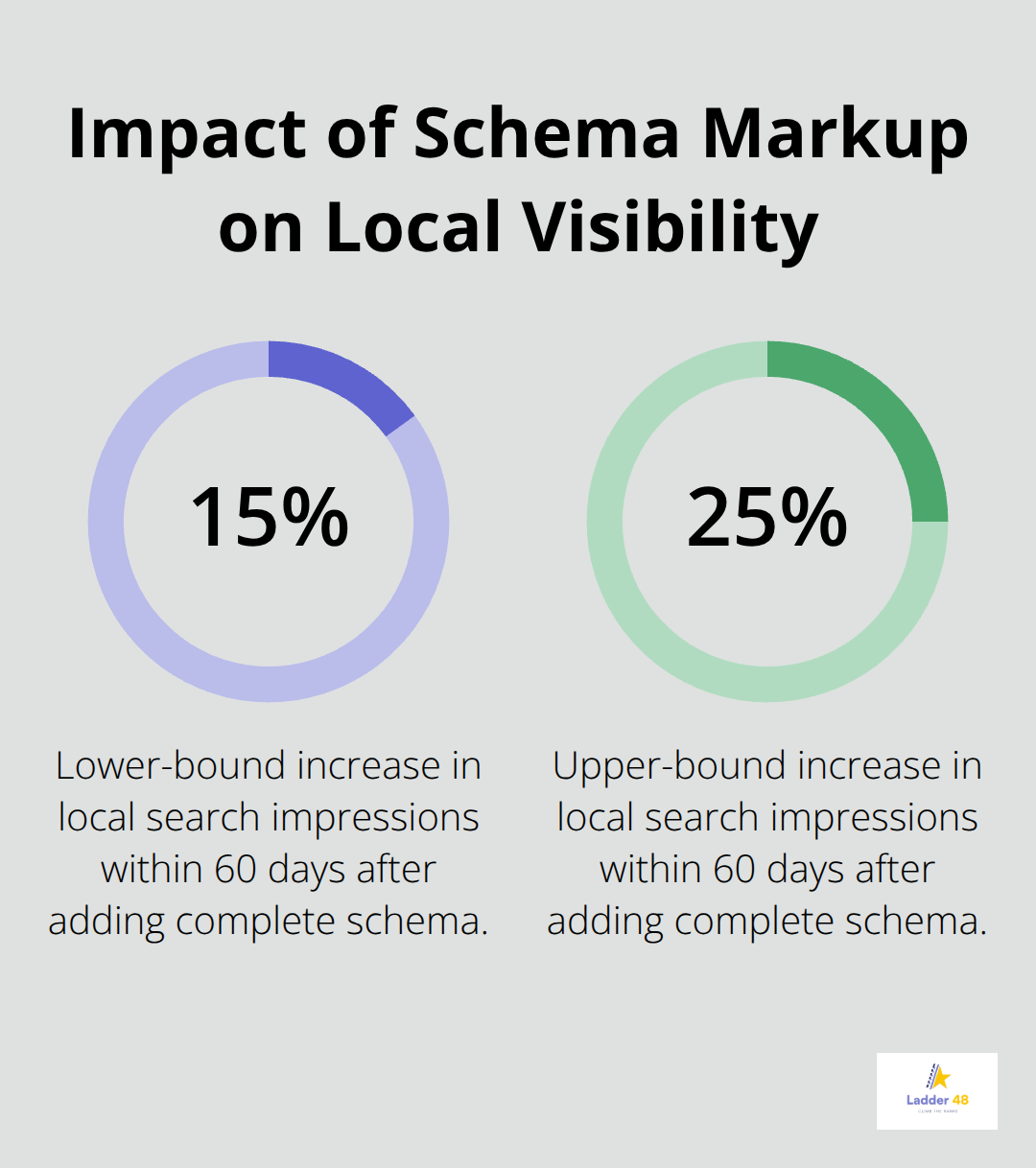
Schema markup directly influences whether Google surfaces your business in local packs, knowledge panels, and AI-powered results. Contractors implementing complete schema markup see 15 to 25 percent increases in local search impressions within 60 days.
Site Structure Signals Service Area Authority
Your site architecture must clearly communicate which neighborhoods and cities you serve. Contractors often build flat site structures that treat all pages equally, confusing Google about geographic relevance. Instead, organize your site hierarchically: create a main service page for each service type, then create location-specific pages underneath for each neighborhood or city you serve.
A roofing contractor in Phoenix should have a main roofing page, then separate pages for roofing in Scottsdale, roofing in Tempe, and roofing in specific neighborhoods within Phoenix. This structure signals to Google that you have deep expertise in specific areas rather than shallow coverage everywhere. Internal linking matters critically here. Link from your neighborhood pages back to your main service pages, and link from main service pages to neighborhood variations. This creates topical clusters that Google rewards with higher rankings.
Contractors using this hierarchical structure with proper internal linking rank for 40 to 60 percent more local keywords than those using flat structures. Avoid the temptation to create hundreds of thin location pages with duplicate content. Instead, write unique, substantive content for your top 10 to 15 service areas and build authority there. Google penalizes thin content across multiple pages far more severely than it rewards broad but shallow coverage.
Final Thoughts
You now understand what local contractor SEO 2027 demands: speed, authority signals, human-written content, a fully optimized Google Business Profile, consistent citations, review generation, and a technically sound website architecture. Start by auditing where you stand against your top three local competitors-pull their Google Business Profiles, check their citation presence across Yelp and industry directories, and test their mobile site speed using PageSpeed Insights. This competitive gap analysis takes two hours and reveals exactly which tactics will move your needle fastest.
Next, identify the local search intent your ideal clients use when they need your services. If you’re a roofer, people search for emergency roof repair after storms, roof replacement before winter, and roof inspection before buying a home (each search intent requires different content and messaging). One well-targeted article answering a specific local search question outperforms ten generic pages about your services, so build your content strategy around these specific moments when potential clients actively search for solutions.
Finally, measure what matters by tracking your Google Business Profile impressions, clicks, and calls separately from your website traffic. Monitor your rankings for 15 to 20 money terms in your service areas monthly, count new reviews, and watch your mobile conversion rate compared to your desktop rate. If you’re ready to build a systematic approach to local search visibility, Ladder 48 specializes in helping contractors implement these strategies with transparent, results-driven SEO tailored to your market.


