
General contractors who ignore SEO lose jobs to competitors who don’t. Most homeowners search Google before calling anyone, and if you’re not showing up in local results, you’re invisible.
We at Ladder 48 built this guide to help you master the general contractor SEO basics that actually drive qualified leads. The foundation is simple: optimize your online presence for local search, build authority in your area, and watch your phone ring.
Why Local Search Drives Contractor Success
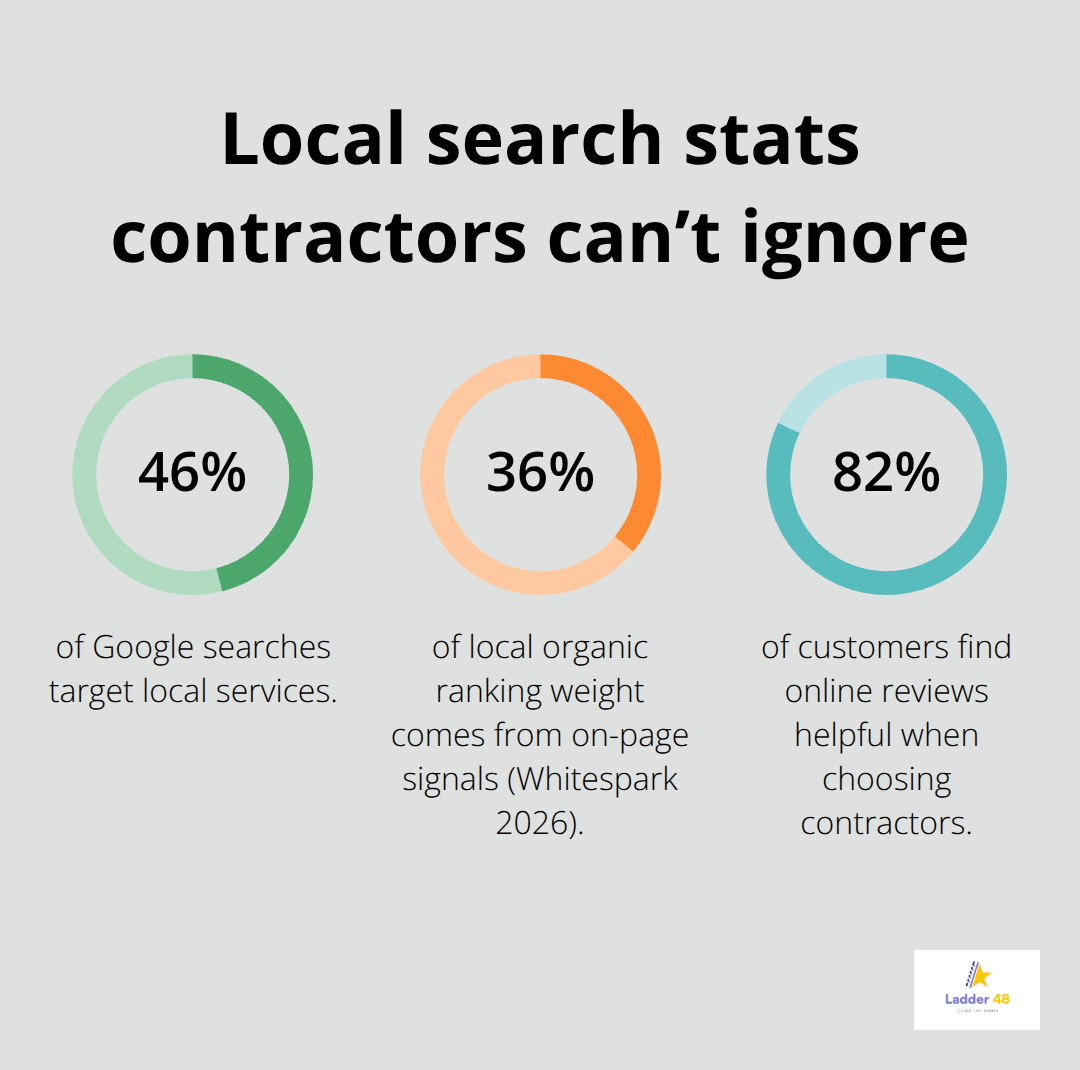
Forty-six percent of all Google searches target local services, and general contractors capture a massive share of that traffic. When a homeowner needs foundation work or a kitchen remodel, they open Google and search for contractors nearby. If you’re not appearing in the local results, you’re losing jobs to competitors who invested in SEO basics. Google processed about 5 trillion searches in 2024, and a significant portion of those came from homeowners ready to hire. The difference between ranking on page one and page three isn’t subtle-it’s the difference between consistent work and empty job sites.
The Google Maps Pack Captures Most Clicks
The Google Maps Pack shows the top three local contractors for a given search and captures the majority of clicks. Homeowners don’t scroll past these three results; they call the first or second contractor they see. Your Google Business Profile is not optional if you want to compete. A complete GBP with high-quality project photos, accurate hours, consistent name and address information, and active review management signals to Google that you’re a legitimate, trustworthy contractor. The Whitespark 2026 survey found that on-page signals contribute about 36 percent to local organic rankings, but your GBP completeness directly determines whether you appear in the Map Pack at all. Without optimization, your listing stays buried.
Mobile Searches Create Real-Time Opportunities
Mobile searches have exploded, with near-me queries growing 900 percent in just two years. Homeowners searching for contractors on their phones actively look for someone to call today or tomorrow. If your website isn’t mobile-friendly, loads slowly, or doesn’t display a click-to-call button prominently, you lose these high-intent leads to competitors. A 1-second delay in page load speed cuts conversions by about 20 percent. Google PageSpeed Insights reveals exactly where your site loses speed, and fixing those issues matters for your bottom line. When a homeowner on a mobile device can’t reach your phone number instantly or sees a slow, cluttered site, they move to the next contractor in the search results.
Your GBP Completeness Determines Local Visibility
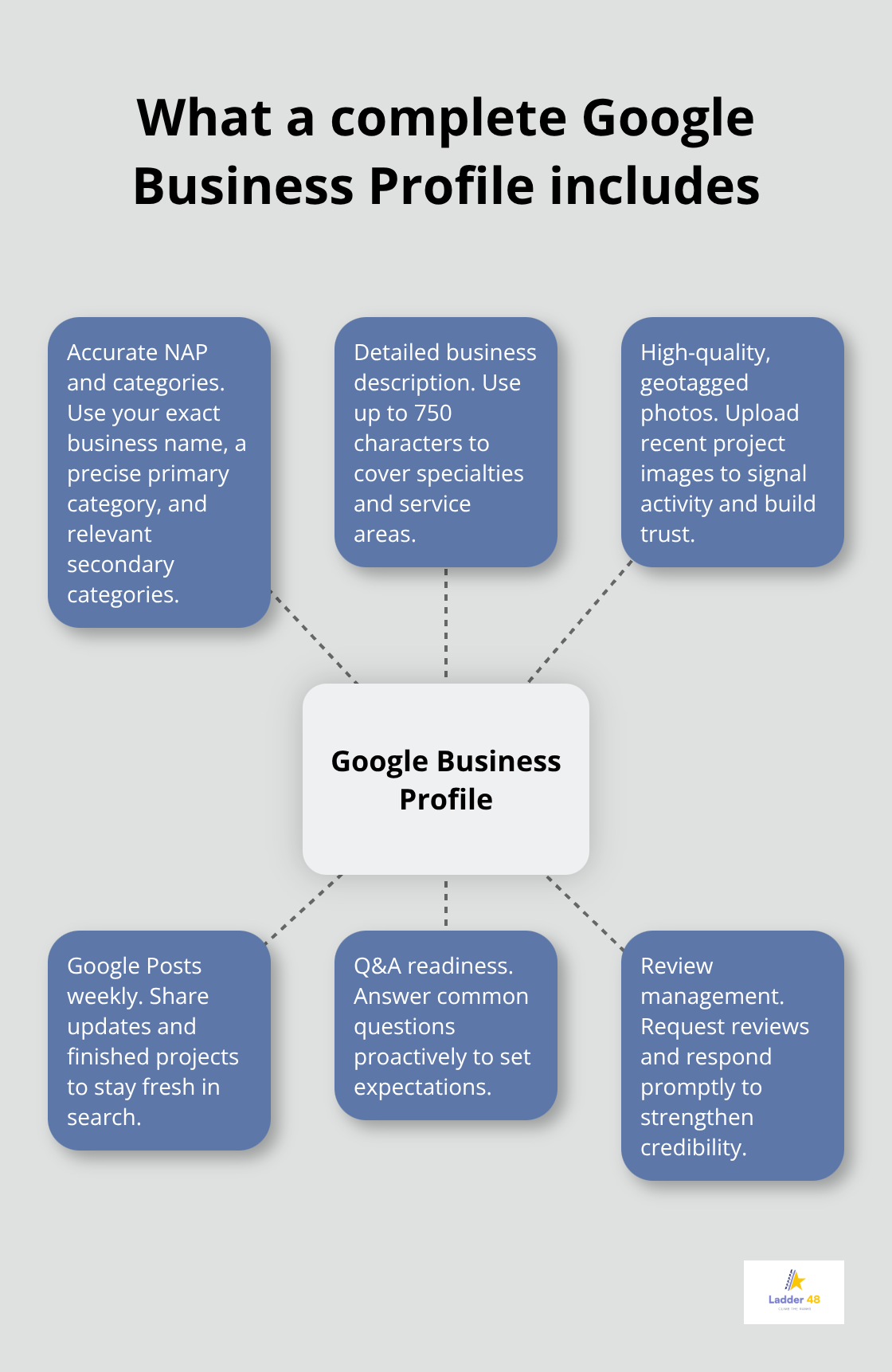
Your Google Business Profile acts as your free digital storefront and directly impacts whether homeowners find you. A complete GBP includes your exact business name, primary category (such as “General Contractor”), additional service categories, accurate hours, and a detailed business description of up to 750 characters. High-quality, geotagged project photos signal ongoing demand and build trust with potential clients. Eighty-two percent of customers find online reviews helpful, so active review management and prompt responses to feedback strengthen your credibility and local rankings. The more complete your GBP, the higher your chances of appearing in the Map Pack and capturing qualified leads from your service area.
Local Authority Starts with Consistent Information
Your name, address, and phone number must match exactly across your website, Google Business Profile, and all local directories. Even small inconsistencies hurt your visibility and confuse Google’s ranking algorithm. Citations on reputable platforms like Yelp, Angi, Houzz, and the Better Business Bureau reinforce your local authority and build trust signals. Each citation acts as a vote of confidence in your business, and maintaining NAP consistency across all platforms strengthens your foundation for local search success. With these fundamentals in place, you’re ready to optimize the pages that actually convert homeowners into clients.
How to Structure Your Website for Local Contractor Searches
Your website’s structure determines whether homeowners searching for contractors in your area find you or your competitors. Most contractor websites fail because they function like brochures instead of lead-generation machines. Service pages scattered across your site without clear optimization for local keywords waste traffic from homeowners actively ready to hire. Each service page should target a specific combination of service and location-for example, Kitchen Remodeling in Denver or Bathroom Renovation in Boulder. This approach lets Google understand exactly what you offer and where you offer it.
Optimize Your Title Tags and Meta Descriptions for Local Intent
Title tags should follow a consistent formula like Kitchen Remodeling in [City], [State] | [Your Business Name]. Meta descriptions should run 155 to 160 characters and answer the homeowner’s question directly: what you do, where you do it, and why they should call. A homeowner searching for foundation repair in their neighborhood needs to see that exact phrase in your title and opening content, not generic language about construction services. Meta descriptions don’t directly affect rankings, but they influence click-through rates in search results. A description like “See our award-winning bathroom remodels in [City]. Free estimates, licensed contractors, 20+ years experience” outperforms generic descriptions by 30 to 40 percent in click performance.
Design Your Site for Credibility and Navigation
Seventy-five percent of users judge your credibility by website design alone, so clear navigation that guides visitors straight to service pages and contact forms matters more than flashy graphics. Your site structure should make it simple for homeowners to find what they need and contact you without friction. A click-to-call button positioned prominently on every page reduces friction and captures high-intent mobile searchers. Load speed directly impacts conversions-a 1-second delay cuts conversions by about 20 percent.
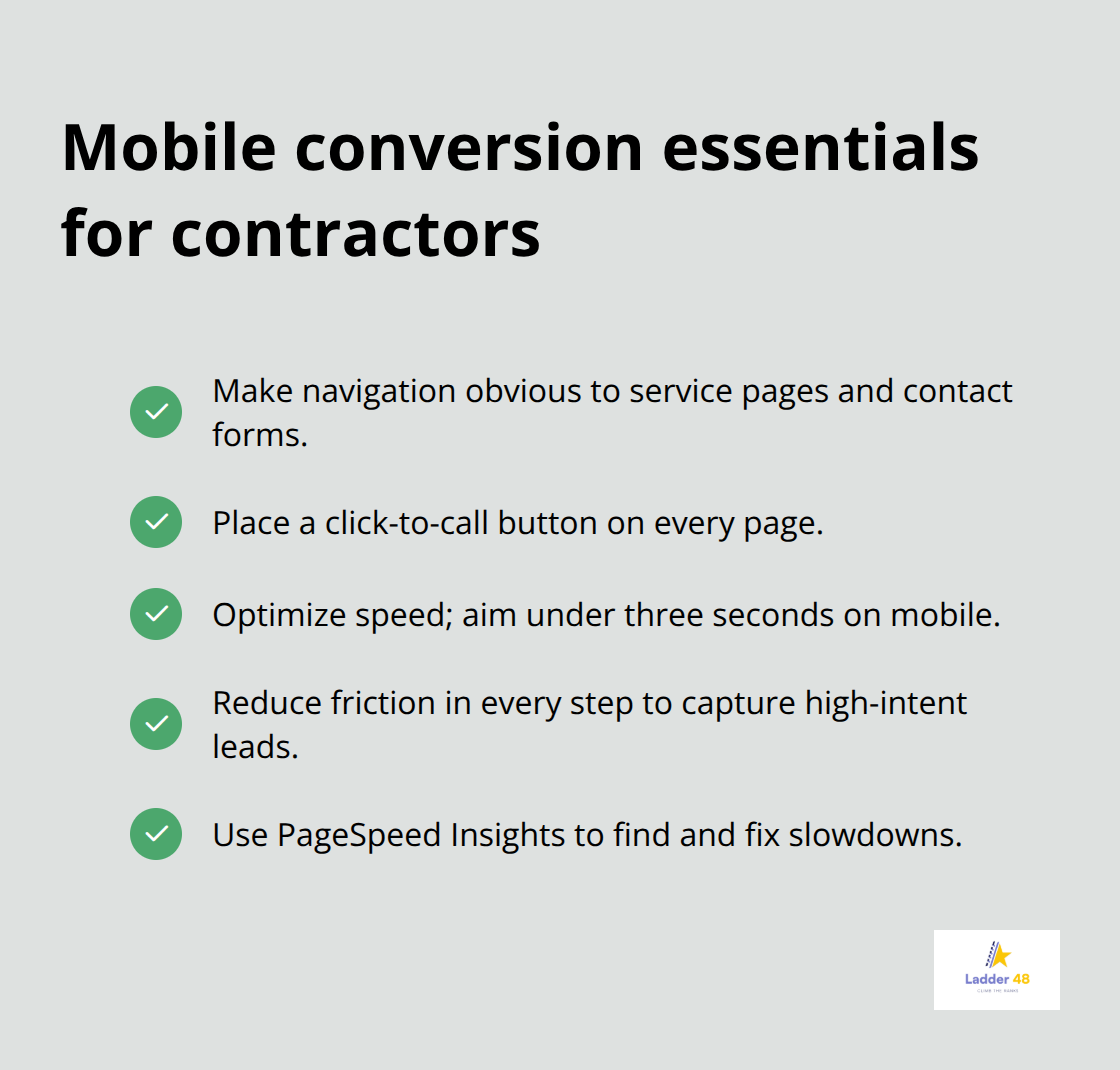
Test your pages with PageSpeed Insights and work to load in under three seconds on mobile devices, where most contractor searches happen.
Create Content That Answers Real Homeowner Questions
Homeowners ask specific questions before hiring: How much does a kitchen remodel cost in my area? What permits do I need? How long will this take? Your website should answer these questions with actual local data, not theoretical estimates. Write content around these real search queries using Google Search Console to see what terms drive traffic to your site already. If homeowners in your area search for luxury bathroom remodel costs or ADU building requirements, create pages that address those exact topics with specifics about your region.
Organize Your Portfolio and Use Proper Header Structure
Include before-and-after project galleries organized by service type, not just a generic portfolio. Homeowners convert faster when they see completed work in their neighborhood or similar homes. Header structure matters more than most contractors realize: use H1 tags once per page for your main service heading, H2 tags for subsections like Timeline or Process, and H3 tags for supporting details. Google Search Console data shows that pages with proper header hierarchy rank higher and receive more clicks. With your site structure and content strategy in place, the next step focuses on building the local authority signals that push your listings above competitors in search results.
Building Local Authority Through Citations and Profiles
Your Google Business Profile stands as the single most important asset you own online, and it demands far more attention than most contractors provide. Claim your GBP immediately if you haven’t already, then complete every field available. Your exact business name, primary category (General Contractor), and up to nine secondary categories must reflect the services you actually offer. If you specialize in kitchen remodels and bathroom renovations, add those as secondary categories so Google understands your full scope. Your business description receives up to 750 characters, and this space should communicate your specialty, service area, and what makes you different from competitors down the street.
Optimize Your GBP with Photos and Regular Updates
Upload high-quality, geotagged photos of completed projects rather than stock images or outdated work. Google timestamps your photos, and fresh imagery signals active business to both the algorithm and homeowners browsing your profile. Post updates weekly through the Google Posts feature to share finished projects or announce new services. Answer common questions in the Q&A section before negative reviews appear there, addressing concerns like “Do you offer free estimates?” or “What is your service area?” These answers position you as responsive and transparent.
Build Citations Across Reputable Directories
Citations from reputable directories reinforce your local authority far more than most contractors realize. Get listed on Yelp, Angi, Houzz, and the Better Business Bureau with your name, address, and phone matching exactly across every platform. Even a single inconsistency confuses Google’s ranking algorithm and weakens your authority signals. Maintain consistent NAP information quarterly by auditing your listings manually or using a tool like BrightLocal to monitor citations across multiple directories simultaneously.
Leverage Reviews to Build Trust and Rankings
Reviews drive both trust and rankings, with 82 percent of customers finding online reviews helpful when selecting contractors. Implement a simple system to request reviews after project completion, such as texting a QR code that links directly to your Google review page. Respond to every review within 48 hours, addressing specific details from the project and incorporating local service keywords naturally into your responses. A negative review answered professionally actually builds credibility more than silence does. Citations act as votes of confidence in your business, and each reputable listing strengthens your foundation for appearing in the Google Maps Pack where most contractor leads originate.
Final Thoughts
General contractor SEO basics require three core actions: optimize your Google Business Profile completely, maintain consistent name, address, and phone information across all directories, and structure your website to answer the questions homeowners actually ask. Your GBP completeness determines whether you appear in the Google Maps Pack where most contractor leads originate, while citations from Yelp, Angi, Houzz, and the Better Business Bureau reinforce your local authority only when your information matches exactly everywhere. Your website must load fast on mobile devices, display a prominent click-to-call button, and organize service pages around location-specific keywords that match how homeowners search for contractors in your area.
Start improving your online visibility today by auditing your current GBP and website against the standards outlined in this guide. Claim your listing if you haven’t already, upload high-quality project photos, and implement a system to request and respond to reviews within 48 hours. Audit your citations across major directories for NAP consistency, then create or optimize your top three service pages with location-specific keywords and proper header structure.
These foundational steps take weeks, not months, and deliver measurable results in local search visibility and qualified leads. We at Ladder 48 help contractors build lasting local growth through transparent, results-driven SEO strategies tailored to your business. Visit Ladder 48 to learn how we help contractors dominate local search and attract more qualified leads from your service area.


