Plumbers who ignore local SEO are leaving money on the table. When homeowners search for emergency plumbing services or need a burst pipe fixed, they’re searching locally-and if you’re not showing up, your competitors are getting those calls.
At Ladder 48, we’ve seen plumbers transform their businesses by mastering the fundamentals of local search. The tactics in this guide will help you rank higher in your service areas, attract qualified customers, and build a sustainable local presence.
How to Set Up Google Business Profile and Citations for Maximum Local Visibility
Your Google Business Profile is the single most important asset in local plumbing SEO. Incomplete or poorly optimized profiles drive seven times fewer clicks than complete ones, which means a half-finished GBP costs you calls every single day. Start by claiming your profile if you haven’t already, then verify it through postcard delivery or phone verification. Once verified, fill in every field with accuracy and specificity.
Optimize Your Business Profile for Maximum Impact
Your business name should be exactly as it appears on your legal documents and business licenses, not stuffed with keywords or service descriptions. Set your primary category as Plumber, then add secondary categories like Water Heater Repair or Drain Cleaning Services if they apply. Add your full service area by listing the cities you actually serve, not nearby towns you hope to cover someday. Include your emergency hours if you offer 24/7 service, your standard hours, and any holiday closures.
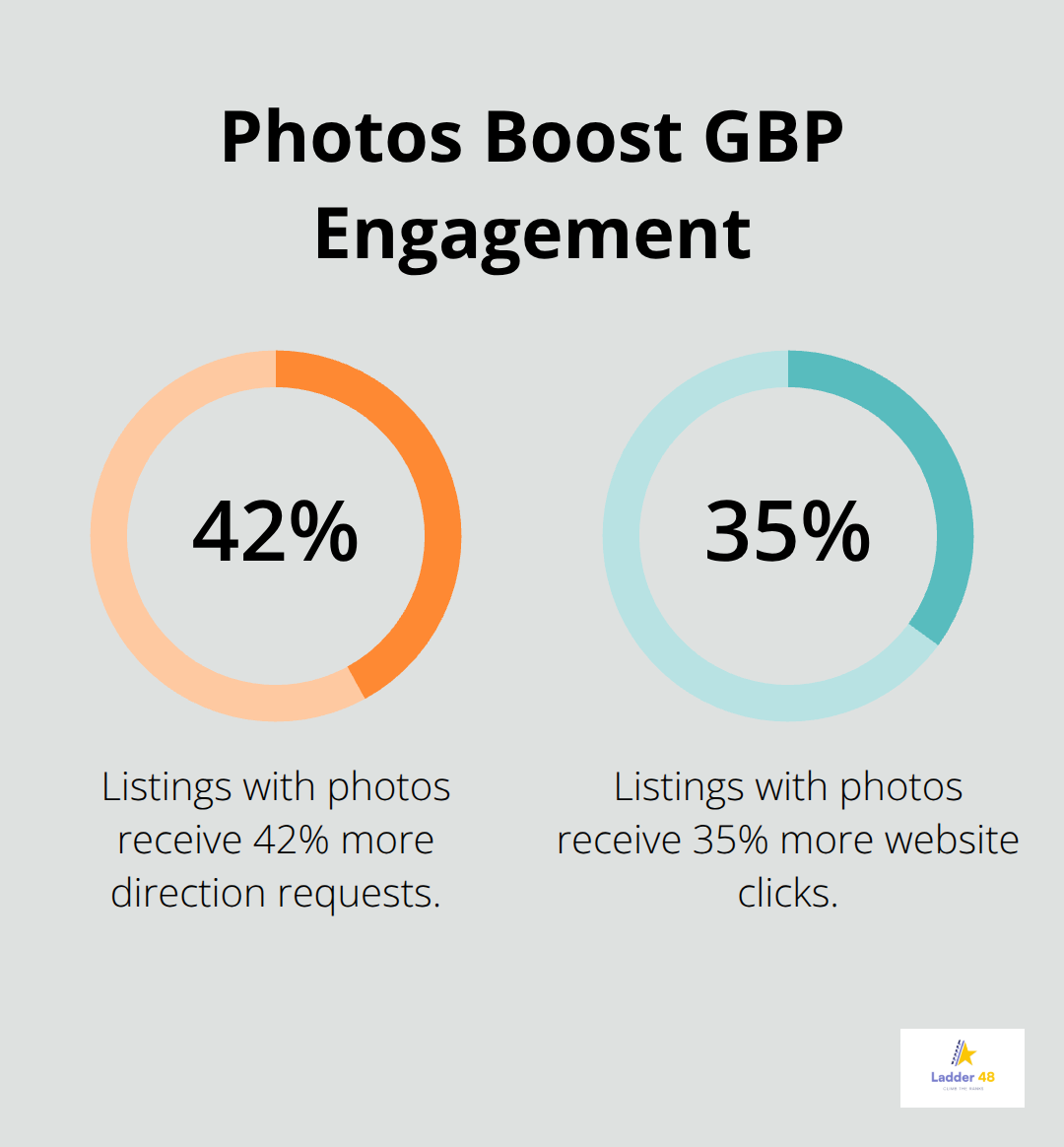
Upload at least 20 high-quality photos showing actual plumbing work, team members, vehicles, and before-and-after shots. According to Google, listings with photos receive 42% more direction requests and 35% more website clicks. Write detailed service descriptions for each major offering, using language your customers actually search for-like emergency water leak repair or same-day drain cleaning. Update your GBP every week with new photos from jobs or brief posts about seasonal tips and current promotions.
Build Citations That Actually Matter
Local citations are mentions of your business name, address, and phone number across directories and websites. Quality matters far more than quantity. Start with the Priority 1 directories: Google Business Profile, Bing Places, Apple Maps, Facebook, and Yelp. These carry the most weight with search algorithms. Next, add your business to Priority 2 sources like Angi, HomeAdvisor, Thumbtack, and Porch, which are where homeowners actively search for plumbers.
Then pursue industry-specific directories like Houzz and Plumber.com, plus local sources such as your chamber of commerce and neighborhood business associations. Try for 50 to 100 quality citations over time rather than chasing thousands. NAP consistency is non-negotiable: your name, address, and phone number must be identical everywhere. One typo or variation across multiple sites confuses Google and harms your rankings. Use a citation auditing tool like BrightLocal or Moz Local to find duplicates, inconsistencies, and outdated information, then clean them up. Many plumbers discover they have duplicate listings or variations (like Inc. versus LLC) that sabotage their local rankings.
Turn Reviews Into Your Competitive Advantage
Ninety-three percent of consumers read online reviews before hiring a service provider, and 85% trust online reviews as much as personal recommendations. Your review velocity matters more than your total count. Two authentic reviews added this month signal more relevance than fifty stale reviews from years ago. Try for 20 to 25 new reviews monthly in competitive markets.
The easiest way to get reviews is to ask immediately after completing a job while the customer is satisfied. Train your technicians to request reviews on-site or send an automated request through software like Housecall Pro, Jobber, or Podium within an hour of job completion. Make it frictionless by providing a direct link to your Google review page or a QR code. Encourage customers to mention the specific service they received, like water heater replacement or emergency leak repair, because keyword-rich reviews help with rankings.
Your review average should stay above 4.5 stars. Respond to every review within 24 hours, whether positive or negative. For negative reviews, acknowledge the concern, apologize if appropriate, and offer to discuss offline. A well-handled negative review shows potential customers you care about service quality. Feature your best reviews prominently on your homepage and create a dedicated reviews page with 20 to 30 standout testimonials. Embedding Google reviews with review schema markup boosts click-through rates by 20 to 30%.
With your GBP optimized, citations built, and reviews flowing in, you’ve established the local foundation that search engines trust. The next step is making sure your website itself is built to convert those clicks into calls.
Website Speed and Mobile Performance Win Emergency Calls
A plumber’s website has one job: convert emergency searches into phone calls. When homeowners search for “emergency plumber near me” on mobile at 2 a.m. with a burst pipe, they need answers in seconds, not minutes. Google prioritizes fast, mobile-friendly sites in local search rankings, and slow sites lose calls to faster competitors. Core Web Vitals now rank as a confirmed ranking factor, meaning a site that loads in 5 seconds ranks lower than one loading in 2 seconds, even if the content is identical. Most plumbing searches happen on mobile devices, so if your site isn’t optimized for phones, you’re already behind.
Test Your Site Speed and Identify Problems
Test your site speed on mobile using Google PageSpeed Insights and try for a score above 90. If your current speed falls below that, you’re losing visibility and conversions every single day. Your homepage should load in under 2.5 seconds on mobile, with your phone number visible above the fold and clickable. Compress images aggressively, eliminate render-blocking JavaScript, and leverage browser caching to reduce load times. Mobile responsiveness is non-negotiable: test your site on real phones and tablets, not just desktop browsers. Your navigation should feature thumb-friendly buttons with large tap targets, and your contact form should load instantly.
Implement HTTPS and Technical Foundations
Implement HTTPS encryption across your entire site because Google ranks secure sites higher and customers trust them more. Set up a clean XML sitemap and robots.txt file so Google can crawl and index all your service pages and location pages without obstacles. Use Google Search Console to monitor crawl errors, indexing issues, and mobile usability problems. Fix any blocked resources or pages that Google cannot crawl. Monitor your Core Web Vitals metrics monthly through Search Console and PageSpeed Insights, tracking Largest Contentful Paint, Interaction to Next Paint, and Cumulative Layout Shift. If any metric falls below the recommended threshold, fix it immediately because these directly affect rankings and user experience.

Use Schema Markup to Help Google Understand Your Business
Schema markup tells Google exactly what your business does and where you serve. Add LocalBusiness schema to your homepage with your name, address, phone, hours, and service area. Add Service schema to each service page describing what you offer and your coverage area. Add FAQPage schema to any FAQ section because Google uses these to populate featured snippets and AI overviews. Add Review schema to showcase your ratings prominently in search results. Schema markup doesn’t directly rank you higher, but it helps Google understand your content and display it accurately in AI-generated answers and local pack results.
With your technical foundation solid and your site optimized for speed and mobile users, you’re ready to attract customers through strategic content that targets the exact problems homeowners search to solve.
Content That Converts Emergency Searches Into Calls
Most plumbers waste content effort on generic blog posts that rank for nothing and convert even fewer readers. The content that actually works targets the specific problems homeowners search for when they need immediate help, combined with the neighborhood-specific keywords that Google uses to match local intent. Your content strategy should focus on three core areas: capturing high-intent emergency searches like “emergency plumber near me” and “water leak repair,” creating dedicated pages for each city and service combination you actually serve, and building problem-solution content around the exact issues that drive phone calls.
Research Keywords That Homeowners Actually Search
Start with keyword research using Google Keyword Planner or SEMrush to identify the terms homeowners in your service areas actually search. Emergency keywords like “emergency plumber near me” and “same-day drain cleaning” convert at 60 to 80 percent, while general service keywords like “plumbing tips” convert at only 20 to 30 percent. Near-me searches account for 30 to 40 percent of local plumbing searches, so optimize your homepage and service pages for these high-intent terms. Major markets like Los Angeles show substantial volume with approximately 8,100 monthly searches for “plumber Los Angeles” and 2,400 monthly searches for “emergency plumber Los Angeles,” meaning even smaller markets can generate 20 to 50 qualified leads monthly if you rank well for the right keywords.
Your homepage should feature your service area prominently, your phone number above the fold as a clickable link, and clear language about emergency availability.
Build Location Pages That Rank in Specific Cities
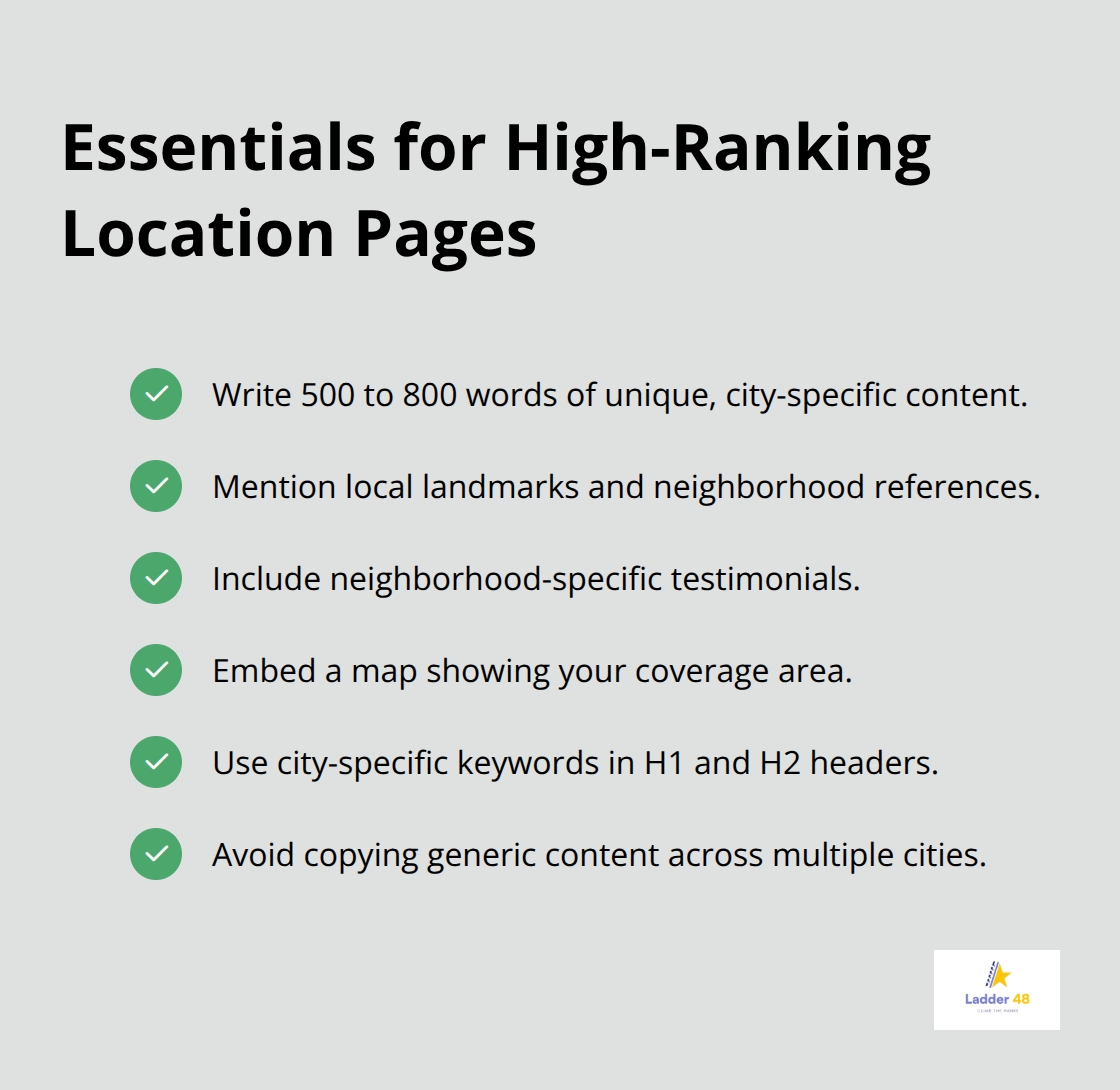
Create dedicated service area pages for each city you serve with 500 to 800 words of unique content that includes local landmarks, neighborhood-specific testimonials, embedded maps showing your coverage area, and city-specific keywords in your H1 and H2 headers. A plumber serving Fort Lauderdale should have a page titled “Plumber in Fort Lauderdale” with content that addresses problems specific to that area, not generic plumbing content copied across multiple cities. This signals to Google that you actually serve that neighborhood and understand its unique challenges.
Target Problems That Drive Urgent Calls
Problem-solution content drives the most qualified traffic because homeowners search for solutions when they have urgent needs. Create pages targeting high-value problems like “cost to replace a water heater,” “signs of hidden water leaks,” and “how to fix a burst pipe,” then provide direct answers that address the problem immediately followed by clear next steps to call your business. Publish 2 to 4 blog posts monthly targeting these problem-focused topics with 1,000 to 1,500 words each, using local keywords and internal links back to your service pages.
Seasonal content performs exceptionally well because homeowners face predictable problems at specific times: frozen pipes in winter, burst pipes from spring flooding, and water heater failures year-round. Create content around these seasonal problems 4 to 6 weeks before the season arrives so you rank when demand peaks. FAQ pages addressing common questions like “what causes low water pressure” or “why is my drain backing up” capture voice searches and featured snippets that Google displays prominently. Add FAQPage schema markup to these sections so Google can cite your answers in AI-generated overviews.
Structure Content for Immediate Conversions
Avoid lengthy introductions and theory; homeowners searching for “emergency plumber near me” want to know if you can help them right now, not read a history of plumbing or general maintenance tips. Front-load your answer, include pricing or process information when relevant, feature trust signals like licenses and insurance, and end with a clear call-to-action directing readers to call or request service. Track which pages and keywords drive the most calls using Google Search Console and Google Analytics 4, then double down on the content that actually converts rather than publishing content you think might rank.
Final Thoughts
Plumber local SEO compounds over time, delivering more calls and higher-quality leads the longer you maintain it. Start with your Google Business Profile-a complete, optimized profile drives seven times more clicks than an incomplete one, which means every day your profile sits half-finished costs you calls. Build citations across the directories homeowners use, keep your NAP consistent everywhere, and gather reviews consistently, since these three foundations signal trust to Google and account for the majority of local search visibility.
Your website must load fast on mobile and convert visitors into calls, because emergency plumbing searches happen on phones at odd hours and slow sites lose those calls to faster competitors. Schema markup helps Google understand your business and display your information accurately in AI-generated answers. Create content that targets the exact problems homeowners search to solve-emergency keywords convert at 60 to 80 percent because they capture high-intent traffic, location pages for each city you serve signal local relevance, and problem-solution content drives qualified leads.
Local SEO delivers 300 to 500 percent ROI within 6 to 12 months because the cost per lead is dramatically lower than paid advertising. If you want to accelerate your plumber local SEO growth, Ladder 48 specializes in SEO strategies designed specifically for contractors and helps plumbers rank higher, attract qualified leads, and build sustainable growth in their service areas.