
HVAC technicians who aren’t showing up in local search results are losing jobs to competitors who are. Most homeowners search online before calling anyone, and if your service pages aren’t optimized, they’ll never find you.
At Ladder 48, we’ve helped HVAC businesses dominate their local markets through strategic SEO. This guide walks you through the exact tactics that work.
Why SEO Matters for HVAC Technicians Right Now
The Map Pack Dominates Local HVAC Searches
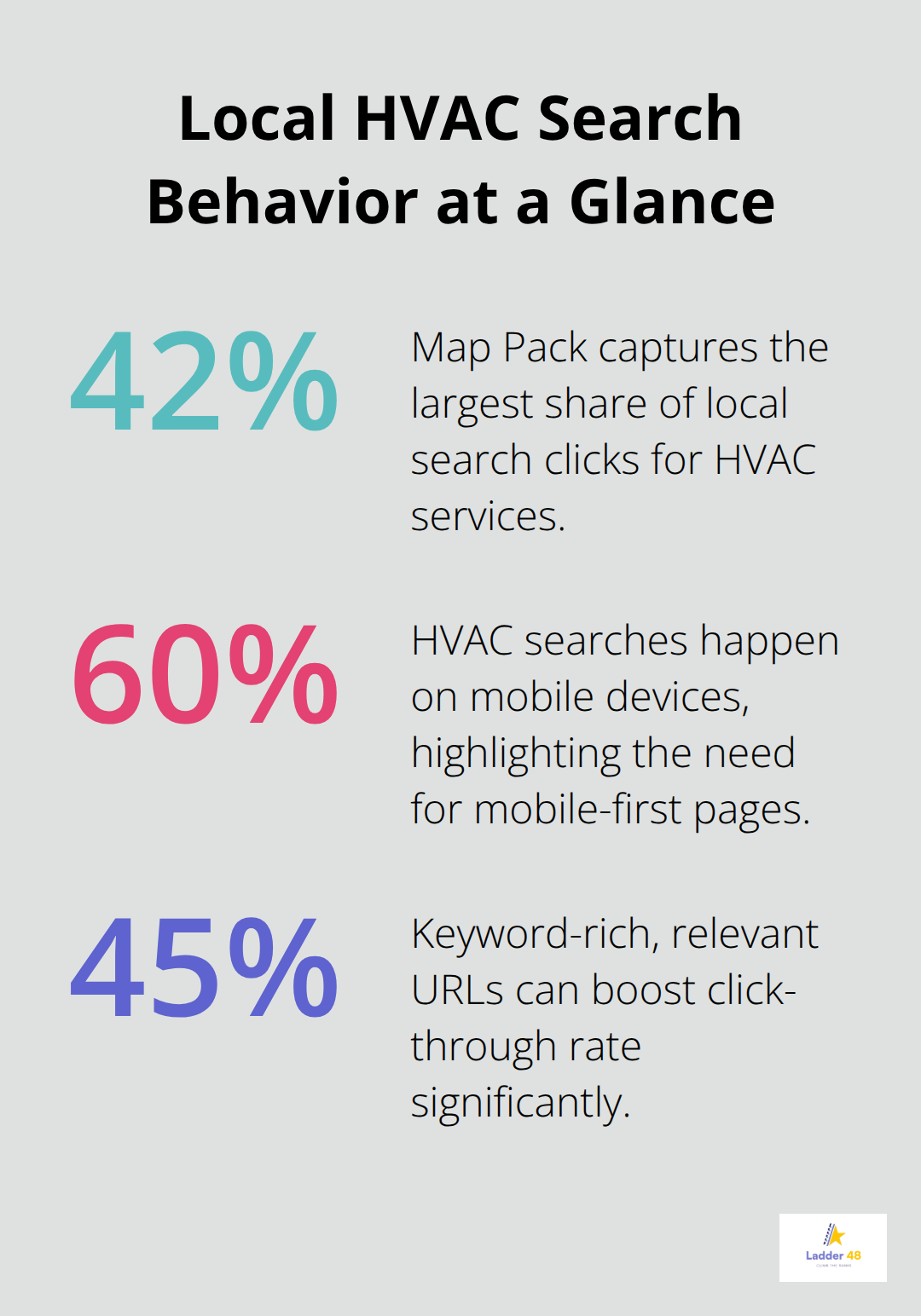
The HVAC market is crowded, and homeowners no longer rely solely on referrals or Yellow Pages listings. According to Google and FieldCamp data, the Map Pack captures roughly 42% of all local search clicks-meaning nearly half of homeowners looking for HVAC services click on map results before anything else. If your business doesn’t appear there, you’re invisible to a massive portion of demand.
About 60% of HVAC searches happen on mobile devices, and most of those searches include location qualifiers like “near me” or the homeowner’s city name. When someone searches “furnace repair in Denver” or “24-hour AC repair near me,” they’re ready to book a technician. That’s high-intent traffic you can’t afford to miss.
Your Competitors Are Already Ranking
Your competitors understand this reality. Many HVAC businesses have already optimized their Google Business Profiles, claimed their local listings, and built service pages targeting their specific cities. If they rank above you, homeowners call them instead.
The math is straightforward: 10 additional calls per month at a 30% close rate yields 3 new jobs. Depending on your average job value, that translates to $1,000 to $6,000+ in monthly revenue. Most HVAC businesses see typical ROI of 5 to 10 times their SEO investment within a year, according to FieldCamp research.
Start with Your Google Business Profile
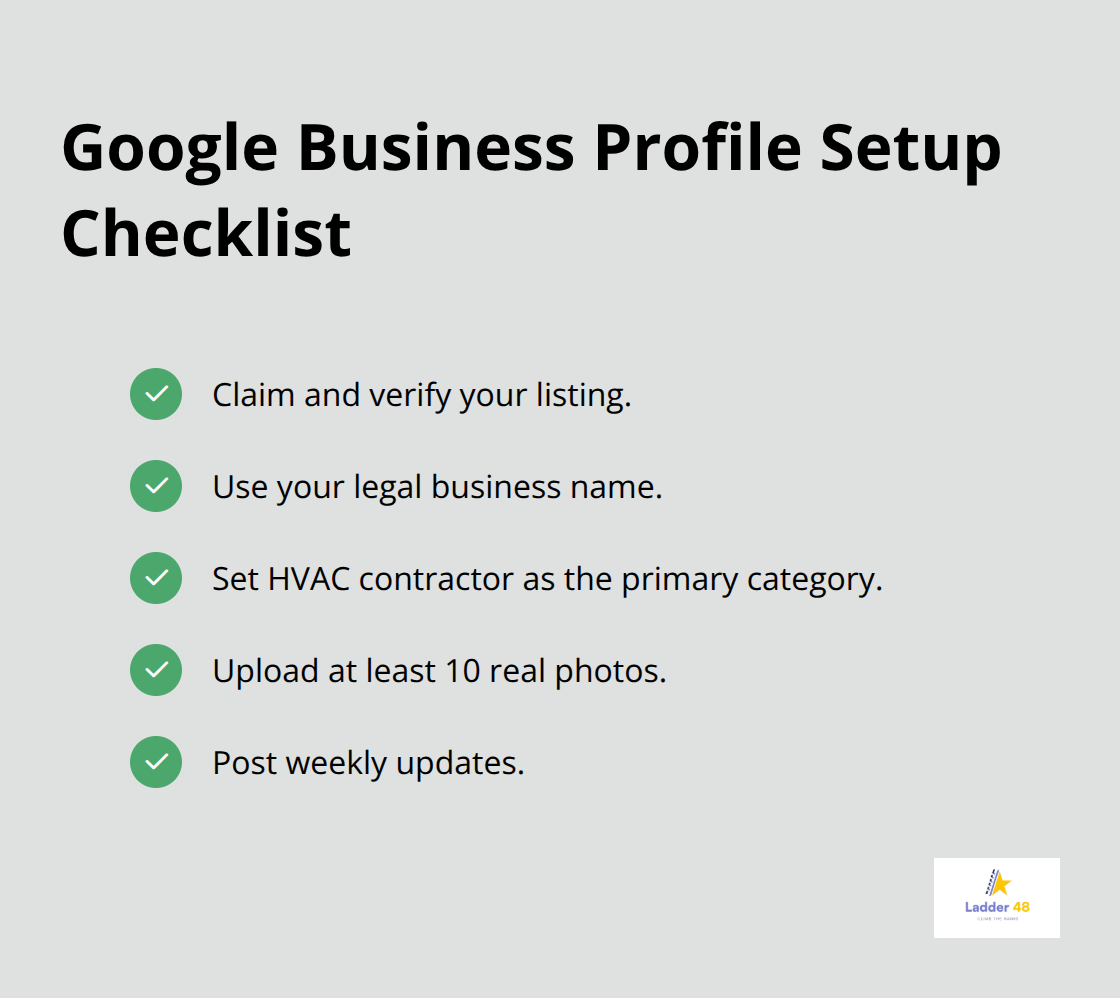
The opportunity is wide open because many HVAC technicians haven’t invested in SEO yet. Start with optimizing your Google Business Profile-claim and verify your listing, add your legal business name, select HVAC contractor as your primary category, upload at least 10 real photos, and post weekly updates. This single step has the highest return on investment for local visibility.
Build Service-Specific Pages for Each Location
Next, build service-specific pages for each HVAC service you offer, each targeting a different city or service area. Each page should include 800 to 1,500 words, real customer testimonials, pricing ranges, and schema markup so Google understands exactly what you do. These foundations work because they align with how homeowners search and how Google ranks local results.
With your Google Business Profile optimized and your first service pages live, you’re ready to implement the on-page SEO strategies that will push your rankings higher.
How to Optimize Service Pages for Local HVAC Searches
Write Title Tags and Meta Descriptions That Convert
Your title tag and meta description are the first things homeowners see in search results, and they determine whether someone clicks your link or your competitor’s. According to FieldCamp research, top-ranking HVAC sites place their primary keyword near the start of the title tag and keep it around 150 to 160 characters, leaving room for a clear call-to-action. A title like “Furnace Repair in Denver | Same-Day Service | Your Company” outperforms generic titles because it answers the homeowner’s question immediately and signals urgency. Your meta description should follow the same logic: front-load the service and location, then add a differentiator. Something like “Professional furnace repair in Denver. Licensed technicians, 24/7 availability, upfront pricing. Call today for same-day service” works because it addresses what homeowners actually search for and gives them a reason to click.
Test your titles and descriptions by searching your target keywords in Google and comparing yours against the top three competitors; if yours doesn’t stand out or doesn’t clearly state what you offer, rewrite it. The goal isn’t cleverness, it’s clarity and relevance. Keyword-rich URLs can raise click-through rate by roughly 45% when relevant, so structure your URLs like /furnace-repair-denver or /ac-installation-colorado-springs rather than /service-1 or /page-47.
Target One Primary Keyword Per Page
Each page should target a single primary keyword, and that keyword belongs in your H1 heading, your first paragraph, and naturally throughout your content. This focus prevents confusion and tells Google exactly what the page is about. Spreading multiple keywords across one page dilutes your ranking power and confuses both search engines and visitors.
Create Location-Specific Content That Ranks
Location-specific content separates HVAC pages that rank from those that languish in obscurity. Generic pages about furnace repair don’t rank because Google has millions of them; pages about furnace repair in specific cities rank because they answer local intent. Create genuinely unique location pages by including specific service areas by city names rather than broad regions, mentioning local landmarks, climate-specific challenges, permit considerations relevant to that city, embedded Google Maps, testimonials from customers in that area, and a local phone number.
A page for Denver should mention the altitude-related HVAC challenges homeowners face there; a page for humid climates should address dehumidification needs. According to FieldCamp research, pages with 800 to 1,500 words and real customer testimonials outrank shorter, generic alternatives. Include pricing ranges specific to your market, not national averages, because homeowners want to know what they’ll actually pay in their area.
Link Related Services Together
Internal linking between related services amplifies ranking power: if you have pages for furnace repair, furnace installation, and furnace maintenance, link them to each other using descriptive anchor text like “furnace maintenance plans” or “upgrade to a high-efficiency furnace.” This structure helps Google understand your service depth and keeps visitors on your site longer, which signals engagement to search engines.
Add Schema Markup to Every Service Page
Use schema markup on every service page so Google immediately understands your business type, services, reviews, and frequently asked questions; tools like Rank Math or Yoast make this straightforward without coding knowledge. Schema markup acts as a translator between your content and Google’s algorithms, ensuring your HVAC services appear correctly in search results and rich snippets. With your service pages optimized for local search, you’re ready to address the technical and off-page factors that push rankings even higher.
Technical SEO and Local Authority for HVAC Businesses
Site Speed Determines Whether Homeowners Stay or Leave
Site speed and mobile performance directly control whether homeowners stay on your page or bounce to a competitor. According to Akamai research, 53% of mobile visitors leave if load time exceeds 3 seconds, and a 1-second delay drops conversions by 7%. HVAC sites currently average 8.7 seconds on mobile, which means most HVAC websites lose leads before visitors even see your service offerings. Fix this immediately through WebP image compression, browser caching, and a content delivery network. Try for a mobile PageSpeed score above 80 in Google’s tools; anything below that signals poor performance to both users and search engines.
Test your site speed at PageSpeed Insights right now and identify which pages load slowest. Image optimization alone typically cuts load times by 40 to 50% because images consume the most bandwidth on HVAC service pages. If your images aren’t compressed, your rankings suffer.
Core Web Vitals Control Your Rankings
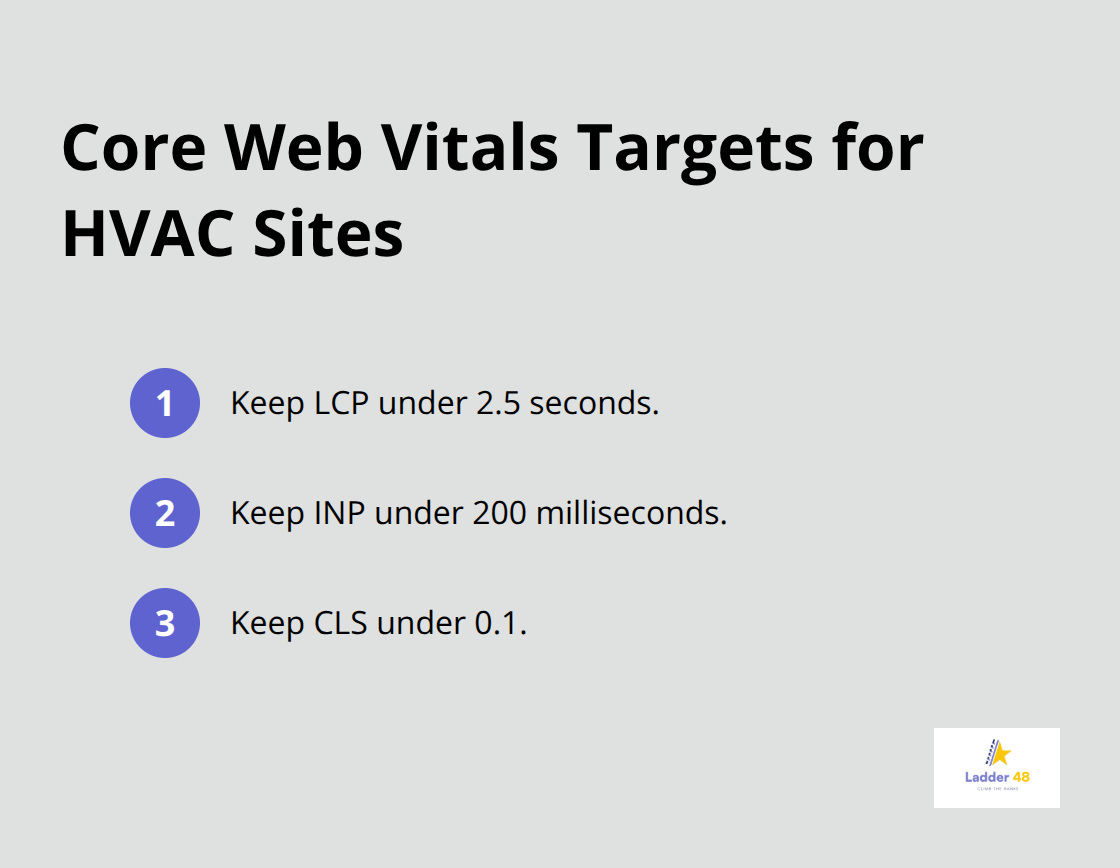
Google’s Core Web Vitals metrics matter directly for rankings: LCP (Largest Contentful Paint) should be under 2.5 seconds, INP (Interaction to Next Paint) under 200 milliseconds, and CLS (Cumulative Layout Shift) under 0.1. Monitor these in Google Search Console weekly because they change as traffic patterns shift. These metrics translate directly into ranking positions, so neglecting them costs you visibility.
Mobile Optimization Goes Beyond Speed
Mobile optimization extends beyond speed to include thumb-friendly buttons, click-to-call functionality, and responsive design that works on all devices. Since 60% of HVAC searches occur on mobile, your site must perform flawlessly on phones or you lose jobs immediately. A mobile visitor who can’t tap your phone number or navigate your menu leaves within seconds.
Local Citations Build Authority Across All Pages
Local citations and Google Business Profile authority compound your ranking power across all service pages. Inconsistent business name, address, or phone number across directories confuses Google and tanks local rankings, so maintain exact NAP consistency on Google Business Profile, Bing Places, Apple Maps, Yelp, Angi, HomeAdvisor, BBB, and ACCA/AHRI directories. Fix any duplicates or inconsistencies right now because these are priority citations that directly influence local search visibility.
Backlinks from HVAC Sources Signal Real Authority
Backlinks from HVAC-specific sources matter more than generic links because they signal real industry authority. Join local chambers of commerce, sponsor community events, pitch local news outlets, and partner with complementary trades like electricians and plumbers who can reference your work. HVAC associations like ACCA and PHCC offer directory listings that carry significant weight with Google because they’re industry-recognized sources. OEM dealer directories from furnace and AC manufacturers also provide valuable backlinks that establish credibility. A single backlink from an ACCA-approved directory carries more ranking power than five links from random websites, so prioritize quality over quantity. Track which citations and backlinks drive actual calls and form submissions through Google Analytics and call tracking software because not all links produce equal results.
Final Thoughts
HVAC technician SEO isn’t optional anymore because homeowners search online before calling, the Map Pack captures 42% of local search clicks, and your competitors are already ranking. Start immediately with your Google Business Profile by claiming and verifying your listing, adding 10+ real photos, posting weekly updates, and including a booking link-this single step delivers the highest ROI for local visibility. Next, build service-specific pages for each location and service you offer, targeting 800 to 1,500 words with real testimonials, pricing ranges, and schema markup.
Site speed and mobile optimization directly control whether homeowners stay on your page or bounce to competitors, so compress images, enable caching, and try for a mobile PageSpeed score above 80. Maintain consistent NAP across Google Business Profile, Bing Places, Apple Maps, Yelp, Angi, HomeAdvisor, and BBB, then build backlinks from HVAC associations like ACCA and PHCC, local chambers, and complementary trades. These tactics compound over time, with most HVAC businesses seeing 5 to 10 times ROI within a year.
If your market is highly competitive or you operate multiple locations, hiring an agency accelerates results significantly. Ladder 48 specializes in contractor SEO and delivers transparent, results-driven strategies to help you climb search rankings and attract qualified local leads. Start today and stay consistent.


