Most HVAC contractors rely on phone calls from homeowners who found them through Google search. But getting those calls means having the right content strategy in place.
At Ladder 48, we’ve seen how a solid HVAC contractor content plan directly impacts local lead generation. This guide shows you exactly what content works and how to distribute it where your customers are looking.
Where Homeowners Look for HVAC Help
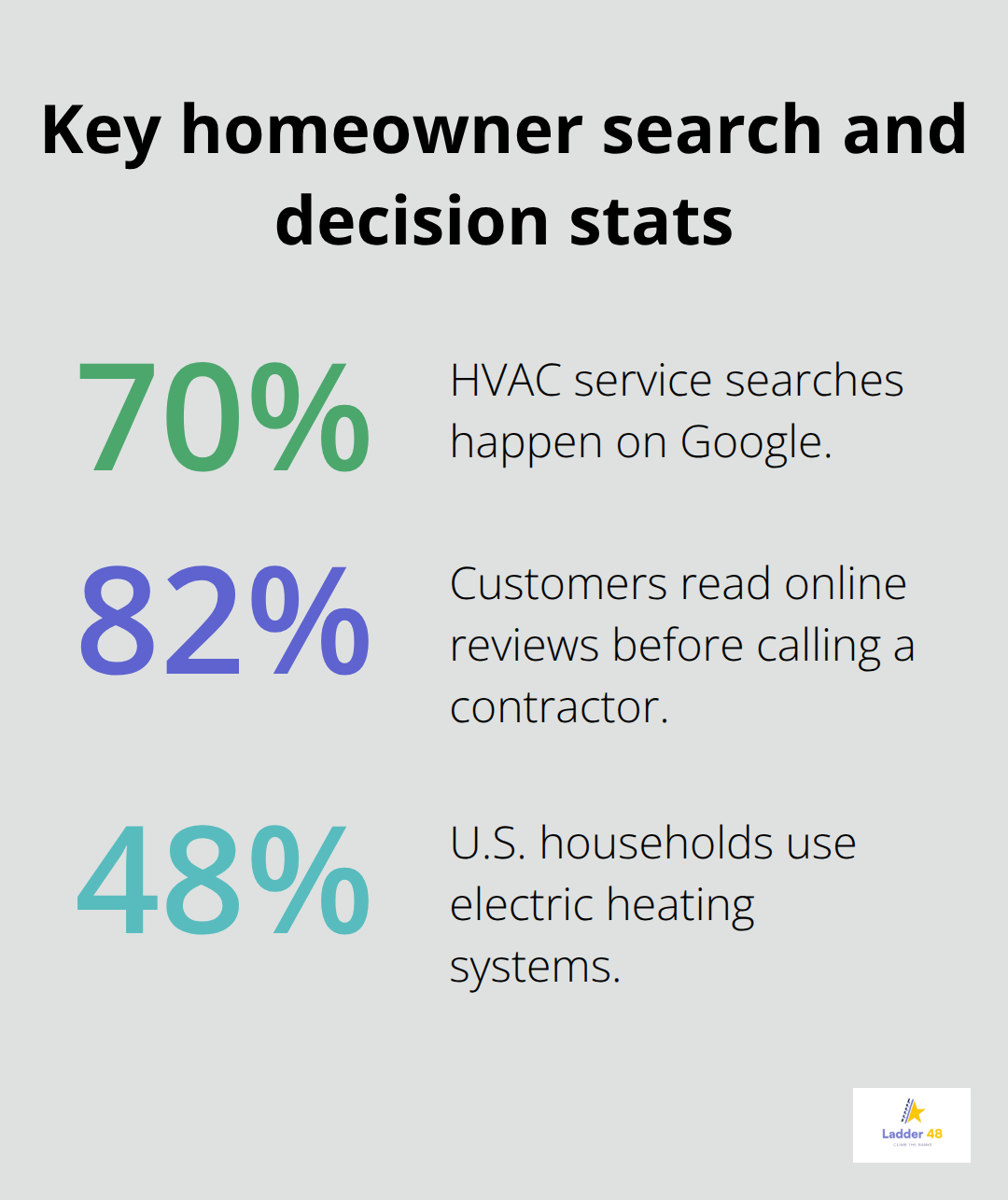
About 70% of HVAC service searches happen on Google, and most of those searches include location terms like “AC repair near me” or “furnace installation in [city name].” Homeowners pull out their phones when their system stops working or they want a quote before the summer heat hits. They no longer browse the yellow pages.
Google Maps results appear right at the top of these searches, showing three to five local businesses with ratings, photos, and phone numbers instantly visible. A homeowner sees a 4.8-star contractor with 120 reviews and calls that number before scrolling down to find someone with no reviews. Your presence in local search results isn’t optional-it’s how customers find you in the first place.
The Three-Step Search Pattern
Homeowners follow a predictable pattern when they search for HVAC help. First, they search for a solution to their immediate problem (“AC repair near me” or “emergency furnace service”). Second, they scan the Google Maps results and click on the top three contractors. Third, they read reviews, check hours, and look for a phone number or contact form. This entire process takes less than two minutes. If your business doesn’t appear in that first search result, or if your Google Business Profile lacks a clear phone number and recent photos, the homeowner moves to the next contractor. The speed of this decision means you can’t afford gaps in your online presence.
What Prospects Verify Before Calling
Homeowners rarely call without checking a few critical details first. They want to know your service area, whether you handle their specific problem (AC repair versus replacement), what your pricing looks like, and whether other customers trust you. About 82% of customers read online reviews before calling a contractor, so a single bad review or a missing phone number on your Google Business Profile costs you a lead. Prospects also search for educational content like “how much does an HVAC replacement cost” or “signs your furnace needs repair.” They’re not ready to schedule at this stage-they’re building a mental list of contractors to call. Your content needs to show up in those educational searches and answer their questions quickly.
Making Contact Simple
A homeowner who finds your blog post about furnace problems, then clicks to your Google Business Profile and sees your hours and a prominent call button, converts faster than someone who hunts for your phone number across three different pages. The friction between finding information and taking action determines whether you get the call. Your website, Google Business Profile, and blog posts must all point toward one clear action: contact you. When prospects move from educational content to your business profile, they should find everything they need to make a decision within seconds. This seamless experience separates contractors who attract leads from those who lose them to competitors.
What Content Actually Converts HVAC Prospects Into Calls
Homeowners searching for HVAC solutions fall into three distinct groups, and each group needs different content to move toward calling you. The first group has an immediate problem: their AC stopped working in July or their furnace won’t start in January. They search frantically and call within minutes. The second group plans ahead, searching for maintenance tips before summer or winter arrives. The third group compares costs and efficiency options before committing to a replacement or upgrade. Most contractors waste time creating generic content that speaks to no one instead of targeting these specific moments when prospects are ready to act.
Immediate Problem Content That Wins Calls
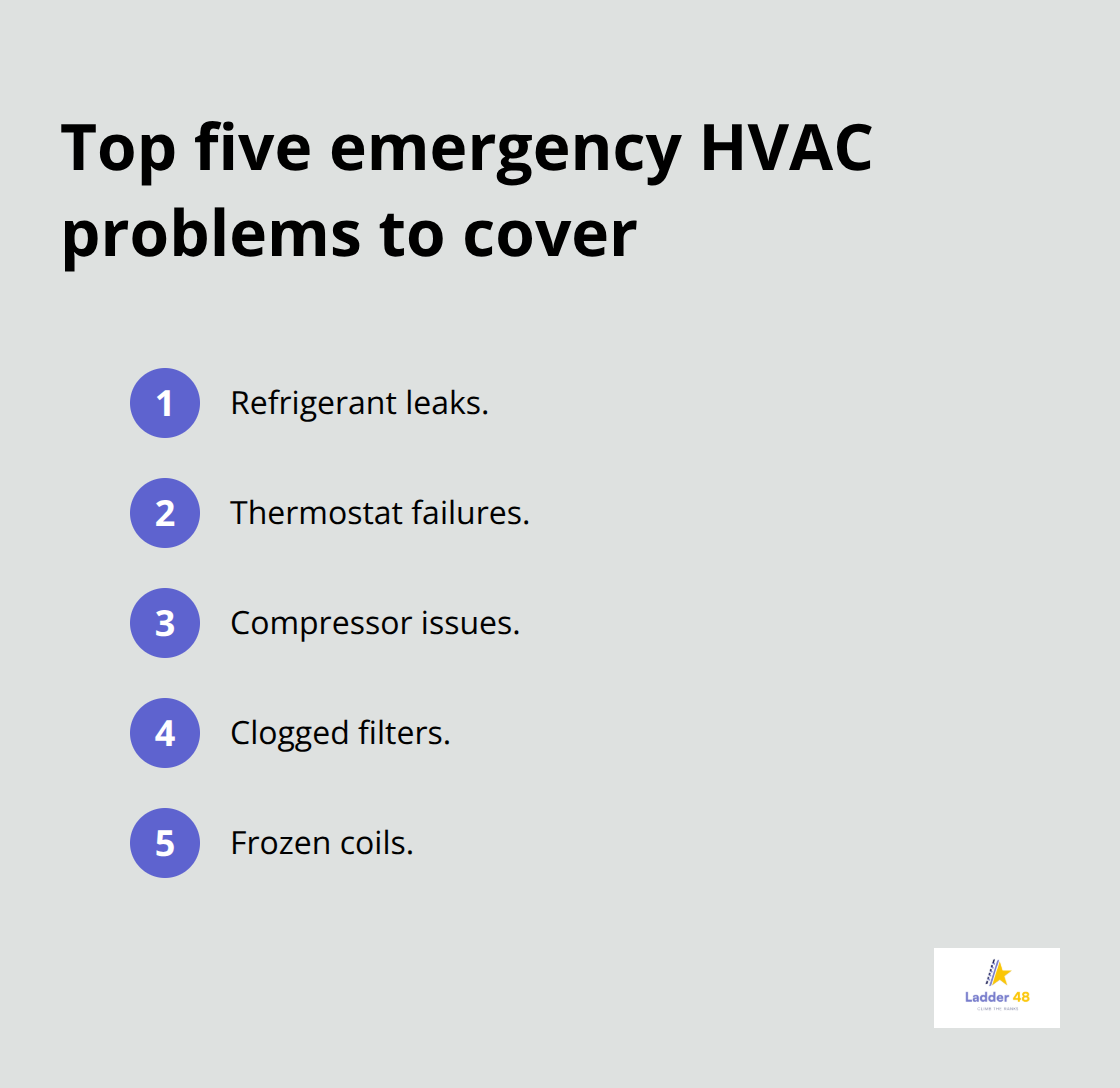
When a homeowner’s system fails, they search for phrases like “furnace not turning on” or “AC making strange noise.” These searches convert fast because the prospect needs help today. Create content around the top five problems you solve: refrigerant leaks, thermostat failures, compressor issues, clogged filters, and frozen coils. Write short, direct articles that explain what’s happening, what it costs to fix (use real numbers from your 2026 pricing, not ranges), and why they should call a professional immediately instead of attempting DIY fixes.
Include your phone number prominently and mention your response time. A homeowner whose furnace fails at 6 PM on a Sunday will call the contractor whose blog post explained the problem and promised same-day emergency service. The U.S. Bureau of Labor Statistics reports approximately 1.6 million HVAC technicians employed nationally, reflecting constant demand for emergency repairs. Your content for these moments should be blunt about risk: improper repair attempts reduce system efficiency by roughly 30 percent according to ENERGY STAR, and cost far more to fix later.
Seasonal Preparation Content That Builds Your Pipeline
Homeowners who prepare ahead search for maintenance guides three to four weeks before the season changes. Spring searches spike for AC preparation; fall searches spike for furnace tune-ups. Create content around what a professional tune-up includes, why it matters, and what homeowners should expect to pay. About 3 million heating and cooling systems get replaced annually in the U.S., and many of those replacements could be delayed through proper maintenance. Write articles about filter changes, refrigerant checks, ductwork inspection, and thermostat calibration. Mention that regular maintenance improves system efficiency and reduces downtime. Include seasonal checklists that homeowners can print. This content doesn’t convert immediately, but it builds trust and positions you as the obvious choice when prospects finally need service. Post this content six to eight weeks before peak season, then repost and promote it on your Google Business Profile and social channels as the season approaches. Reviews and testimonials combined with educational content build the trust that converts one-time repair customers into maintenance plan subscribers.
Energy Efficiency and Replacement Content for High-Value Leads
The third audience researches replacement options and efficiency upgrades. They search for terms like “HVAC replacement cost” or “heat pump vs furnace.” These prospects often have budget and are ready to invest. Create detailed cost guides that show real pricing for your market. A full system replacement typically costs between $9,000 and $16,500 depending on SEER2 rating and installation complexity, but your local pricing may differ. Show the long-term savings from upgrading to a high-efficiency system. Upgrading to energy-efficient HVAC systems can reduce energy consumption by 20 to 50 percent according to the U.S. Department of Energy. Mention available rebates and incentives. The Inflation Reduction Act offers substantial federal tax credits for heat pump installations, and many states provide additional rebates. About 48 percent of U.S. households now use electric heating systems, driven by federal incentives and rebates, making this content timely and relevant. Write comparison articles: traditional furnace versus heat pump, window units versus ductless mini-splits, standard efficiency versus premium efficiency. Include real customer case studies from your service area showing actual bills before and after. This content attracts prospects with higher lifetime value and larger service budgets. These readers are 90 days away from calling, not 90 minutes away, but they’re the ones who spend $12,000 instead of $1,200.
Matching Content to Search Intent
Each of these three content types addresses a different moment in the homeowner’s decision journey. Emergency repair content targets the immediate crisis. Seasonal maintenance content reaches prospects weeks before they need service. Efficiency and replacement content speaks to long-term planning and investment decisions. The contractors who dominate their local markets create content for all three moments, then distribute it strategically across their website, Google Business Profile, and social channels. Your next step involves deciding which platforms will carry this content and how to structure your distribution to maximize visibility and calls.
Where Your HVAC Content Actually Gets Found
Your content only generates leads if it appears where homeowners search. Website blogs rank in Google organic results, Google Business Profile posts appear in local map packs, and seasonal content on your profile drives calls during peak demand periods. Most HVAC contractors post content randomly without understanding which platform serves which purpose, then wonder why their blog gets traffic but no calls. Contractors waste months writing excellent content that no one finds because it wasn’t distributed strategically.
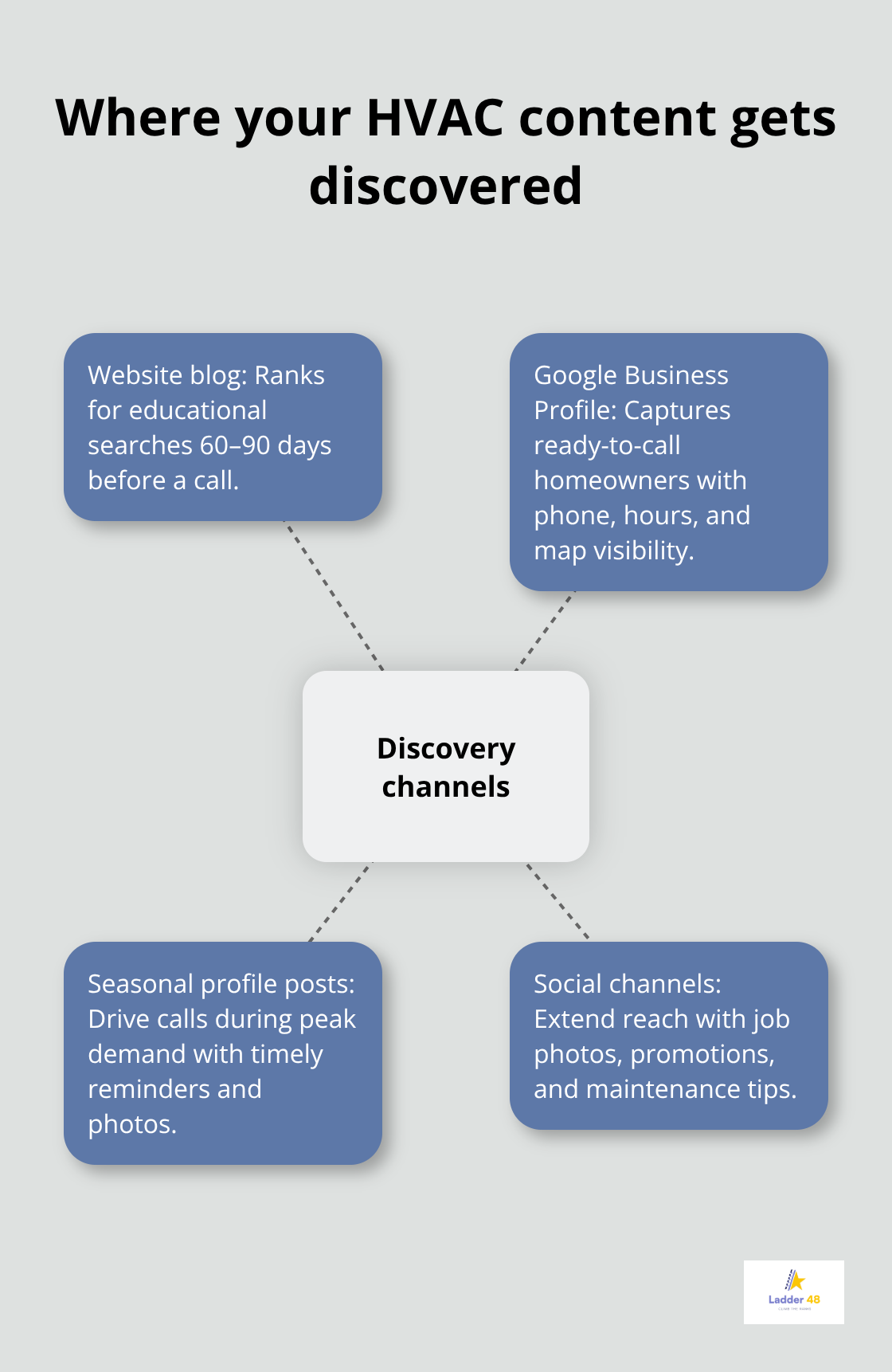
Your website blog targets homeowners searching educational terms like how much HVAC replacement costs or signs your furnace needs repair. These searches happen 60 to 90 days before someone calls. Google Business Profile, meanwhile, captures the homeowner who already decided to call today and just needs your phone number and hours.
Structure Content for Each Platform
Post your seasonal maintenance guides and emergency repair content on both platforms, but structure them differently. Your blog article on furnace problems runs 1,500 to 2,000 words with detailed explanations, troubleshooting steps, and internal links to your service pages. Your Google Business Profile post about the same topic runs 200 to 300 words, emphasizes your response time, and includes a direct call button. The difference matters because a homeowner reading your blog post is still comparing contractors, while a homeowner on your Google Business Profile has already chosen you and wants to book service immediately.
Post Content Before Peak Season Arrives
Create seasonal content eight weeks before peak season, not during peak season. Spring AC maintenance content should go live in February so it ranks by the time homeowners search in April. Fall furnace preparation content should go live in July for August and September searches. Post one major blog article every two weeks during off-season, then increase to weekly during peak months. Google rewards freshness and activity, so consistent posting improves your rankings for local searches. Alongside blog posts, add two to three Google Business Profile posts per week during peak season, featuring photos of real jobs, maintenance reminders, and current promotions. A contractor posting weekly during summer and winter dominates the map pack against competitors posting once monthly.
Answer Questions at Every Search Stage
The median HVAC repair costs $415 to $1,200 in 2026, so homeowners research intensely before calling. Your content needs to answer their questions at every stage of their search. Your blog post answers the what and why. Your Google Business Profile post answers the where and when. Together, they eliminate friction between interest and action.
Direct Readers Toward Phone Calls
Every piece of content must push toward one action: getting the homeowner to call you. Your blog articles should end with a clear statement like contact us today for a free inspection or call now for same-day service availability, not vague phrases like learn more or get started. Include your phone number at the top and bottom of every blog post. Make your phone number clickable on mobile so homeowners can call with one tap. Add a contact form below your article, but don’t require an email address or multiple fields. Ask for a phone number and service type only. Homeowners in crisis won’t fill out lengthy forms.
Optimize Your Business Profile for Immediate Action
Your Google Business Profile must display your phone number above the fold without scrolling. A homeowner who finds your profile should see your business name, rating, phone number, hours, and a book now or call button within two seconds. Google Business Profile data pulls from your website, so create dedicated service pages for AC repair, furnace installation, heat pump replacement, and emergency service. Each page should target a specific search term and include your phone number and a prominent call-to-action. This structure tells Google that you’re relevant for these searches and gives homeowners a clear path from search result to contact information.
Final Thoughts
Homeowners trust contractors who answer their questions before they call. When a prospect finds your blog post about furnace problems, then sees your Google Business Profile with recent photos and a 4.8-star rating, they’ve already decided you’re competent. Consistent content builds this trust faster than any advertisement, and your HVAC contractor content plan works because it meets prospects at three distinct moments: when they panic about a broken system, when they prepare for seasonal changes, and when they research replacement costs.
Start your content plan this month instead of waiting for perfect conditions. Post one blog article about a common HVAC problem your customers ask about, add two Google Business Profile posts with photos from recent jobs, and create a seasonal maintenance checklist to promote on your profile. These actions take hours, not weeks, and they begin generating leads immediately. Homeowners searching for HVAC help in your area will find you instead of your competitors.
Track which content generates leads by asking new customers how they found you and monitoring your Google Business Profile analytics to see which posts drive clicks and calls. After three months, you’ll know exactly which topics convert prospects into service bookings, and you can double down on what works. We at Ladder 48 help contractors build SEO strategies that attract local customers and generate qualified leads, so reach out when you’re ready to strengthen your online presence and climb search rankings.