Concrete contractors lose business every day because potential customers can’t find them online. Local search is where most concrete work gets discovered-homeowners and property managers search for services in their area before picking up the phone.
We at Ladder 48 have helped dozens of concrete companies rank higher in local results and attract qualified leads. This guide covers the concrete company SEO tips that actually move the needle: optimizing your Google Business Profile, building citations, creating service-specific pages, and earning backlinks from local sources.
How to Build a Strong Local Foundation for Concrete Contractor SEO
Claim and Optimize Your Google Business Profile
Your Google Business Profile is not optional. It’s the first place potential customers find your concrete company when they search locally, and Google treats it as a trust signal for ranking your website higher in local results. Claim your profile if you haven’t already, then fill in every field with accuracy. Your primary category should be Concrete Contractor, but add secondary categories like Stamped Concrete Specialist or Concrete Driveway Repair if they match your services.
Define your service areas explicitly. Don’t just list your office address-specify the cities and neighborhoods where you work. A concrete contractor serving five surrounding towns should create separate service area entries for each one. Upload high-quality before-and-after photos regularly, at least two or three times per month. Google rewards profiles that stay active, and fresh project photos signal that your business is thriving.
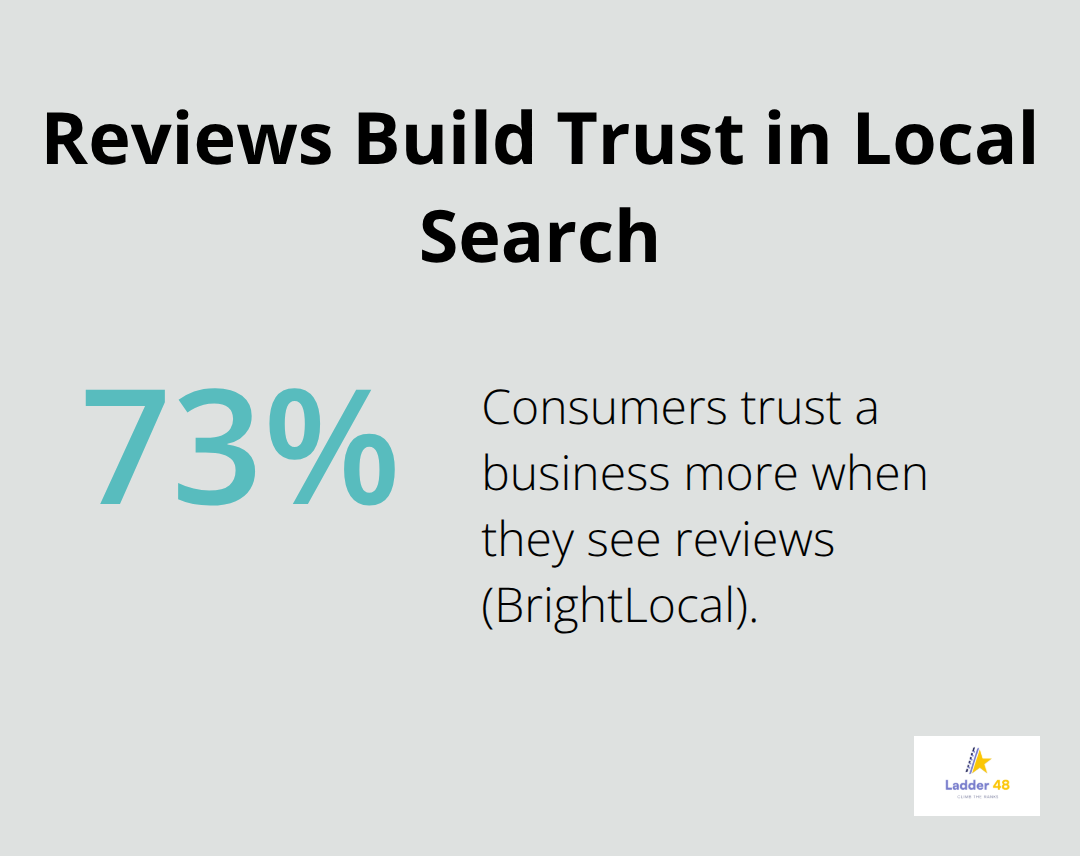
Respond to every review, positive or negative, within 48 hours. This signals engagement and shows potential customers that you value feedback. A study from BrightLocal found that 73% of consumers trust a business more when they see reviews, and Google’s algorithm favors profiles with consistent engagement.
Maintain Consistent NAP Across All Directories
Your Name, Address, and Phone number must match exactly across your website, Google Business Profile, Yelp, Angie’s List, HomeAdvisor, Thumbtack, and any other directory where you appear. Inconsistencies confuse Google’s algorithm and tank your local rankings. Audit all your citations right now. Search for your business on each platform and correct any variations in spelling, phone formatting, or address abbreviations.
This single step can improve your local visibility by 15% to 20% because search engines use NAP consistency as a ranking factor. Beyond the major directories, concrete contractors should list on BuildZoom, Houzz, and BBB if you serve residential work, or on specialized construction platforms if you focus on commercial projects. Each citation acts as a local signal telling Google that your business is real, established, and trustworthy.
Target Action-Oriented Keywords with Location Intent
Stop targeting generic terms like concrete contractor. Instead, target action-oriented phrases with location intent: concrete driveway repair near me, stamped concrete patio installation in [city], or decorative concrete overlay services. Google Keyword Planner and Ahrefs both show search volume and competition levels for these terms.
Concrete contractors searching for concrete driveway repair near me are ready to hire now, while searches for how much does concrete cost are just research. Build separate service pages for each type of work you do-driveways, patios, foundations, overlays-and anchor each page with the city or region you serve. This approach captures the specific searches that convert into actual jobs and positions you to compete for the leads that matter most.
Content That Converts Concrete Leads
Create Service-Specific Pages for Each Concrete Offering
Service-specific pages are non-negotiable. You need a dedicated page for each type of concrete work you offer-driveways, patios, stamped concrete, foundations, overlays, decorative work, repairs. Each page should target a specific keyword phrase with location intent, like stamped concrete patio installation in Denver or concrete driveway repair in Austin. This structure lets Google understand exactly what services you provide in each area, and it gives potential customers a clear path to find the work they need.
On each service page, include two or three high-quality before-and-after photos showing real projects you’ve completed. Add a brief case study or project description that mentions the problem the client faced, the solution you delivered, and the result. For example: We sealed a 2,000-square-foot driveway that was cracking and spalling after five winters of freeze-thaw cycles. The customer wanted a permanent fix without replacement. We applied a polyurea coating system that added 10 years of protection. The work took two days and cost $3,200, compared to $8,000 for full replacement.
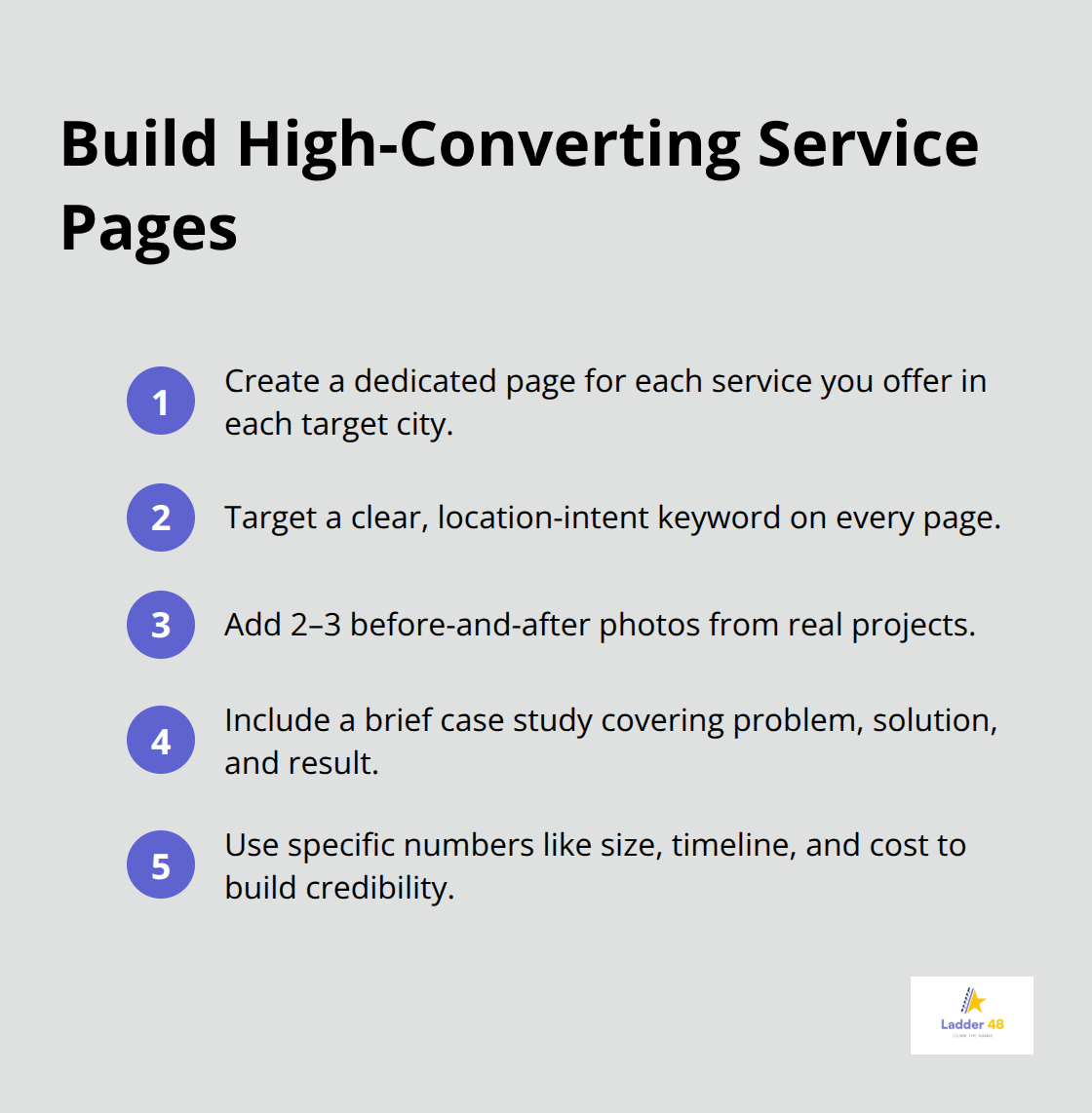
Specific numbers and outcomes build credibility far better than generic claims about quality or expertise.
Attract Early-Stage Searchers with Educational Content
Content marketing around common concrete problems attracts customers earlier in their decision journey. You should create short guides that answer questions like Why does concrete crack in winter, What causes efflorescence on my patio, or How long does concrete sealing last. These pieces capture search traffic from people researching problems before they’re ready to call a contractor, and they position you as the expert they remember when they’re ready to hire.
Publish these guides as standalone pages or blog posts, and link them from your service pages. A 400-word guide on concrete maintenance or seasonal curing tips costs minimal time to produce but ranks for dozens of related searches. Use Google Search Console to identify which searches currently drive traffic to your site but have low click-through rates-these are opportunities to create targeted content that moves people toward contacting you.
Leverage Visual Proof Across Multiple Channels
Post before-and-after project photos consistently on your Google Business Profile, Instagram, and website. Concrete work is visual. A homeowner scrolling through your profile sees a driveway transformation and immediately visualizes what you could do for their property. Try posting two new project updates per month on your GBP and one substantial case study per quarter on your website. This cadence keeps your profile active, signals to Google that your business is thriving, and gives potential customers fresh proof that you deliver results.
The visual evidence you build now becomes the foundation for the next critical piece of your SEO strategy: earning authority through backlinks and partnerships that tell search engines your concrete company is a trusted local leader.
Link Building and Authority for Concrete Companies
Trade Associations Deliver Credible Backlinks
Backlinks are the currency of SEO authority, and concrete contractors who earn them from credible local sources rank higher than those who don’t. Search engines treat a backlink from your local chamber of commerce or a trade association differently than a random directory listing. The key is targeting sources that already have authority in your region and industry.
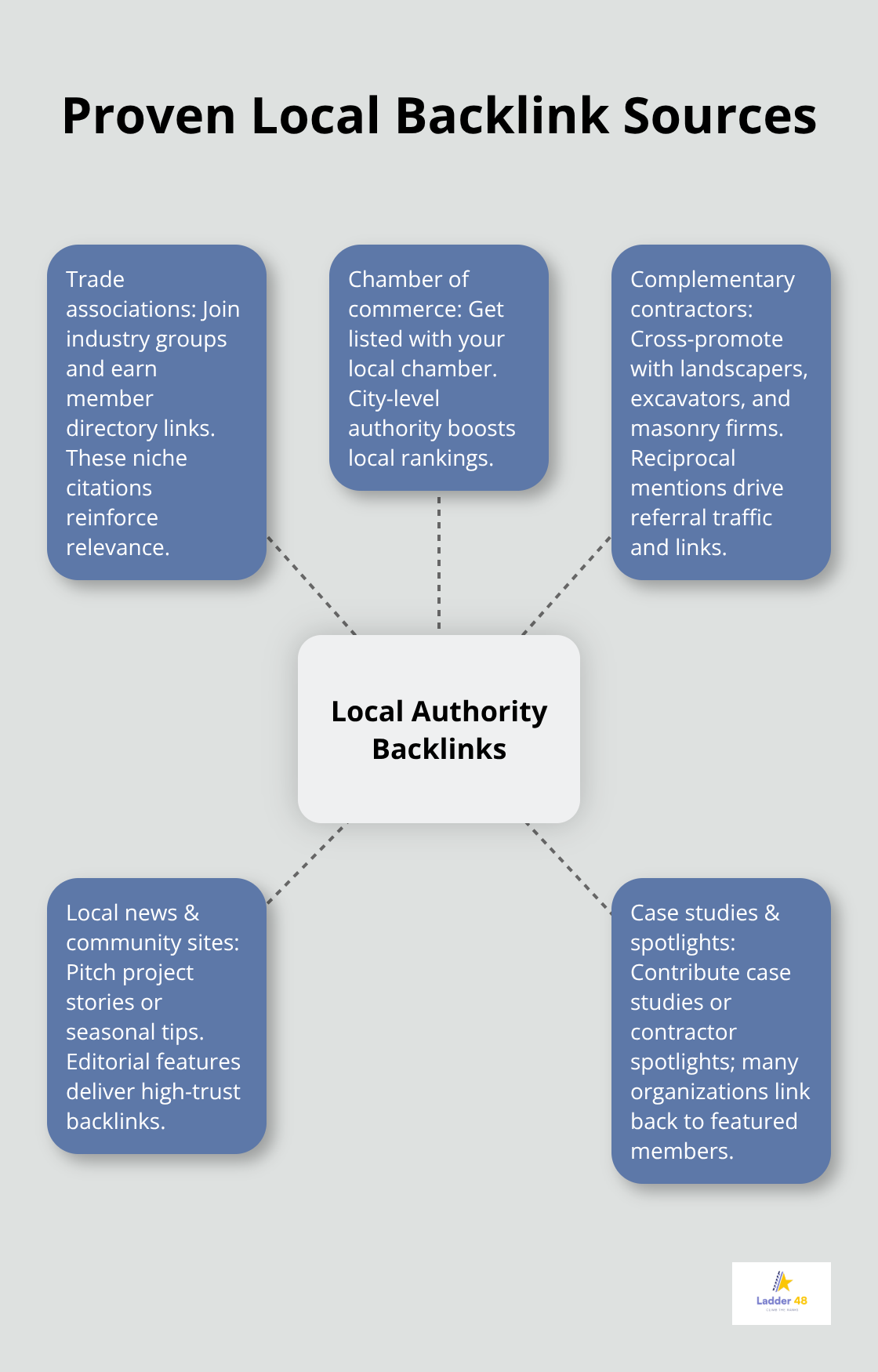
Start with trade associations like the American Concrete Pavement Association or the Concrete Reinforcing Steel Institute. Many of these organizations feature member directories, publish case studies, or highlight contractor spotlights in their newsletters. A mention in these publications counts as a backlink and signals to Google that your business meets industry standards. Contact your local chapter directly and ask about membership benefits that include online visibility. Most associations charge $200 to $500 annually for membership, and the backlink alone justifies the cost when it improves your local rankings.
Cross-Promote with Complementary Local Contractors
Identify complementary contractors in your area who don’t compete directly with you. A concrete contractor pairs naturally with excavation companies, landscape designers, masonry contractors, and property management firms. Reach out to three or four of these businesses and propose a simple cross-promotion: you mention them on a relevant service page, they mention you on theirs, and both of you benefit from the referral traffic and the backlink exchange.
This approach works better than cold outreach to random websites because both parties have mutual benefit. You build relationships with local businesses that your customers already trust, and you earn backlinks from sites that Google recognizes as relevant to your industry and geography. The concrete contractor who partners with a landscape designer signals to search engines that both businesses serve the same local market and share credibility.
Pitch Stories to Local News and Community Publications
Local news outlets and community blogs actively publish content about home improvement and construction. Pitch them a story about a challenging concrete project you completed, seasonal concrete care tips, or a safety initiative your team runs. When your story runs, you get a backlink, visibility in your local community, and credibility that money can’t buy.
Many local newspapers and online community sites seek expert sources for construction-related articles, and they link to your website if you provide useful insight. A feature story about how you solved a difficult foundation repair or protected a historic driveway from winter damage positions you as the expert readers remember when they need concrete work. These backlinks carry significant weight because they come from established local media sources.
Track Backlink Performance and Repeat What Works
Track which backlinks actually drive traffic and referrals using Google Search Console, which shows you exactly which external sites send clicks to your website. This data tells you which partnerships and publications are worth repeating. A backlink from your local chamber of commerce might drive five qualified leads per month, while a mention in a regional trade publication drives two. Focus your effort on the sources that produce results.
Monitor your backlink profile quarterly and identify patterns in which types of partnerships generate the most valuable traffic. Some concrete contractors find that cross-promotions with landscape companies drive more leads than trade association memberships, while others see the opposite. Your data reveals which authority-building tactics work best for your specific market and service mix.
Final Thoughts
Concrete company SEO tips work when you execute them consistently and measure results against actual business outcomes. Start with one or two tactics this month-claim and optimize your Google Business Profile if you haven’t already, then audit your NAP consistency across directories. These two steps take a few hours and deliver immediate visibility gains that attract qualified leads in your local market.
Track which tactics drive actual phone calls and jobs, not just website traffic. A backlink from a local news outlet might generate five qualified leads, while a directory listing generates one (your data tells you where to focus next). The concrete contractors who dominate local search execute a clear plan consistently over three to six months, measure results, and double down on what works.
If you want to accelerate this process and avoid the trial-and-error phase, we at Ladder 48 help concrete contractors build and execute SEO strategies that generate predictable lead flow. We handle the technical work, content creation, and authority building so you can focus on running your business and completing jobs.