Most electricians focus on getting calls from their immediate area. But if you’re only optimizing for one location, you’re leaving qualified leads on the table.
At Ladder 48, we’ve seen electricians double their lead volume by implementing proper electrician service area SEO. When you create dedicated pages for each service territory and optimize them correctly, search engines understand exactly where you operate and show your business to customers actively searching in those zones.
Why Service Area SEO Matters for Local Visibility
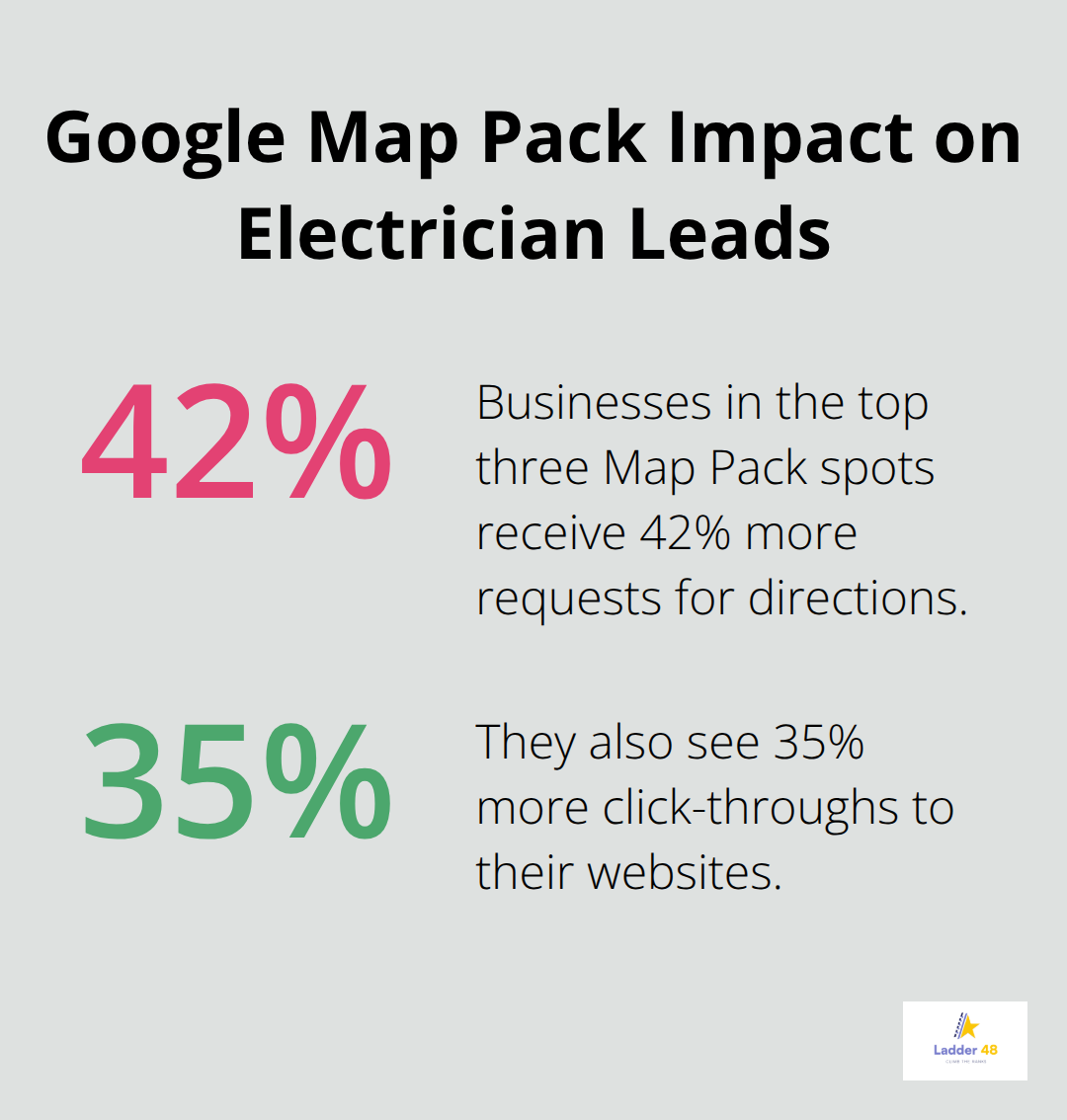
About 230,000 people search for “electrician near me” on Google every month, and that number keeps climbing as more homeowners turn to mobile search for urgent repairs. These aren’t theoretical visitors-they’re real customers with immediate needs, wallets ready, searching in specific neighborhoods and cities. When you ignore service area optimization, you become invisible to these searchers. They type their location plus “electrician” and your website never appears because you haven’t told Google where you actually work. The electricians winning right now rank in the top three positions of the Google Map Pack for their service territories. According to Google’s own data, businesses in those top three spots receive 42% more requests for directions and 35% more click-throughs to their websites compared to those without optimized profiles. That’s not incremental improvement-that’s transformational.
High-Intent Keywords Hide Your Biggest Opportunities
Service area pages target what we call high-intent keywords. Someone searching “emergency electrician in Dallas” isn’t browsing-they need you now. Someone searching “EV charger installation in Plano” has already decided they want that service and just needs to find the right contractor. These aren’t vanity searches; they convert into jobs. Electricians operating across multiple neighborhoods or cities can’t rank for all this intent with a single homepage. You need dedicated pages for each area because each location has different search behavior, different electrical issues (older homes with outdated panels rank higher in established neighborhoods, for example), and different competition levels. When you build pages optimized for “electrical panel upgrade in [specific suburb]” instead of just “electrical panel upgrades,” you speak the language your customers actually use. Google rewards this specificity with better rankings and higher click-through rates.
Prioritize Your Core Service Areas First
Spreading your SEO effort thin across too many locations at once wastes resources. Instead, prioritize your top five to ten service areas based on call volume and revenue potential. Focus on locking down those areas first-strong Google Business Profile optimization, consistent citations across Yelp, BBB, and local directories, customer reviews from that specific area-before expanding. This concentrated approach builds real authority faster than half-hearted efforts across twenty locations. Once those core areas rank consistently, expansion to new territories becomes predictable and repeatable. Electricians who take this methodical approach see measurable ranking improvements within three to six months, with Google Business Profile visibility improvements sometimes visible within two to four weeks. The compounding effect matters here: each properly optimized service area page, each accumulated review from local clients, and each citation added reinforces your authority in that zone.
What Comes Next: Building Pages That Convert
Your service areas are only as strong as the pages you build for them. The next section covers exactly how to structure and optimize these pages so search engines understand your coverage zones and customers find you when they search.
How to Build Service Area Pages That Actually Convert
Structure Your URLs for Location Clarity
Each service area page needs a URL structure that signals location intent to Google immediately. Use either /electrician-service-dallas or /location/dallas paired with your main service page, depending on your site architecture. The URL itself tells search engines this page targets Dallas specifically. This approach removes ambiguity and helps Google categorize your coverage zones accurately.
Write Location-Specific Content That Resonates
Your H1 should include the city name and service type-something like “Electrician in Dallas” or “Emergency Electrical Repair in Plano.” This isn’t keyword stuffing; it’s clarity. Your title tag should follow the same pattern and stay under 60 characters so it displays fully in search results. The meta description gets about 155 characters to explain what you offer in that specific area, which directly impacts click-through rates from search results.
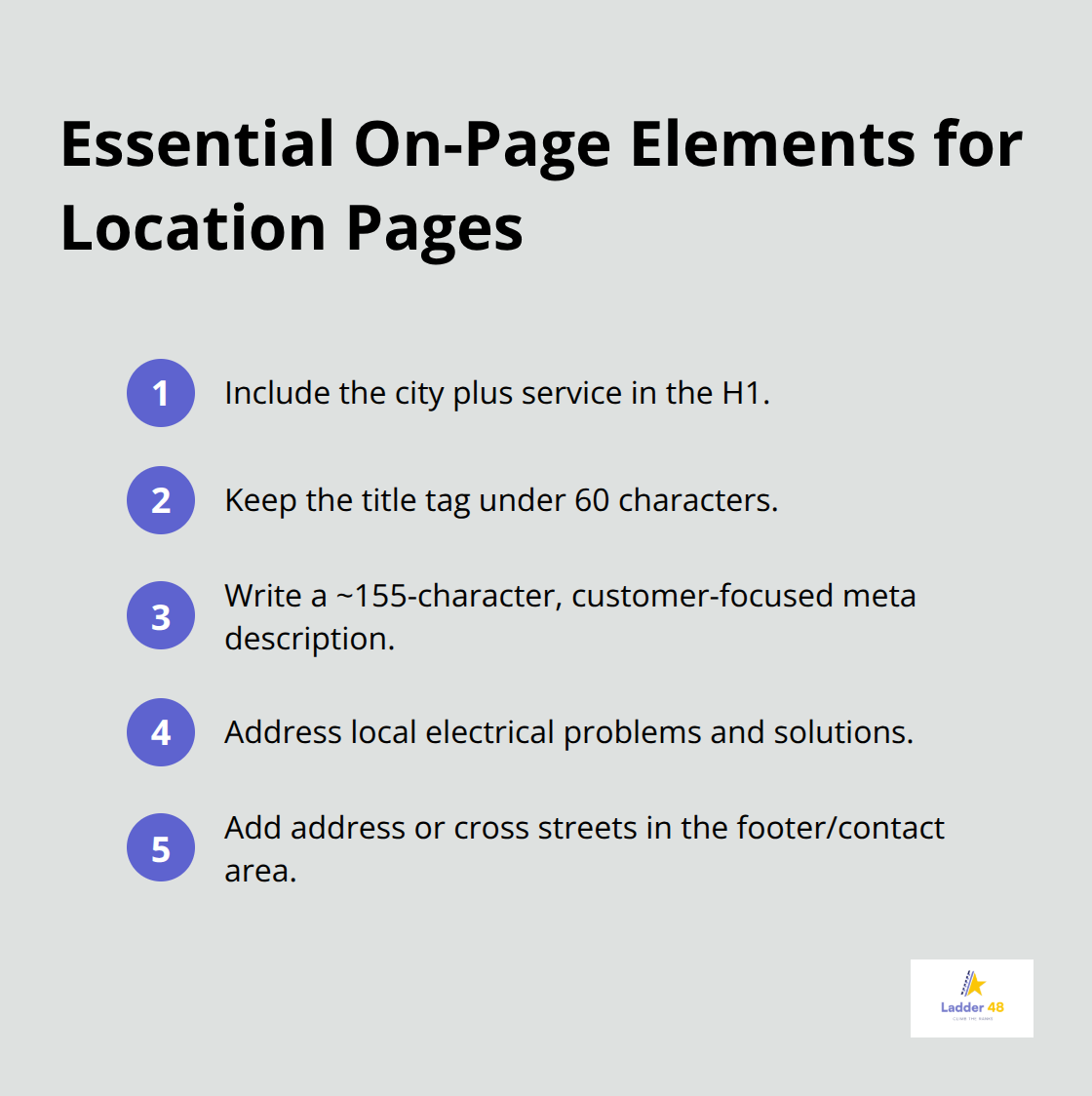
Content on each page must address location-specific electrical problems. Older neighborhoods have outdated panel systems that need upgrades; newer subdivisions see more EV charger installation requests. Talk to your service team about their call patterns in each area and research what electrical issues actually occur there. Include the service area’s address or cross streets in the footer or contact section so Google understands your physical presence. Add customer testimonials specifically from that area-not generic five-star reviews, but short quotes from real clients who mention the neighborhood or street. A homeowner in the Lakewood area saying you fixed their 40-year-old panel carries far more weight than a generic review.
Use Schema Markup and Internal Linking to Build Authority
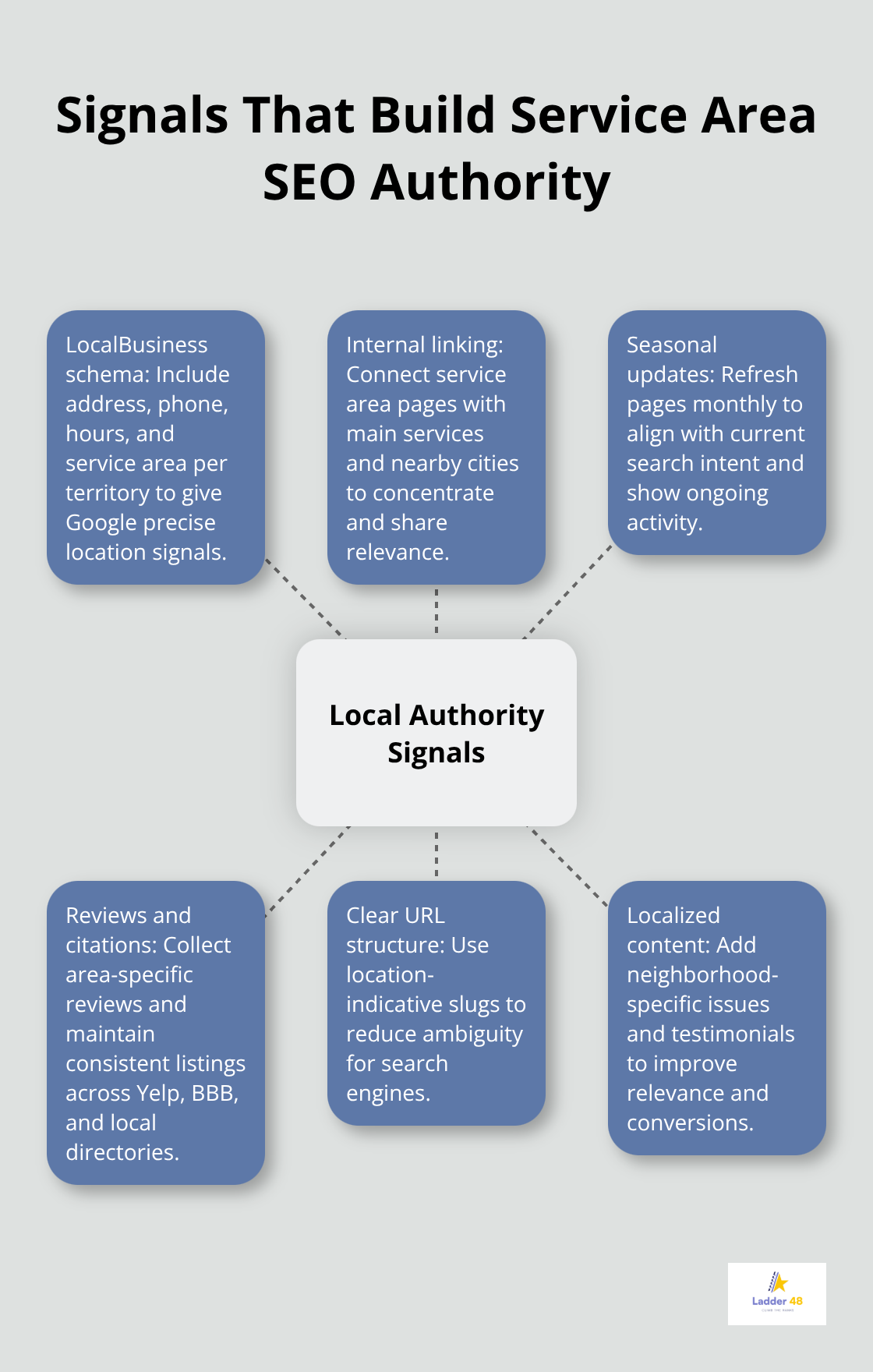
Implement LocalBusiness schema markup on each page with the service area address and phone number so search engines index your coverage zones precisely. This structured data removes guesswork and reinforces your local authority. Internal linking matters equally: connect each service area page back to your main service pages and to your homepage. This distributes ranking authority evenly across your site and helps Google understand your service territory structure.
Keep Pages Fresh With Seasonal Updates
Update each page monthly with seasonal content-summer cooling concerns, winter heating load issues, storm-related emergency repair demand. Fresh, timely content keeps pages relevant to what customers in that area actually search for right now. This consistent maintenance signals to Google that your pages remain active and authoritative.
The real test of these pages comes when you measure which ones actually drive calls and bookings. The next section shows you exactly how to track performance and identify which service areas deserve more investment.
Make Your Service Area Pages Searchable
Schema Markup Signals Your Service Territory to Google
Schema markup transforms how Google interprets your service areas. LocalBusiness schema tells search engines exactly where you operate, what services you provide in each location, and how customers can contact you there. Without it, Google treats your service area pages like generic content. With it, your pages become precise location signals.
Add LocalBusiness schema to every service area page with the specific address, phone number, service area boundaries, and business hours for that territory. If you operate emergency services in Dallas but standard hours in Plano, your schema should reflect that distinction. Google Search Console flags schema errors immediately, so validate every implementation before publishing.
Title Tags and Meta Descriptions Drive Click-Through Rates
Title tags remain your most visible real estate in search results. A title like “Electrician in Dallas” outperforms “Dallas Electrical Services” because it matches how actual customers search. Keep titles under 60 characters so they display fully on mobile devices where most searches happen.
Your meta description gets roughly 155 characters to convince searchers to click your link instead of competitors. Write these descriptions as customer-focused statements: “Same-day electrical repairs in Dallas. Licensed, insured, 24/7 emergency service. Call now for a free estimate.” This approach converts better than generic descriptions about your company history or values.
Internal Linking Architecture Concentrates Authority Where It Matters
Internal linking determines how ranking authority flows through your site. Connect each service area page directly to your main service pages and your homepage. If you offer panel upgrades, EV charger installation, and emergency repairs, link from your Dallas panel upgrade page to your main panel upgrade service page and vice versa. This creates relevance clusters that tell Google these pages work together to answer customer questions comprehensively.
Electricians often isolate service area pages, treating each one as independent. Instead, treat them as part of a network where connections reinforce authority. Link geographically related pages too: if you serve Dallas and nearby Arlington, a link between those pages shows Google they’re part of your coverage zone.
Refresh Content Monthly to Maintain Relevance
Update each page monthly when you refresh seasonal content, keeping connections fresh and relevant. Track which service area pages generate the most calls in Google Analytics, then strengthen internal links pointing to those high-performing pages.
This tactical approach concentrates authority where it drives real revenue (and identifies which territories deserve expansion investment).
Final Thoughts
Service area SEO directly increases your visibility where customers actively search for electricians. When you build dedicated pages for each territory, optimize them with location-specific keywords, and maintain consistent citations across directories, search engines understand exactly where you operate. The result is straightforward: more qualified leads calling your business because they found you at the exact moment they needed electrical work in their neighborhood.
Electricians who implement electrician service area SEO strategies see ranking improvements within three to six months, with some Google Business Profile visibility gains appearing within two to four weeks. Each service area page you optimize, each customer review you collect from that specific location, and each citation you maintain across Yelp, BBB, and local directories reinforces your authority in that zone. This concentrated effort builds a digital footprint that competitors without service area optimization simply cannot match.
Start with your top five to ten service areas based on call volume and revenue potential. Lock down those territories first before expanding to new regions. Contact Ladder 48 to build a stronger online presence across your service territories and achieve sustainable growth for your electrical contracting business.