Concrete finishing contractors often lose business to competitors who show up first in local search results. Most contractors focus on their craft, not on being found online-and that’s exactly why local SEO matters so much.
At Ladder 48, we’ve seen contractors double their leads by fixing their Google Business Profile and targeting the right keywords. This guide shows you how to do the same.
Getting Found Where Your Customers Search
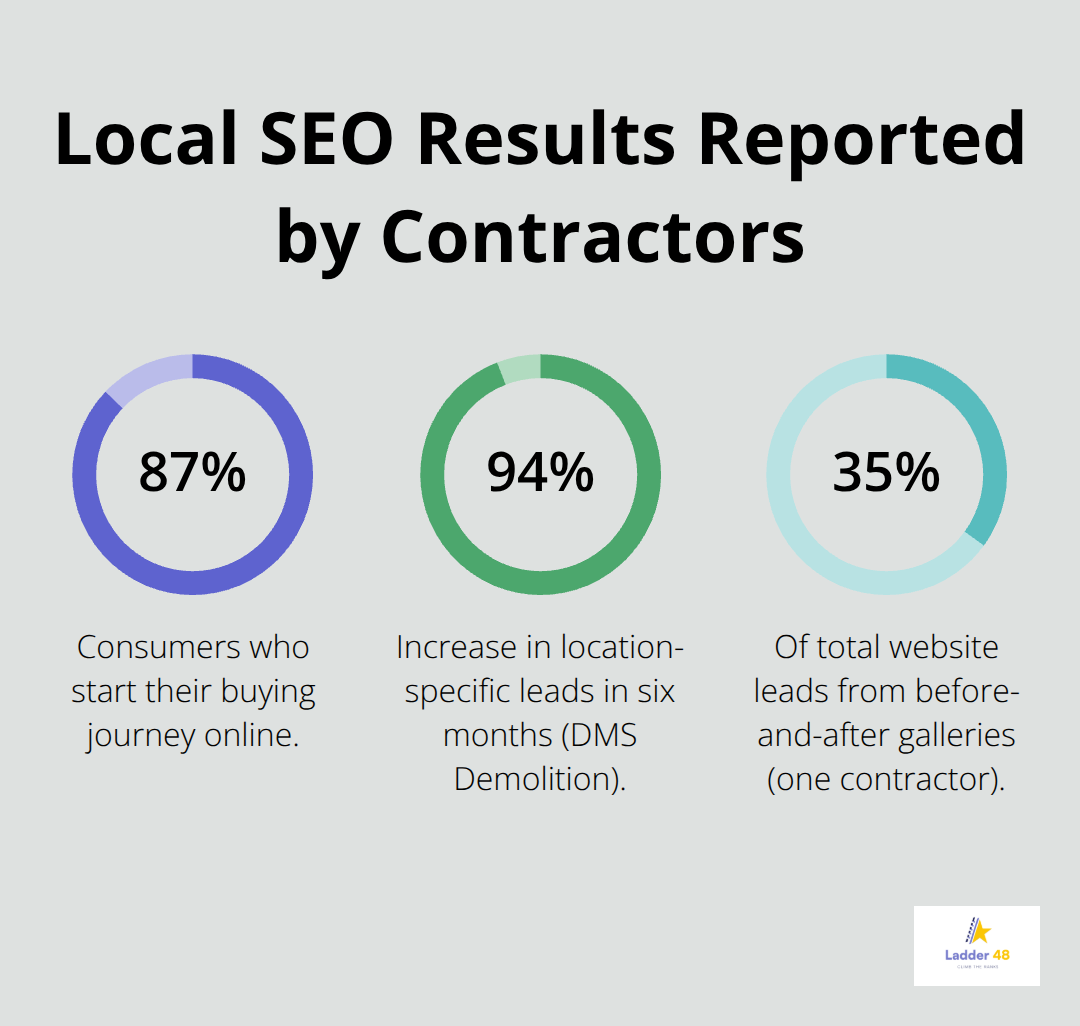
Your Google Business Profile is the first thing potential customers see when they search for concrete finishing services in your area. If your profile is incomplete or outdated, you’re invisible to 87% of consumers who start their buying journey online.
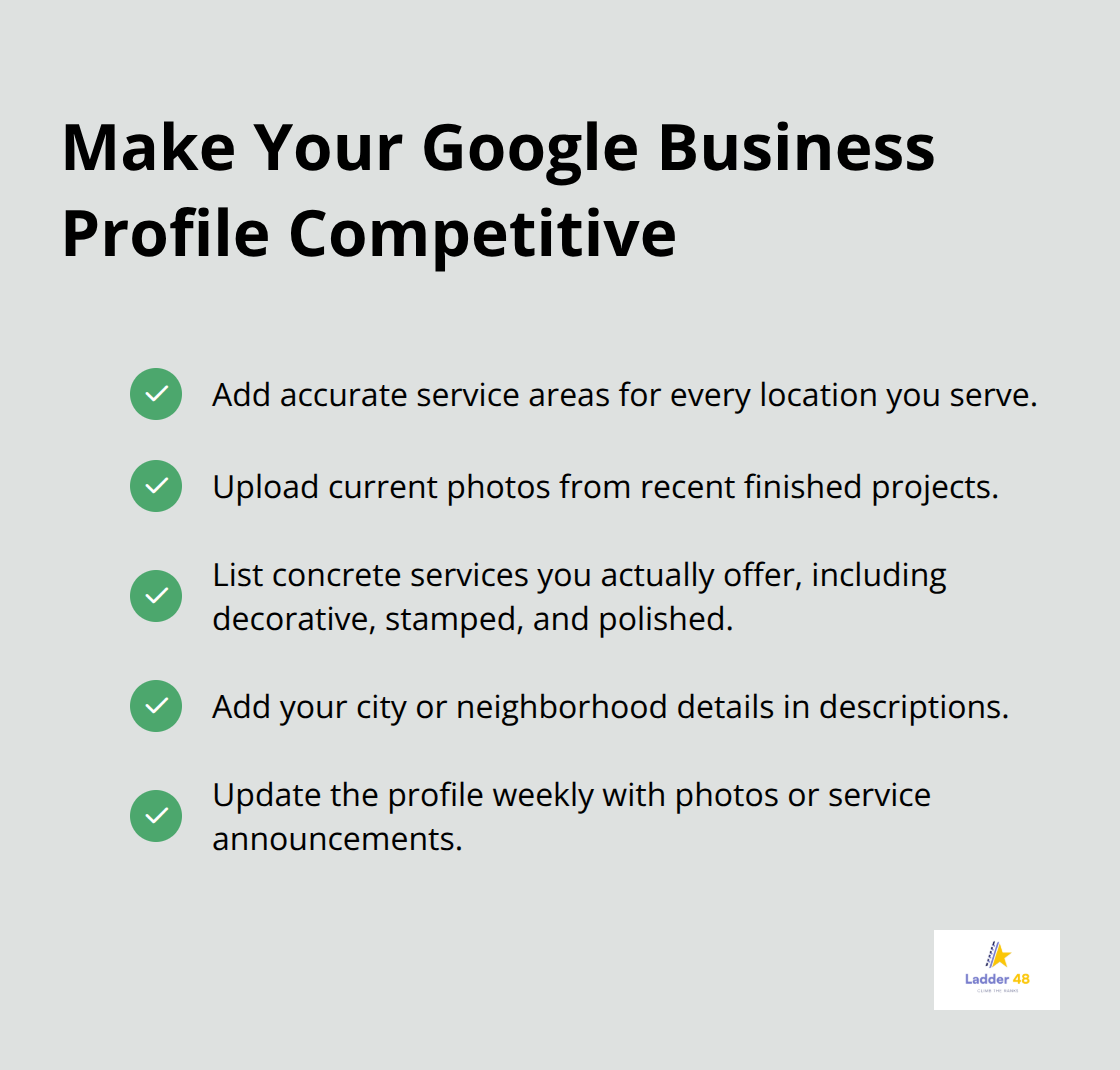
The profile needs accurate service areas, current photos of finished projects, and a description that includes the concrete services you actually offer. When you add decorative concrete, stamped concrete, and polished concrete to your description alongside your location, Google understands what you do and shows your profile to the right people. Update your profile weekly with new project photos or service announcements. This signals to Google that your business is active and trustworthy, which directly improves your local rankings.
Citations Build Trust Across the Web
Citations are mentions of your business name, address, and phone number across directories like Yelp, Angi, Houzz, and local construction directories. Google uses these to verify that your business is real and legitimate. Inconsistent information across directories confuses Google and hurts your rankings. If your address appears as 123 Main Street in one directory and 123 Main St. in another, Google sees these as different businesses. Audit your current listings and standardize your business information everywhere. The effort takes time upfront but prevents months of ranking problems. Local contractors who maintain consistent citations across five or more directories rank higher than those with scattered or incomplete listings.
Content That Speaks to Your Neighborhood
Location-specific service pages rank better than generic pages because they answer the exact question a customer is asking. A page titled Stamped Concrete Patios in Miami performs better than one titled Stamped Concrete Patios. Include neighborhood names, local landmarks, and climate-specific details on these pages. Miami concrete finishers should mention how the local humidity and salt air affect concrete durability and finish choices. A page about concrete driveways in your area should reference local weather patterns and explain how they impact maintenance. Customers recognize themselves in this content and trust that you understand their specific situation. Create one location-specific page for each concrete service in each area you serve, and you’ll capture search traffic that generic competitors miss.
Keywords That Match Local Search Intent
High-intent keywords like “concrete finishing near me” and “stamped concrete patios in [your city]” attract customers ready to hire. These phrases indicate someone is actively searching for your services in their area (not just researching concrete in general). Service-specific keywords with local modifiers-such as “decorative concrete driveways in [neighborhood]” or “polished concrete floors near [city]”-perform better than broad terms because they match exactly what your potential customers type into Google. Research your competitors’ keywords and identify gaps where they rank weakly. You can claim those positions and capture leads they miss.
Keywords That Win You Concrete Finishing Leads
Concrete finishing contractors rank for the wrong keywords every day. They chase broad terms like “concrete services” or “concrete contractor” when they should hunt for phrases that reveal buyer intent. A customer searching for “concrete finishing near me” or “stamped concrete patios in Miami” is ready to call someone today. A customer searching for “types of concrete finishes” is still in research mode and might not convert for months. The difference between these two searches determines whether your SEO effort generates leads or just traffic. Target the first type aggressively, and your phone will ring.
Service-Specific Keywords With Local Modifiers
Service-specific keywords with local modifiers work because they combine what you do with where you do it. Instead of competing for “concrete finishing,” you compete for “decorative concrete driveways in Sarasota” or “polished concrete floors near Tampa.” These longer phrases attract fewer searches, but the searches come from people who already know they want your service in their area. Google processes 5 trillion searches annually, yet most contractors ignore the fact that local, specific searches convert at higher rates than generic ones. When you build pages around these precise combinations, you rank faster and spend less time competing against national concrete companies. A contractor in Florida targeting “stamped concrete patios in Coral Gables” will beat a national competitor targeting “stamped concrete patios” every single time because Google rewards specificity and location relevance.
Find Keywords Your Competitors Ignore
Your competitors are probably targeting the same ten keywords. Run a quick search for your main service in your city and look at who ranks in the top five results. Check what keywords appear in their page titles, headers, and descriptions. Then search for related services or neighborhoods they haven’t covered.
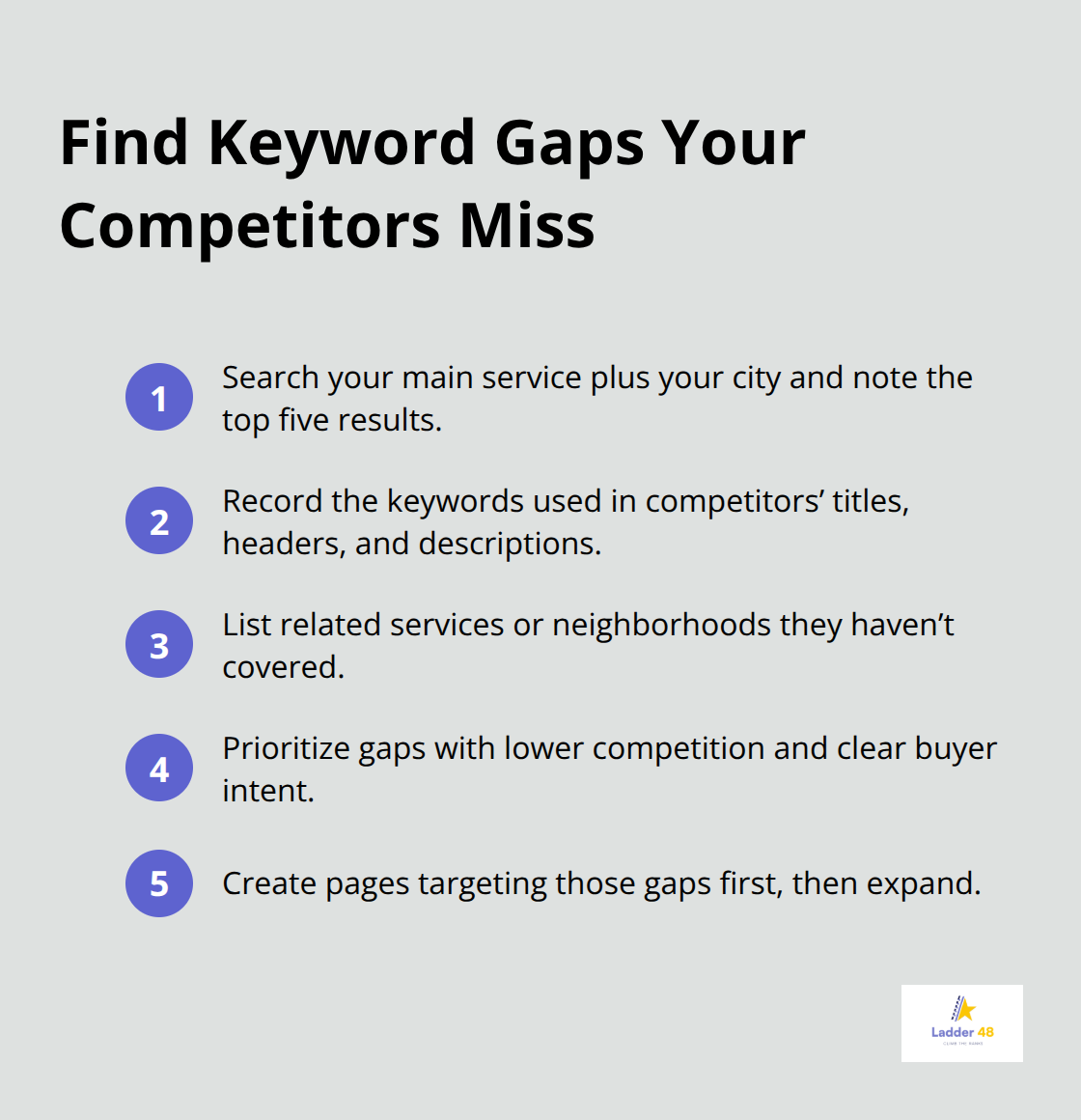
If three competitors rank for “concrete driveways in Miami,” check whether any of them rank for “concrete driveways in Wynwood” or “concrete driveways near Buena Vista.” These gaps exist in almost every local market, and they represent leads sitting unclaimed. You can claim one of these positions in weeks instead of months because competition is lower. Start with neighborhoods or service combinations where your competitors have weak or no presence, then expand from there.
Build Pages That Capture Specific Search Moments
One location-specific page for each service in each area you serve captures the exact moment someone searches. A page titled “Stamped Concrete Patios in Miami” ranks differently than a page titled “Stamped Concrete Services in South Florida.” The first one answers the specific question someone typed. The second one tries to cover too much ground and ranks for nothing. Include the service, the location, and specific details that match what customers search for. Before-and-after photos of projects in that neighborhood strengthen relevance even more. Customers see their own streets and neighborhoods in your work, and that trust translates to phone calls. Each page answers one specific question that one specific customer asks in one specific place.
The pages you build now set the foundation for how Google understands your business. Once your keyword strategy and page structure are in place, you need to earn authority signals that tell Google your content deserves to rank above your competitors.
How to Build Authority That Google Rewards
Real projects separate you from competitors who only talk about concrete finishing. When you create case studies from actual jobs your team completed, Google sees evidence that you deliver results, and customers see proof that you can handle their project. A case study needs before photos taken at the start, during-process images showing your team at work, and after photos from multiple angles showing the finished concrete. Include specific details like the square footage, the concrete type used, any challenges you solved, and the timeline. DMS Demolition boosted organic traffic by 167% and location-specific leads by 94% within six months through location-specific service pages paired with detailed project case studies. Customers trust concrete work they can see in their own neighborhood more than generic testimonials.
Post these case studies on dedicated service pages, feature them in blog posts about that service type, and share them on social media. Google indexes this content and recognizes that you have real expertise backed by completed projects.
Before-and-After Galleries That Convert Prospects
Before-and-after galleries organized by project type work even better when you add context. Instead of just showing photos, explain what the customer wanted to achieve, what problems existed with their old concrete, and how your finishing work solved those problems. One contractor reported that before-and-after galleries generated about 35% of their total website leads because they answer the question every prospect has: can this contractor make my space look like that? Make these galleries mobile-friendly since most customers browse on phones. Add multiple angles of finished work, close-up detail shots, and wide shots showing the concrete in its full setting.
Earn Backlinks From Local Sources
Backlinks from local business directories, construction associations, and neighborhood publications tell Google that other websites trust your authority. Earn these links through your local chamber of commerce, industry directories like the Concrete Contractors Association, and local news stories about completed projects. Create newsworthy angles from your work, such as a large commercial project, a unique decorative finish technique, or a project that solved a difficult problem. Reach out to local construction journalists and neighborhood publications with these stories. Strategic partnerships feel natural and carry local relevance that Google rewards, while paid backlink schemes violate Google’s guidelines and risk penalties. Each backlink signals to Google that your business matters in your community.
How-to Content Establishes Your Expertise
How-to content attracts customers still researching their options and establishes you as someone who understands the craft. Write articles about how to choose between decorative concrete and stamped concrete, what maintenance concrete patios need in your specific climate, or how to plan a concrete project from start to finish. Answer the actual questions customers ask during consultations. These articles rank for broader search terms, drive traffic from people not yet ready to hire, and build trust over time. When prospects eventually decide to move forward, they remember the contractor who answered their questions for free.
Final Thoughts
Concrete finishing contractors who rank in local search results win more business than those who don’t. The difference isn’t talent or craftsmanship-it’s visibility. Your competitors already optimize their Google Business Profile, build citations, and create location-specific content. If you don’t do the same, you lose leads to contractors who do.
Start with one local keyword in one neighborhood and build a page around it. Optimize your Google Business Profile for that service, and earn one backlink from a local source. Once that page ranks and generates leads, add another keyword and repeat this approach because it’s focused, measurable, and produces results quickly.
If you need help building a local SEO strategy tailored to your concrete finishing business, Ladder 48 specializes in SEO strategies designed specifically for contractors. We understand the unique challenges you face and provide transparent, results-driven solutions to help you climb search rankings and attract more local customers.