
Local concrete contractors often get buried in search results, even when they’re the best option for customers in their area. At Ladder 48, we’ve seen how the right local SEO strategy transforms visibility and brings qualified leads through the door.
Most contractors skip the fundamentals that actually move the needle-complete Google Business profiles, strategic citations, and location-specific content. This guide shows you exactly what works.
Why Local Concrete Contractors Get Lost Online
The concrete contracting market is fragmented and hyperlocal, yet most contractors treat their online presence like an afterthought. You might run a tight operation with excellent workmanship and satisfied customers, but if you’re not visible in local search results, those customers can’t find you. According to data from Think with Google, 46% of all Google searches have local intent, and for service businesses like concrete contractors, that number climbs even higher. Yet 56% of local businesses haven’t fully optimized their Google Business Profile, according to Semrush. This gap between search demand and actual visibility is where most concrete contractors lose potential work before they even get a phone call.
The Search Visibility Problem
Your competitors aren’t just other local contractors anymore. National concrete franchises and regional chains dominate the top map pack positions with polished websites and aggressive digital marketing budgets. When someone searches for concrete contractors near me (roughly 486,000 searches annually according to keyword research data), the top three map results capture the lion’s share of clicks. If you’re not in that top three, you’re essentially invisible to the majority of searchers. A mobile-friendly website paired with a complete Google Business Profile increases inquiry likelihood significantly, yet many contractors operate with outdated websites that don’t convert mobile visitors into leads. Worse, they don’t update their business information consistently across directories, which confuses search engines and damages local rankings.
Why Strategy Matters More Than Good Work
Concrete contractors excel at what they do on job sites, but online marketing operates by completely different rules. Without a structured approach, your efforts scatter across disconnected channels. You might post occasionally on Facebook, wait months between website updates, and never respond to reviews. This inconsistency signals to Google that your business isn’t actively engaged or trustworthy. Search engines reward fresh, consistent signals. Frequent Google Business Profile updates (including posts and new project photos) outperform static profiles. Regular content that addresses location-specific keywords like concrete driveway replacement in Denver or stamped concrete contractors in Seattle helps you capture high-intent local searches. The contractors winning in your market aren’t necessarily better at concrete work than you are. They’re simply more visible because they treat local SEO as a core business function, not a side project.
What Separates Winners From the Rest
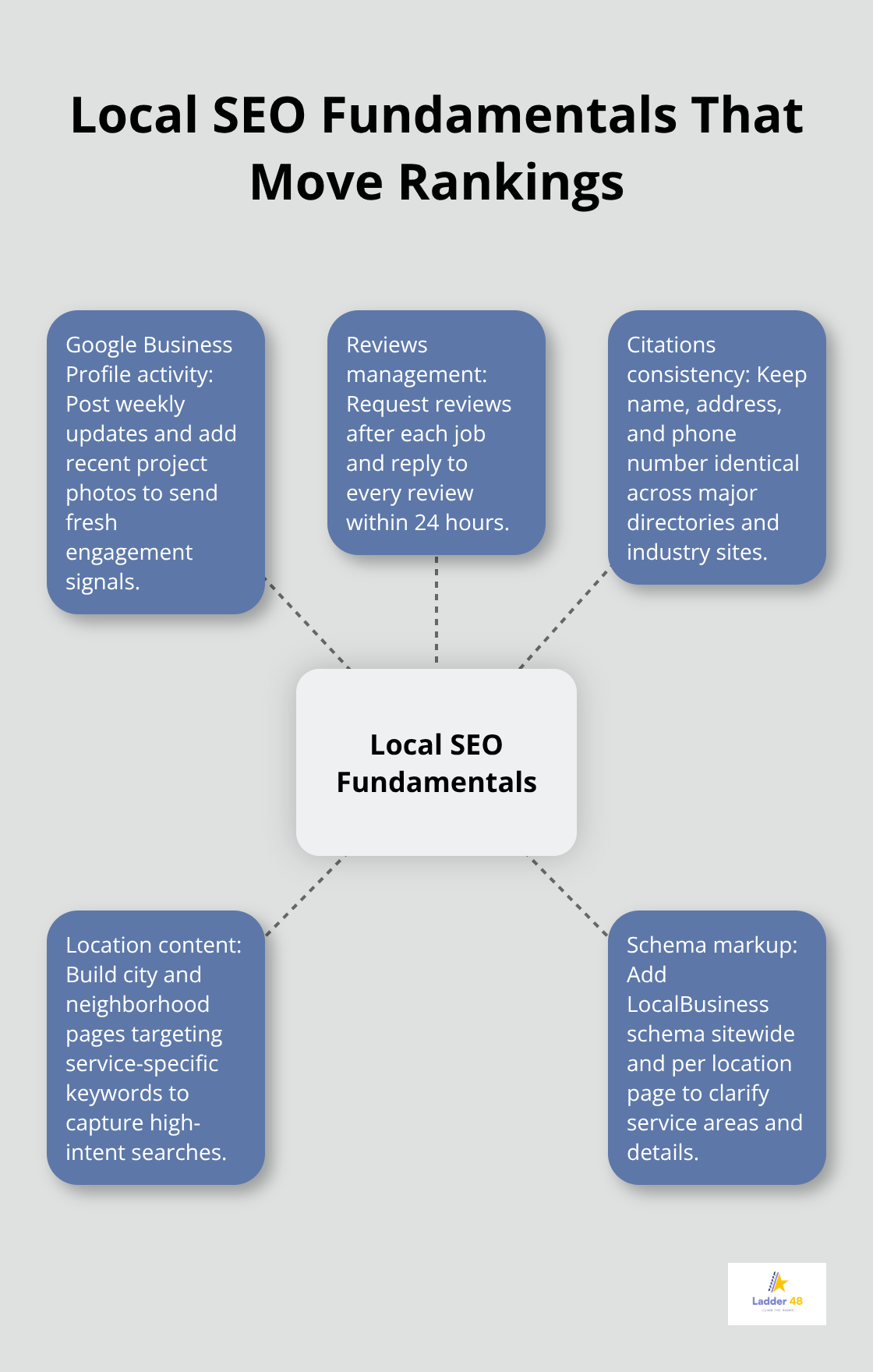
The contractors who rank on page one understand that local SEO requires ongoing attention. They post weekly project updates to their Google Business Profile. They respond to every review within 24 hours. They maintain accurate business information across all directories. They create content that speaks directly to their service areas. This consistency compounds over time. Search engines notice when a business actively manages its online presence, and they reward that behavior with higher rankings. The contractors who skip these fundamentals stay invisible, no matter how good their concrete work actually is. The question isn’t whether you have the skills to do excellent concrete work. The question is whether you’re willing to invest in the systems that make customers find you in the first place.
Local SEO Strategies That Work for Concrete Contractors
Optimize Your Google Business Profile With Complete Information
Your Google Business Profile is the single most important asset you own online, and most contractors treat it like an abandoned storefront. We see contractors with incomplete profiles, missing photos, and service descriptions that could apply to any business in any industry. Google Business Profile optimization isn’t optional if you want local visibility.
Start with your primary category set to Concrete Contractor, then add secondary categories like Paving Contractor or Masonry Contractor if they apply. Upload at least 10 high-quality photos of completed projects, including before-and-after shots, team photos, and equipment. Add every concrete service you offer to your service list, not just a vague description. Update your business hours and mark yourself open now so searchers see you’re actively operating.
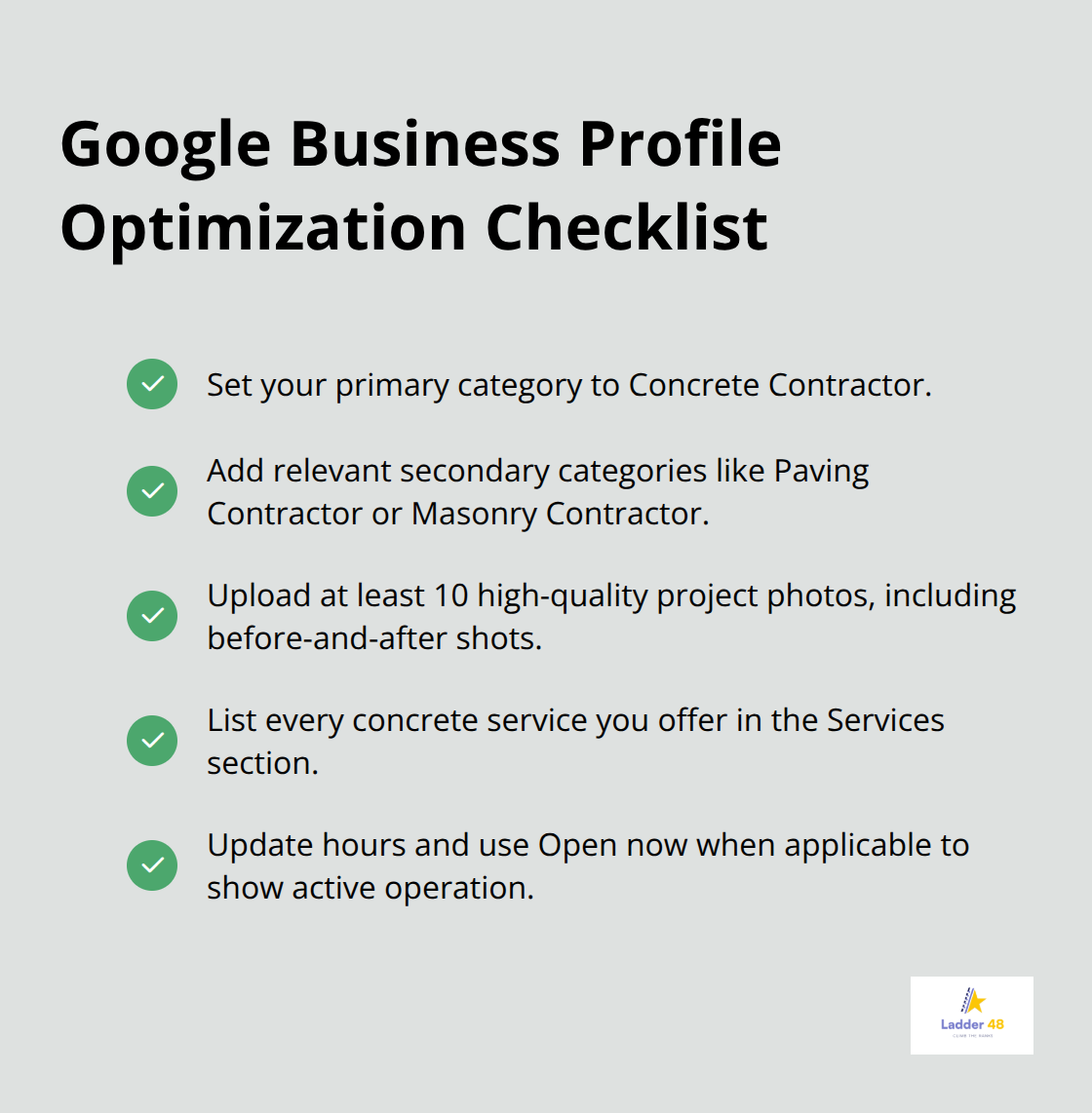
Post weekly updates about completed projects, seasonal services, or limited-time offers. This consistency matters because Google rewards active profiles with higher local visibility. According to Google Business Profile data, listings that include photos drive significantly more clicks and actions than those without. When you answer customer questions directly on your profile, you signal to Google that your business is engaged and trustworthy.
Build Citations Across Local Directories and Industry Platforms
Citations form the backbone of local rankings, yet most contractors spread their information across directories haphazardly. Your business name, address, and phone number must remain identical everywhere they appear online-whether that’s Google, Yelp, the Better Business Bureau, or industry platforms like Angi, HomeAdvisor, and Thumbtack. One inconsistency in spelling, formatting, or phone number damages your local authority.
Semrush data shows that 62% of consumers avoid businesses with inaccurate information online, so data hygiene directly impacts your bottom line. Beyond the major directories, claim your business on local industry-specific platforms where concrete contractors actually appear. Build relationships with local organizations like chambers of commerce and trade associations to secure citations from authoritative local sources.
Generate Authentic Customer Reviews on Google and Local Sites
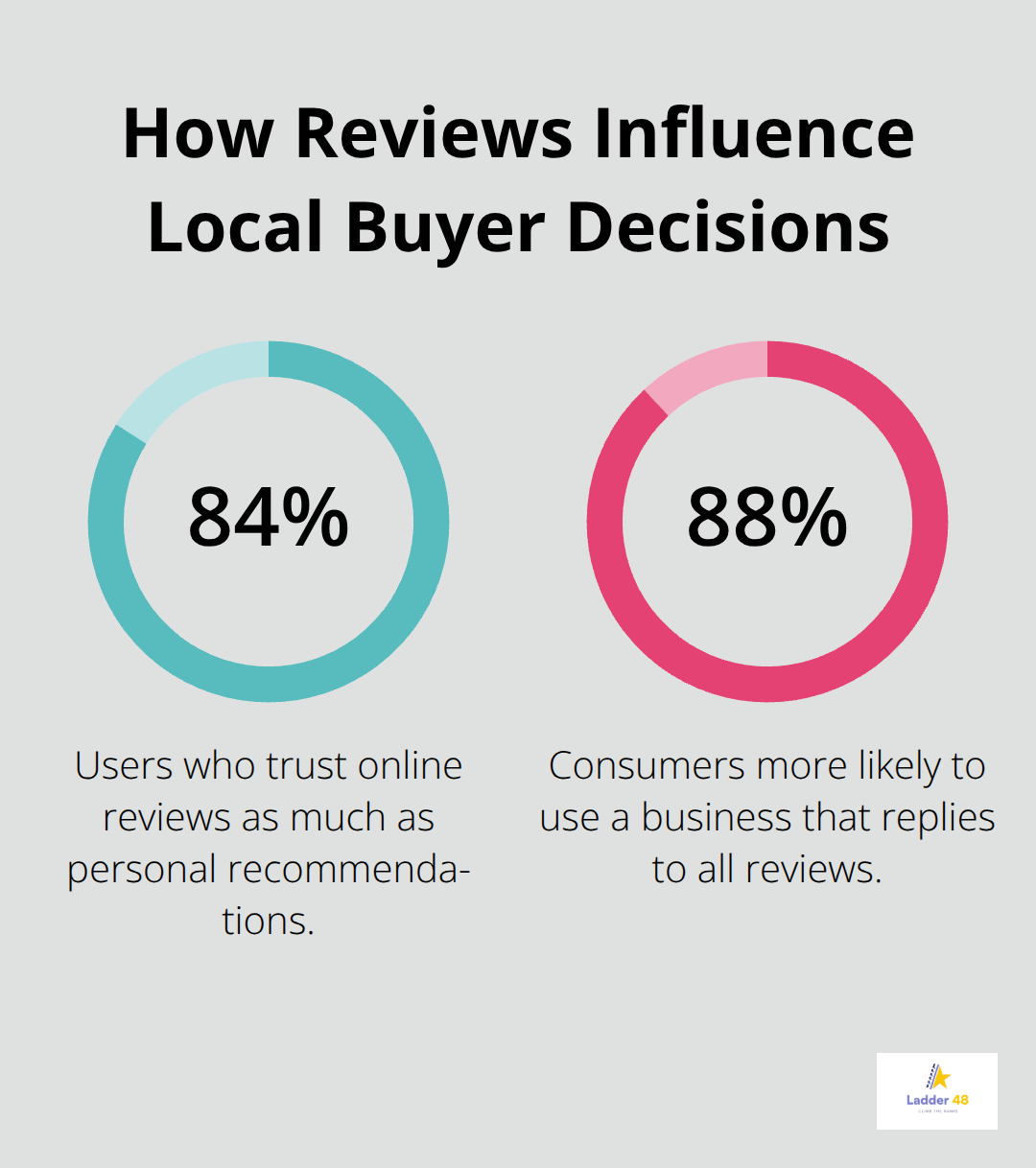
Customer reviews act as social proof and ranking signals simultaneously. Google’s algorithm uses review volume, recency, and sentiment to determine local rankings. Studies show that 84% of users trust online reviews as much as personal recommendations, and 88% of consumers are more likely to use a business that replies to all reviews.
After every completed project, send customers an automated text or email with a direct link to leave a Google review. Make it frictionless-the easier you make it, the more reviews you’ll collect. Respond to every review within 24 hours, whether it’s positive or negative. This active engagement tells Google your business is legitimate and customer-focused. Contractors with 100+ Google reviews consistently outrank those with fewer than 20 reviews, all else being equal.
Target Location-Specific Keywords in Website Content
Location-specific keywords are where most contractors miss massive opportunity. Generic terms like concrete contractors have enormous search volume but brutal competition. Instead, target phrases like concrete driveway replacement in Denver or stamped concrete contractors in Seattle. These terms have lower competition and higher purchase intent because someone searching for a specific service in a specific city is ready to hire.
Create dedicated service pages for each major offering, and create location pages for each neighborhood or city you serve. Each page should include your target keyword naturally in the title, header, and first paragraph. Include local schema markup on these pages so Google understands you serve that specific area. This layered approach captures searchers at the exact moment they need your services, setting the stage for the tactical execution that separates contractors who rank from those who remain invisible.
Practical Tools and Tactics for Ranking Locally
Use Schema Markup to Help Search Engines Understand Your Service Areas
Schema markup transforms how search engines interpret your concrete business and the locations you serve. LocalBusiness schema written in JSON-LD tells Google your exact service areas, hours, contact details, and service categories in a language search engines actually understand. Most contractors skip this entirely, which means Google has to guess whether you serve one neighborhood or fifty. Install LocalBusiness schema on your homepage and add separate schema blocks on each location page you create. This structured data directly influences whether you appear in local pack results, and the top three map positions capture roughly 80% of all clicks for local concrete searches. Without schema, you’re competing with one hand tied behind your back.
Create Location Pages for Each Service Area You Cover
Create dedicated location pages for every city or neighborhood where you actively take projects. A page for concrete driveway services in Denver operates differently from the same service in Boulder because search intent varies by location. Each page needs unique content that addresses local soil conditions, seasonal weather patterns, and neighborhood-specific design preferences. Include your target keyword naturally in the page title, H1 header, and first paragraph. Add before-and-after project photos from that specific area, and mention local landmarks or neighborhoods by name. One contractor achieved 167% growth in organic traffic and 94% growth in location-specific leads within six months through comprehensive location-specific service pages with maps, area testimonials, and project galleries organized by neighborhood. This approach works because it answers the exact question a searcher in that location is asking.
Build Backlinks from Local Business Directories and Relevant Industry Sites
Backlinks from local sources carry more weight than random links from distant websites. Partner with local landscapers, builders, architects, and real estate agents who naturally recommend concrete contractors to their clients. These partnerships yield high-quality citations and backlinks that signal local authority to Google. One contractor strategy involved relationships with 40–50 local businesses, resulting in roughly 40–50% faster page-one rankings for competitive terms compared to contractors who ignored local link building. Claim your business on local directories like Angi, Yelp, BBB, HomeAdvisor, and Thumbtack, but verify that your NAP information matches exactly across all platforms. Each citation acts as a vote of confidence in your local relevance.
Develop Content Around Local Projects and Community Involvement
Project case studies organized by location and service type rank for valuable long-tail keywords while generating direct leads from similar projects. Document completed work with detailed photos, project timelines, materials used, and challenges overcome. Publish these as blog posts that mention the specific neighborhood or city where you worked. A homeowner searching for concrete driveway repair in their neighborhood will find your case study from that exact neighborhood, which builds immediate trust and relevance. Participate visibly in local community events, sponsorships, or charitable work, then write about that involvement on your website. This content captures searches from people in your community and positions you as a business that cares about more than just making money.
Final Thoughts
Local concrete contractors SEO demands consistent effort over months, not a sprint you complete and abandon. The contractors dominating local search results committed to the fundamentals in this guide and maintained that commitment week after week. They optimized their Google Business Profile completely, built citations across directories, collected reviews systematically, and created location-specific content that answers what their customers actually search for. This work compounds-each weekly project update strengthens your profile, each new location page captures additional traffic, and each customer review builds credibility that influences both rankings and conversions.
The contractors who struggle online typically started strong but lost momentum. They created a few location pages then stopped. They posted to their Google Business Profile for a month then abandoned it. They collected reviews sporadically instead of systematically. Consistency beats intensity in local concrete contractors SEO. A contractor who posts one project update weekly for a year outranks one who posts ten updates in a single week then vanishes for months.
If you’re ready to accelerate your local SEO results, we at Ladder 48 help contractors build stronger online presence and attract more qualified leads through transparent, results-driven strategies tailored to your specific market. Our team understands the unique challenges contractors face and provides the expertise to climb you to the top of local search rankings. Partner with us to transform your online visibility and achieve sustainable growth for your business.


