HVAC contractors face a simple reality: without a solid marketing strategy, growth stalls. The competition for local customers is fierce, and generic approaches won’t cut it.
We at Ladder 48 built this guide to show you exactly how to attract more leads, convert them into paying customers, and establish your business as the trusted choice in your market. You’ll find actionable tactics across local SEO, lead generation, and brand authority that actually work.
How to Dominate Local Search for HVAC Services
Claim and Optimize Your Google Business Profile First
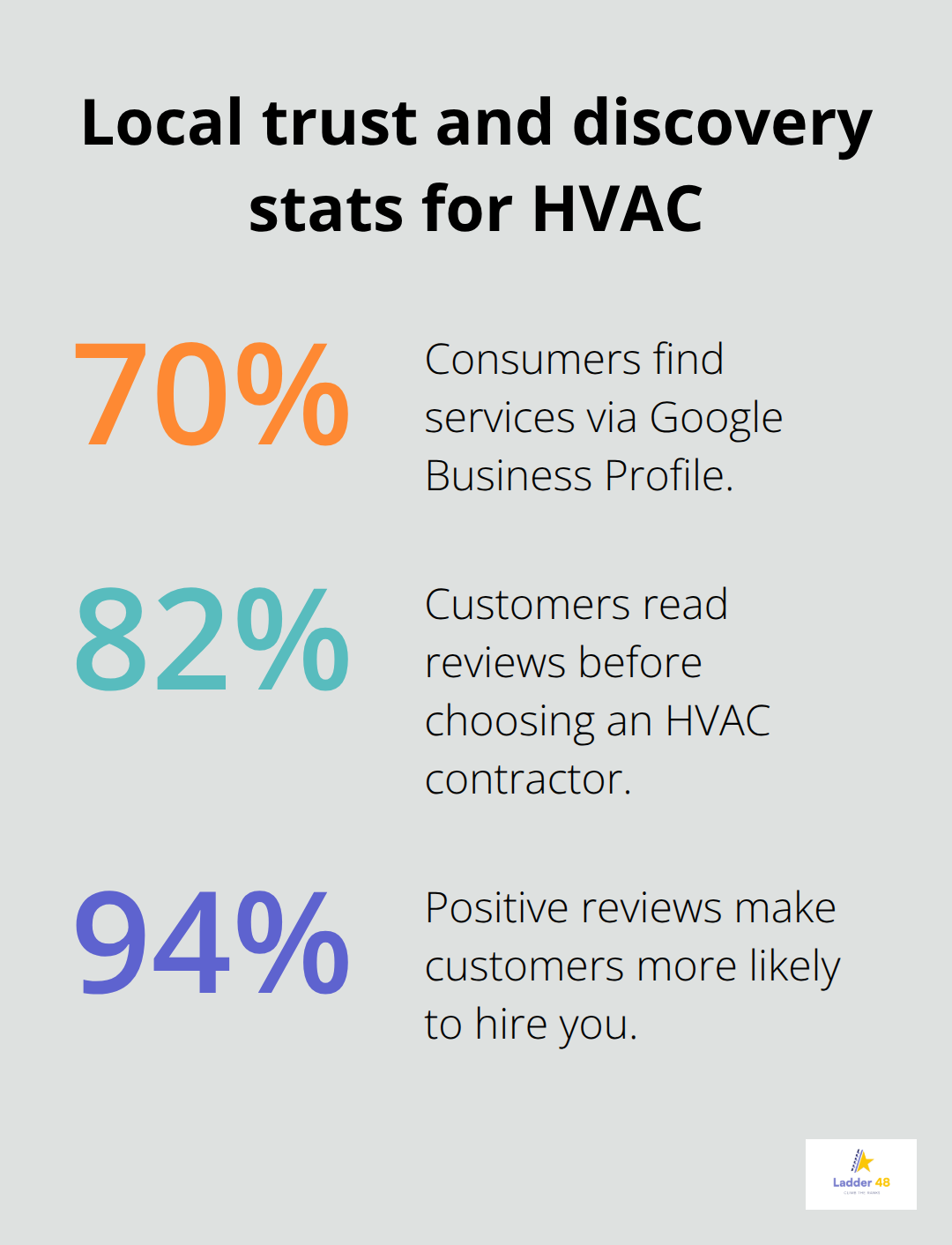
Your Google Business Profile is where 70% of consumers find services, according to research on local search behavior. This isn’t optional-it’s the foundation of your local visibility. Claim your profile immediately if you haven’t already, then fill in every field completely. Add your full business name, phone number, address, and hours of operation exactly as they appear across your website and other directories. Upload high-quality photos of your team, service vehicles, and completed work. Include a detailed business description that mentions the specific services you offer: AC repair, furnace installation, emergency service, and any other specialties. Respond to every review, positive or negative. Research shows that 82% of customers read reviews before choosing an HVAC contractor, and 94% say positive reviews make them more likely to hire you. When you respond to negative reviews, you signal that you value feedback and take customer concerns seriously. This builds trust and strengthens your ranking signals with Google.
Build Local Citations and Earn Backlinks That Matter
Citations are mentions of your business name, address, and phone number across the web. Consistency is everything-your NAP must match exactly on your website, Google Business Profile, and all directories. List your business on high-authority local directories like Yelp, Angie’s List, and HomeAdvisor. These citations improve your local search rankings and give potential customers multiple places to find your phone number and hours. For backlinks, focus on local relevance rather than quantity. Earn links from local chamber of commerce websites, neighborhood associations, and community event sponsors. If you sponsor a local charity event or partner with a real estate agent in your area, ask them to link back to your website. These local backlinks carry more weight than random national links because they signal that your business is genuinely part of the community. Create location-specific content that naturally attracts links-a guide to common HVAC problems in your climate, for example, is more likely to earn citations from local news sites and homeowner forums than generic content.
Target Location-Based Keywords Where Homeowners Search
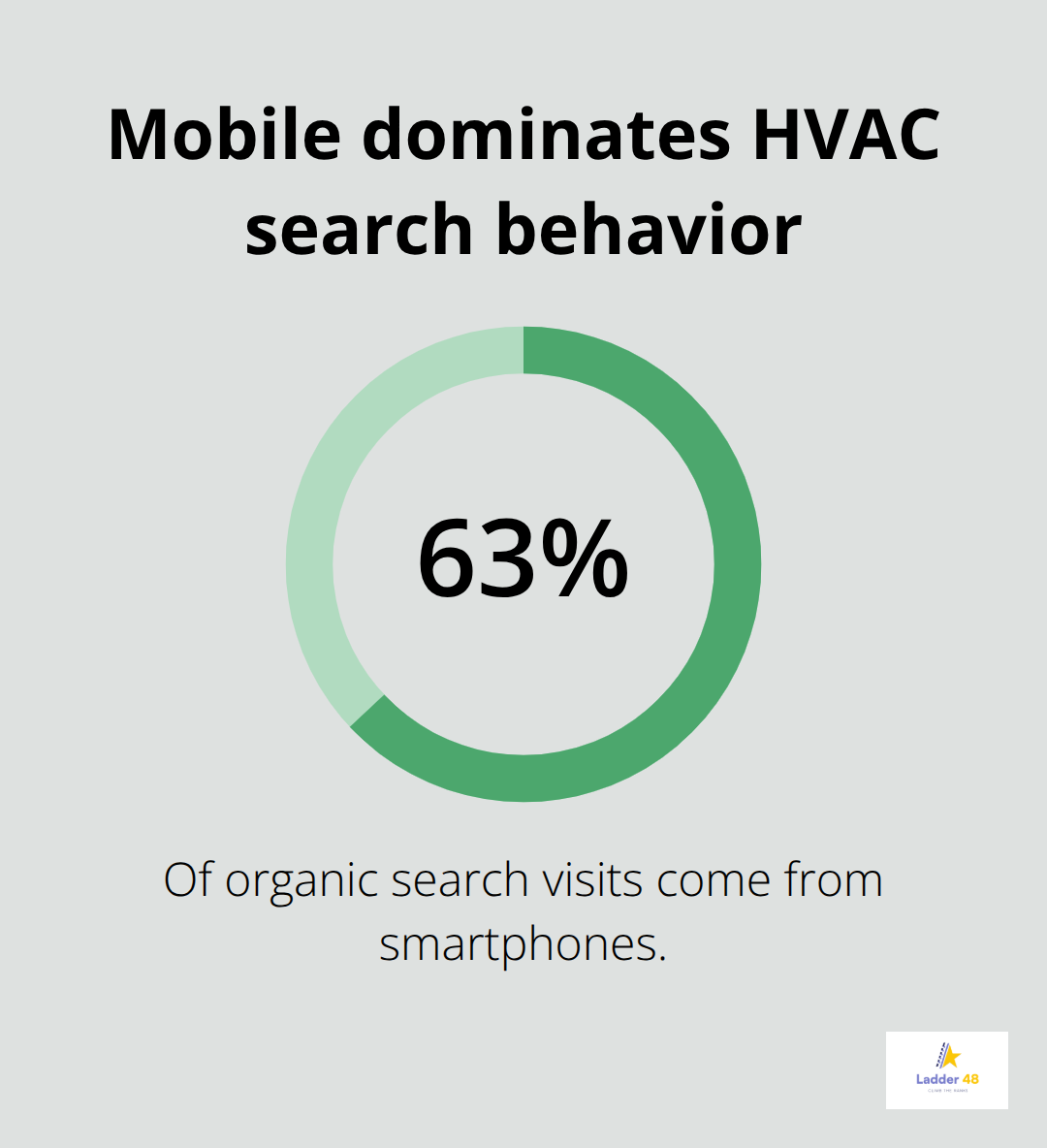
Generic keywords like HVAC repair waste your budget. Homeowners search for “HVAC repair near me” on mobile devices, and 63% of organic search visits come from smartphones. This means your website must load fast and be easy to navigate on phones.
Target long-tail, location-based keywords such as “furnace repair in Denver” or “emergency AC service in Austin.” Create dedicated service area pages for each city or neighborhood you serve, not just one generic service page. Each page should mention the specific location multiple times naturally in the content, answer common questions homeowners in that area ask, and include a clear call to action. A homeowner in Kansas City searching for heating repair will find and convert better on a page titled “Heating Repair in Kansas City” than on a generic heating repair page. Competitive keyword research helps contractors target the exact phrases potential customers are searching for. Use keyword research tools to identify the exact phrases homeowners in your service areas search for, then build pages around those terms. The HVAC market is projected to grow to $545.4 billion by 2034, which means competition is intensifying. Standing out in local search isn’t a luxury-it’s how you capture your share of that growth before competitors do.
Move Beyond Local Search to Lead Generation
Local search visibility opens the door, but converting those visitors into leads requires a different approach. Your website structure, service pages, and call-to-action buttons all play a role in turning searchers into customers. The next section covers how to implement PPC campaigns and create service pages that actually convert prospects into paying jobs.
How to Turn Website Visitors Into Paying Customers
Leverage PPC and Google Local Services Ads for Immediate Lead Flow
PPC campaigns and organic search work best together, but most HVAC contractors underestimate how quickly paid ads fill your pipeline while you build long-term SEO authority. When a homeowner’s furnace breaks in winter, they search for immediate solutions on mobile. Google Local Services Ads appear above traditional PPC results and carry a Google Guarantee badge, which boosts conversions because homeowners see third-party validation. These ads operate on a pay-per-lead model-you pay only when someone contacts you, not just when they click. Set a realistic daily budget ($20 to $50 per day works for most local markets) and monitor which keywords and service categories generate the most qualified leads. Track every call and form submission back to the specific ad or keyword that triggered it using call-tracking software. This data reveals which seasonal services (AC repair in summer, furnace repair in winter) and which geographic areas drive your highest-value jobs.
Stop Wasting Money on Broad Keywords
Most contractors waste money targeting broad keywords instead of location-specific, high-intent terms. Bid on phrases like “emergency furnace repair in [your city]” or “AC maintenance plans near me” rather than generic “HVAC repair” searches. Your cost per lead drops significantly when you stop chasing generic traffic and focus on homeowners actively searching for your exact services in your service area.
Create Service Pages That Convert Prospects Into Leads
Your website serves as your digital storefront and determines whether visitors become leads or bounce to a competitor. A generic AC repair page performs poorly because it doesn’t address the specific problems homeowners face or build confidence that you can solve them. Create dedicated pages for your top revenue drivers: emergency AC repair, furnace installation, seasonal maintenance plans, and specialty services like ductless mini-split installation. On each page, answer the exact questions homeowners ask-how much does AC repair cost, how often should I service my HVAC system, what’s the difference between repair and replacement. Include before-and-after photos of your work, customer testimonials with names and locations, and clear pricing or pricing ranges. Add a prominent online booking button or phone number above the fold so visitors don’t scroll searching for how to contact you.
Launch Seasonal Campaigns to Multiply Lead Volume
Seasonal campaigns multiply your lead volume during peak demand periods. In spring, promote AC maintenance plans and spring tune-ups; in fall, emphasize furnace inspections and winter readiness; year-round, highlight emergency service availability. Email open rates exceed 90% for SMS messages, so text existing customers about seasonal specials before you launch paid ads. This costs almost nothing and converts faster than cold outreach because these customers already trust your work. Run Facebook and Instagram ads targeting homeowners in your service area during peak seasons, promoting limited-time offers on maintenance plans or system upgrades.
Allocate Your Marketing Budget Strategically
Budget 10 to 20% of your annual revenue for marketing; if you currently spend 5% or less, you’re likely missing growth opportunities while competitors capture your market share. The HVAC market is projected to grow to $545.4 billion by 2034, which means competition intensifies every quarter. Contractors who invest in paid lead generation during peak seasons capture jobs that competitors leave on the table. Your next challenge is building the brand authority and trust that turns one-time customers into repeat clients and referral sources.
How Trust and Reviews Drive Repeat Business and Referrals
Collect Reviews Systematically and Respond to Every One
Customer reviews are your most powerful marketing asset, and the data proves it. Eighty-two percent of customers read reviews before choosing an HVAC contractor, and 94% say positive reviews make them more likely to hire you. This means your reputation directly impacts your ability to capture market share.
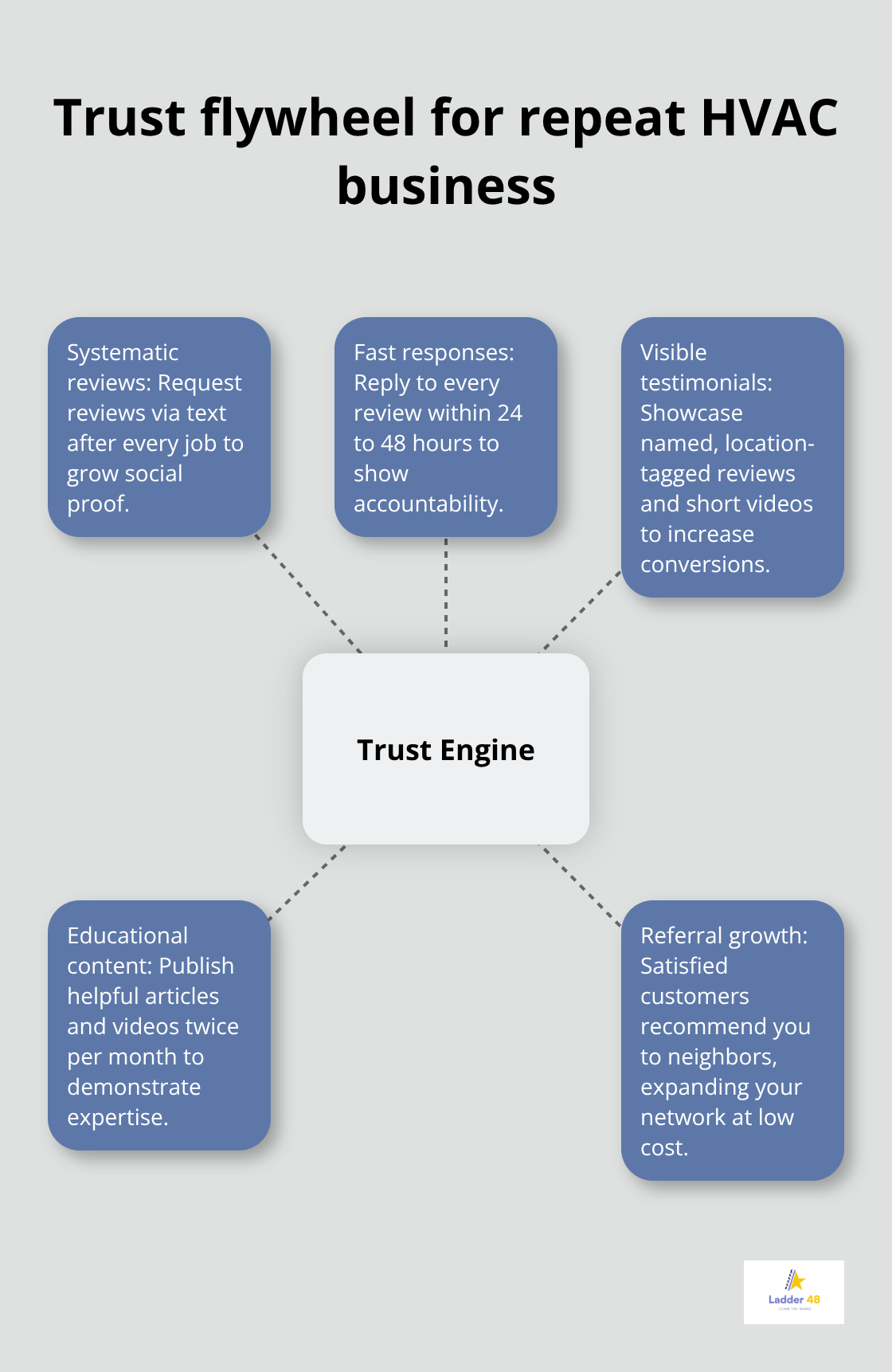
After every completed job, text customers a direct link to your review page on Google or Yelp. Make the process frictionless-most homeowners will leave a review if you remove the friction of searching for where to post it. Respond to every single review within 24 to 48 hours, regardless of the star rating. Responding to negative reviews signals that you take customer concerns seriously and are willing to make things right. Responding to positive reviews thanks customers and shows potential clients that you engage with your community.
Display Reviews and Testimonials Where Prospects See Them
Feature your best reviews prominently on your website homepage and service pages. Include customer names, locations, and the specific service they had performed. Video testimonials convert even better than written reviews because homeowners see real people describing real results. Offer a small incentive such as a $25 gift card or discount on future service for customers willing to record a 30-second video testimonial on their phone. This investment pays for itself many times over through increased conversions from prospects who watch these videos.
Create Educational Content That Positions You as the Expert
Educational content separates contractors who dominate their market from those who compete on price alone. Create blog posts and videos that answer the exact questions homeowners ask: How much does AC repair cost in my area? What’s the difference between HVAC repair and replacement? How often should I service my furnace? These posts attract organic traffic from homeowners actively researching their problems, position you as the expert in your market, and improve your search rankings over time. Publish new content at least twice per month to maintain momentum and signal to search engines that your site remains active and relevant.
Leverage Email Marketing to Stay Top-of-Mind
Share your educational content on Facebook and Instagram to reach existing customers and warm leads. Email newsletters with maintenance tips, seasonal reminders, and educational content keep your business top-of-mind when customers need service. Email marketing delivers approximately $40 in revenue for every $1 spent, making it one of your highest-ROI channels. Segment your email list so homeowners who recently purchased a new system receive different messages than those with older units. Include a clear call-to-action in every email directing readers to schedule service or contact you with questions.
Convert One-Time Customers Into Recurring Revenue
This combination of reviews, testimonials, and educational content builds the trust that converts one-time repair customers into maintenance plan subscribers. Homeowners who trust you recommend you to neighbors and friends, expanding your referral network without additional acquisition costs. The trust you establish through consistent, helpful communication and transparent reviews becomes your competitive advantage in a market where price alone no longer wins jobs.
Final Thoughts
Your HVAC contractor marketing plan determines whether you capture growth or watch competitors take your market share. The strategies in this guide-local SEO optimization, PPC campaigns, service page conversions, seasonal promotions, and review management-work together to attract qualified leads and convert them into loyal customers. The HVAC market expands to $545.4 billion by 2034, which means opportunity exists for contractors who invest in systematic marketing rather than hope for referrals.
Start with your Google Business Profile this week, as this single step positions you in front of the 70% of homeowners searching locally for HVAC services. Audit your website’s mobile experience and load speed, then create dedicated service pages for your top revenue drivers (these foundational changes cost little but generate immediate results). Implement call tracking to measure which marketing channels deliver your highest-value leads, and budget 10 to 20% of annual revenue toward marketing, prioritizing paid ads during peak seasons.
The contractors winning in your market combine data-driven decisions with consistent execution. They track metrics, adjust campaigns based on performance, and maintain a content calendar that keeps their business visible year-round. We at Ladder 48 help contractors implement these strategies through transparent, results-driven SEO that attracts more local customers and generates qualified leads.