Roofers who rely on phone calls know the truth: visibility drives revenue. Most homeowners search online before picking up the phone, which means your content marketing plan needs to work harder than your competition’s.
At Ladder 48, we’ve seen roofers transform their local presence by publishing the right content at the right time. This guide shows you exactly how.
What Topics Actually Drive Roofing Calls
The Four Content Pillars That Homeowners Search For
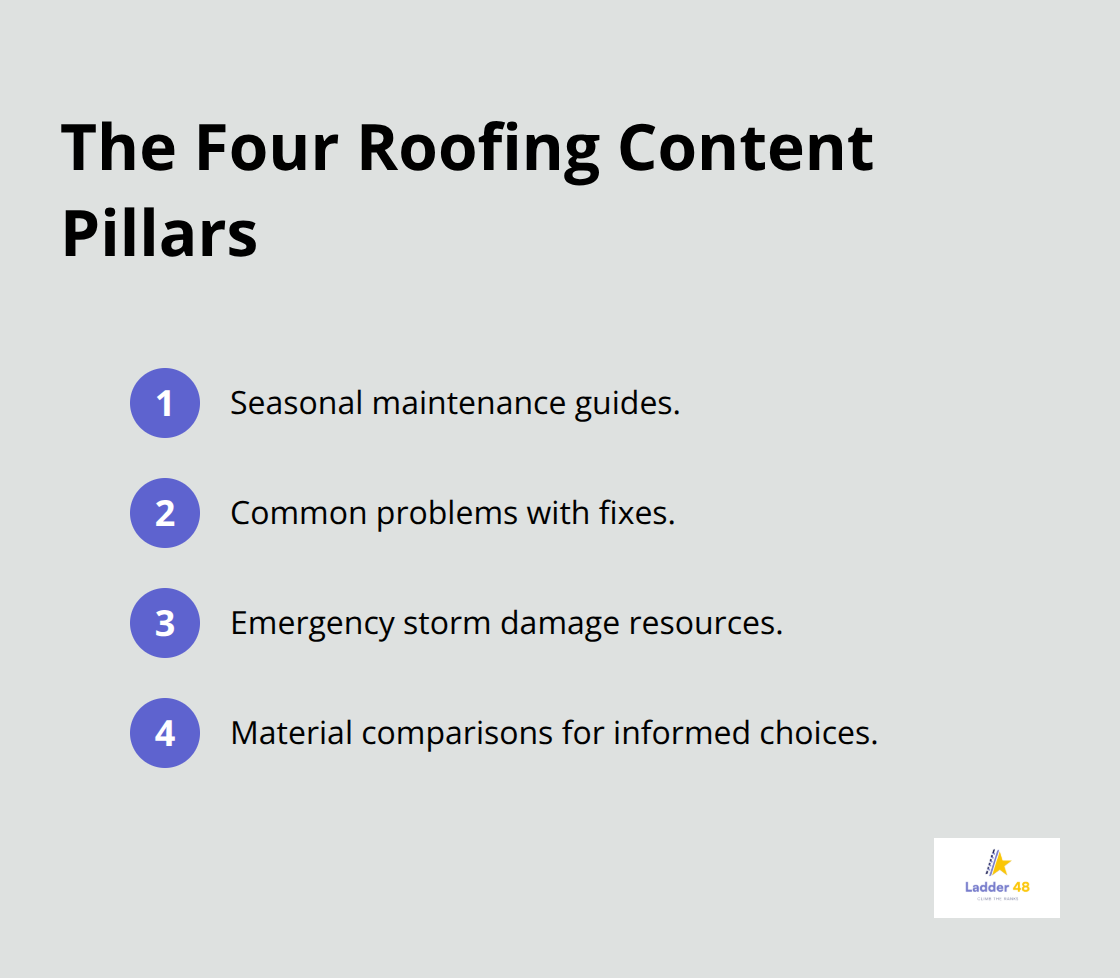
Roofers waste enormous amounts of time on content that nobody searches for. Generic articles about roofing benefits or vague maintenance tips sit in your blog archives collecting dust while homeowners search for specific problems and solutions. We recommend focusing your content strategy on the four topics that homeowners actually type into Google when they need a roofer: seasonal maintenance guides, common problems with fixes, emergency storm damage, and material comparisons. These topics match what people actively search for, not what you hope they’ll read.
Seasonal Content Captures Predictable Demand
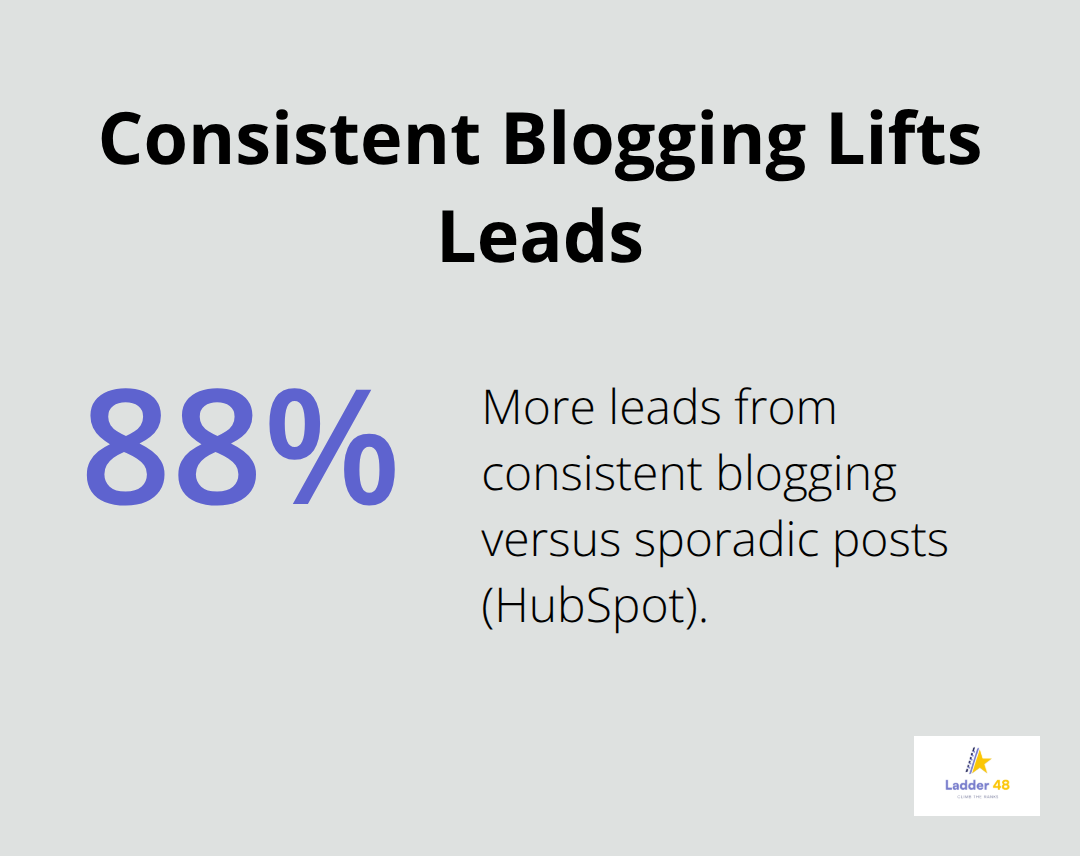
Seasonal content works because homeowners search for maintenance tips before problems become emergencies. When spring arrives, homeowners search for terms like “roof inspection checklist” or “spring roof maintenance tips.” Fall brings searches for “gutter cleaning” and “winter preparation.” A study from HubSpot found that 88% more leads come from consistent blogging, but only if you target what people actually search for. Post your seasonal guides two to three weeks before peak seasons hit, not after.
This timing positions your content to capture homeowners at the exact moment they start thinking about roof care.
Common Problems Drive Year-Round Traffic
Common roofing problems generate year-round traffic because homeowners diagnose their own roof issues before calling a contractor. Searches like “missing shingles repair cost” or “roof leak in attic how to find” appear constantly throughout the year. Your articles should explain the problem clearly, show what caused it, describe the repair process, and include your service area. This positions you as the expert who understands the specific issue they face. Homeowners trust contractors who can identify their exact problem before the first phone call.
Emergency Storm Damage Captures Highest-Intent Leads
Emergency storm damage content captures the highest-intent leads because homeowners search frantically when a storm hits their area. Searches spike immediately after severe weather, with terms like “emergency roof repair near me” and “hail damage roof repair” dominating search volume. Your content should answer the urgent questions: what should I do right now, does my insurance cover this, and how quickly can you respond. Include your emergency contact information prominently and create a dedicated emergency page that ranks for local storm-related searches in your service areas. These leads convert faster than any other type because homeowners face immediate pressure to act.
Material Comparisons Influence Purchase Decisions
Material comparison articles work because homeowners research before committing to expensive replacements. Searches like “architectural shingles vs asphalt shingles” or “TPO vs EPDM roofing” come from people ready to make purchasing decisions. Compare materials honestly, discuss durability and cost differences, and mention which materials work best in your local climate. Include actual price ranges from recent projects, not vague estimates, because homeowners trust numbers over generalities. Google processes roughly 8.5 billion searches daily, with millions focused on roofing problems and solutions. Your content strategy succeeds when it targets these specific search behaviors instead of hoping homeowners find generic information about your company.
Once you identify these four content pillars, the next step involves building a publishing system that keeps your content fresh and optimized for local search. Start by finding the best roofing SEO keywords that match each pillar, then create a publishing calendar around those terms to ensure consistent visibility.
How to Build Authority With a Publishing System That Works
Create a Publishing Schedule That Matches Search Demand
Roofers who publish sporadically rank nowhere. The roofing contractors dominating local search results publish consistently, optimize every article for the neighborhoods they serve, and weave customer proof throughout their content. Authority doesn’t come from one great article-it comes from proving to Google and homeowners that you understand roofing problems in their specific area, month after month.
Most roofers fail here because they treat content as a one-time project instead of a system. You need a publishing schedule that ties directly to the search demand you identified in the previous section. Create a 12-month content calendar that maps seasonal topics to the months when homeowners search for them. Post your spring maintenance guide in late February, not April, because search volume for spring roof care peaks in early March. Schedule your winter preparation content for August and September, when homeowners prepare for fall storms.
Post emergency storm damage guides year-round because these searches spike immediately after severe weather hits your area. This timing matters more than most roofers realize-publishing two weeks too late means you miss the peak search window and lose visibility to competitors who planned ahead. For common roofing problems, spread these articles throughout the year on a rotating schedule. You don’t need to publish five articles per week; instead, publish two solid articles every two weeks that directly answer what homeowners search for in your service areas. Consistency beats volume-companies that publish twice monthly generate 67% more leads than those publishing sporadically.
Target Local Search Terms in Every Article
Every article must target local search terms specific to the neighborhoods and cities you serve. Generic articles about roofing benefits rank for nothing because thousands of national roofing sites already dominate those terms. Instead, write articles that answer searches like “roof repair cost in [city name]” or “hail damage repair [neighborhood name].” Include your service area names naturally throughout the content, not forced in brackets.
Mention local climate factors that affect roof longevity in your region-this proves you understand the specific conditions homeowners face. Reference local building codes and insurance requirements that differ from other areas. When you discuss material comparisons, mention actual price ranges from recent projects in your area, not national averages. This specificity signals to both Google and homeowners that you operate locally and understand their specific situation.
Weave Customer Reviews Into Your Content Strategy
Customer reviews and testimonials belong in your articles, not just on a separate testimonials page. When you write about a common problem like missing shingles, include a short quote from a customer who had that exact issue. Mention their neighborhood by first name and last initial if they consent. This approach serves multiple purposes simultaneously-it adds social proof that influences homeowners reading your article, it provides fresh content signals that Google rewards, and it makes articles more trustworthy than generic expert commentary.
Describe what a customer in a specific neighborhood experienced instead of writing vague statements like “we fix roof leaks quickly.” Explain what the problem looked like, how your team diagnosed it, and how long the repair took. These details make your authority tangible and memorable in ways that generic claims never achieve. Homeowners trust contractors who can identify their exact problem before the first phone call, and customer stories prove that you’ve solved similar issues in their own neighborhoods.
Now that you’ve built a system for consistent, locally-optimized content backed by real customer proof, the next step involves converting the traffic that arrives at your articles into actual phone calls.
How to Turn Website Visitors Into Roofer Calls
Content attracts visitors, but visitors don’t pay your bills-calls do. Most roofers publish solid articles and then watch traffic numbers climb while phone calls stay flat. The gap between traffic and calls exists because roofers treat their content like information resources instead of conversion machines. Every article you publish must guide readers toward picking up the phone or submitting a form, and this requires strategic placement of contact information and clear pathways to action throughout your content.
Position Call-to-Action Buttons Where Readers See Them
The first mistake roofers make involves hiding contact details at the bottom of articles where nobody sees them. Homeowners reading your article about hail damage repair are already interested-they actively research a roofing problem. If they finish reading without seeing an obvious way to contact you, they scroll to the next search result and call your competitor instead. Place your primary call-to-action near the top of every article, ideally within the first 300 words. Use action-oriented language that matches the urgency of the topic.
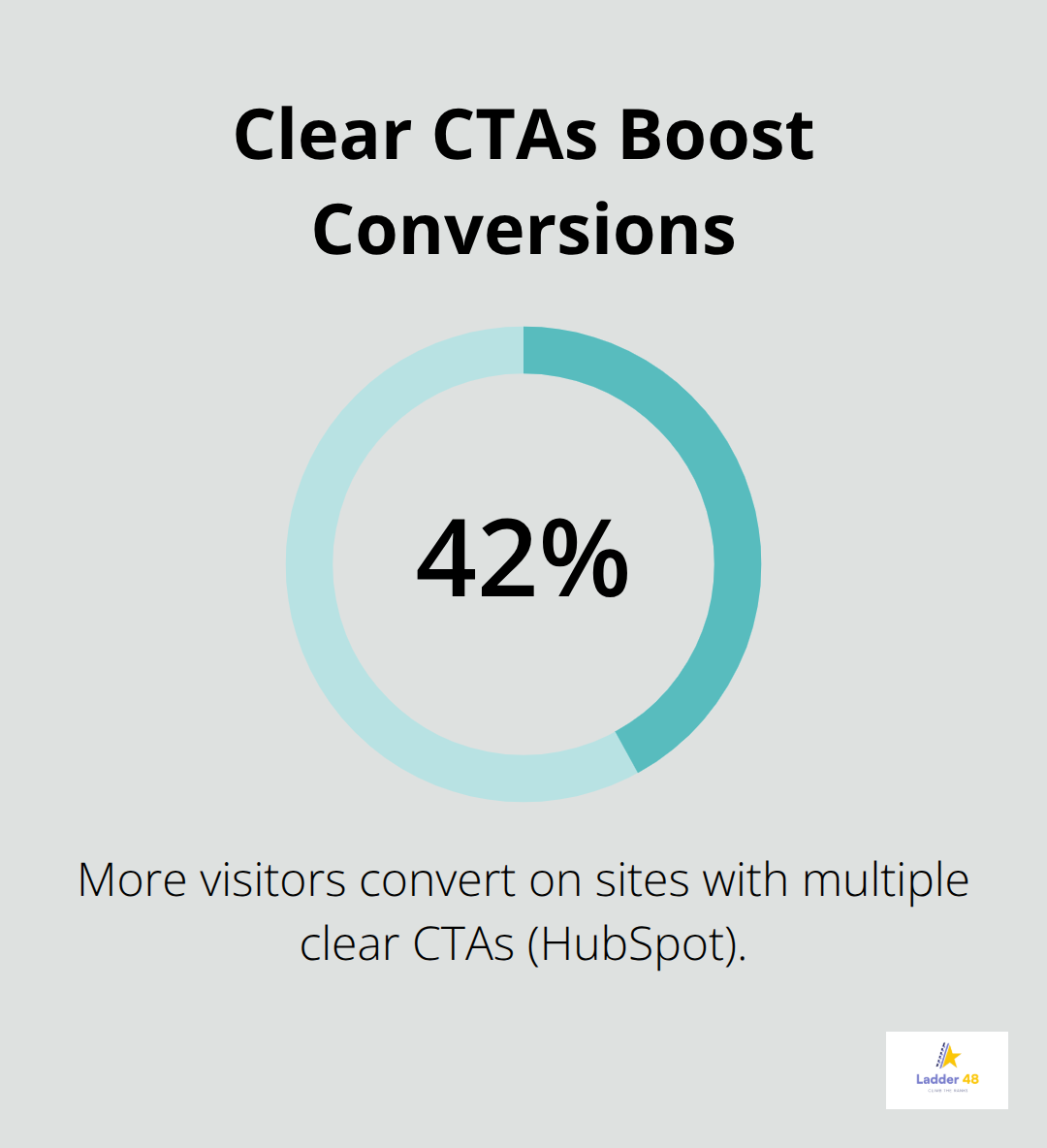
For emergency content like storm damage repair, your call-to-action should emphasize speed and availability: contact us for same-day inspection or call our emergency line. For comparison articles about roofing materials, your call-to-action can focus on consultation and expertise: schedule a free assessment to determine the best materials for your roof. Each article type requires different messaging because readers in different stages of decision-making need different reasons to call. Research from HubSpot shows that websites with multiple clear calls-to-action convert 42% more visitors into leads than those with minimal CTAs. Include at least two to three contact opportunities per article-one near the top, one in the middle, and one at the bottom.
Include Your Service Areas Prominently
Homeowners searching for local roofers need immediate confirmation that you operate in their neighborhood. Articles that mention service areas build trust because readers know you’re not a national company trying to serve everywhere. Include your specific service areas in the first paragraph when relevant, and repeat them naturally throughout the article. If you’re writing about roof repair costs, mention actual neighborhoods you serve: we provide roof repair services in downtown, the Riverside district, and the North End.
Include a coverage map in articles or as a downloadable resource-this removes the question mark from readers’ minds about whether you serve their location. Maps work better than lists because homeowners instantly recognize their neighborhood on a visual map. Add a sentence near your call-to-action that confirms service availability: we serve the greater metropolitan area within a 25-mile radius. This specificity converts better than vague statements about serving the region. Google rewards location-specific content because it matches search intent, so mentioning neighborhoods throughout your article also improves your local search rankings simultaneously.
Make Phone Numbers Impossible to Miss
Click-to-call links should appear on every page and article, not just your contact page. Mobile users-which represent over 60% of web traffic according to Google data-need the ability to call with a single tap. Use prominent phone numbers formatted as clickable links throughout your content. Include your phone number in at least two places within the article body and once in a sticky header or footer that remains visible as readers scroll.
Format numbers consistently across all articles and pages so homeowners see the same contact number everywhere they encounter your content. Test your click-to-call links on mobile devices to verify they work properly. Some roofers make the mistake of using generic contact forms for emergency content when phone calls are far more effective. Emergency roof damage requires immediate conversation, not a form submission that takes 24 hours to process. Display a dedicated emergency phone number prominently in storm-damage articles with language that emphasizes immediate availability. Homeowners facing active roof leaks or storm damage will call if they know someone answers quickly.
Track Which Articles Generate the Most Calls
Track which articles generate the most phone calls using call attribution software-this data reveals which content topics resonate most with your audience and deserve more publishing investment. Articles that generate 15 to 20 calls per month deserve expansion and deeper optimization, while articles generating minimal calls might need topic adjustment or removal. This approach ensures your content strategy focuses on topics that actually convert readers into customers rather than topics that simply attract traffic.
Final Thoughts
Content marketing separates roofers who dominate local search from those who struggle for visibility. Your roofers content marketing plan works because it targets what homeowners actually search for, proves your expertise through consistent publishing, and converts traffic into phone calls. Strategic content about seasonal maintenance, common problems, emergency repairs, and material comparisons generates revenue while generic blogs about roofing benefits generate nothing but noise.
Your competitive advantage grows stronger with every article you publish. Homeowners in your service areas find answers to their roofing questions, see proof that you’ve solved similar problems in their neighborhoods, and know exactly how to contact you (Google rewards this consistency by ranking your content higher for local searches). Meanwhile, competitors who publish sporadically watch your visibility climb while they fall further behind.
Start with your 12-month content calendar mapped to seasonal demand and publish two solid articles every two weeks instead of waiting for perfection. Include local service areas, customer stories, and clear calls-to-action in every article, then track which topics generate the most calls and double down on those winners. Contact Ladder 48 to transform your content into a lead-generation machine that works 24/7 for your roofing business.